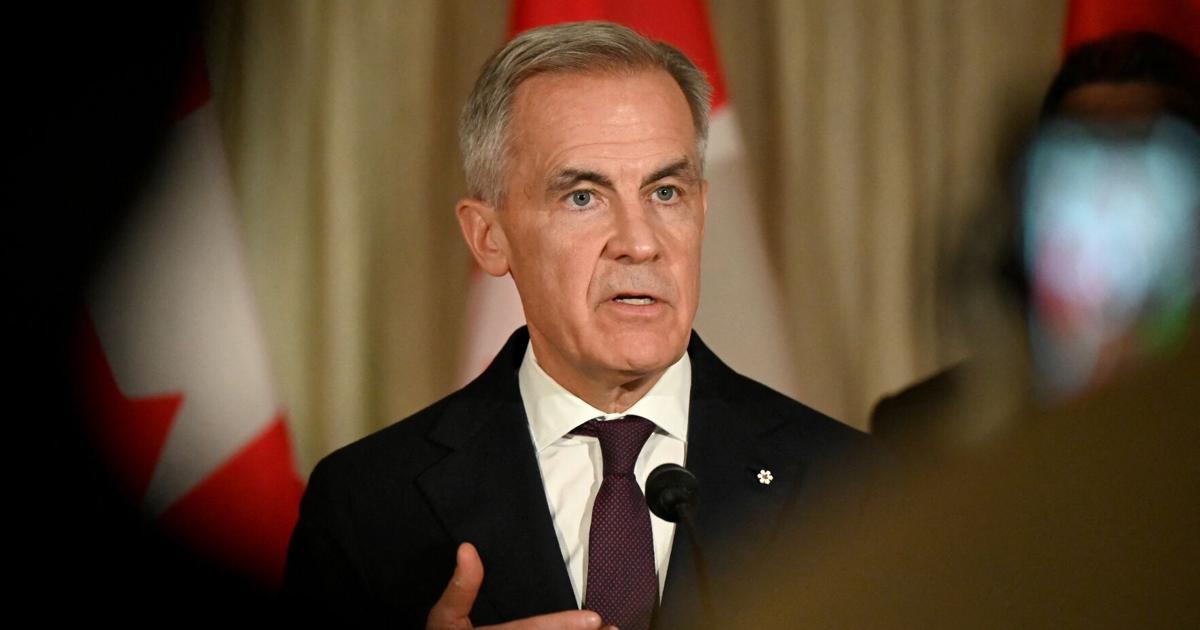
As Canadian consumers responded to U.S. trade threats by buying homegrown products, Prime Minister Mark Carney pledged that the federal government would too, introducing a new ”Buy Canadian” initiative.
asserted
government → respond → initiative
The policy, which took effect in December 2025, was designed to “ensure the federal government buys from Canadian suppliers.”
asserted
government → take → suppliers
Now, for the first time, the list of contracts awarded under that policy has been made public, and the results show its success depends on your definition of a Canadian company.
asserted
success → award → company
A total of 52 contracts were awarded by Public Services and Procurement Canada from the policy’s launch through Oct. 28, according to data provided to the Star by the federal department.
uncertain
contracts → award → department
However, at least 30 per cent of the $808 million awarded has gone to foreign-controlled companies, including companies based in the U.S., U.K., France and Italy.
asserted
cent → award → U.S.
The finding echoes a previous Star analysis that looked at all federal contracts awarded since Carney took office — regardless of whether they fell under the Buy Canadian policy — which found that an estimated $7.8 billion, or roughly one-third of the total value, went to American-controlled corporations through July 2026.
asserted
billion → echo → July
While the new rules require Ottawa to prioritize Canadian suppliers and content in procurement, they do allow leeway for contracts to be awarded to Canadian subsidiaries of foreign companies.
asserted
contracts → require → companies
The result is that some American-owned companies, including IBM Canada, Salesforce Canada, and Pfizer Canada, have received millions of dollars under the Buy Canadian policy.
asserted
companies → own → policy
“Clearly the metrics they’re using here are wrong,” said David Macdonald, senior economist of the Canadian Centre for Policy Alternatives, who reviewed the data.
asserted
who → use → data
“These aren’t Canadian companies — they’re foreign subsidiaries that have a presence in Canada — but they are being flagged as successful Buy Canadian contracts.”
asserted
they → ’re → contracts
A spokesperson for Joël Lightbound, Minister of Public Services and Procurement Canada, said the government consulted extensively with provinces, territories and industry before establishing its definition of a qualified supplier.
asserted
government → say → supplier
“The policy maintains access to suppliers from trade partners that have established operations in Canada.
asserted
that → maintain → Canada
Every eligible company must operate in Canada, pay taxes here, and contribute to our economy,” wrote the minister’s office in a statement to the Star.
asserted
office → operate → Star
But Macdonald said the program’s definition of a Canadian company is too broad because most foreign companies supplying the federal government would have offices in Canada anyway.
asserted
companies → say → Canada
“The trouble is the preference goes to everyone,” he said.
asserted
he → go → everyone
“In essence, you aren’t actually preferencing Canadian-owned, Canadian-operated, Canadian-headquartered firms.”
asserted
you → preference → firms
Millions awarded to foreign-controlled companies
To find out the true ownership of companies winning contracts under the policy, the Star cross-referenced the procurement data with Statistics Canada’s Inter-corporate Ownership (ICO) database, which identifies the country of control of more than 50,000 businesses.
asserted
which → award → businesses
Publicly available information on companies not listed in the database was also consulted.
asserted
information → list → database
The Buy Canadian policy has two parts.
asserted
policy → buy → parts
One prioritizes Canadian suppliers and Canadian content (CSCC), while the other prioritizes Canadian materials (CM) in federal procurement, mandating the use of Canadian-produced steel, wood products and aluminum in construction and defence projects valued at $25 million or more.
asserted
other → prioritize → more
The Star found that 14 of the 50 identified contract recipients (Ottawa did not disclose the identities of the remaining two) are foreign-controlled and were awarded a combined $250 million in contracts, accounting for about 32 per cent of the total value.
asserted
Ottawa → find → value
Vass Bednar, the managing director of the think tank Canadian Shield Institute for Public Policy, said that while those foreign subsidiaries support Canadian jobs, their capital, intellectual property and innovation, is not staying in Canada.
“People understand the difference between a wholly-owned foreign firm that operates here and a firm that started here and is growing here,” said Bednar.
asserted
Bednar → say → firm
When the government lumps that together and reports back to Canadians, I think we do ourselves and citizens a disservice.”
asserted
we → lump → disservice
The health and pharmaceuticals sector is one of five sectors prioritized under the Buy Canadian policy, yet the Star analysis found that most contracts in the sector went to foreign-controlled companies.
asserted
contracts → prioritize → companies
About $88 million in vaccine contracts went to Sanofi, GSK Canada, Merck Canada and Pfizer Canada, with the latter three confirming to the Star by email that the vaccines they supplied are not manufactured in Canada.
asserted
they → go → Canada
Sanofi, headquartered in France, said it produces the pertussis vaccines worth $37 million at its Toronto campus.
asserted
it → headquarter → campus
Pfizer and Merck told the Star their Canadian employees support supply, distribution and quality oversight of those vaccines.
asserted
employees → tell → vaccines
Records show that Canada had long been procuring these vaccines from the same foreign subsidiaries before designating them as Buy Canadian contracts.
asserted
Canada → show → contracts
“Maybe in the case of vaccines, everyone who provides vaccines is a foreign subsidiary, which is fine,” said Macdonald.
asserted
Macdonald → provide → vaccines
“But why pretend like it’s a Buy Canada policy when it isn’t?
asserted
it → pretend → ?
Lightbound’s office responded in the statement saying the policy is intended to boost Canadian participation, content and economic activity in federal procurement.
asserted
policy → respond → procurement
“Contracts may be reported as having been awarded under the Buy Canadian Policy where the applicable Buy Canadian measures formed part of the procurement process,” the statement read.
uncertain
statement → report → process
Macdonald questioned whether such a broad policy would meaningfully change federal procurement outcomes.
asserted
policy → question → outcomes
“Let’s have a policy that actually makes a difference, as opposed to it being a performative policy that looks good on paper,” said Macdonald.
asserted
Macdonald → have → paper
Impact of Buy Canadian ‘exaggerated’
asserted
Impact → buy → Canadian
When asked about assessing the success of the policy so far, Lightbound’s office said Ottawa has “shifted the approach of ‘best effort’ to a clear obligation to support Canadian industries.
asserted
Ottawa → ask → industries
The policy ensures procurement delivers greater economic benefits for Canadians by creating opportunities for domestic workers, businesses and manufacturers, the statement said.
asserted
statement → ensure → workers
The 52 contracts have an estimated total procurement value of $1.8 billion if all options are exercised.
asserted
options → have → billion
The government expects the volume and value of Buy Canadian contracts to grow as the policy is applied to more procurements.
asserted
policy → expect → procurements
Noah Fry, a political science post-doctoral fellow at Dalhousie University, said the $808 million in contract value is “almost certainly” an exaggeration of the actual impact of policy.
asserted
million → say → policy
…and 2 more, not listed.
 The Aporia