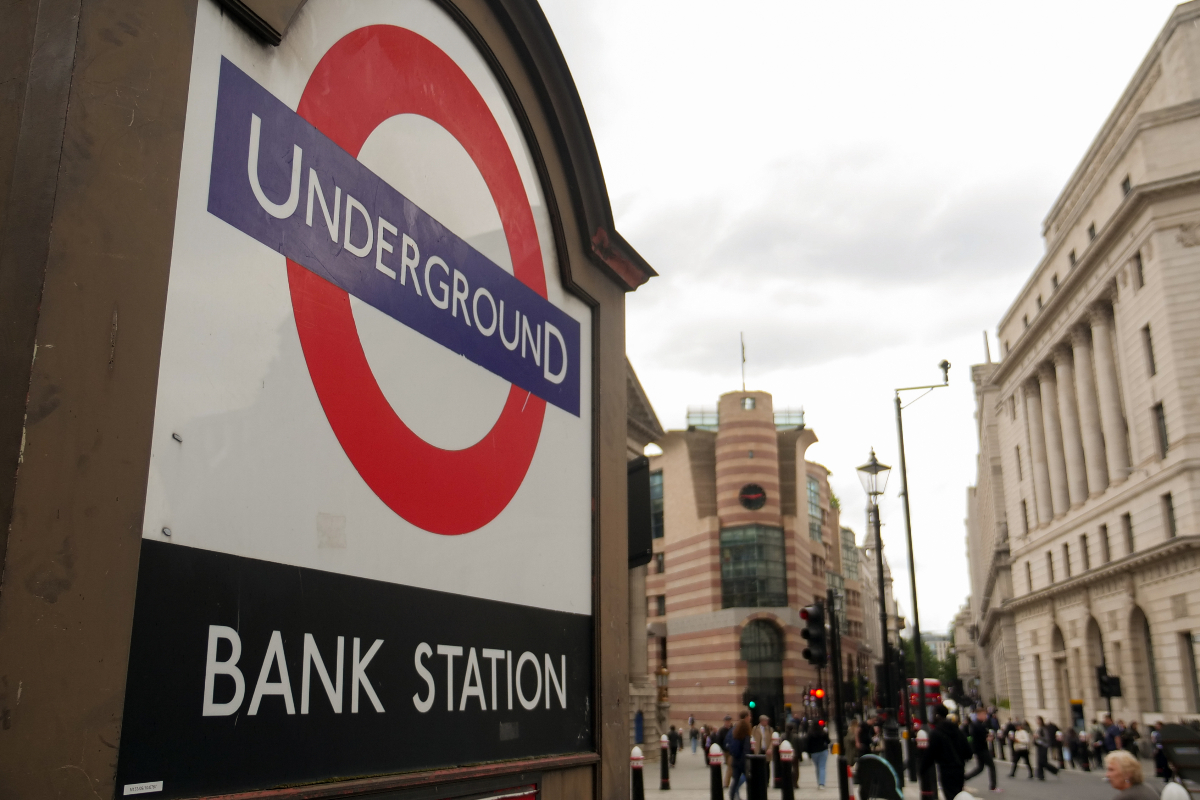
Photo via Evening Standard

Why are Tube drivers striking this week? War of words erupts over RMT walkouts

Read the original at Evening Standard ↗
Cite

Cecil, N., & Place, T. (2026, November 25). Why are Tube drivers striking this week? War of words erupts over RMT walkouts. Evening Standard. https://www.standard.co.uk/news/london/tube-strikes-explained-rmt-london-underground-b1306305.html

Dated from the outlet's own feed. Check the original for its byline.

Evening Standard · collected 2026-11-25 · by Nicholas Cecil, Tom Place

Quick Summary

The RMT union is organizing strikes by Tube drivers this week due to disagreements over proposed changes to working conditions by Transport for London (TfL). The union argues that the changes will lead to longer hours, less predictable shifts, and reduced job security. In contrast, TfL claims the reforms, such as a voluntary four-day workweek and changes to how drivers pick up trains, aim to improve efficiency and provide drivers with more flexible working patterns. Despite months of talks, both sides remain at odds, with the RMT viewing the changes as detrimental to drivers' terms and conditions.
Written by AI on 2026-11-25, from this article's own text only (the story summary below draws on all the coverage).
See how they differ ↓

AI analysis

Story summary

The RMT union is set to begin a series of eight 24-hour strikes on the London Underground starting Thursday, November 26, 2026, causing major travel disruptions. Talks between Transport for London (TfL) and the RMT to avert the strikes failed, with the union pressing ahead despite criticism from politicians and businesses. The first strike is expected to impact Londoners heavily, especially as it coincides with cold weather conditions, with temperatures forecast to feel near freezing during the morning rush hour. Future strikes are planned for December 17 and 19, and January 4 and 6, 2027, along with February 17, 23, and 25. The RMT claims the strikes are in response to working condition changes, including a shift to a four-day workweek, which has also drawn criticism from rival unions like ASLEF.

Written for “Tube Strike by RMT Union Hits London” on 2026-11-26, grounded in this article and the 25 other(s) covering the same event.

How they differ

3 outlets covered “Tube Strike by RMT Union Hits London”.

What each outlet says

One AI summary per outlet of its latest article on this story, written from that article alone and checked against it. Open the article for the outlet's own words.

Evening StandardThis outlet25 Nov

The RMT union is organizing strikes by Tube drivers this week due to disagreements over proposed changes to working conditions by Transport for London (TfL). The union argues that the changes will lead to longer hours, less predictable shifts, and reduced job security. In contrast, TfL claims the reforms, such as a voluntary four-day workweek and changes to how drivers pick up trains, aim to improve efficiency and…

Why are Tube drivers striking this week? War of words erupts over RMT walkouts (this article)22 articles from Evening Standard on this story
Daily Mail24 Nov

RMT union members will strike for 24 hours starting Thursday noon after talks with Transport for London (TfL) failed to resolve a dispute over a four-day working week. The strike is expected to cause significant travel disruption, with most Tube services reducing from around 10 am and only minimal service on the Circle, Piccadilly, and Waterloo & City lines throughout the day. Additional strikes are planned for…

Tube strikes WILL go ahead with travel chaos set to hit London after last-ditch crunch talks between RMT and TfL fail - as rival criticises militant union for fighting against four-day working week →3 articles from Daily Mail on this story

Compared with similar articles

This article reads unscored and hedges 0% of its claims. Each row says how that neighbour differs.
Evening Standard
Hedges 0 of 9 claims Outlet record 64/100
Evening Standard
Hedges 1 of 8 claims Outlet record 64/100
“Article A focuses on the specific disruptions caused by the RMT strike on November 26, while Article B discusses the reasons and context behind the strikes, without specifying the same specific day or time of disruption.”
Evening Standard
Hedges 0 of 9 claims Outlet record 64/100
City AM
Hedges 0 of 12 claims Outlet record 95/100
Evening Standard
Hedges 0 of 27 claims Outlet record 64/100
“While both articles discuss the upcoming RMT Tube strike, Article A focuses on the specific strike points and the failure of talks, while Article B provides a broader explanation of the reasons behind the strike.”
Evening Standard
Leans right Hedges 3 of 20 claims Outlet record 64/100
Evening Standard
Hedges 3 of 16 claims Outlet record 64/100
Evening Standard
Hedges 1 of 29 claims Outlet record 64/100
Evening Standard
Hedges 2 of 15 claims Outlet record 64/100
“The articles cover different stages of the same general situation, with Article A reporting on the initial planned strikes and Article B discussing the reasons behind the strikes after they have begun.”

Story

Tube Strike by RMT Union Hits London
Politics · 26 article(s) covering the same event. See how they differ ↑
How this article was measured signals, leaning charts, publisher record, byline, topics and claims

Signals How these are calculated →

Claims extracted
18
sentences that state something as happening or true
Uncertain
0%
0 of 18 hedged ("reportedly", "may", "according to")
Leaning
withheld
no quote in the article backed the model's score
Publisher signals
64/100
Evening Standard's corrections and hedging, across everything collected from it. Not a measure of accuracy.
Outlets on this story
26
Politics
Same framing elsewhere
1
articles that frame the event the way this one does
Analyzed 2026-11-25 · how these are computed

How this is being covered How these are calculated →

Article leaning vs. publisher reliability
Source leaning vs. consistency

Publisher

Evening Standard · 11835 article(s) · 89 correction(s) detected
Running correction rate · 89 correction(s)

Who wrote this

Nicholas Cecil
160 article(s) here · 1 carrying a prediction
Here are the key timings and details of which Tube lines will be affected.
With depots close to platforms, the change would in many cases only mean a difference of a few minutes in terms of when drivers begin their shift.
The first of a wave of Tube strikes by the RMT union will start hitting London in less than 24 hours.
The union said drivers will face longer hours driving trains, longer duties, earlier starts and later finishes, short-notice changes to shifts and attacks on existing transfer rights between depots and annual leave arrangements.
Train drivers will walk out for 24 hours at midday on Thursday for the start of the industrial action which will run into the following day, Black Friday, when millions will seek to take advantage of retail discounts.
The £99,000-a-year union chief will serve a five-year term until March 2030. But he faces a challenge to live up to the record of some of his predecessors, with growing questions over whether he has picked the wrong battle to hit London with eight Tube strikes over a voluntary four-day week for train drivers. He died in the spring of 2014 of a suspected heart attack at the age of 52, having led the union since 2002.
Travel in and around London will also be hit by a series of works to upgrade railway lines over the festive period.
But last-ditch talks held on Tuesday failed to achieve a breakthrough, meaning the walkouts will go ahead as planned.
He added: “In the meantime, we are asking customers to check before they travel and allow extra time for their journeys during this strike action." After the talks ended in deadlock, the union claimed the reforms would “force drivers to surrender hard-won protections”.
Travel in and around London will also be hit by a series of works to upgrade railway lines over the festive period.
Also by Nicholas Cecil
Nothing else under this byline is closely related to this article, so these are simply their most recent.
All 160 articles by Nicholas Cecil →
Tom Place
216 article(s) here · 1 carrying a prediction
The idea is favoured by those arguing that people in cheaper homes should be paying less - but residents in the capital who take on bigger mortgages due to higher property prices could be worse off.
A series of cost-of-living increases coming into effect will add thousands of pounds to the the total outgoings of many in the capital. Here are all the big rises set to hit Londoners in the coming months.
The union said drivers will face longer hours driving trains, longer duties, earlier starts and later finishes, short-notice changes to shifts and attacks on existing transfer rights between depots and annual leave arrangements.
“Other routes might be impacted too.
Welcome to The Standard’s live travel coverage, where we will be bringing you all the latest news from around the capital today.
The price cap will rise by £443 per year - or £36.91 per month - to £2,166 for the average household using both electricity and gas if this level was sustained for a year.
She said: “Would I use that language?
Forecasters have warned of a “battleground” between colder and milder air which could be the “perfect recipe” for snow, as milder weather systems arriving from the mid-Atlantic come up against colder Arctic air.
I would like to reassure residents that arrests have been made and detectives are progressing their investigation at pace.
Nick Dent, TfL's director of customer operations, said that the plans would give drivers "a real, meaningful choice" over their working patterns.
Also by Tom Place
Nothing else under this byline is closely related to this article, so these are simply their most recent.
All 216 articles by Tom Place →

Topics

ASLEF London Underground RMT TfL Transport for London

Subjects

TfL ORG · 7× RMT ORG · 2× ASLEF ORG · 1× Eddie Dempsey PERSON · 1× London Underground ORG · 1× Nick Dent PERSON · 1× Transport for London ORG · 1×

Narrative

The union said drivers will face longer hours driving trains, longer duties, earlier starts and later finishes, short-notice changes to shifts and attacks on existing transfer rights between depots and annual leave arrangements.
framing: assertive · carried by 1 article(s) · first seen 2026-11-25
The union said drivers will face longer hours driving trains, longer duties, earlier starts and later finishes, short-notice changes to shifts and attacks on existing transfer rights between depots and annual leave arrangements.
2026-11-25 · Evening Standard
Why are Tube drivers striking this week? War of words erupts over RMT walkouts · assertive framing

Claims (18 extracted, 0 hedged)

Why are the strikes happening? asserted
strikes → happen → ?
The union said drivers will face longer hours driving trains, longer duties, earlier starts and later finishes, short-notice changes to shifts and attacks on existing transfer rights between depots and annual leave arrangements. asserted
drivers → say → depots
It attacked the reforms as a “vehicle for job cuts, intensified working and the erosion of terms and conditions”. asserted
It → attack → terms
But TfL stressed that the change to a four-day week would be voluntary and would mean drivers work fewer hours overall. asserted
drivers → stress → hours
Drivers can stay on the old working arrangements, but some faced having to move depot. asserted
some → stay → depot
New working conditions TfL also pointed to some of the reforms it wants to see, including on picking up trains. asserted
it → point → trains
Drivers are currently allocated paid walking time from the depot where they are based to pick up a train which TfL stressed “takes time”. asserted
TfL → allocate → time
It wants drivers to instead pick up trains on platform, which it says is in line with many rail companies. asserted
it → want → companies
TfL also wants to reduce notice periods for shifts, for example to avoid two drivers being down for the same work if one is returning from sick leave. asserted
one → want → leave
Read More Currently, drivers can nominate to move depots and lines after 18 months. asserted
drivers → read → months
But TfL says training takes 14 weeks, and transferring between lines takes between 8 and 10 weeks, so drivers can spend months not driving. asserted
drivers → say → months
It wants to limit line moves to every five years to cut the impact of drivers changing soon after qualifying. asserted
drivers → want → impact
The RMT and Transport for London (TfL) were in talks over the summer to try to resolve the stand-off, but the two sides failed to reach an agreement over the changes which are strongly backed by the ASLEF train drivers’ union. asserted
which → try → union
Nick Dent, TfL's director of customer operations, said that the plans would give drivers "a real, meaningful choice" over their working patterns. asserted
plans → say → patterns
He stressed: “We have engaged with our trade unions for months about our proposal for a new four-day working week. “ asserted
We → stress → week
As a result of that engagement, drivers can now choose to remain on a five-day week with a guarantee of remaining at the same depot.” asserted
drivers → choose → depot
However, RMT General Secretary Eddie Dempsey stressed: "London Underground is attempting to dress up a wholesale attack on drivers' working conditions as a voluntary four-day week." asserted
Underground → stress → week
He added that there was "nothing voluntary" about the proposals and claimed drivers would be asked to "accept longer and more unpredictable shifts" while giving up long-standing protections”. asserted
drivers → add → protections
Give feedback · no sign-in needed

No sign-in needed for now. Your note is sent without a name, so it cannot be answered.

History Support