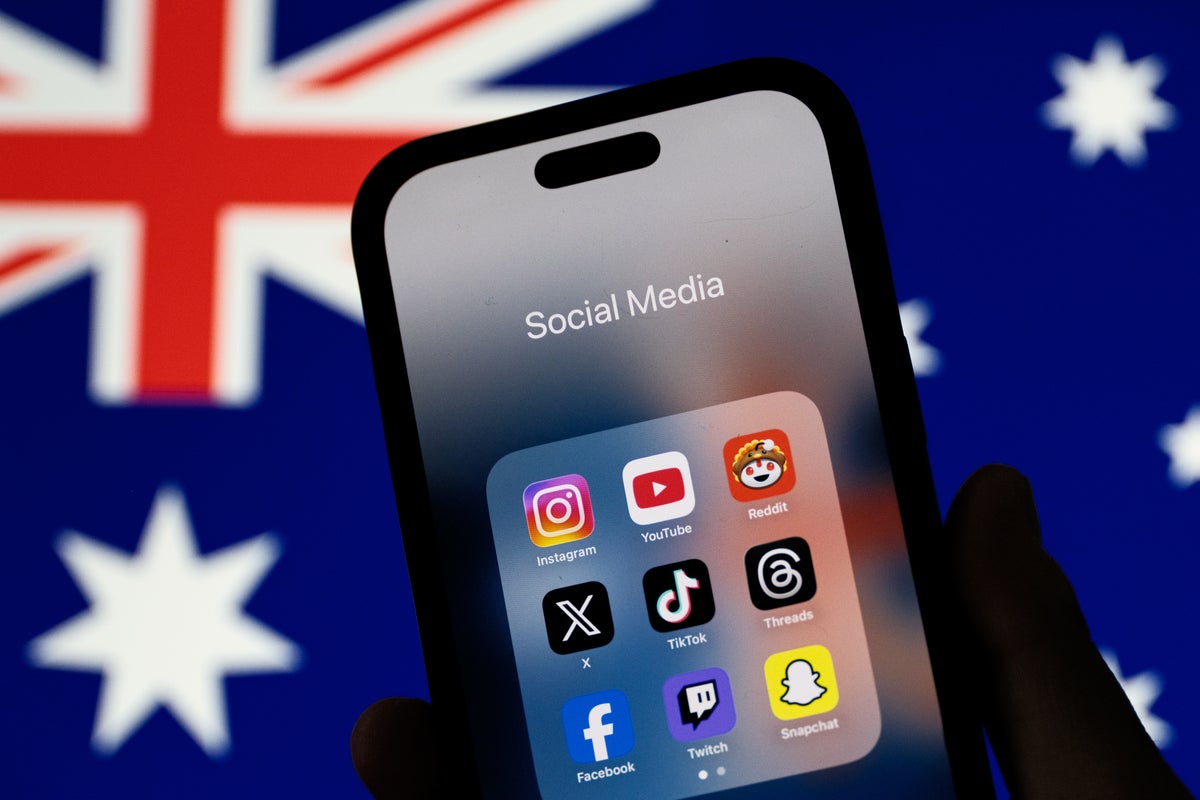
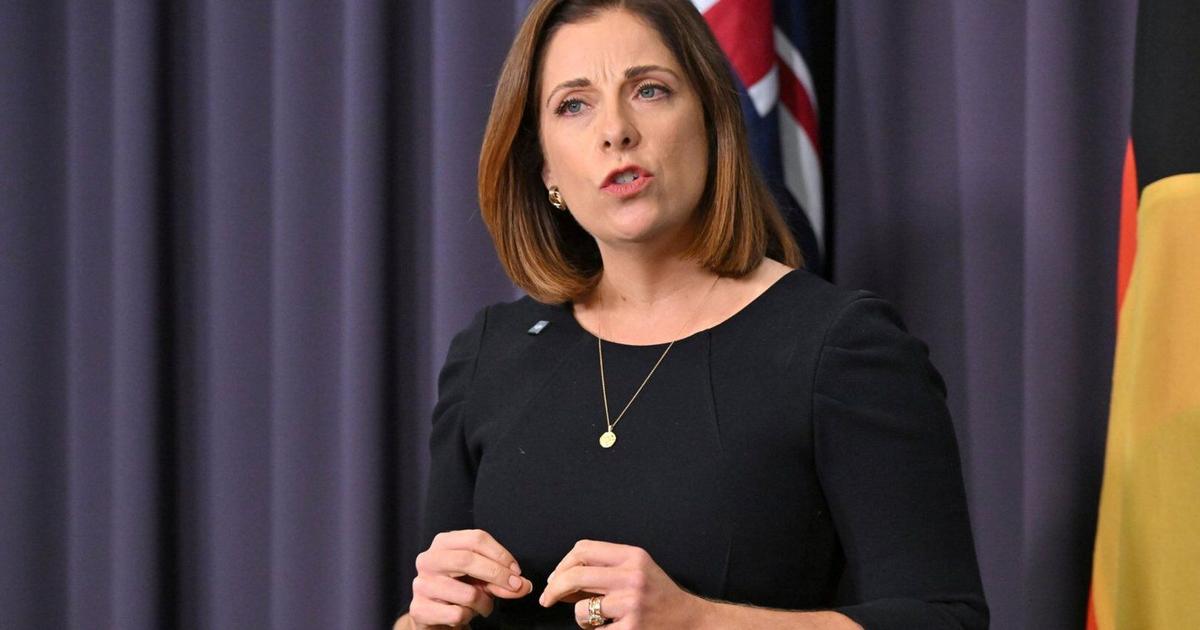
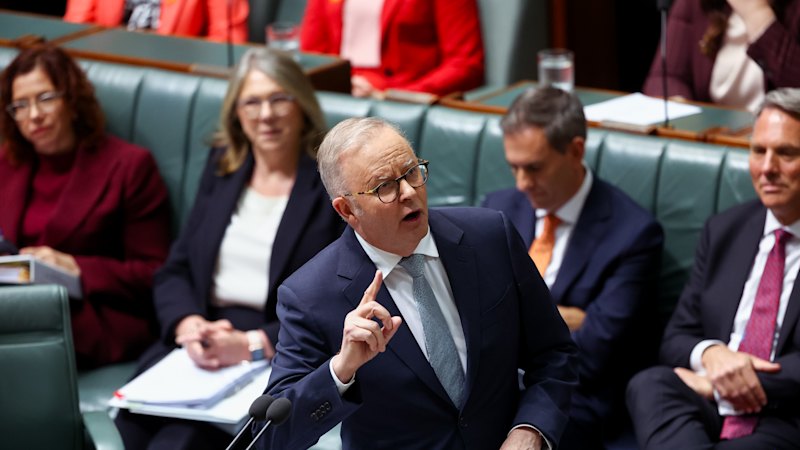
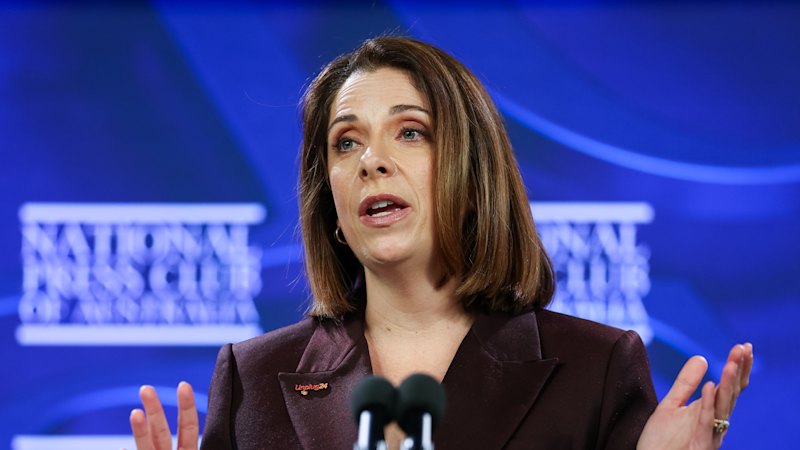
Photo via TIME

Big Tech Companies May Face Billion-Dollar Fines After Australia Passes ‘Digital Duty of Care’ Law

Read the original at TIME ↗
Cite

Guzman, C. d. (2026, November 25). Big Tech Companies May Face Billion-Dollar Fines After Australia Passes ‘Digital Duty of Care’ Law. TIME. https://time.com/article/2026/11/25/australia-digital-duty-of-care-big-tech-fines-social-media-platforms-risks-harms-safety/

Dated from the outlet's own feed. Check the original for its byline.

TIME · collected 2026-11-25 · by Chad de Guzman

Quick Summary

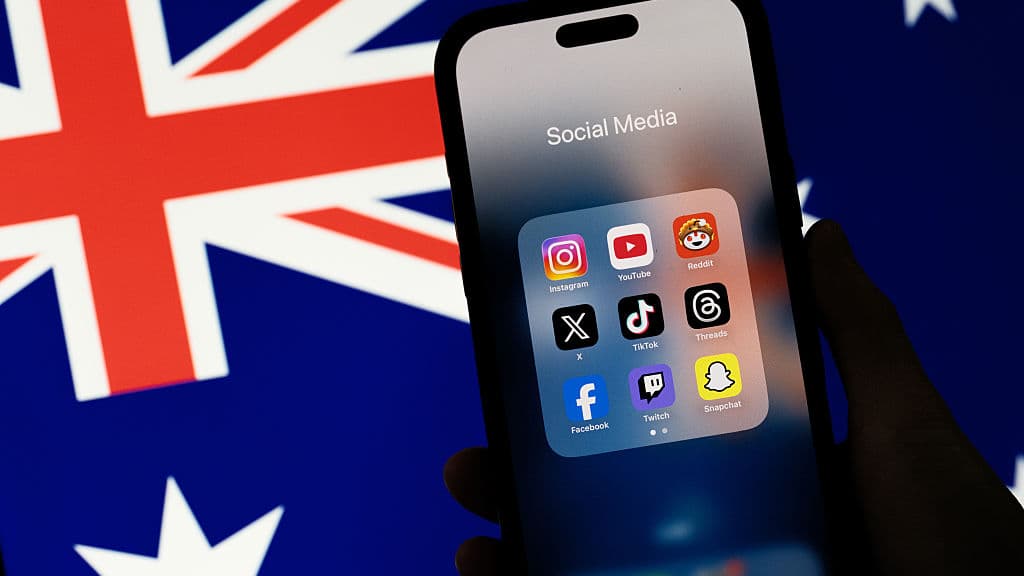
Australia's Parliament has passed the Digital Duty of Care bill, which allows for fines of up to 5% of a tech company's global revenue if they fail to meet new online safety standards. The law, supported by the Labor Party government and the Greens, aims to protect users from harmful online content and follows previous measures such as a social media ban for those under 16. Critics, including the U.S. Ambassador to Australia, argue that the vague definition of what constitutes harmful content and the potential fines could lead to over-censorship and impose disproportionate compliance costs on American tech firms.
Written by AI on 2026-11-25, from this article's own text only (the story summary below draws on all the coverage).
See how they differ ↓

AI analysis

Story summary

Australia's Parliament has passed the Digital Duty of Care law, which allows tech giants like Google, TikTok, and Meta to face fines of up to 5% of their global revenue if they fail to prevent harmful content on their platforms. The law was struck between the Labor government and the Greens, aimed at protecting Australians from online harm. The previous system relied on the eSafety commissioner to hold tech companies accountable, leaving individuals with limited options for seeking compensation. Critics argue that the law could impact freedom of expression, while the US has warned it could force American tech companies to impose disproportionate compliance costs. The legislation also introduces stronger privacy protections and expanded regulatory powers to remove "nudifying" services and clarify definitions of "hostile attitudes to women." Opposition leader Angus Taylor has vowed to repeal the law if his Liberal Party wins the 2028 elections.

Written for “Australia Passes Digital Duty Of Care Law” on 2026-11-26, grounded in this article and the 8 other(s) covering the same event.

How they differ

8 outlets covered “Australia Passes Digital Duty Of Care Law”.

What each outlet says

One AI summary per outlet of its latest article on this story, written from that article alone and checked against it. Open the article for the outlet's own words.

TimeThis outlet25 Nov

Australia's Parliament has passed the Digital Duty of Care bill, which allows for fines of up to 5% of a tech company's global revenue if they fail to meet new online safety standards. The law, supported by the Labor Party government and the Greens, aims to protect users from harmful online content and follows previous measures such as a social media ban for those under 16. Critics, including the U.S. Ambassador to…

Big Tech Companies May Face Billion-Dollar Fines After Australia Passes ‘Digital Duty of Care’ Law (this article)
Toronto Star25 Nov

Australia’s Parliament has passed the Digital Duty of Care Act, which could impose fines of up to 5% of a tech company’s global revenue for failing to prevent online harms. The law, similar to EU and UK legislation, requires tech giants to proactively reduce risks before they occur. While Prime Minister Anthony Albanese praised the bill for protecting children and society, opposition leader Angus Taylor vowed to…

Australia passes online safety law, putting Big Tech at risk of multibillion-dollar fines →2 articles from Toronto Star on this story
Sydney Morning Herald24 Nov

The Australian government, in collaboration with the Greens, is set to impose fines of up to 5% of global revenue on tech companies like Google, TikTok, and Meta for allowing harmful content on their platforms. This is a significant increase from the original maximum penalty of $109.2 million per breach. For Meta, with annual revenue over $200 billion, this could translate to fines exceeding $10 billion per breach…

Tech giants to face billion dollar fines for breaching Labor’s digital duty of care laws →
ABC News (AU)24 Nov

The Australian government, with support from the Greens, is set to pass new digital safety laws that allow Australians to sue social media companies for harm suffered online. These laws increase fines for companies to up to 5% of their global revenue, up from an initial proposal of $109.2 million. The legislation aims to protect children from bullying, misogyny, and harmful content, while also giving adults control…

Australians will be able to take social media giants to court for harms →
Daily Mail24 Nov

The Albanese Government has reached an agreement with the Greens to implement Digital Duty of Care laws in Australia, which aim to regulate online platforms like Facebook, TikTok, and Google. These measures require tech companies to proactively address harmful content, with potential fines reaching up to five percent of global revenue, or $109 million, for non-compliance. Critics, including the Liberal Party and One…

Critics say it's 'censorship', the Greens are cheering and your algorithm is about to change: What Albanese's new 'digital duty of care' means for you - and free speech in Australia →
Al Jazeera24 Nov

Australia's government is set to introduce a digital duty of care law that would impose fines of up to five percent of global revenue on tech companies failing to remove harmful content from their platforms. The proposed legislation, which surpasses earlier penalties, aims to address issues like child sexual abuse and other harmful online activities, and would give individuals the right to sue platforms for enabling…

Australia warns tech giants of multibillion-dollar fines for online ‘harm’ →
Show 2 more outlets
The Straits Times25 Nov

The US ambassador to Australia, David Brat, has criticized Australia’s proposed Digital Duty of Care Bill, arguing that it will limit free speech and unfairly impact US companies. The bill, expected to pass Parliament soon, requires tech firms to incorporate safety measures into their products to reduce online harm. Brat claims the legislation’s high fines could push platforms to censor lawful speech and imposes…

US criticises Australia social media law as harming free speech →
The Independent25 Nov

The US Trump administration has criticized Australia’s proposed Digital Duty of Care legislation, arguing that it could force American technology companies to censor lawful speech and impose significant compliance costs. Ambassador David Brat met with Minister for Communications Anika Wells to express concerns about the bill, which includes penalties of up to five percent of global revenue for non-compliance. The…

Trump administration slams Australian social media law as a setback for free speech →

Where they agree and split

Framing

How the first headlines put it

Attributed to a source1
Stated as fact4
The headlines (5)

Critics say it's 'censorship', the Greens are cheering and your algorithm is about to change: What Albanese's new 'digital duty of care' means for you - and free speech in Australia Daily Mail · attributed to a source

Tech giants to face billion dollar fines for breaching Labor’s digital duty of care laws Sydney Morning Herald · stated as fact

Australians will be able to take social media giants to court for harms ABC News (Australia) · stated as fact

Australia warns tech giants of multibillion-dollar fines for online ‘harm’ Al Jazeera · stated as fact

Australia set to pass a digital duty of care law, with fines up to 5% of tech giants' global revenue Toronto Star · stated as fact

Words to watch (1)

Trump administration slams Australian social media law as a setback for free speech The Independent

The full story: what happened, how it changed, and all 9 articles →

Compared with similar articles

This article reads unscored and hedges 6% of its claims. Each row says how that neighbour differs.
The Independent
Leans right Hedges 2 of 21 claims Outlet record 59/100
Toronto Star
Hedges 2 of 16 claims Outlet record 65/100
ABC News (AU)
Leans strongly left Hedges 2 of 20 claims Outlet record 66/100
The Sydney Morning Herald
Hedges 0 of 3 claims Outlet record 61/100
“While both articles discuss the Digital Duty of Care bill and potential fines for tech companies, Article A provides a broader overview of multiple news items, while Article B focuses specifically on the passage and implications of the Digital Duty of Care bill.”
Toronto Star
Hedges 2 of 29 claims Outlet record 65/100
“The articles describe the political process and passage of the Digital Duty of Care bill, but they report on different days (one on Wednesday, the other on Tuesday), suggesting they are not describing the exact same specific event.”
Al Jazeera
Hedges 3 of 17 claims Outlet record 60/100
“Article A discusses the announcement of plans to impose fines, while Article B reports on the actual passage of the Digital Duty of Care bill in Parliament, which are different stages of the same legislative process.”
The Sydney Morning Herald
Leans left Hedges 1 of 19 claims Outlet record 61/100
“Article A discusses a deal and fines that will be imposed, while Article B reports on the passage of the Digital Duty of Care bill in Parliament, which is a different specific event.”
The Straits Times
Leans right Hedges 0 of 10 claims Outlet record 64/100
“While both articles discuss the passage of the Digital Duty of Care Bill, Article A describes the criticism of the bill by the US ambassador, while Article B focuses on the passage of the bill and potential penalties for tech companies.”

Story

Australia Passes Digital Duty Of Care Law
Politics · 9 article(s) covering the same event. Compare every outlet's account →
How this article was measured signals, leaning charts, publisher record, byline, topics and claims

Signals How these are calculated →

Claims extracted
36
sentences that state something as happening or true
Uncertain
6%
2 of 36 hedged ("reportedly", "may", "according to")
Leaning
withheld
no quote in the article backed the model's score
Publisher signals
60/100
TIME's corrections and hedging, across everything collected from it. Not a measure of accuracy.
Outlets on this story
9
Politics
Same framing elsewhere
1
articles that frame the event the way this one does
Analyzed 2026-11-25 · how these are computed

How this is being covered How these are calculated →

Article leaning vs. publisher reliability
Source leaning vs. consistency

Publisher

TIME · 1129 article(s) · 2 correction(s) detected
Running correction rate · 2 correction(s)

Who wrote this

Chad de Guzman
39 article(s) here · 1 carrying a prediction
Tech giants could face penalties of up to 5% of their global revenue if found in violation of new online safety rules in Australia.
Gomez was already set to leave office in early 2027, after losing his re-election bid to newcomer Angela Gonzales-Torres.
Nearly five tons of degraded lead azide, a chemical compound used as a detonator in cartridges and shells, are set to be detonated at the Iowa Army Ammunition Plant in Middletown, a city in Des Moines County of nearly 400 people some 13 km away from the Mississippi River separating the state from Illinois.
2026-11-23 · assertive framing · Scott Olson—Getty Images
The President initially promised that the war with Iran would only take weeks, but it has dragged on to nearly nine months, though major hostilities have subsided.
“Fears about what humans may lose when we outsource our thinking have made us reconsider the extent to which we rely on AI: from top mathematicians to teachers of young children.”
2026-11-19 · assertive framing · 2026’s Words of the Year, So Far
The U.S. and Iran exchanged attacks on Tuesday in the latest flare-up of the war that the Trump Administration promised would end after the U.S. midterms.
The state uses a ranked-choice voting system, which can make the process of certifying votes more complicated and would have resulted in a second round of vote tabulating if the leading candidate had received less than 50% of the first-round votes cast.
But the brutal crackdown on protesters has only urged more Filipinos to take to the streets, according to leaders of the protest movement, who estimated more than 10,000 would show up as the U.S. President landed in Manila.
2026-11-17 · assertive framing · Philippine Protests Grow as Government Welcomes Trump
Meanwhile, Democrat Clara Pratte, a member of the Navajo Nation, was elected to Arizona’s Corporation Commission, the state’s five-member utility-regulation body that was previously entirely Republican but will now have two Democrats after Tuesday’s election.
It’s the most expensive election cycle in U.S. history in terms of political ad spending, with more than $11 billion expected to be spent, according to analysis firm AdImpact.
Also by Chad de Guzman
Scott Olson—Getty Images
2026-11-23 · TIME
Nothing else under this byline is closely related to this article, so these are simply their most recent.
All 39 articles by Chad de Guzman →

Topics

Australia Parliament U.S. Wells the Digital Duty of Care

Subjects

Australia GPE · 9× U.S. GPE · 4× Wells ORG · 4× Parliament ORG · 3× American NORP · 2× Anika Wells PERSON · 1× Anthony Albanese PERSON · 1× Communications ORG · 1× Greens NORP · 1× Labor Party ORG · 1×

Narrative

The new law also implements stronger privacy protections for users, expanded regulatory powers to remove “nudifying” services, and a clarified definition of “hostile attitudes to women”—which now refers to material depicting hatred or the inferiority of women or promoting violence, abuse, exclusion, or the denial of women’s rights.
framing: assertive · carried by 1 article(s) · first seen 2026-11-25
Tech giants could face penalties of up to 5% of their global revenue if found in violation of new online safety rules in Australia.

Claims (36 extracted, 2 hedged)

Tech giants could face penalties of up to 5% of their global revenue if found in violation of new online safety rules in Australia. uncertain
giants → face → Australia
The country’s Parliament passed the Digital Duty of Care bill Wednesday, Communications Minister Anika Wells said, after the center-left Labor Party government of Prime Minister Anthony Albanese reached a deal with the left-wing Greens party. asserted
government → pass → party
Australia has been a world pioneer in legislating protections against harms online. asserted
Australia → legislate → harms
Last December, it implemented a global-first social media ban for residents under 16, which has had mixed results but has also inspired other countries to follow suit. asserted
which → implement → suit
“It’s about Australia taking action on the side of parents and children, not foreign-owned tech companies,” he told Parliament on Tuesday. asserted
he → ’ → Tuesday
Tech firms like Meta and Apple, many of which are headquartered in the U.S., have said that they want to improve child protection and curb harm on their platforms, though they have pushed back against how broad they say Australia’s laws are. asserted
laws → headquarter → platforms
Critics of the Digital Duty of Care law particularly question who gets to decide what counts as harmful content. asserted
what → question → content
David Brat, the U.S. Ambassador to Australia, said he had conveyed the Trump Administration’s objections to the law amendments to Wells on Tuesday. asserted
he → say → Tuesday
“Vaguely defined ‘harms,’ backed by penalties of up to 5% of global revenue, will push platforms to censor lawful speech,” Brat posted on social media. asserted
Brat → define → media
“As Australia’s largest foreign investor, the U.S. is concerned with regulations that impose disproportionate compliance burdens on American companies relative to competitors.” asserted
that → concern → competitors
Last month, Wells told the National Press Club that the new law would apply to U.S. President Donald Trump’s Truth Social platform. asserted
law → tell → platform
On Tuesday, she said her ministry was ironing out differences with their American counterparts. asserted
ministry → say → counterparts
What does the Digital Duty of Care law do? asserted
law → do → Care
The law amends a collection of internet-related legislation, including Australia’s 2021 Online Safety Act, which set 17 online safety codes and standards to combat unlawful and age-restricted material. asserted
which → amend → material
Amendments have been pursued for years amid criticisms that previous safeguards were inadequate. asserted
safeguards → pursue → criticisms
Wells said in October that those prior codes “were drafted by big tech for big tech.” asserted
codes → say → tech
The Digital Duty of Care law, which was introduced in Parliament in October, repeals those prior codes in favor of a broader “duty of care” requirement for tech firms, following a 12-month transition period. asserted
which → introduce → period
The duty mimics how Australia regulates other sectors, including aged care and child supervision, commercial vessel and rail safety, and workplace safety, in which businesses and providers are expected to manage risks to health and safety “as much as is reasonably practicable.” asserted
businesses → mimic → health
Under the Digital Duty of Care law, platforms must provide risk assessments to regulators at least once a year, and they must notify regulators before they introduce significant changes to their platforms that could allow for new risks of harm, such as “addictive” design features. uncertain
that → provide → features
The amendments also make it easier for Australian citizens to hold tech companies to account. asserted
citizens → make → account
Previously, one needed to rely on complex legal avenues concerning company negligence and consumer protection. asserted
one → need → negligence
The new law grants Australians the “private right of action,” which means they can directly sue digital platforms for breaching their duty of care. asserted
they → grant → care
The new law also implements stronger privacy protections for users, expanded regulatory powers to remove “nudifying” services, and a clarified definition of “hostile attitudes to women”—which now refers to material depicting hatred or the inferiority of women or promoting violence, abuse, exclusion, or the denial of women’s rights. asserted
law → implement → rights
The bill would also require tech firms to allow users in Australia to opt out of a platform’s algorithm and instead choose to see only content from accounts they follow. asserted
they → require → accounts
It also introduces steeper fines for violations, which Wells said the Australian public demanded. asserted
public → introduce → violations
Initially, the proposed maximum penalty was 109 million Australian dollars ($72 million), but it was raised to up to 5% of the violator’s global revenue. asserted
it → propose → revenue
The steep fines mirror those in other jurisdictions, including Canada’s proposed 3% penalty in a bill that would require Big Tech to reduce the risk of harmful content and the European Union’s draft 6% fine against companies that push for unfair trade practices. asserted
that → mirror → practices
How have critics responded? asserted
critics → respond → ?
The Tech Council of Australia, an industry body whose membership includes companies like Google, Microsoft, and LinkedIn, told the Guardian in a statement that it supported the legislation but was concerned over its impact on businesses, particularly in its empowering of individuals to sue. asserted
it → include → individuals
“A private right of action is a complex undertaking with significant consequences,” a spokesperson said. asserted
spokesperson → say → consequences
“How this is implemented is critical, and we need proper consultation to ensure that businesses are not hindered from investing in Australia. asserted
businesses → implement → Australia
If we get this wrong, it will be counterproductive to encouraging innovation in Australia.” asserted
it → get → Australia
The conservative opposition coalition has called the law “a blank cheque for political censorship.” asserted
coalition → call → censorship
Senator Sarah Henderson said on Tuesday that the bill compromised current legislation, gave “extensive” powers to the government, and would hurt smaller tech businesses. asserted
bill → say → businesses
“The fact is the digital duty of care should never have seen the light of day,” Henderson said. asserted
Henderson → see → day
“This is policy on the run, driven by an insidious agenda to shut down lawful speech and control political debate.” asserted
This → drive → debate
Give feedback · no sign-in needed

No sign-in needed for now. Your note is sent without a name, so it cannot be answered.

History Support