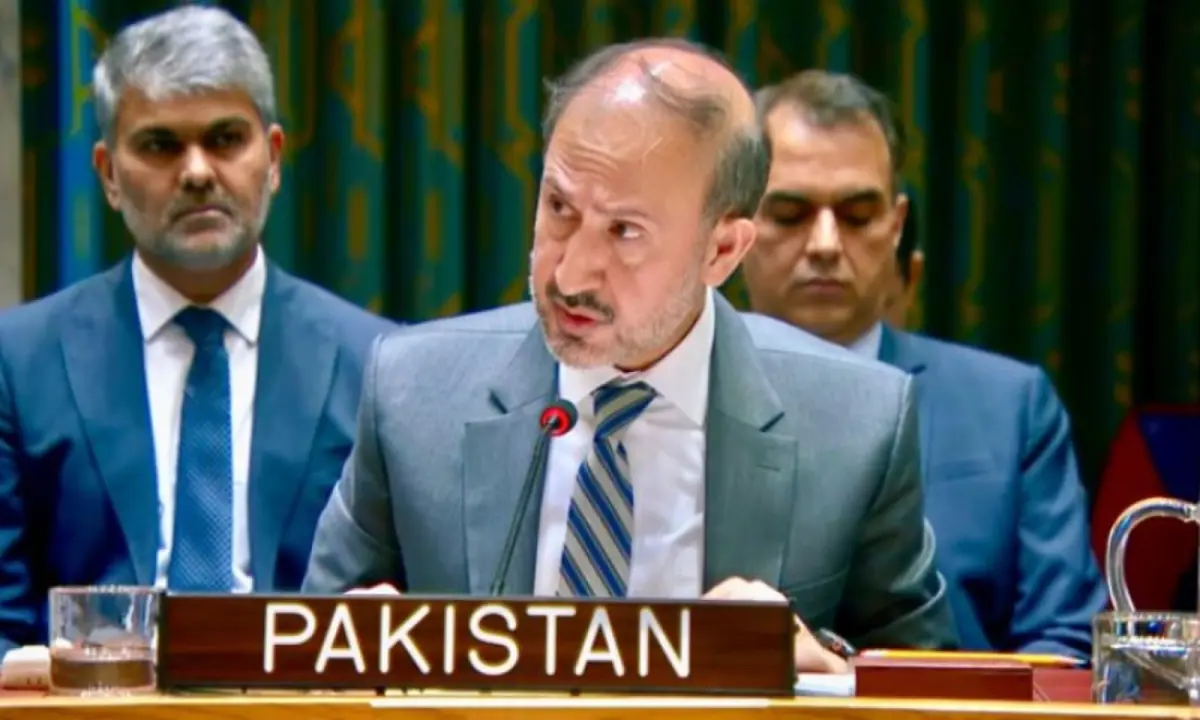
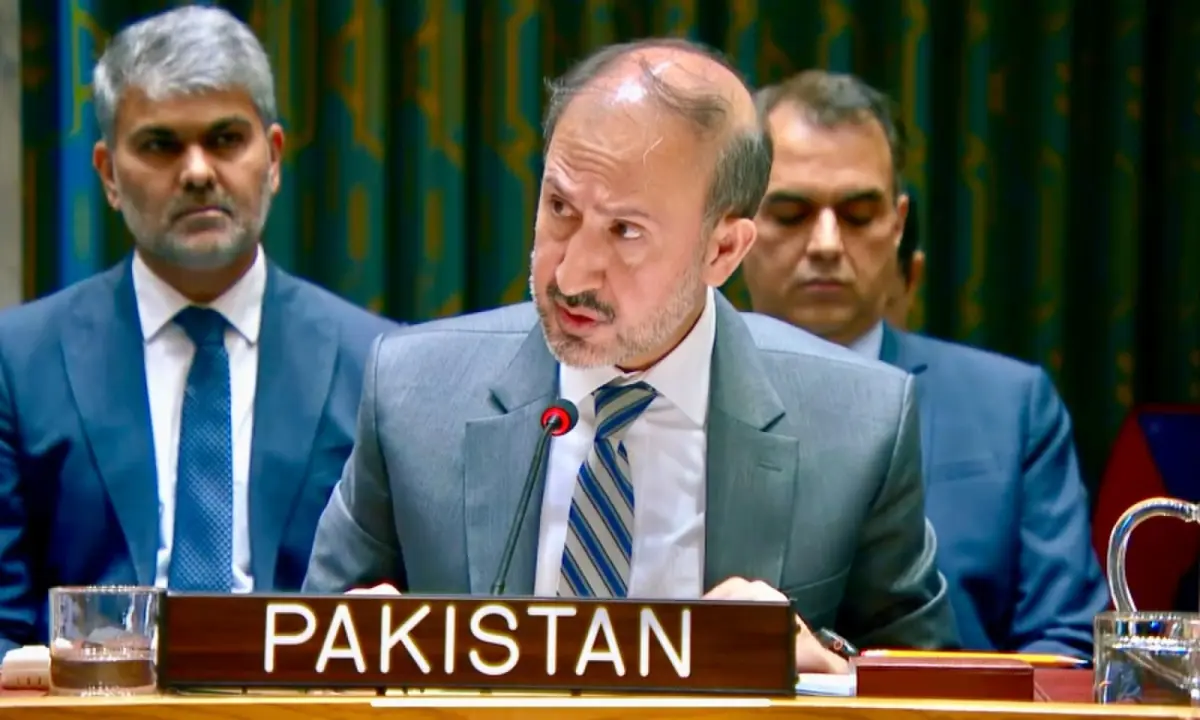
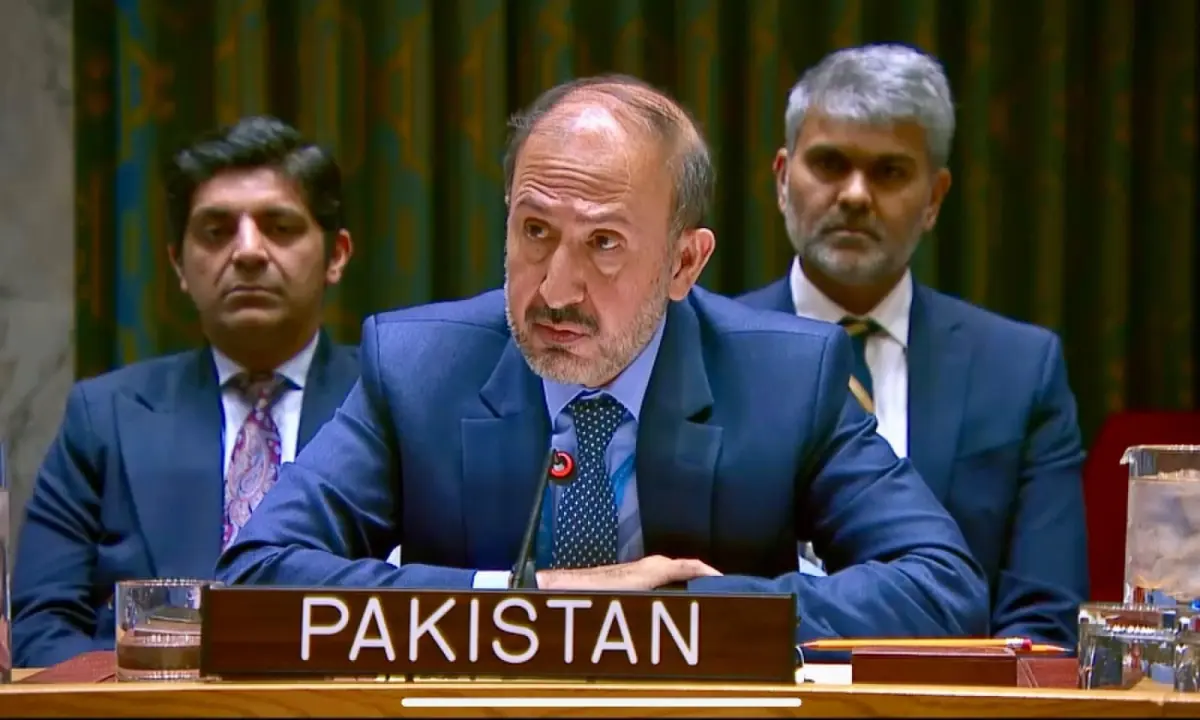
Photo via Dawn

Pakistan calls for human control over decisions on nuclear weapons use

Read the original at Dawn ↗
Cite

Iqbal, A. (2026, November 25). Pakistan calls for human control over decisions on nuclear weapons use. Dawn. https://www.dawn.com/news/2046970/pakistan-calls-for-human-control-over-decisions-on-nuclear-weapons-use

Dated from the outlet's own feed. Check the original for its byline.

Dawn · collected 2026-11-25 · by Anwar Iqbal

Quick Summary

Pakistan’s Permanent Representative to the United Nations, Ambassador Syed Haider Shah, emphasized during a UN Security Council debate that decisions on nuclear weapons use must remain under human control and warned against the use of AI in targeting nuclear command systems. Shah’s comments, made during a high-level open debate on conflict resolution in an era of rapid technological change, highlight the importance of maintaining human oversight in nuclear security, particularly relevant in South Asia due to the nuclear capabilities of both Pakistan and India. He stressed the need for international regulations to prevent technological advancements from exacerbating arms races and urged for global participation in technology development to avoid monopolization by powerful countries.
Written by AI on 2026-11-25, from this article's own text only (the story summary below draws on all the coverage).

AI analysis

Story summary

Pakistan’s Permanent Representative to the United Nations, Ambassador Syed Haider Shah, warned during a high-level UN Security Council debate on Wednesday that decisions on the use of nuclear weapons must remain under human control. He specifically cautioned against using artificial intelligence (AI) systems to target nuclear command, control, and communications systems. This call is particularly significant for South Asia, where both Pakistan and India possess nuclear weapons, highlighting the importance of securing these systems to prevent potential security threats. Ambassador Shah noted that the rapid advancement of technologies is complicating international security and could exacerbate the ongoing arms race.

Written for “Pakistan Nuclear Weapons Control” on 2026-11-26, grounded in this article and the 0 other(s) covering the same event.

Compared with similar articles

This article reads leans strongly left and hedges 10% of its claims. Each row says how that neighbour differs.
Al Jazeera
Hedges 1 of 11 claims Outlet record 60/100
“The articles cover related topics but different specific events: one is about Pakistan's call for human control over nuclear weapons decisions, and the other is about the UN Secretary-General's call for global AI risk management oversight.”

Story

Pakistan Nuclear Weapons Control
Politics · 1 article(s) covering the same event.
How this article was measured signals, leaning charts, publisher record, byline, topics and claims

Signals How these are calculated →

Claims extracted
20
sentences that state something as happening or true
Uncertain
10%
2 of 20 hedged ("reportedly", "may", "according to")
Leaning
Leans strongly left
of the writing, not the subject · beta estimate
Publisher signals
64/100
Dawn's corrections and hedging, across everything collected from it. Not a measure of accuracy.
Outlets on this story
1
Politics
Same framing elsewhere
1
articles that frame the event the way this one does
Analyzed 2026-11-25 · how these are computed

How this is being covered How these are calculated →

Article leaning vs. publisher reliability
Source leaning vs. consistency

Publisher

Dawn · 3731 article(s) · 8 correction(s) detected
Running correction rate · 8 correction(s)

Who wrote this

Anwar Iqbal
41 article(s) here · 1 carrying a prediction
He cautioned that the rapid development and convergence of emerging technologies were adding unprecedented speed, scale and complexity to international security challenges and could intensify the ongoing arms race.
The ambassador highlighted the close links between energy supplies, fertilisers, maritime transportation and agricultural trade, warning that disruptions in these interconnected sectors could spread food insecurity well beyond conflict-affected regions.
Earlier on Nov 10, Jaiswal had described the allegations against senior Indian officials as fabricated and malicious and maintained that requests for serving judicial documents in India could only be routed through the Ministry of Law and Justice.
The plot was foiled by US agencies before Pannun could be killed.
The proposed overhaul would extend recruitment periods, restrict sponsorship by companies that have recently laid off US workers and eliminate special exemptions currently available to certain healthcare professionals. Labour Secretary Keith Sonderling said existing rules had allowed companies to sponsor foreign workers “without fully considering American applicants”, a practice the department seeks to address through “expanded recruitment and enforcement requirements”. The proposals would affect employers seeking to sponsor foreign nationals through the EB-2 and EB-3 employment-based green card categories under the Permanent Labour Certification (PERM) programme.
The debate highlighted growing concerns that the confrontation could disrupt international trade, energy supplies and food shipments while increasing the risk of a wider regional conflict.
Another provision reaffirmed that the arbitrary detention of UN, diplomatic and humanitarian personnel by the Houthis could constitute grounds for additional sanctions.
Representative Veronica Escobar, whose Texas district includes the border city of El Paso, said she wanted far-reaching reform but recognised that legislation could not pass without Republican support. “
Americans voted on Tuesday in a midterm election seen as a nationwide referendum on US President Donald Trump that could wrest control of Congress from his Republican Party and impose major restraints on the remaining two years of his presidency.
Also by Anwar Iqbal
Nothing else under this byline is closely related to this article, so these are simply their most recent.
All 41 articles by Anwar Iqbal →

Topics

India Pakistan UNITED NATIONS the UN Security Council the United Nations

Subjects

Pakistan GPE · 4× Shah PERSON · 3× Council ORG · 1× India GPE · 1× Pakistani NORP · 1× Syed Haider Shah PERSON · 1× UNITED NATIONS ORG · 1× the Security Council’s ORG · 1× the UN Security Council ORG · 1× the United Nations ORG · 1×

Narrative

The ambassador’s remarks carry particular significance for South Asia, where both Pakistan and India possess nuclear weapons, making the security of nuclear command, control and communications systems an important regional concern. “This is most critical in the nuclear domain, where decisions on the use of nuclear weapons must remain under human control, and AI systems must never be used to target nuclear command, control and communications systems,” Ambassador Shah said.
framing: assertive · carried by 1 article(s) · first seen 2026-11-25
He cautioned that the rapid development and convergence of emerging technologies were adding unprecedented speed, scale and complexity to international security challenges and could intensify the ongoing arms race.

Claims (20 extracted, 2 hedged)

Pakistan has called for keeping decisions on the use of nuclear weapons under human control and warned that artificial intelligence (AI) systems must never be used to target nuclear command, control and communications systems. asserted
systems → call → systems
The warning was delivered by Pakistan’s Permanent Representative to the United Nations, Ambassador Syed Haider Shah, during a high-level open debate of the UN Security Council on Wednesday on conflict resolution in an era of rapid technological change. asserted
warning → deliver → change
The ambassador’s remarks carry particular significance for South Asia, where both Pakistan and India possess nuclear weapons, making the security of nuclear command, control and communications systems an important regional concern. “This is most critical in the nuclear domain, where decisions on the use of nuclear weapons must remain under human control, and AI systems must never be used to target nuclear command, control and communications systems,” Ambassador Shah said. asserted
Shah → carry → systems
He cautioned that the rapid development and convergence of emerging technologies were adding unprecedented speed, scale and complexity to international security challenges and could intensify the ongoing arms race. uncertain
development → caution → race
Ambassador Shah said technology itself was neutral, with its impact depending on the intentions and motivations of those using it. asserted
impact → say → it
The foremost priority, he stressed, should be to retain human judgement and control at all stages of technological design, development and integration. asserted
he → stress → design
He called for appropriate safeguards, regulations and governance frameworks to ensure that technological advances served peace rather than becoming instruments of geopolitical dominance and war. asserted
advances → call → dominance
In the military domain, he advocated restraint and confidence-building measures to reduce the risks of miscalculation and compressed decision-making, particularly in the nuclear domain. asserted
he → advocate → domain
The Pakistani envoy also warned against allowing advanced technologies to become the monopoly of a few powerful countries, arguing that all member states, including developing countries, should participate in their democratic, inclusive and equitable development. asserted
states → warn → development
He said measures introduced in the name of technological safety should not become instruments for denying other countries access to technology and infrastructure. asserted
measures → say → technology
All member states, particularly developing countries, retained their inalienable right to the peaceful use of technology, he added. asserted
he → develop → technology
Shah also highlighted the growing dangers of misinformation, disinformation, fake news and cyberattacks, including attacks on critical infrastructure by state and non-state actors. asserted
Shah → highlight → actors
“The UN Charter and international law apply in all situations, irrespective of underlying technologies,” he said, calling for collective efforts to clarify the application of international law and take concrete action against emerging threats. asserted
he → apply → threats
He advocated practical confidence-building measures, including crisis communication, deconfliction and mutual restraint, to reduce mistrust, prevent accidental escalation and manage risks associated with military and foundational technologies. asserted
He → advocate → technologies
The ambassador said the fragmented and dispersed nature of emerging technologies required layered governance frameworks, accountability measures and, where appropriate, legally binding instruments. asserted
nature → say → frameworks
“Delaying regulation to secure advantage and domination will not work,” he cautioned, adding that discriminatory agendas and forums with selective representation would not help address the challenges. asserted
agendas → delay → challenges
Pakistan believes discussions on the development and deployment of emerging technologies, particularly their implications for arms control, should take place in inclusive and representative multilateral forums under UN auspices. asserted
discussions → believe → auspices
While supporting the Security Council’s engagement with emerging technologies, Shah said its discussions should focus on their operational implications, including the implementation of Council mandates in peacekeeping, peacebuilding and conflict resolution. asserted
discussions → support → peacekeeping
He also highlighted the potential of artificial intelligence and unmanned aerial vehicles to improve civilian protection and the safety and security of UN peacekeepers. asserted
He → highlight → peacekeepers
The country’s envoy added that the use of new technologies, particularly UAVs and AI, by terrorist groups and other non-state actors could also be addressed in the renewal of Security Council mandates. uncertain
use → add → mandates

Give feedback · no sign-in needed

No sign-in needed for now. Your note is sent without a name, so it cannot be answered.

History Support