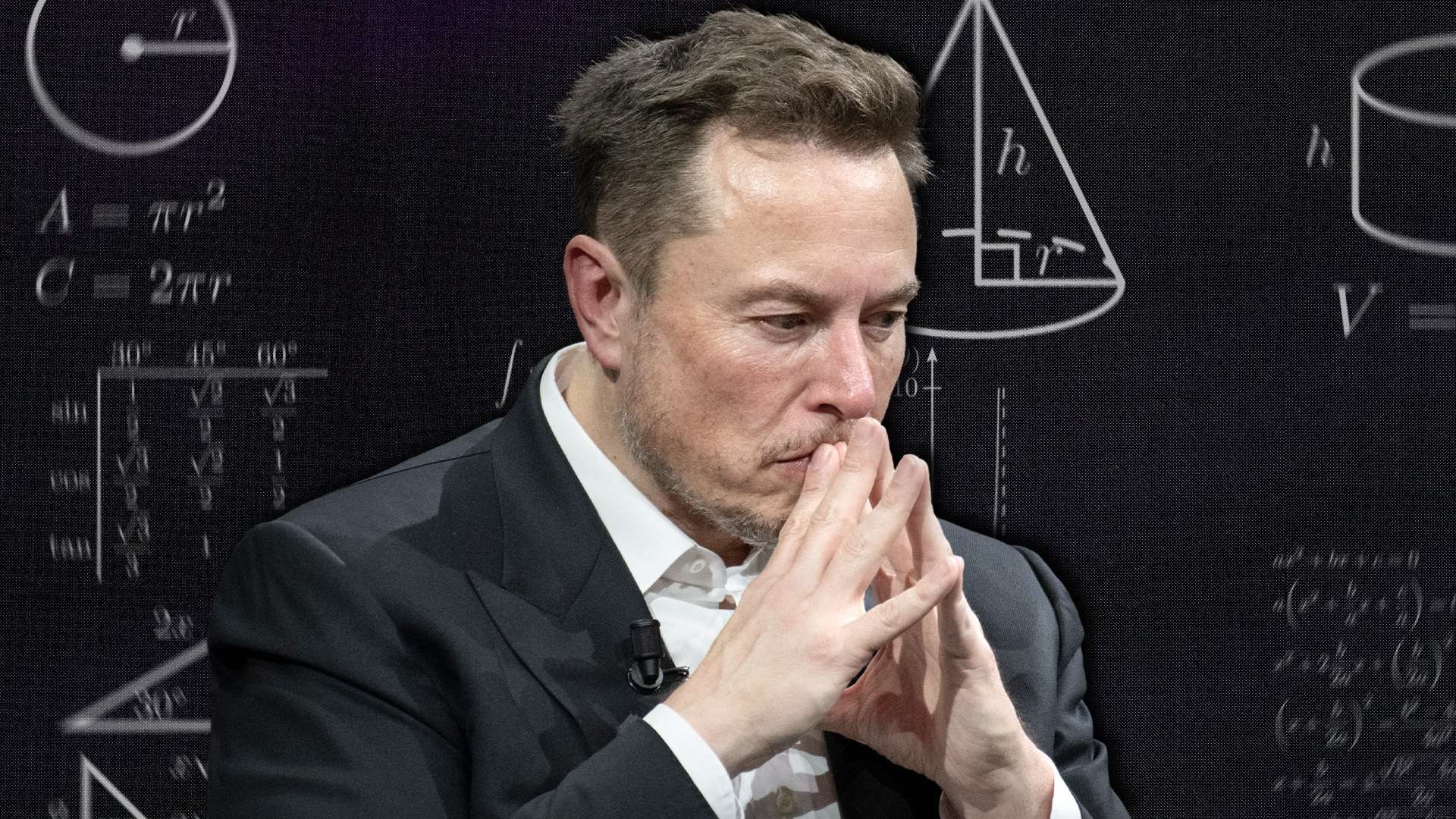
Elon Musk, the world's richest man, spent nearly half a billion dollars in a vain attempt to help Republicans win this month's midterm elections.
asserted
Republicans → spend → elections
"I feel pretty foolish about having spent so much money and not seeing much for it," he told The New York Times last week.
asserted
he → feel → Times
Contrary to what advocates of stricter campaign finance regulation often imply, Musk noted that "American elections are not just about money."
asserted
elections → imply → money
That point was repeatedly confirmed by midterm races that Republicans lost, sometimes by a lot, despite large spending advantages.
asserted
Republicans → confirm → advantages
"Republicans have an enormous financial edge in this year's midterms," Times reporter Shane Goldmacher noted in October.
asserted
Goldmacher → have → October
In the seven U.S. Senate races that the Cook Political Report described as toss-ups, Goldmacher reported, "Republicans are outspending Democrats on advertising by $947 million to $625 million"—"a breathtaking advantage of more than $320 million in the key races that could determine which party wins control of the Senate.
uncertain
party → describe → Senate
Democrats won all those Senate races, plus 15 more.
asserted
Democrats → win → races
In Texas, for example, James Talarico beat Ken Paxton by 12 points, even though pro-Paxton spending, including $212 million that Musk contributed, exceeded pro-Talarico spending by about 35 percent.
asserted
Musk → beat → percent
Money clearly was not enough to make up for the manifest defects of a scandal-plagued candidate like Paxton, who also suffered from his close association with President Donald Trump.
asserted
who → make → Trump
By contrast, that association enabled Paxton to prevail against incumbent Sen. John Cornyn in the Republican primary.
asserted
association → enable → primary
In a contest dominated by the MAGA faithful, Trump's favor easily overcame Cornyn's vastly superior financial resources.
asserted
favor → dominate → resources
Although Cornyn and his supporters outspent Paxton and his allies by more than 3 to 1, Paxton trounced Cornyn in their head-to-head match, winning by more than 27 points.
asserted
Paxton → outspent → points
In addition to beating Paxton in the general election, Democrats won every other statewide contest in Texas, including the elections for governor, lieutenant governor, and attorney general.
asserted
Democrats → beat → governor
That sweep was remarkable enough given recent Texas political history, and it was especially striking because Republicans outspent Democrats by more than 5 to 1 overall and by nearly 8 to 1 in the gubernatorial race, where Gina Hinojosa beat the incumbent, Greg Abbott, by seven points.
asserted
Hinojosa → give → points
In the Ohio gubernatorial race, Republican nominee Vivek Ramaswamy and his supporters outspent Democratic nominee Amy Acton and her allies by nearly 3 to 1.
asserted
Ramaswamy → outspent → 3
Acton won by eight points.
asserted
Acton → win → points
Republican candidate Rick Jackson spent more than $200 million of his own money on his campaign for governor of Georgia.
asserted
Jackson → spend → Georgia
As of October 20, spending on Jackson's behalf totaled about $235 million, compared to $30 million for Democratic nominee Keisha Lance Bottoms.
asserted
spending → total → Bottoms
Despite that 8-to-1 financial advantage, Jackson lost the race by more than eight points.
asserted
Jackson → lose → points
Notwithstanding such conspicuous counterexamples, a 2024 study of House elections from 2000 to 2018 found that campaign spending was positively associated with victory.
asserted
spending → find → victory
In general, a 1 percent increase in campaign spending corresponded with a 6.5-point increase in the probability of winning.
asserted
increase → correspond → winning
But for incumbents, the "marginal effect" was negative, especially when it came to contributions by special-interest groups.
asserted
it → come → groups
The authors echoed the explanation offered by other researchers: Although incumbents start with big advantages, including the name recognition, publicity, support networks, and pork associated with their offices, they face "diminishing returns for the money spent on campaigning," such that "higher campaign spending does not help incumbents much to secure a seat."
asserted
spending → echo → seat
Challengers, by contrast, see "increasing marginal returns for each dollar spent" as they strive to overcome the benefits of incumbency.
asserted
they → see → incumbency
Given that difference, limits on campaign spending are unlikely to reduce the dauntingly high reelection rates for members of Congress, which averaged about 93 percent for the House and 88 percent for the Senate from 2010 through 2024.
asserted
which → give → 2024
To the contrary, such restrictions would further undermine competitiveness by making it even harder to throw the bums out.
asserted
it → undermine → bums
 The Aporia