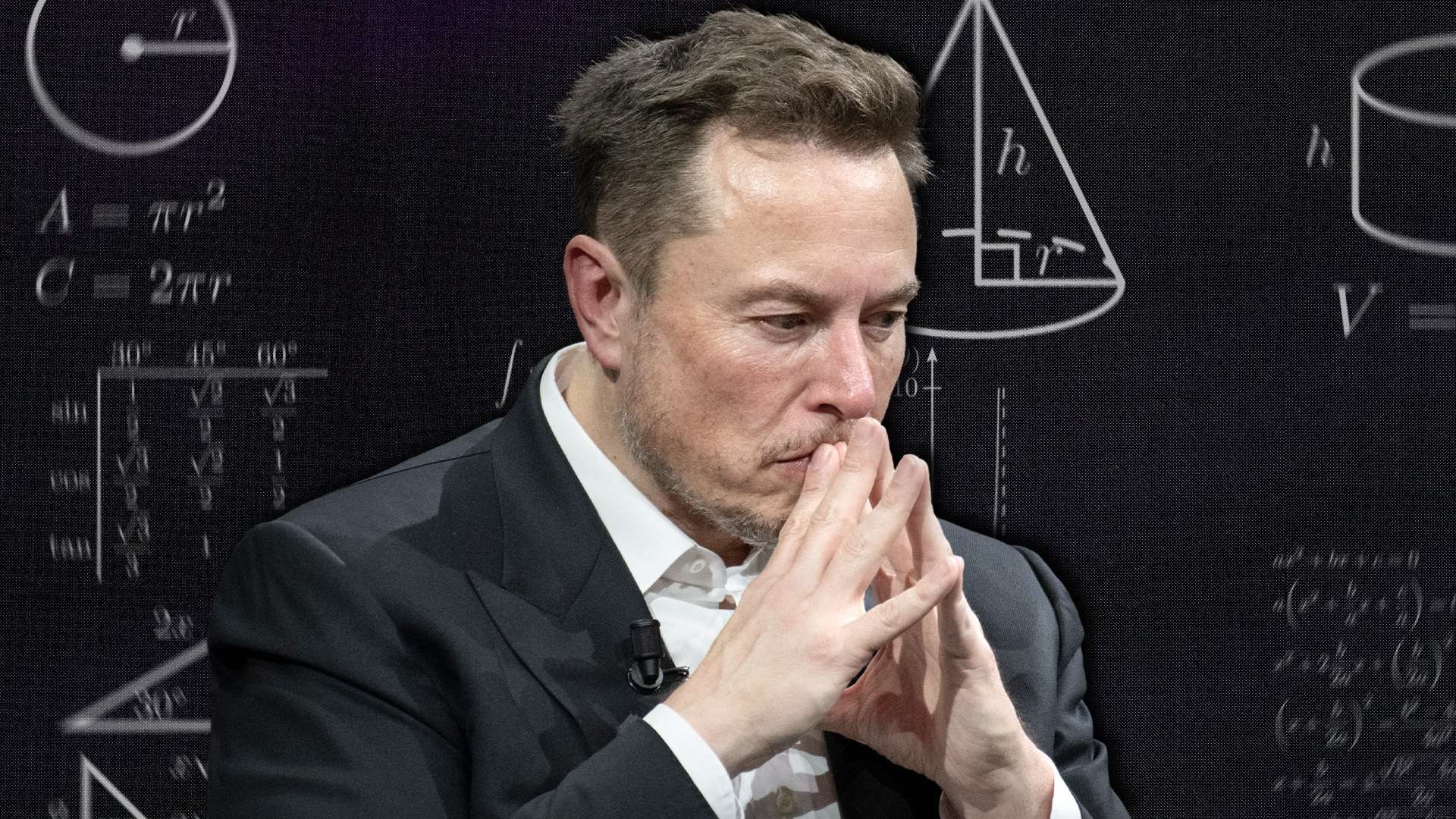
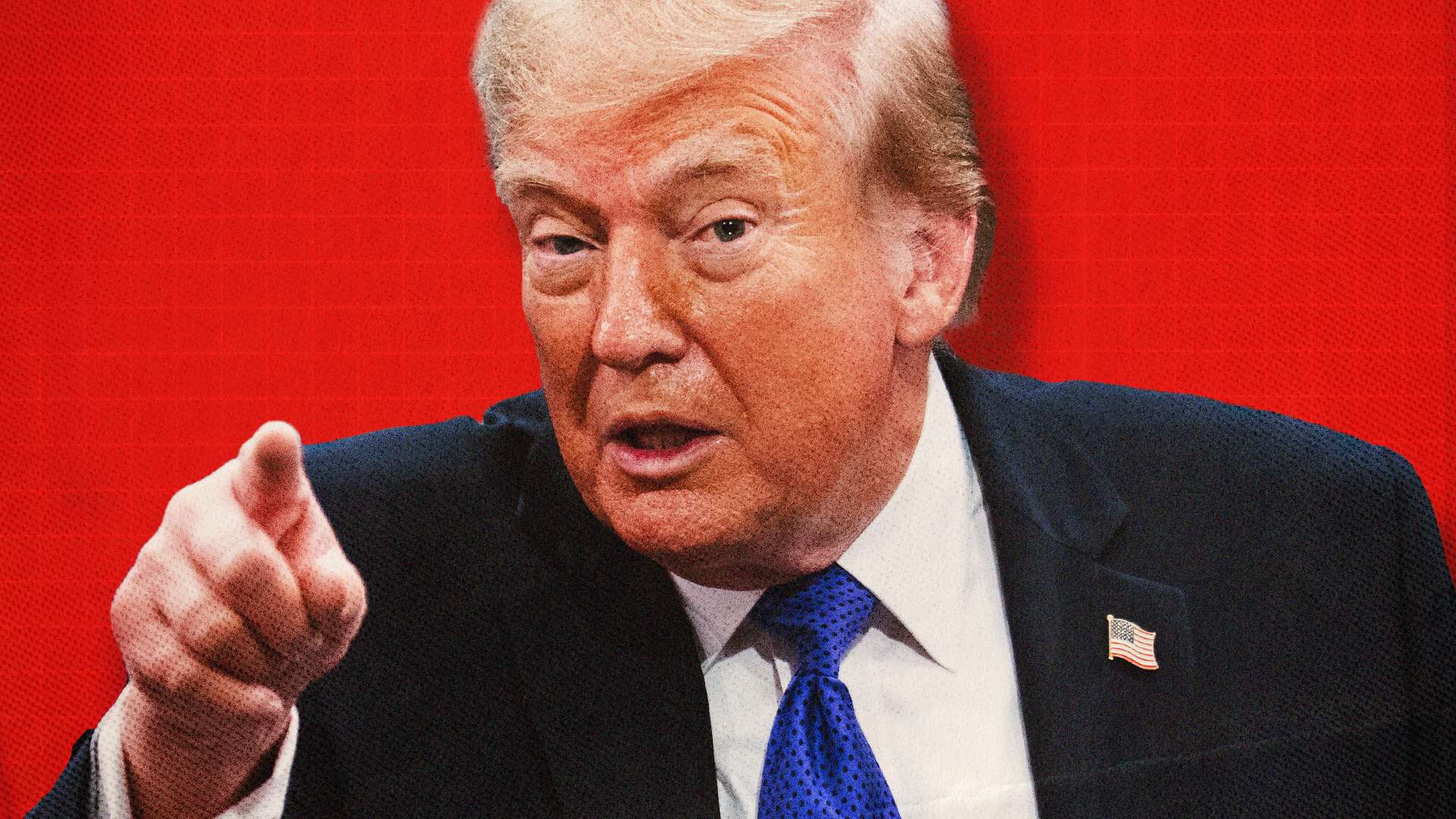
Photo via Reason

Elon Musk Discovers That 'American Elections Are Not Just About Money'

Read the original at Reason ↗
Cite

Sullum, J. (2026, November 25). Elon Musk Discovers That 'American Elections Are Not Just About Money'. Reason. https://reason.com/2026/11/25/elon-musk-discovers-that-american-elections-are-not-just-about-money/

Dated from the outlet's own feed. Check the original for its byline.

Reason · collected 2026-11-25 · by Jacob Sullum

Quick Summary

Elon Musk, the world's richest man, spent nearly half a billion dollars in an effort to help Republicans win the recent midterm elections but saw little return on his investment. In an interview with The New York Times, Musk acknowledged that "American elections are not just about money," noting that despite significant financial advantages, Republicans lost several key races. For instance, in Texas, Democrat James Talarico defeated Republican Ken Paxton despite pro-Paxton spending, including $212 million from Musk, far exceeding pro-Talarico spending. Democrats also won all seven U.S. Senate races described as toss-ups, despite Republicans having a $320 million spending advantage in these races.
Written by AI on 2026-11-25, from this article's own text only (the story summary below draws on all the coverage).

Compared with similar articles

This article reads leans strongly right and hedges 4% of its claims. Each row says how that neighbour differs.
The Guardian
Leans right further left than this Hedges 5 of 67 claims Outlet record 63/100
“While both articles discuss Elon Musk's regret over spending money on the Republican Party, they describe different parts of the same conversation and do not focus on the same specific incident or outcome.”

Story

Elon Musk On Elections
Politics · 1 article(s) covering the same event.
How this article was measured signals, leaning charts, publisher record, byline, topics and claims

Signals How these are calculated →

Claims extracted
26
sentences that state something as happening or true
Uncertain
4%
1 of 26 hedged ("reportedly", "may", "according to")
Leaning
Leans strongly right
of the writing, not the subject · beta estimate
Publisher signals
65/100
Reason's corrections and hedging, across everything collected from it. Not a measure of accuracy.
Outlets on this story
1
Politics
Same framing elsewhere
1
articles that frame the event the way this one does
Analyzed 2026-11-25 · how these are computed

How this is being covered How these are calculated →

Article leaning vs. publisher reliability
Source leaning vs. consistency

Publisher

Reason · 1559 article(s) · 5 correction(s) detected
Running correction rate · 5 correction(s)

Who wrote this

Jacob Sullum
50 article(s) here · 1 carrying a prediction
"No one doubts that the Commission may enforce the law in the manner it sees fit.
As Reason's C.J. Ciaramella notes in his recent story about one such prisoner, that situation inspired a judicial solution that the Supreme Court deemed out of bounds last May in Rutherford v. United States: resentencing based on "extraordinary and compelling reasons" under the FIRST STEP Act.
In the seven U.S. Senate races that the Cook Political Report described as toss-ups, Goldmacher reported, "Republicans are outspending Democrats on advertising by $947 million to $625 million"—"a breathtaking advantage of more than $320 million in the key races that could determine which party wins control of the Senate.
The petitioners in Khaya v. Cook County (previously Viramontes v. Cook County) and Grant v. Higgins, including the Firearms Policy Coalition (FPC) and the Second Amendment Foundation (SAF), want the justices, who will hear oral argument in those consolidated cases on December 2, to overturn decisions by two federal appeals courts that deemed the AR-15 bans constitutional.
Although Attorney General Todd Blanche seemed willing to comply, he did not suggest that anything Democrats had said or planned to do fit the elements of extortion.
Contrary to the implication of that label, the initiative affected many people who had no criminal convictions that would justify revoking their visas.
Trump also averred that his projects do not involve much money, although the ballroom alone is expected to cost around $600 million, half of which will be covered by taxpayers.
Last week, the city of Delray Beach, Florida, announced that it will not organize or sponsor next year's St. Patrick's Day parade, citing a state law that takes effect on January 1.
That means SSJC members cannot even legally transport their guns to the vicinity of the synagogue on those occasions, since they would pass within 300 feet of parks, schools, and other houses of worship while walking there.
In a 60 Minutes interview that aired on Sunday night, President Donald Trump conceded that his mass deportation campaign may have contributed to the Republican rout in last week's midterm elections because "a lot of people think it's too tough."
2026-11-11 · assertive framing · Trump Debates Mass Deportation With Himself
Also by Jacob Sullum
Nothing else under this byline is closely related to this article, so these are simply their most recent.
All 50 articles by Jacob Sullum →

Topics

Democrats Republican Republicans Senate Texas

Subjects

Paxton PERSON · 5× Republicans NORP · 5× Democrats NORP · 4× Texas GPE · 4× Cornyn PERSON · 3× Republican NORP · 3× Democratic NORP · 2× Jackson PERSON · 2× Musk PERSON · 2× Senate ORG · 2×

Narrative

The authors echoed the explanation offered by other researchers: Although incumbents start with big advantages, including the name recognition, publicity, support networks, and pork associated with their offices, they face "diminishing returns for the money spent on campaigning," such that "higher campaign spending does not help incumbents much to secure a seat."
framing: assertive · carried by 1 article(s) · first seen 2026-11-25
In the seven U.S. Senate races that the Cook Political Report described as toss-ups, Goldmacher reported, "Republicans are outspending Democrats on advertising by $947 million to $625 million"—"a breathtaking advantage of more than $320 million in the key races that could determine which party wins control of the Senate.

Claims (26 extracted, 1 hedged)

Elon Musk, the world's richest man, spent nearly half a billion dollars in a vain attempt to help Republicans win this month's midterm elections. asserted
Republicans → spend → elections
"I feel pretty foolish about having spent so much money and not seeing much for it," he told The New York Times last week. asserted
he → feel → Times
Contrary to what advocates of stricter campaign finance regulation often imply, Musk noted that "American elections are not just about money." asserted
elections → imply → money
That point was repeatedly confirmed by midterm races that Republicans lost, sometimes by a lot, despite large spending advantages. asserted
Republicans → confirm → advantages
"Republicans have an enormous financial edge in this year's midterms," Times reporter Shane Goldmacher noted in October. asserted
Goldmacher → have → October
In the seven U.S. Senate races that the Cook Political Report described as toss-ups, Goldmacher reported, "Republicans are outspending Democrats on advertising by $947 million to $625 million"—"a breathtaking advantage of more than $320 million in the key races that could determine which party wins control of the Senate. uncertain
party → describe → Senate
Democrats won all those Senate races, plus 15 more. asserted
Democrats → win → races
In Texas, for example, James Talarico beat Ken Paxton by 12 points, even though pro-Paxton spending, including $212 million that Musk contributed, exceeded pro-Talarico spending by about 35 percent. asserted
Musk → beat → percent
Money clearly was not enough to make up for the manifest defects of a scandal-plagued candidate like Paxton, who also suffered from his close association with President Donald Trump. asserted
who → make → Trump
By contrast, that association enabled Paxton to prevail against incumbent Sen. John Cornyn in the Republican primary. asserted
association → enable → primary
In a contest dominated by the MAGA faithful, Trump's favor easily overcame Cornyn's vastly superior financial resources. asserted
favor → dominate → resources
Although Cornyn and his supporters outspent Paxton and his allies by more than 3 to 1, Paxton trounced Cornyn in their head-to-head match, winning by more than 27 points. asserted
Paxton → outspent → points
In addition to beating Paxton in the general election, Democrats won every other statewide contest in Texas, including the elections for governor, lieutenant governor, and attorney general. asserted
Democrats → beat → governor
That sweep was remarkable enough given recent Texas political history, and it was especially striking because Republicans outspent Democrats by more than 5 to 1 overall and by nearly 8 to 1 in the gubernatorial race, where Gina Hinojosa beat the incumbent, Greg Abbott, by seven points. asserted
Hinojosa → give → points
In the Ohio gubernatorial race, Republican nominee Vivek Ramaswamy and his supporters outspent Democratic nominee Amy Acton and her allies by nearly 3 to 1. asserted
Ramaswamy → outspent → 3
Acton won by eight points. asserted
Acton → win → points
Republican candidate Rick Jackson spent more than $200 million of his own money on his campaign for governor of Georgia. asserted
Jackson → spend → Georgia
As of October 20, spending on Jackson's behalf totaled about $235 million, compared to $30 million for Democratic nominee Keisha Lance Bottoms. asserted
spending → total → Bottoms
Despite that 8-to-1 financial advantage, Jackson lost the race by more than eight points. asserted
Jackson → lose → points
Notwithstanding such conspicuous counterexamples, a 2024 study of House elections from 2000 to 2018 found that campaign spending was positively associated with victory. asserted
spending → find → victory
In general, a 1 percent increase in campaign spending corresponded with a 6.5-point increase in the probability of winning. asserted
increase → correspond → winning
But for incumbents, the "marginal effect" was negative, especially when it came to contributions by special-interest groups. asserted
it → come → groups
The authors echoed the explanation offered by other researchers: Although incumbents start with big advantages, including the name recognition, publicity, support networks, and pork associated with their offices, they face "diminishing returns for the money spent on campaigning," such that "higher campaign spending does not help incumbents much to secure a seat." asserted
spending → echo → seat
Challengers, by contrast, see "increasing marginal returns for each dollar spent" as they strive to overcome the benefits of incumbency. asserted
they → see → incumbency
Given that difference, limits on campaign spending are unlikely to reduce the dauntingly high reelection rates for members of Congress, which averaged about 93 percent for the House and 88 percent for the Senate from 2010 through 2024. asserted
which → give → 2024
To the contrary, such restrictions would further undermine competitiveness by making it even harder to throw the bums out. asserted
it → undermine → bums

Give feedback · no sign-in needed

No sign-in needed for now. Your note is sent without a name, so it cannot be answered.

History Support