Last week, while visiting a
, also known as Angola, 60 Minutes contributor Sebastian Junger met some men who are behind bars even though the jury's verdict wasn't unanimous in their cases.
asserted
verdict → visit → cases
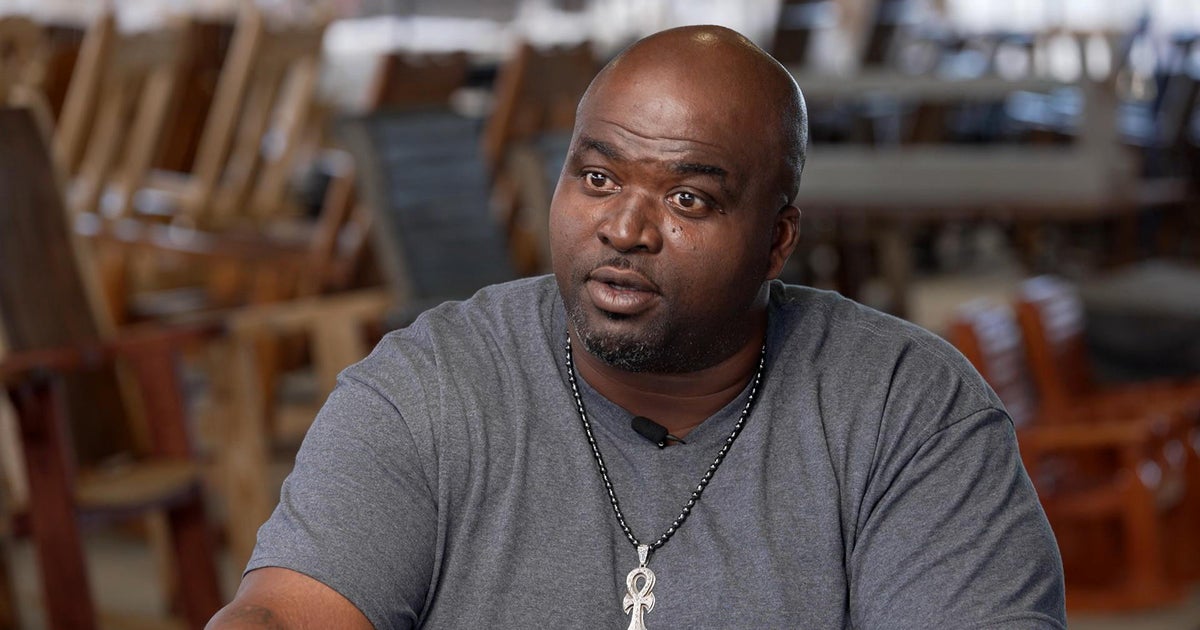
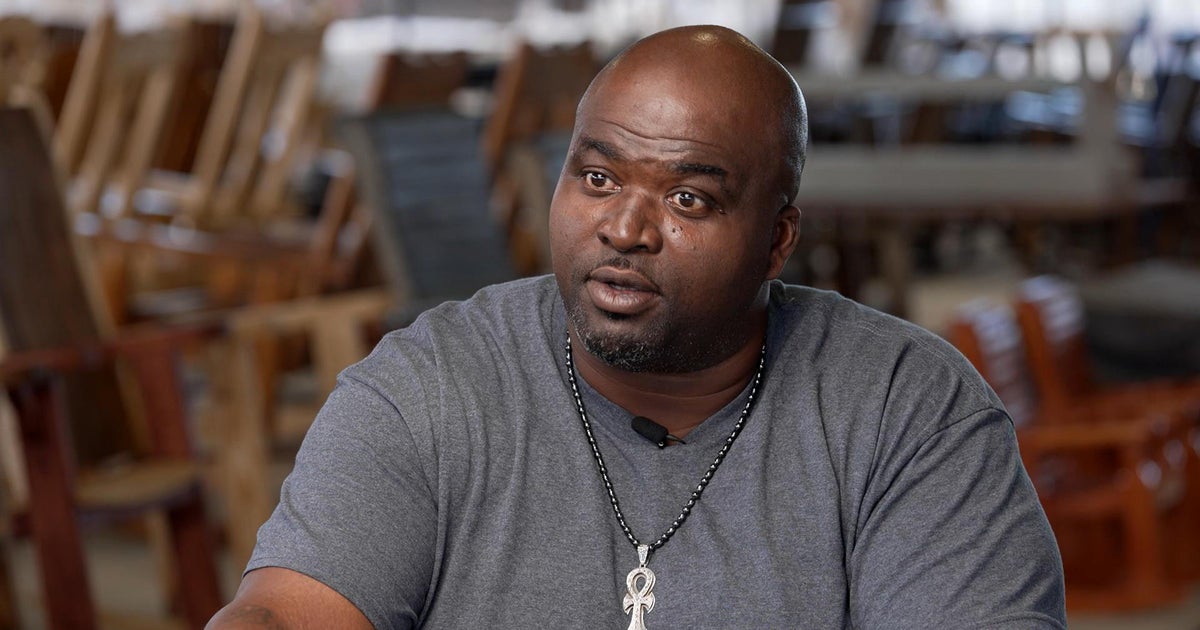
One of them, Kenny Palmer – nicknamed "300" – sells art and crafts at the rodeo, which has been dubbed the "Wildest Show in the South."
asserted
which → nickname → South
He makes chess boards, wooden jewelry and other crafts by hand.
asserted
He → make → hand
Palmer hopes to send some of the profits to his niece.
asserted
Palmer → hop → niece
Almost 20 years ago, Palmer was sentenced to life without parole for killing a man in a drug deal.
asserted
Palmer → sentence → deal
The jury at his trial was split 10-2, with two voting not guilty.
asserted
two → split → trial
But Palmer was still convicted under a Louisiana law, which, at the time, allowed for non-unanimous jury convictions, or split jury convictions.
asserted
which → convict → convictions
"The only Black woman on there [and] the one elderly White woman voted not guilty," Palmer told Junger in an interview.
asserted
Palmer → vote → interview
Palmer said prosecutors have an unfair advantage when split jury convictions are allowed.
asserted
convictions → say → advantage
"You're able to convict me with a reasonable doubt….
asserted
You → convict → doubt
I'm supposed to be given either a new trial or be given a plea bargain," he told Junger.
asserted
he → suppose → Junger
"The non-unanimous jury system is like fighting a 10,000-pound silverback gorilla on steroids.
asserted
system → fight → steroids
How can you win?" Palmer said.
asserted
Palmer → win → ?
Non-unanimous juries date back to 1880 and were created to dilute Black voices in the justice system.
asserted
juries → date → system
The practice was enshrined in the Louisiana Constitution in 1898 during a constitutional convention that hoped to "establish the supremacy of the white race in the state."
asserted
that → enshrine → state
Then, in 2020, the United States Supreme Court declared non-unanimous jury convictions unconstitutional.
asserted
convictions → declare → 2020
Oregon and Louisiana were the only states that allowed split jury convictions at the time.
asserted
that → allow → time
The Supreme Court ultimately left it up to the states to decide whether the ruling would apply retroactively.
asserted
ruling → leave → states
Oregon chose to apply the law retroactively, resulting in hundreds of convictions being overturned.
asserted
hundreds → choose → convictions
Louisiana, however, did not.
asserted
Louisiana → do → ?
Inmate John Corley is serving a life sentence without parole for second-degree murder.
asserted
Corley → serve → murder
"I was convicted by a 10-2 jury….
asserted
I → convict → jury
If I were convicted today, I would not-- well, I wouldn't be convicted.
asserted
I → convict → ?
They can't do it today," he told Junger in an interview.
asserted
he → do → interview
Corley explained that after the U.S. Supreme Court let the state of Louisiana decide whether to apply the ruling retroactively, the Louisiana Supreme Court passed the buck, saying it should be decided through legislation.
asserted
it → explain → legislation
But because of a lack of political will and partisan politics, Corley said, efforts to overturn those convictions through legislation have been unsuccessful.
asserted
efforts → say → legislation
"The legislature says, 'Well, we're not gonna mess with that.'
asserted
we → say → that
And so we're still fighting," Corley said.
asserted
Corley → fight → ?
There are almost 800 people still incarcerated in Louisiana that were convicted by non-unanimous juries, according to the Promise of Justice Initiative.
uncertain
that → be → Initiative
Palmer now works as an advocate for those inmates, working with the 10-2 Committee for Equal Justice.
asserted
Palmer → work → Justice
"What are you fighting for?" Junger asked Palmer
"To get out of here.
asserted
Junger → fight → Palmer
That's what makes me the freedom fighter I am," Palmer said.
asserted
Palmer → make → ?
"We got people who've been locked up… 30, 40, 50 years on this law, " he said.
asserted
he → get → law
"Only thing we asking for is equal protection.
asserted
we → ask → ?
We just want the same protection that everybody else in the country got."
asserted
everybody → want → country
The video above was produced by Will Croxton and Nelson Ryland.
asserted
video → produce → Croxton
It was edited by Nelson Ryland.
asserted
It → edit → Ryland
 The Aporia