Photo via Times of India

Utah banker mailed 37 tons of bricks to build a bank, forcing postal rule changes

Read the original at Times of India ↗
Cite

TOI World Desk. (2026, November 24). Utah banker mailed 37 tons of bricks to build a bank, forcing postal rule changes. Times of India. https://timesofindia.indiatimes.com/world/us/in-1916-a-utah-banker-mailed-about-15000-bricks-roughly-37-tons-nearly-400-miles-by-parcel-post-to-build-the-bank-of-vernal-because-it-was-cheaper-than-freight-and-the-us-post-office-quickly-changed-its-rules/articleshow/136123479.cms

Dated from the outlet's own feed. Check the original for its byline.

Times of India · collected 2026-11-24 · by TOI World Desk

Quick Summary

In 1916, a Utah banker named William Horace Coltharp faced the challenge of building a brick bank in Vernal, where transporting bricks by truck was prohibitively expensive. He found a solution by mailing 37 tons of bricks in 1,500 separate parcels, each under the postal service’s 50-pound limit, over a 390-mile route via rail and freight wagons. This creative use of the newly established parcel post service, which had originally set a weight limit of 11 pounds and was increased to 50 pounds due to popularity, saved money but also prompted postal authorities to reconsider the practical limits of their service.
Written by AI on 2026-11-25, from this article's own text only (the story summary below draws on all the coverage).

AI analysis

Story summary

In 1916, a Utah banker in Vernal, a remote town, mailed nearly 37 tons of bricks to build a modern, fire-resistant bank, prompting postal authorities to reconsider their rules for parcel post. The closest brick source was the Salt Lake Pressed Brick Company in Salt Lake City, but the cost of transporting bricks over poor roads was prohibitively high. The banker opted to use the postal service instead, which was an unconventional yet financially viable solution at the time. This decision not only helped construct a historic bank but also led postal officials to evaluate the extent to which they could use the mail system for large-scale deliveries. The unusual episode highlights the ingenuity and flexibility of early American postal services.

Written for “Utah Banker's Brick Mailings” on 2026-11-25, grounded in this article and the 0 other(s) covering the same event.
Why this leaning score
This article does not take a side on a contested political question, so it has no leaning score. That is an answer rather than a gap: a match report or a rescue can be warmly or critically written without being left or right, and scoring it anyway is how approval of a subject gets recorded as a political position.
No political leaning scored for article 177933 · logged 2026-11-25

Compared with similar articles

Nothing to compare against. No article is close enough to this one for the pipeline to have linked or judged the pair.

Story

Utah Banker's Brick Mailings
Other · 1 article(s) covering the same event.
How this article was measured signals, leaning charts, publisher record, byline, topics and claims

Signals How these are calculated →

Claims extracted
35
sentences that state something as happening or true
Uncertain
14%
5 of 35 hedged ("reportedly", "may", "according to")
Leaning
not political
takes no side on a contested political question
Publisher signals
58/100
Times of India's corrections and hedging, across everything collected from it. Not a measure of accuracy.
Outlets on this story
1
Other
Same framing elsewhere
1
articles that frame the event the way this one does
Analyzed 2026-11-25 · how these are computed

How this is being covered How these are calculated →

Article leaning vs. publisher reliability
Source leaning vs. consistency

Publisher

Times of India · 5767 article(s) · 9 correction(s) detected
Running correction rate · 9 correction(s)

Who wrote this

TOI World Desk
1688 article(s) here · 1 carrying a prediction
The family called local snake catcher Daniel May to remove the unexpected visitor.
The proposed building would have been positioned 10.1 feet from the property line, instead of the prescribed 20 feet.
The extraordinary decision helped build a historic bank in a remote town but also forced postal authorities to rethink how far they could stretch parcel post.
New York City’s plan to end its horse-drawn carriage industry is facing an immediate legal challenge, with the union representing carriage drivers and owners taking the fight to federal court just minutes after Mayor Zohran Mamdani signed the ban into law.
The money will go towards the daughter's ongoing hospital treatment and recovery, Ashok's funeral and memorial expenses, and the family's everyday living costs.
The new arrangement changed how people could move between the parking lot and the neighbouring shopping centre.
The Ohio Sixth District Court of Appeals overturned a lower court decision that had dropped a contempt ruling against Willard H. Sturt and lowered what he owed.
He entered government as China's environmental protection minister before becoming mayor of Beijing.
The former home of late film critic and journalist Rex Reed, located inside New York City’s celebrated Dakota building, is being offered for $5,999,000, with proceeds from the sale and an accompanying estate auction set to support the Rex Reed Foundation.
How will the $1,000 contributions work?
Wire or desk byline, not an individual reporter.
Also by TOI World Desk
Nothing else under this byline is closely related to this article, so these are simply their most recent.
All 1688 articles by TOI World Desk →

Topics

Almanac America Salt Lake City Utah Vernal

Subjects

Vernal GPE · 4× Salt Lake City GPE · 3× Almanac ORG · 2× Coltharp PERSON · 2× Utah GPE · 2× the National Postal Museum ORG · 2× the United States Postal Service ORG · 2× America GPE · 1× the Bank of Vernal’s ORG · 1× the Salt Lake Pressed Brick Company ORG · 1×

Narrative

Postal authorities move to change the rules Eventually the huge shipments of bricks attracted the attention of postal officials, who wondered whether the postal service should be used to deliver such large quantities of building material.
framing: assertive · carried by 1 article(s) · first seen 2026-11-25
The extraordinary decision helped build a historic bank in a remote town but also forced postal authorities to rethink how far they could stretch parcel post.

Claims (35 extracted, 5 hedged)

When does it become financially viable to ship a whole building's worth of bricks by postal service, as opposed to trucking them in? asserted
it → become → them
In 1916 a Utah banker discovered an unconventional solution to an expensive construction problem by using the US mail system as an unlikely delivery service for almost 37 tons of building material. asserted
banker → discover → material
The extraordinary decision helped build a historic bank in a remote town but also forced postal authorities to rethink how far they could stretch parcel post. uncertain
they → build → post
It was a quirky episode, and it became one of the more memorable examples of the possibilities and the limits of America’s early parcel post. asserted
it → become → post
According to the United States Postal Service, the Bank of Vernal’s directors aimed to build a modern, fire-resistant building for their community in 1916. uncertain
directors → accord → 1916
It was to be a two-storey structure 70 feet by 97 feet with pressed brick on the outside. asserted
It → press → outside
The cost of hauling the brick over bad roads was high. asserted
cost → haul → roads
The Almanac reports the expected cost to truck in the 15,000 bricks was roughly $2,250, potentially putting the construction project in jeopardy. asserted
cost → report → jeopardy
Rather than scrapping the idea, one of the bank’s directors, William Horace Coltharp, began exploring other transportation options. asserted
one → scrap → options
How the parcel post became the solution Coltharp found that the postal rules were a much cheaper option. asserted
rules → become → ?
Parcel post, which had been established in 1913, had revolutionized the movement of merchandise throughout the United States by making it possible for ordinary customers to send heavier packages by the postal system. asserted
customers → establish → system
According to the National Postal Museum, before the parcel post, private express companies were the primary carriers of goods weighing more than four pounds. uncertain
companies → accord → pounds
The introduction of the service made shipping much more readily available, especially for communities off the railroad networks. asserted
shipping → make → networks
At first, the weight limit for parcel post was 11 pounds, but because of its popularity, it was expanded to 50 pounds within a year. asserted
it → expand → year
Coltharp spotted the opportunity, and arranged to break the bricks into smaller shipments. asserted
Coltharp → spot → shipments
Each package contained about 10 bricks, carefully wrapped in paper and placed in wooden crates that weighed under 50 pounds. asserted
that → contain → pounds
The entire order contained something like 1,500 separate parcels. asserted
order → contain → parcels
A 390 mile journey via several routes The postal shipment, which came from Vernal, only about 125 miles away by road, traveled nearly 390 miles on a complicated transportation network to get to Salt Lake City. asserted
which → come → City
According to the Almanac, the crates were shipped first by rail from Salt Lake City to Mack, Colorado. uncertain
crates → accord → Mack
They were then taken by narrow gage railroad to Watson, Co. asserted
They → take → Watson
The last leg was freight wagons to haul the packages approximately 65 miles to Vernal. asserted
leg → haul → Vernal
The unusual route reflected the limitations of the transportation infrastructure in the region. asserted
route → reflect → region
Vernal did not lie directly on the rail network, making regular freight deliveries difficult and costly. asserted
deliveries → lie → network
The National Postal Museum notes that the town was receiving about two tons of mail each day. asserted
town → note → mail
Postal authorities move to change the rules Eventually the huge shipments of bricks attracted the attention of postal officials, who wondered whether the postal service should be used to deliver such large quantities of building material. asserted
service → move → material
The United States Postal Service says the rules limited shipments from a single sender to a single recipient to 200 pounds per day. asserted
rules → say → day
The bank directors, however, found another way to complete the deliveries. asserted
directors → find → deliveries
They recruited local farmers, ranchers and residents to each accept the packages. asserted
They → recruit → packages
When the crates arrived, these volunteers carried them from the post office to the building site. asserted
volunteers → arrive → site
The arrangement enabled the project to continue under the new restrictions. asserted
arrangement → enable → restrictions
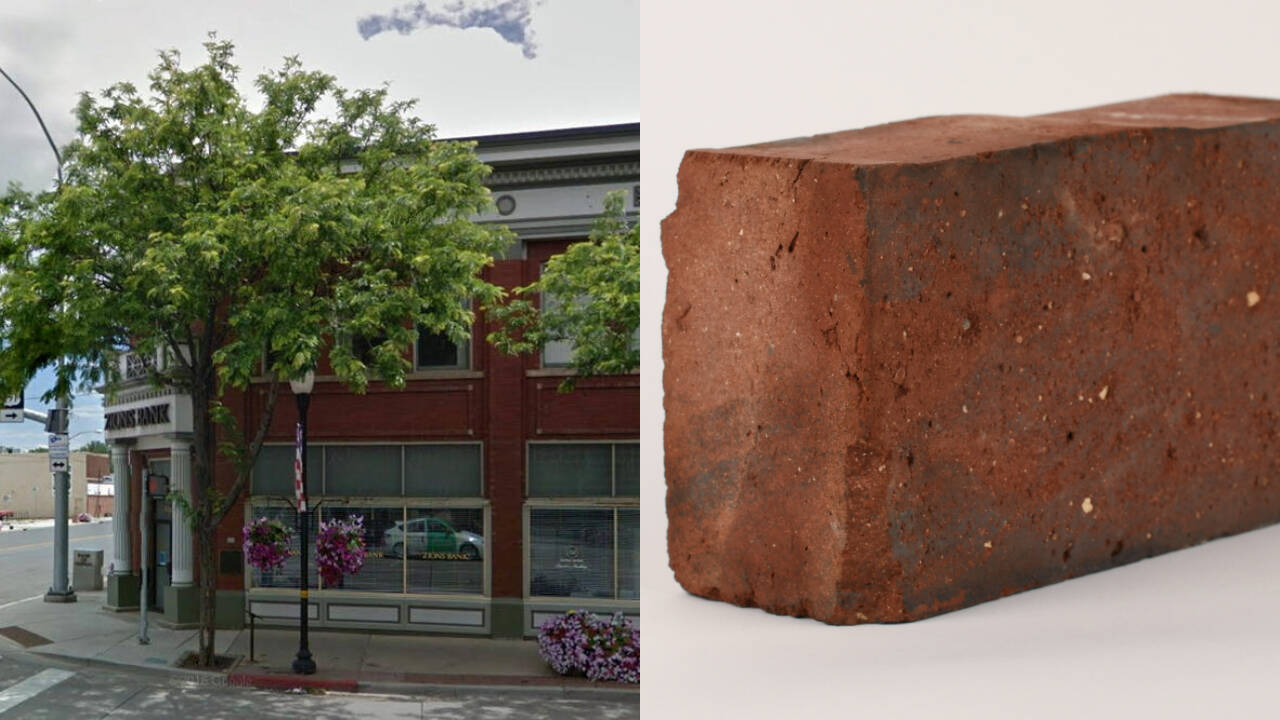
A curious postal legacy and a historic building The Bank of Vernal was finished at last, the first brick building in town. asserted
Bank → finish → town
The structure still exists today as a reminder of the extraordinary postal arrangement. asserted
structure → exist → arrangement
The National Postal Museum has preserved one of the building’s original bricks to demonstrate the importance of the parcel post in linking America’s far-flung communities. asserted
Museum → preserve → communities
The episode also showed how cheap postal services could encourage rural commerce, construction and access to consumer goods. uncertain
services → show → goods
What started as a cost-saving move by a Utah banker eventually revealed a loophole in postal regulations and led to a change in shipping rules, leaving behind an unusual chapter in American postal history. asserted
started → start → history

Give feedback · no sign-in needed

No sign-in needed for now. Your note is sent without a name, so it cannot be answered.

History Support