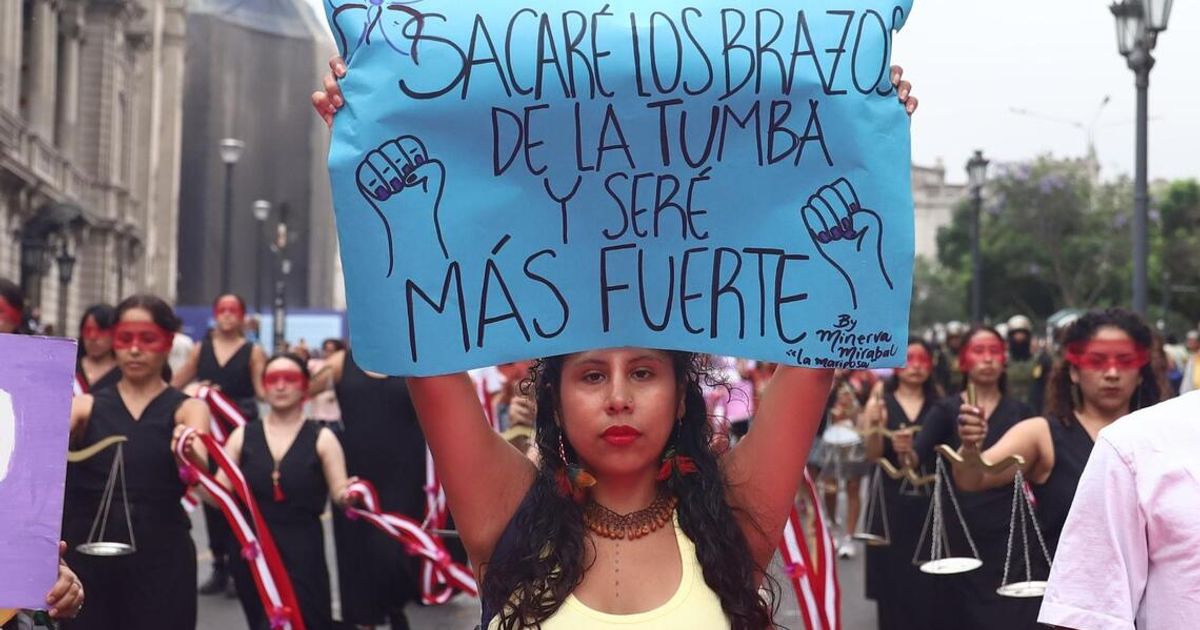
About 47,000 women and girls were killed intentionally by an intimate partner or family member last year, according to new data from the United Nations Office on Drugs and Crime (UNODC) and UN Women.
uncertain
women → kill → Drugs
The 2026 Femicide Brief, published on Tuesday, marked the International Day for the Elimination of Violence against Women.
asserted
Brief → publish → Women
Recommended Stories
list of 4 items- list 1 of 4Pakistan urged to declare femicide emergency amid surge in killings
- list 2 of 4Fear and anger in South Africa as bodies of nine women found: What we know
- list 3 of 4South African police discover body of 11th woman near Johannesburg
- list 4 of 4South
asserted
police → urge → Johannesburg
president orders action on femicide after killings
The report found that home remains the most dangerous place for a woman or girl, “a pattern that has barely shifted in years”, UN Women said in a statement.
asserted
Women → order → statement
About 60 percent of last year’s 78,000 femicides were committed by an intimate partner or family member.
asserted
percent → commit → partner
That amounts to five women being killed every hour, or 129 per day, on average.
asserted
women → amount → day
While the 47,000 figure is lower than the 2024 estimate of 50,000 victims, this change is largely due to improvements and not indicative of an actual decrease, the UN statement said.
asserted
statement → say → decrease
The femicides took place across the globe, with no region safe from such violence.
asserted
femicides → take → violence
“Africa remains the continent with the highest rate of victims of intimate partner/family member femicide (2.9 victims per 100,000 female population), followed by the Americas (1.4 victims), Oceania (1.1 victims), Asia (0.6 victims), and Europe (0.5 victims),” UN Women said.
asserted
Women → remain → Americas
“For far too long, we have seen alarming statistics,” Executive Director of UNODC Monica Juma said in the statement.
asserted
Juma → see → statement
“Frightening attitudes, social norms, and the failure of institutional safeguards create an environment in which killing a wife, daughter, mother, or sister becomes ‘tolerable’.”
asserted
killing → create → wife
Juma called for action across all levels of society, including strategies targeted at changing societal behaviour and harmful attitudes, and investing in specialised programmes and interventions to “deal with perpetrators of domestic violence, protect women, and secure their human rights and dignity”.
asserted
Juma → call → rights
Femicide is rarely an isolated act, but rather the final one in a long pattern of violence, threats, and abuse, said UN Women.
asserted
Women → say → violence
Yet, most women and girls never seek help or are left without protection, while “perpetrators escape justice their entire lives”.
asserted
perpetrators → seek → justice
“We must ensure women can report violence safely, access protection, and receive support before it is too late,” said UN Women Executive Director Sima Bahous.
asserted
Bahous → ensure → support
“When warning signs go unreported, cases are not properly investigated, women and girls are not protected and perpetrators are not brought to justice, the consequences can be fatal.”
asserted
consequences → go → justice
The UN has found that while homicide rates globally have declined, femicide rates have done so at a slower pace.
asserted
rates → find → pace
In fact, between 2010 and last year, homicide rates declined nearly twice as fast as femicide rates in the Americas, and about 1.5 times as fast in Europe.
asserted
rates → decline → Europe
 The Aporia