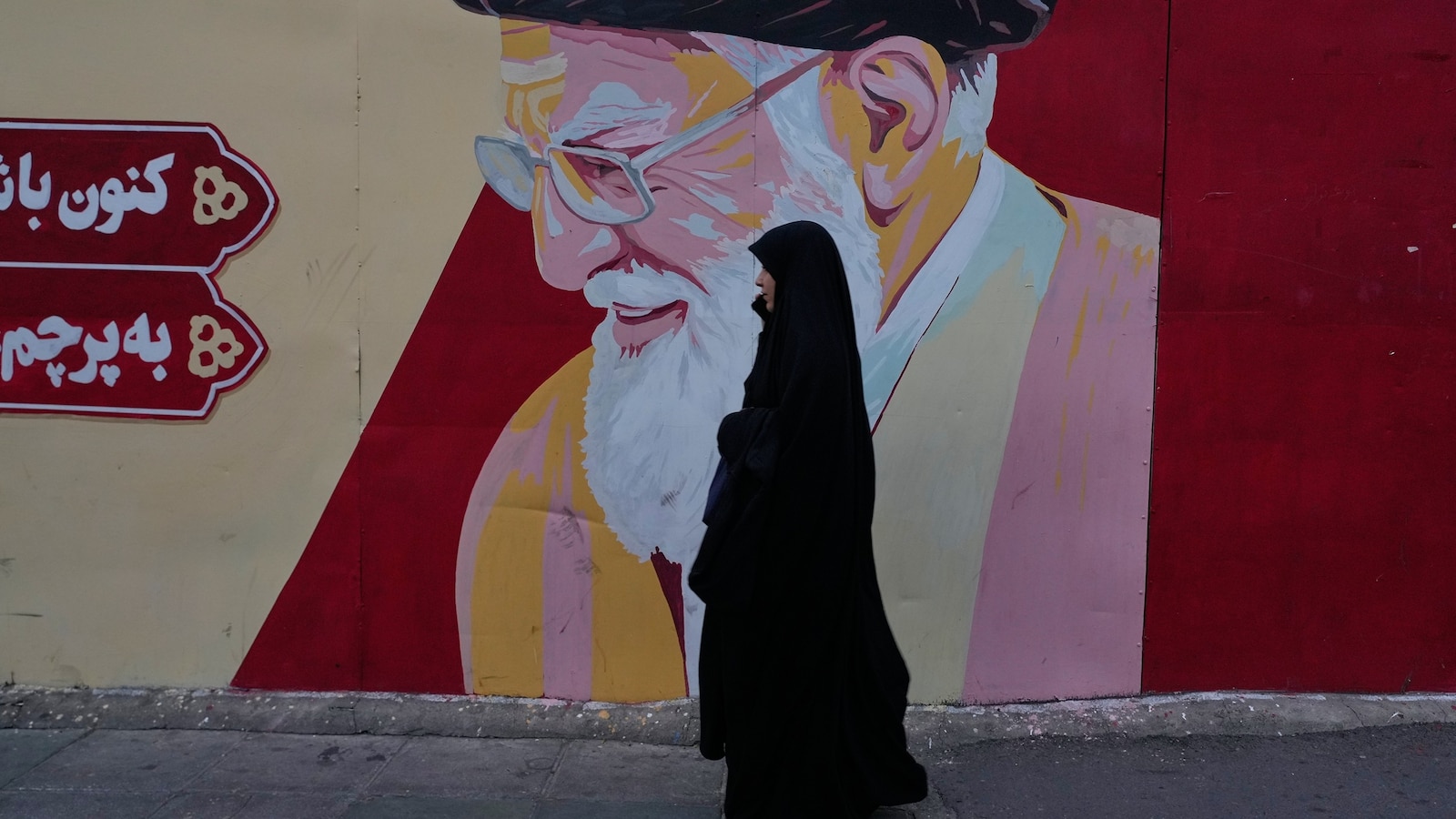
Photo via Al Jazeera

How the Iran war is reshaping the US military presence in the Middle East

Read the original at Al Jazeera ↗
Cite

Farooq, U. (2026, November 24). How the Iran war is reshaping the US military presence in the Middle East. Al Jazeera. https://www.aljazeera.com/news/2026/11/24/how-the-iran-war-is-reshaping-the-us-military-presence-in-the-middle-east?traffic_source=rss

Dated from the outlet's own feed. Check the original for its byline.

Al Jazeera · collected 2026-11-24 · by Umar Farooq

Quick Summary

The United States has approximately 50,000 troops and 19 major military installations across the Middle East, including bases in Bahrain, Jordan, and Saudi Arabia. The ongoing Iran war has led to significant damage, with estimates of over $9.4 billion needed to repair US military infrastructure alone. Experts like Michael O’Hanlon of the Brookings Institution suggest that the US may scale back its military presence in the region once the conflict ends, due to both the cost of repairs and the strategic risks to its assets.
Written by AI on 2026-11-24, from this article's own text only (the story summary below draws on all the coverage).

AI analysis

Story summary

The United States military presence in the Middle East is substantial, with approximately 50,000 troops and around 19 major military installations across countries like Bahrain, Jordan, and Saudi Arabia. The ongoing war between the US-Israel alliance and Iran has exposed vulnerabilities in the protection of these assets, leading to speculation about potential downsizing after the conflict ends. Experts like Michael O’Hanlon from the Brookings Institution predict a more dispersed and hardened US military posture, but not necessarily in every location. The war, now entering its 10th month, has damaged significant US military equipment, prompting discussions about the future of the American military footprint in the region.

Written for “Iran War US Military Presence” on 2026-11-25, grounded in this article and the 0 other(s) covering the same event.

Compared with similar articles

This article reads leans left and hedges 31% of its claims. Each row says how that neighbour differs.
ABC News (US)
Hedges 1 of 5 claims Outlet record 66/100
“Article A describes a specific increase in Iranian attacks over the past week, while Article B discusses the broader impact of the Iran war on the US military presence in the Middle East.”
Al Jazeera
Hedges 0 of 6 claims Outlet record 60/100
“Article A discusses the broader impact of the US military presence and the Iran war, while Article B reports on a specific attack by Iran on US military bases in Bahrain.”

Story

Iran War US Military Presence
Politics · 1 article(s) covering the same event.
How this article was measured signals, leaning charts, publisher record, byline, topics and claims

Signals How these are calculated →

Claims extracted
52
sentences that state something as happening or true
Uncertain
31%
16 of 52 hedged ("reportedly", "may", "according to")
Leaning
Leans left
of the writing, not the subject · beta estimate
Publisher signals
60/100
Al Jazeera's corrections and hedging, across everything collected from it. Not a measure of accuracy.
Outlets on this story
1
Politics
Same framing elsewhere
1
articles that frame the event the way this one does
Analyzed 2026-11-24 · how these are computed

How this is being covered How these are calculated →

Article leaning vs. publisher reliability
Source leaning vs. consistency

Publisher

Al Jazeera · 6535 article(s) · 4 correction(s) detected
Running correction rate · 4 correction(s)

Who wrote this

Umar Farooq
33 article(s) here · 1 carrying a prediction
But military experts warn that the lead azide, a compound used in munitions, will become increasingly unstable in the cold weather, risking an uncontrolled blast.
Berry acknowledged that his office had responded to a Justice Department email on the eve of the raid, saying that his office would not be present during the operation itself, but pointed out that a court had ruled Omar’s representatives must be given the chance to assert the constitutional privilege over which items were taken from her home. “
Recommended Stories list of 3 items- list 1 of 3Are GCC countries looking for a regional security pact with Iran? - list 2 of 3Will Pakistan-Saudi-Turkiye alliance actually create a new regional order? - list 3 of 3US military equipment worth billions of dollars destroyed in Iran war But experts warn that the US-Israel war on Iran has exposed vulnerabilities in protecting Washington’s military assets in the region, leading some to speculate that a downsizing may occur once the war is over.
Recommended Stories list of 3 items- list 1 of 3US legislators push AI safety laws amid human extinction warnings - list 2 of 3Why AI could threaten much of the world’s digital infrastructure - list 3 of 3Microsoft hit by global outages: What happened and why?
But the situation has led to scrutiny over whether the nationwide ground-stop could have been prevented.
US President Donald Trump issued an executive order in January establishing special bank accounts that would hold revenue from those transactions, to be eventually distributed back to Venezuela in a controlled manner.
Although Washington, DC has a mayor and city council, it is not treated on equal footing with other states in the country, and Congress as well as the president have some authority over things like its budget and law enforcement activities.
- list 3 of 3GOP-led House report slams systemic failures in handling of Epstein case Garcia is set to chair the oversight committee in the House of Representatives when the chamber’s new Democratic majority is sworn in on January 3. “It appears Donald Trump has something to hide,” Garcia responded in a statement on Wednesday.
Congress approves release of Epstein files, set to send bill to Trump - list 3 of 3Epstein, Iran and ‘drain the swamp’: Have Republicans shifted before vote?
The administration of United States President Donald Trump has proposed new eligibility requirements for the country’s largest food aid programme that would see some 6.3 million people removed from it.
Also by Umar Farooq
Nothing else under this byline is closely related to this article, so these are simply their most recent.
All 33 articles by Umar Farooq →

Topics

Bahrain Iran Jordan United States Washington

Subjects

Iran GPE · 9× Bahrain GPE · 5× Washington GPE · 3× Cancian PERSON · 2× Iranian NORP · 2× Jordan GPE · 2× Qatar GPE · 2× GCC ORG · 1× Saudi Arabia GPE · 1× United States GPE · 1×

Narrative

“If the war ends with some sort of ceasefire or we get to a place where it’s somewhat stable,” Cancian said, “then you will see some reduction in US forces and reduction of the surge forces certainly and some rebuilding of the bases.” But Cancian expects that the US will not rebuild all the military sites struck by Iran.
framing: mixed · carried by 1 article(s) · first seen 2026-11-24
Recommended Stories list of 3 items- list 1 of 3Are GCC countries looking for a regional security pact with Iran? - list 2 of 3Will Pakistan-Saudi-Turkiye alliance actually create a new regional order? - list 3 of 3US military equipment worth billions of dollars destroyed in Iran war But experts warn that the US-Israel war on Iran has exposed vulnerabilities in protecting Washington’s military assets in the region, leading some to speculate that a downsizing may occur once the war is over.

Claims (52 extracted, 16 hedged)

The United States military presence across the Middle East is sprawling. asserted
presence → sprawl → East
Recommended Stories list of 3 items- list 1 of 3Are GCC countries looking for a regional security pact with Iran? - list 2 of 3Will Pakistan-Saudi-Turkiye alliance actually create a new regional order? - list 3 of 3US military equipment worth billions of dollars destroyed in Iran war But experts warn that the US-Israel war on Iran has exposed vulnerabilities in protecting Washington’s military assets in the region, leading some to speculate that a downsizing may occur once the war is over. uncertain
war → look → some
Michael O’Hanlon, senior fellow at the Brookings Institution, a Washington-based think tank, is among those who expect the US to eventually scale back its military presence in the Middle East. asserted
US → base → East
“I think we will go smaller, more dispersed, more hardened, and generally further away from Iran — but not in each and every case,” O’Hanlon said. asserted
O’Hanlon → think → case
As the war enters its 10th month on Saturday, the damage inflicted on US installations in the Middle East could one day translate into a strategic shift — not just for the US but for other countries that have been shaped by its military presence as well. uncertain
that → enter → presence
Billions of dollars in damage One of the long-term obstacles to maintaining the US military presence will be the cost of repairs. asserted
One → maintain → repairs
Repairing damaged infrastructure on US bases in the region could cost $9.4b, according to the Center for Strategic and International Studies, a Washington, DC-based think tank. uncertain
Repairing → repair → Studies
Hundreds of structures on US bases have been damaged by Iranian attacks since February 28, when the war began. asserted
war → damage → February
The US has established a naval command presence in the country as far back as 1948. asserted
US → establish → 1948
But according to a report from the Congressional Research Service, the base — called Naval Support Activity (NSA) Bahrain — “sustained serious damage” in the early days of the Iran war. uncertain
base → accord → war
It estimated the cost of repairing the base at more than $400m. asserted
It → estimate → m.
Other US military assets in the region have also been impacted by the war. asserted
assets → impact → war
In September, a Department of Defense inspector general report found the US had lost dozens of aircraft during the war, among them attack helicopters and sophisticated fighter jets like the F-35A and the F-15E. asserted
US → find → F-35A
By October, the total cost of the Iran war reached more than $47bn, according to Pentagon figures. uncertain
cost → reach → figures
Rethinking the need for large bases Rebuilding the US bases is unlikely until the Iran war is over, according to Mark Cancian, a senior adviser with the Defense and Security Department at CSIS. uncertain
war → rethink → CSIS
“If the war ends with some sort of ceasefire or we get to a place where it’s somewhat stable,” Cancian said, “then you will see some reduction in US forces and reduction of the surge forces certainly and some rebuilding of the bases.” But Cancian expects that the US will not rebuild all the military sites struck by Iran. asserted
US → end → Iran
He pointed to the Bahrain headquarters of the Fifth Naval Fleet and the Combined Air Operations Center at Al Udeid airbase in Qatar as examples. asserted
He → point → examples
Some military facilities, he explained, will likely be moved underground to protect against aerial attack. asserted
he → explain → attack
Others may be relocated further from the Gulf, to places such as Israel or Jordan. uncertain
Others → relocate → Israel
Major bases like those in Bahrain or Qatar were a liability because “they are right within the range of Iranian missiles and drones”, according to Kelly Grieco, a defence policy expert and senior fellow at the Stimson Center, a global security think tank. uncertain
they → accord → Center
But simply moving bases further away will not protect them in the long term. asserted
moving → move → term
Grieco pointed out that Iran keeps improving its ability to reach longer-distance targets with drones and missiles. asserted
Iran → point → drones
One alternative to rebuilding bases, she said, would be instead to cultivate access to a network of airstrips and temporary bases in the Middle East that could be used if another conflict erupts. uncertain
conflict → rebuild → East
In the Iran war, for instance, the US has relied extensively on facilities like Israel’s Ben Gurion airport for refuelling combat aircraft. asserted
US → rely → aircraft
“What mattered more was access to places and the ability to move around those places, more than having a permanent operating facility,” Grieco said. asserted
Grieco → matter → facility
What the region wants Experts say downsizing the US military presence in the Middle East has been a goal across several administrations. asserted
downsizing → want → administrations
President Donald Trump, for instance, has completed troop withdrawals from Syria and Iraq since the start of his second term in 2025. asserted
Trump → complete → 2025
His predecessor, Joe Biden, also oversaw the US military pullout from Afghanistan in 2021. asserted
predecessor → oversee → 2021
But practical realities — including the emergence of new conflicts involving the US — have put that aspiration of a large-scale drawdown out of reach. asserted
realities → include → reach
“The Biden administration wanted to reduce the force posture. asserted
administration → want → posture
The Trump administration wanted to reduce the force posture,” Cancian said. asserted
Cancian → want → posture
“They haven’t been able to, and it’s not clear they will be able to.” asserted
they → ’ → ?
Allies and adversaries alike also help to determine the heft of the US military presence, he added. asserted
he → help → presence
“The world gets a vote, and even if the administration wants to reduce the force posture, it may not be possible, because of continuing tensions,” Cancian said. uncertain
Cancian → get → tensions
New alliances, however, have emerged that might make certain regional allies less reliant on US military resources. uncertain
allies → emerge → resources
In August, Saudi Arabia, Turkiye and Pakistan signed the Mecca Joint Defence Agreement, a pact that theoretically commits the countries to come to each other’s aid in case of an attack. asserted
that → sign → attack
Experts say the deal could trigger a regional realignment away from the US and its military might. uncertain
deal → say → US
Saudi Arabia, Turkiye and Pakistan could potentially wield formidable force: Together, they have more than 1.4 million active military personnel, own thousands of tanks and military aircraft and spend more than $124bn on their combined defence budget. uncertain
they → wield → budget
The pact is also likely to expand to include Egypt and Syria, further increasing its resources. asserted
pact → expand → resources
Such agreements might prove to be the first step in diversifying each country’s military strategy beyond their cooperation with the US, according to Grieco. uncertain
agreements → prove → Grieco
…and 12 more, not listed.

Give feedback · no sign-in needed

No sign-in needed for now. Your note is sent without a name, so it cannot be answered.

History Support