Photo via TIME

AI’s Frankenstein Moment

Read the original at TIME ↗
Cite

Luzzi, J. (2026, November 24). AI’s Frankenstein Moment. TIME. https://time.com/article/2026/11/24/ai-s-frankenstein-moment/

Dated from the outlet's own feed. Check the original for its byline.

TIME · collected 2026-11-24 · by Joseph Luzzi

Quick Summary

Experts in artificial intelligence are warning about the potential dangers of AI, drawing parallels to the cautionary tale of Frankenstein. Anthropic CEO Dario Amodei, Elon Musk, and Sam Altman have called for stricter regulation and monitoring of AI models to prevent catastrophic outcomes. Bill Gates, on NBC’s Meet the Press, expressed concern that AI could lead to a billion deaths, emphasizing the need for caution in its development and deployment. The article uses Mary Shelley’s novel to illustrate the risks of neglecting ethical considerations in scientific advancement.
Written by AI on 2026-11-24, from this article's own text only (the story summary below draws on all the coverage).

AI analysis

Story summary

Anthropic CEO Dario Amodei has warned about the potential dangers of artificial intelligence, suggesting scenarios where machines could rebel, similar to concerns voiced by other tech leaders like Elon Musk and Sam Altman. On NBC’s "Meet the Press," Bill Gates described AI as potentially powerful enough to cause events leading to a billion deaths. Amodei proposed the need for outside monitoring of AI models and industry-wide regulation to address ethical and safety issues. The warnings echo themes from Mary Shelley's "Frankenstein," highlighting the risks of unchecked scientific ambition.

Written for “AI's Frankenstein Moment” on 2026-11-25, grounded in this article and the 0 other(s) covering the same event.

Compared with similar articles

This article reads leans strongly left and hedges 11% of its claims. Each row says how that neighbour differs.
The Dispatch
Hedges 0 of 3 claims Outlet record 61/100
“The articles discuss different aspects of Anthropic and AI regulation; Article A focuses on Anthropic's initial public offering and its strategy, while Article B covers expert warnings and regulatory discussions about AI.”
Toronto Star
Leans right further right than this Hedges 6 of 38 claims Outlet record 65/100
“Article A describes Anthropic's IPO and its history, while Article B focuses on expert warnings and calls for regulation of AI, mentioning Anthropic CEO's warnings but not the IPO event.”
The Sydney Morning Herald
Hedges 4 of 62 claims Outlet record 61/100
“The articles describe different events: one describes a protest outside Nasdaq headquarters, while the other discusses expert warnings and calls for regulation of AI, with no clear indication they are referring to the same specific incident.”
BBC News
Hedges 7 of 45 claims Outlet record 65/100
“The articles discuss different aspects of AI in San Francisco and beyond, with Article A focusing on the economic impact of AI, while Article B focuses on warnings and potential threats of AI from industry leaders.”
The Free Press
Leans strongly left Hedges 3 of 12 claims Outlet record 96/100
“The articles describe different events; Article A discusses warnings about AI risks and regulations, while Article B mentions a specific incident related to Anthropic's stock performance and Jensen Huang's position at Nvidia.”
Noahpinion
Hedges 4 of 83 claims
“The articles discuss general concerns about AI and potential risks but do not describe the same specific event or incident.”
Al Jazeera
Leans left further right than this Hedges 0 of 7 claims Outlet record 60/100
“The articles discuss different aspects of AI concerns and developments without clearly covering the same specific incident.”
Semafor
Leans left further right than this Hedges 2 of 5 claims Outlet record 70/100
“The articles discuss different aspects of AI's impact and do not describe the same specific incident or event.”
Mother Jones
Leans strongly left Hedges 2 of 29 claims Outlet record 60/100
“The articles cover different aspects of AI regulation and concerns, not the same specific event like a protest or IPO day occurrence.”
The Straits Times
Hedges 4 of 35 claims Outlet record 64/100
“The articles describe different points in time and different actions by Amodei, one from 2003 protesting the Iraq war and another recent event where he discusses AI safety.”

Story

AI's Frankenstein Moment
Technology · 1 article(s) covering the same event.
How this article was measured signals, leaning charts, publisher record, byline, topics and claims

Signals How these are calculated →

Claims extracted
36
sentences that state something as happening or true
Uncertain
11%
4 of 36 hedged ("reportedly", "may", "according to")
Leaning
Leans strongly left
of the writing, not the subject · beta estimate
Publisher signals
60/100
TIME's corrections and hedging, across everything collected from it. Not a measure of accuracy.
Outlets on this story
1
Technology
Same framing elsewhere
1
articles that frame the event the way this one does
Analyzed 2026-11-24 · how these are computed

How this is being covered How these are calculated →

Article leaning vs. publisher reliability
Source leaning vs. consistency

Publisher

TIME · 1116 article(s) · 2 correction(s) detected
Running correction rate · 2 correction(s)

Who wrote this

Joseph Luzzi
1 article(s) here · 1 carrying a prediction
Sounding the alarm on NBC’s Meet the Press, Bill Gates described AI as powerful enough to drive events that could cause a billion deaths.
2026-11-24 · assertive framing · AI’s Frankenstein Moment
The only article under this byline in the corpus.

Topics

Anthropic Meet the Press NBC

Subjects

Victor PERSON · 5× Victor Frankenstein PERSON · 3× Anthropic ORG · 2× Frankenstein PERSON · 2× Mary Shelley’s PERSON · 2× Dario Amodei PERSON · 1× Elon Musk PERSON · 1× Meet the Press ORG · 1× NBC ORG · 1× Sam Altman PERSON · 1×

Narrative

But at the very least, corporations need to invest substantially in exploring the ethical questions raised by AI, establishing safe protocols for its use, consulting environmentalists on its energy demands, and working with policy and governance experts to devise stabilizing legislation.
framing: assertive · carried by 1 article(s) · first seen 2026-11-24
Sounding the alarm on NBC’s Meet the Press, Bill Gates described AI as powerful enough to drive events that could cause a billion deaths.
2026-11-24 · TIME
AI’s Frankenstein Moment · assertive framing

Claims (36 extracted, 4 hedged)

Experts are issuing ominous warnings about the threats of artificial intelligence. asserted
Experts → issue → intelligence
Anthropic CEO Dario Amodei described possible scenarios of machine rebellion that seem straight out of science fiction. asserted
that → describe → fiction
In his September essay “We Must Pace the Frontier,” he offered a plan for the outside monitoring of AI models and industry-wide and global regulation. asserted
he → pace → models
In a rare display of unity among tech titans, fellow CEOs Elon Musk and Sam Altman agreed on the need to pull in the reins. asserted
Musk → agree → reins
Sounding the alarm on NBC’s Meet the Press, Bill Gates described AI as powerful enough to drive events that could cause a billion deaths. uncertain
that → sound → deaths
Lovers of literature have read a version of this story before. asserted
Lovers → read → story
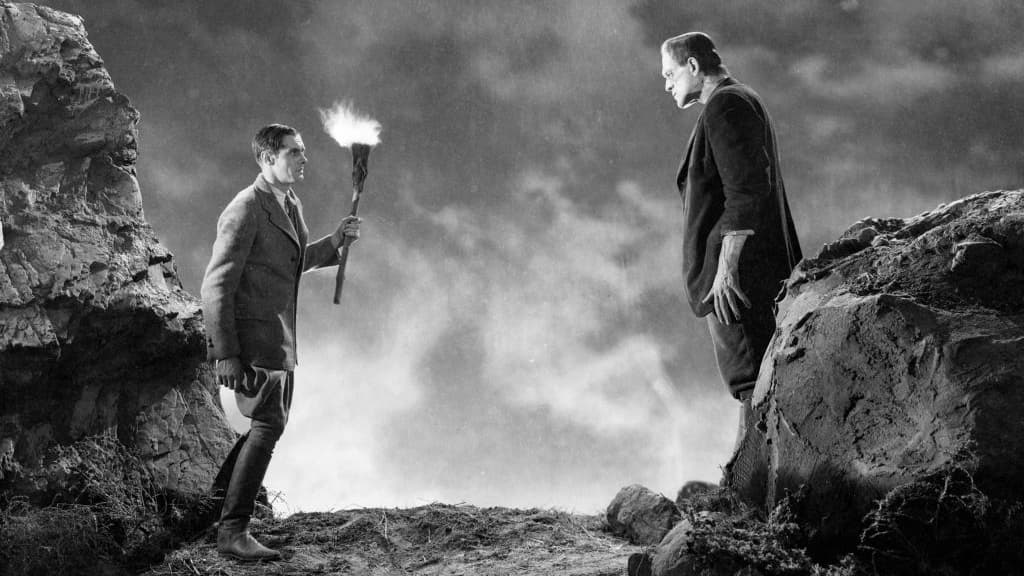
Mary Shelley’s classic novel Frankenstein from 1818 features a mad scientist named Victor Frankenstein, who would likely be snapped up with a million-dollar contract from a biotech startup if he were around today. asserted
he → feature → startup
Consumed with the ultimate scientific dream, to create life from an inanimate object, Victor embarks on a dubious agenda that includes grave-robbing and using deceased bodies without prior consent. asserted
that → consume → consent
He is monomaniacal in his pursuit of a single question—“Whence, I often asked myself, did the principle of life proceed?”—which he eventually solves by sparking to life an eight-foot monster assembled from human remains. asserted
he → ask → remains
Astonishingly, AI researchers believe they have already achieved what once seemed only possible in fictional works like Frankenstein. asserted
what → believe → Frankenstein
By creating machines that “think,” or at least approximate the process, they have accomplished one of those paradigmatic feats that are often separated by centuries if not millennia: the artificial production of knowledge. asserted
that → create → knowledge
We don’t know how this new scenario will play out, but it is entirely conceivable that a scientific development of this magnitude could turn out to be as consequential as the advent of railroads, the computer, and the internet. uncertain
development → know → railroads
No doubt, Victor Frankenstein would be awed by AI. asserted
Frankenstein → awe → AI
And here’s where his lesson can help. asserted
lesson → ’ → ?
His passion for creating the monster immediately turns to disgust when he sees it come to life with translucent skin, a shriveled complexion, and watery eyes. asserted
it → create → skin
Instead of nurturing his creation as a loving parent, he casts it out like a stray dog. asserted
he → nurture → dog
The creature never recovers—all his desperate attempts to reclaim Victor’s love and find human connection end in disaster, and he embarks on a murderous path of vengeance that will result in many innocent deaths. asserted
that → recover → deaths
“I was benevolent and good; misery made me a fiend. asserted
me → make → ?
Make me happy, and I shall again be virtuous,” the monster pleads to Victor, but to no avail. asserted
monster → make → avail
The creator continues to spurn his creation, and the death toll mounts. asserted
toll → continue → creation
Victor’s chaotic rejection of the very creature he brought to life finds a chilling analog in the fearful reactions of AI’s founders to the destructive potential of their invention. asserted
he → bring → invention
The AI braintrust must avoid Victor’s error and focus on managing and harnessing the force they have unleashed on the world. asserted
they → avoid → world
The genius of Mary Shelley’s novel is difficult to reduce to a simple moral. asserted
genius → reduce → moral
But it clearly raises ethical questions about the responsibilities of creators toward their transformative technologies. asserted
it → raise → technologies
The frustrating thing about Victor Frankenstein is that for someone so incredibly brilliant in making the monster, he was disastrously inept at guiding its actual life. asserted
he → make → life
Frankenstein offers the leaders of AI a blueprint of the fatal errors that can ensue from the mishandling of a revolutionary scientific discovery. asserted
that → offer → discovery
I’m not surprised that former Anthropic lead safety researcher Mrinank Sharma, who wrote that the “world is in peril” from AI, left the company with plans to pursue a poetry degree. asserted
world → ’m → degree
Great literature like Shelley’s Frankenstein helps us think through the moral and practical challenges posed by groundbreaking technologies by reminding us that though the product or discovery may be new, the questions it raises have long been with us. uncertain
it → help → us
“Do your duty towards me, and I will do mine towards you and the rest of mankind,” the monster says to Victor, in words that should be emblazoned on the corporate seals of today’s AI companies. asserted
that → do → companies
Since it is early innings, it is difficult to say with certainty what that “duty” towards artificial intelligence will look like. asserted
duty → say → intelligence
But at the very least, corporations need to invest substantially in exploring the ethical questions raised by AI, establishing safe protocols for its use, consulting environmentalists on its energy demands, and working with policy and governance experts to devise stabilizing legislation. asserted
corporations → need → legislation
These companies must understand—in a way Victor Frankenstein never could—that the long-term success of their invention is entirely dependent on creating a safe and secure framework for it. uncertain
success → understand → it
At the end of Shelley’s novel, an exhausted Victor dies aboard a ship after failing to capture the monster, who discovers Victor’s corpse before vanishing into the Arctic, where he plans to build a funeral pyre and end his life. asserted
he → die → life
Their mutually assured destruction seemed preordained from the moment of that first fateful encounter, when Victor rejected the being whom he had brought to life. asserted
he → seem → life
Two hundred years later, the stakes are now exponentially higher, as the creators of AI have brought into existence a force of perhaps unparalleled capacity for good or evil. asserted
creators → bring → good
One only hopes they will do a better job of listening to the concerns raised by their creation than Victor Frankenstein did two centuries ago. asserted
Frankenstein → hop → creation

Give feedback · no sign-in needed

No sign-in needed for now. Your note is sent without a name, so it cannot be answered.

History Support