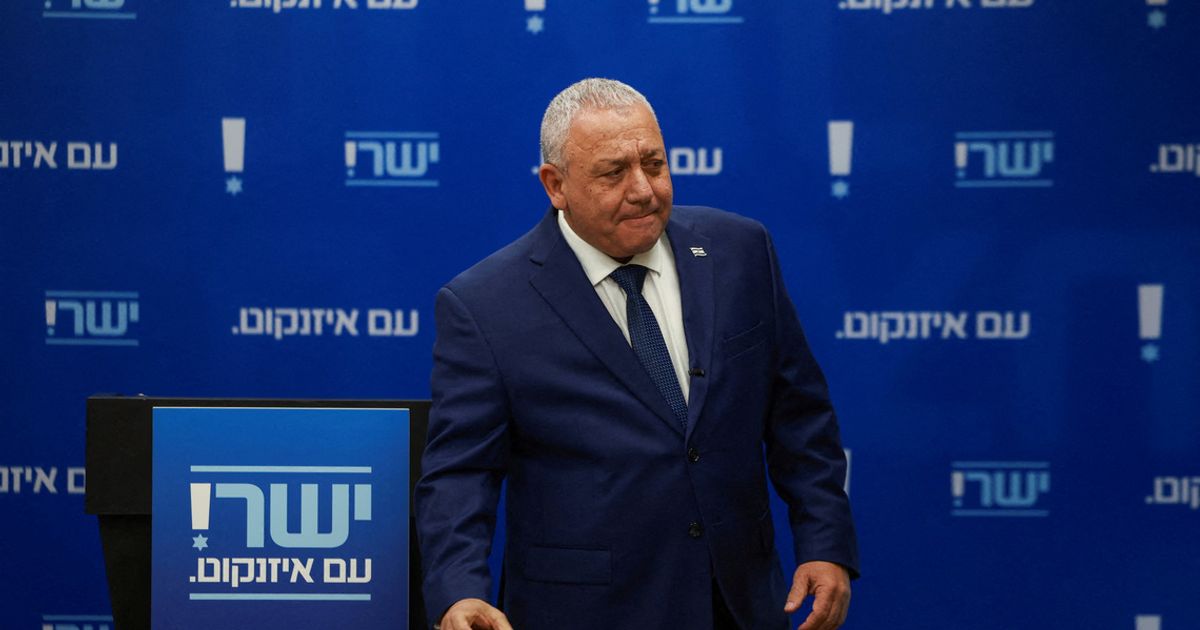
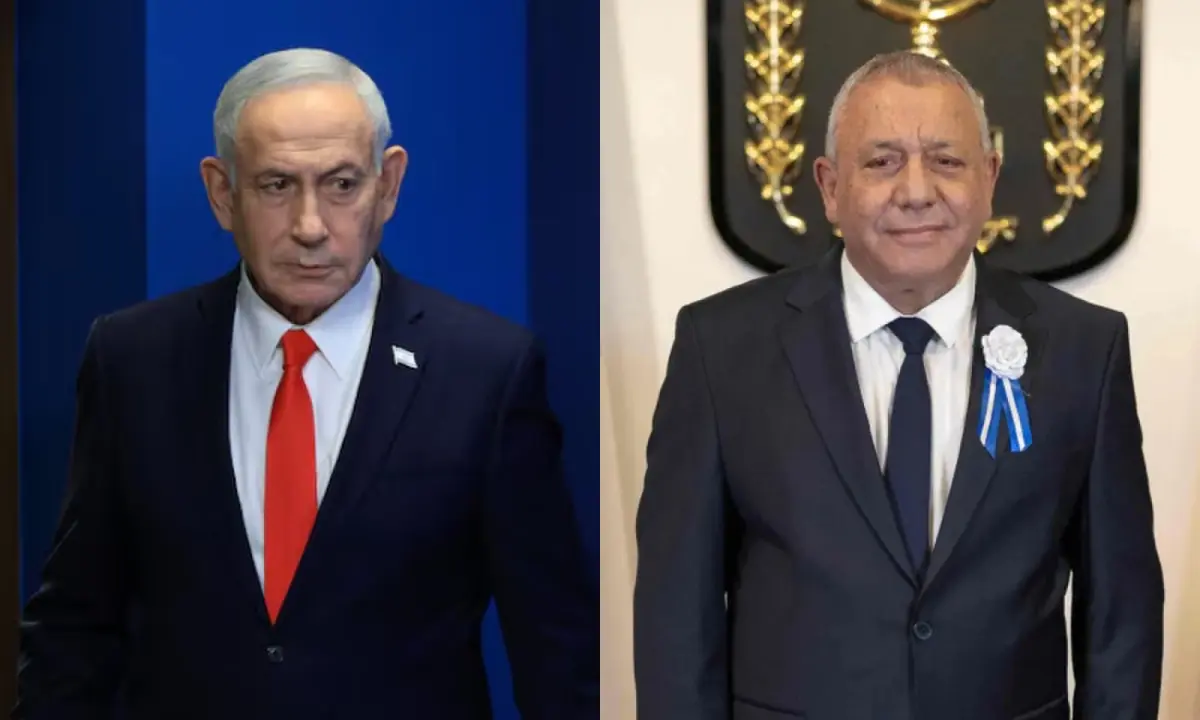
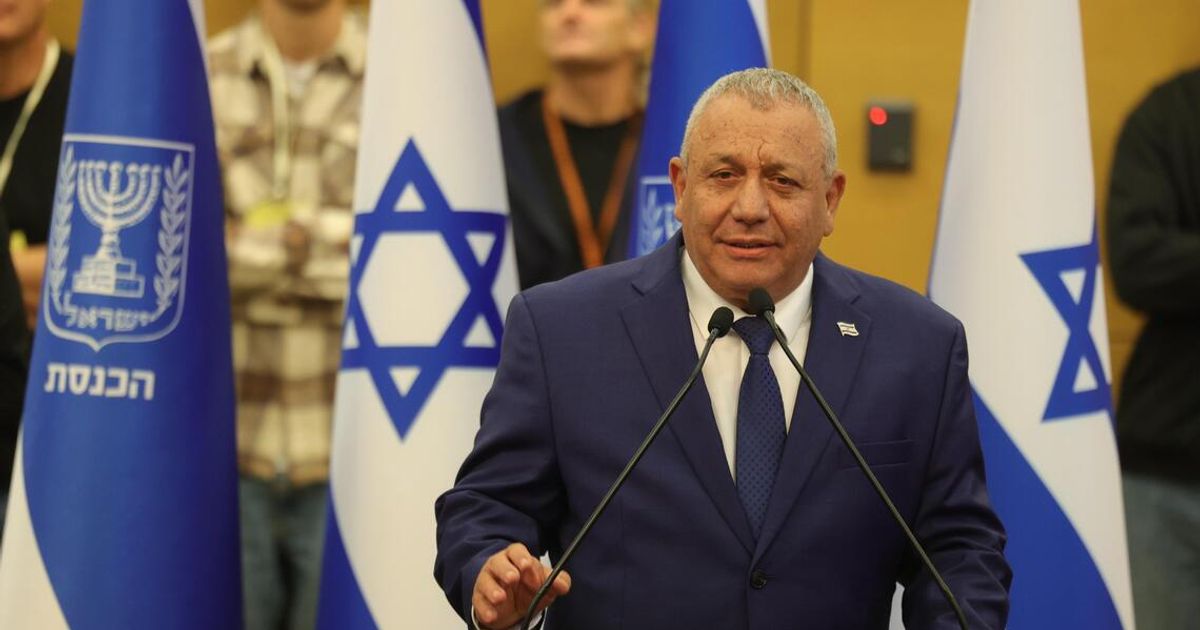
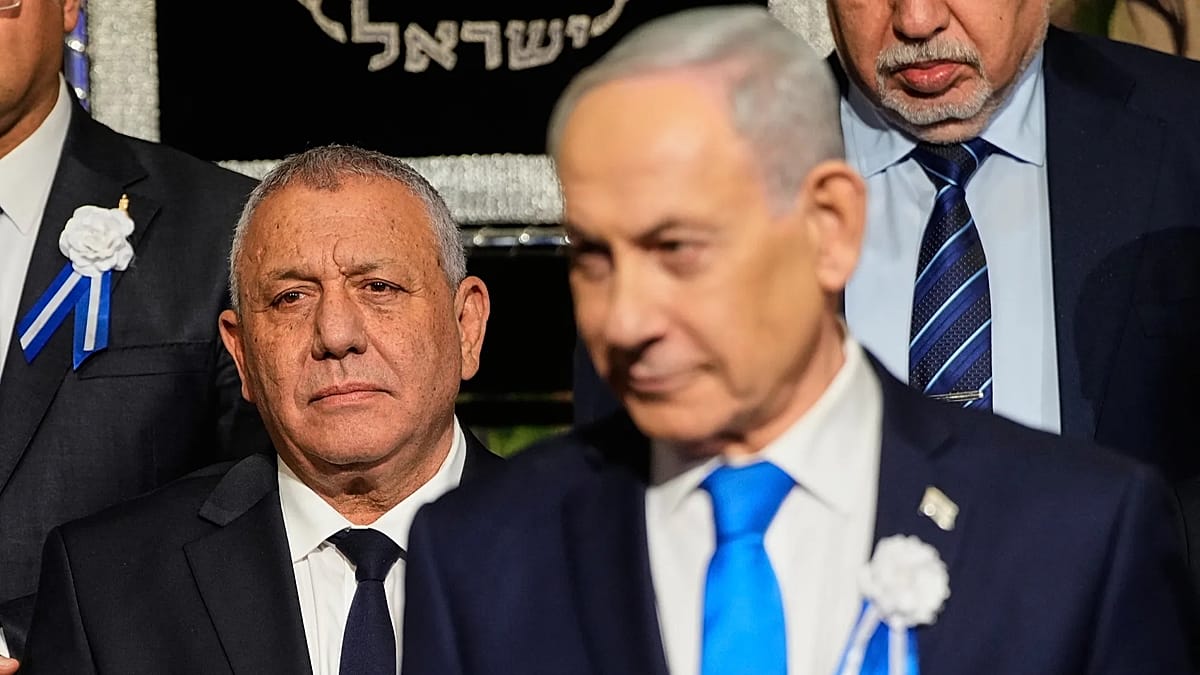
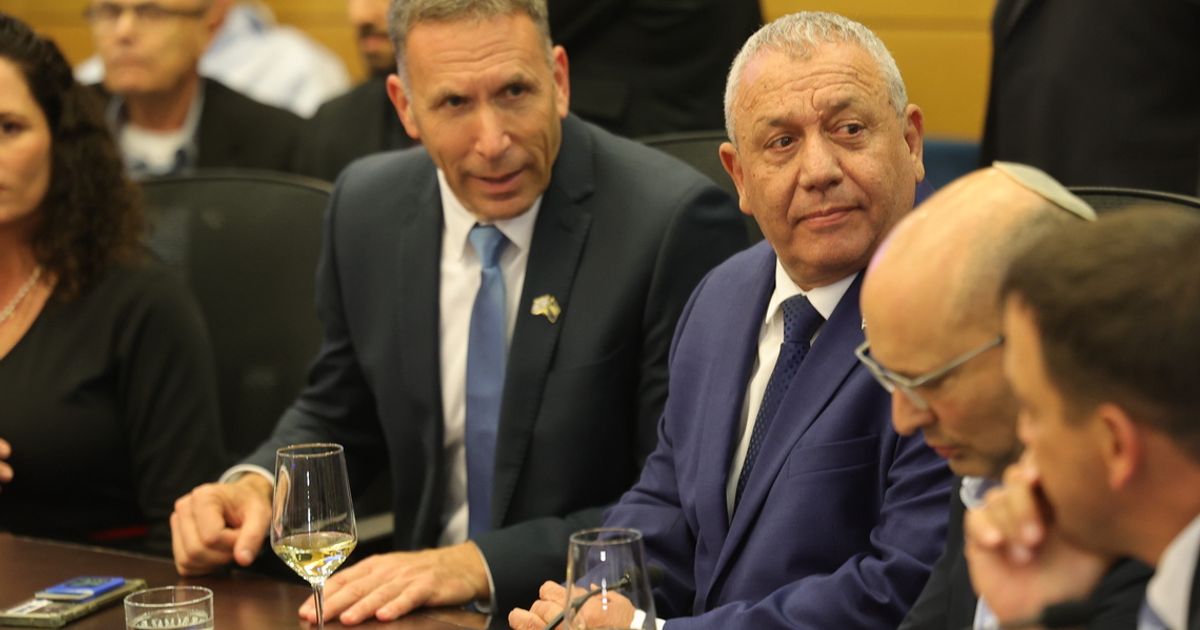
Photo via Al Jazeera

Why Eisenkot is negotiating with Netanyahu

Read the original at Al Jazeera ↗
Cite

Jabareen, E. (2026, November 24). Why Eisenkot is negotiating with Netanyahu. Al Jazeera. https://www.aljazeera.com/opinions/2026/11/24/why-eisenkot-is-negotiating-with-netanyahu?traffic_source=rss

Dated from the outlet's own feed. Check the original for its byline.

Al Jazeera · collected 2026-11-24 · by Ehab Jabareen

Quick Summary

Gadi Eisenkot, leader of the Yashar party in Israel, is negotiating with Benjamin Netanyahu's Likud party to form a unity government despite Eisenkot's previous vows to remove Netanyahu from power. Eisenkot is also in talks with ultra-Orthodox parties and is considering a minority government supported by Palestinian parties. These negotiations are complex and contentious, with disagreements over who would lead the government and policy compromises. Despite the challenges, Eisenkot sees political benefit in showing that he has genuinely attempted to form a unity government, which allows him to shift responsibility back to Netanyahu if the talks fail.
Written by AI on 2026-11-24, from this article's own text only (the story summary below draws on all the coverage).
See how they differ ↓

How they differ

7 outlets covered “Eisenkot Netanyahu Coalition Talks”.

What each outlet says

One AI summary per outlet of its latest article on this story, written from that article alone and checked against it. Open the article for the outlet's own words.

Al JazeeraThis outlet24 Nov

Gadi Eisenkot, leader of the Yashar party in Israel, is negotiating with Benjamin Netanyahu's Likud party to form a unity government despite Eisenkot's previous vows to remove Netanyahu from power. Eisenkot is also in talks with ultra-Orthodox parties and is considering a minority government supported by Palestinian parties. These negotiations are complex and contentious, with disagreements over who would lead the…

Why Eisenkot is negotiating with Netanyahu (this article)3 articles from Al Jazeera on this story
The Hindu24 Nov

Former Israeli military chief Gadi Eisenkot’s Yashar party signed a coalition agreement with the right-wing Israel Our Home party led by Avigdor Lieberman on November 24, 2026, in an effort to form a government after the October 27 election. This agreement marks the first coalition pact since the election, with Eisenkot holding 21 seats and Lieberman’s party holding 7. President Isaac Herzog has tasked Eisenkot with…

Israel’s Eisenkot clinches first coalition agreement in bid to form government →4 articles from The Hindu on this story
The Straits Times24 Nov

Former military chief Gadi Eisenkot of the Yashar party signed a coalition pact with Avigdor Lieberman's right-wing Israel Our Home party on November 24, marking the first such agreement since the October 27 election. This pact aims to form a government in Israel, where President Isaac Herzog has tasked Eisenkot with creating a coalition within a 28-day mandate. The deal includes the possibility of support from Arab…

Israel’s Eisenkot clinches first coalition agreement in bid to form government →3 articles from The Straits Times on this story
ABC News (AU)21 Nov

Former Israeli military chief Gadi Eisenkot, who leads the centrist Yashar party tasked with forming the next government, has invited the right-wing Likud party of caretaker Prime Minister Benjamin Netanyahu for coalition talks. The talks aim to explore options for forming a broad government, reflecting Eisenkot's commitment to pursue every avenue. With a deadline next month to form a government after the October…

Eisenkot invites Netanyahu's party to Israeli coalition talks →
Euronews22 Nov

Gadi Eisenkot, a candidate tasked with forming Israel's next government, has invited Benjamin Netanyahu's Likud party for coalition talks beginning Sunday. These talks aim to form a broad government following the October legislative elections where neither bloc secured a parliamentary majority. Netanyahu's Likud received 53 seats, while the opposition led by Eisenkot's Yashar party received 48. Netanyahu demands a…

Gadi Eisenkot invites Netanyahu's Likud party for 'marathon' coalition talks →
Dawn23 Nov

In Herzliya, near Tel Aviv, parties led by Israeli caretaker prime minister Benjamin Netanyahu and his rival Gadi Eisenkot resumed talks on Sunday to form a coalition government following October's inconclusive elections. With a deadline of December 6 for Eisenkot to form a government, negotiations are focused on whether to build a national unity government, which Netanyahu wants to include his party Likud, despite…

Netanyahu and Eisenkot’s parties resume talks to form coalition govt in Israel →
Show 1 more outlets
Times of India25 Nov

Former Israeli military chief Gadi Eisenkot's Yashar party has formed a coalition pact with Avigdor Lieberman's right-wing Israel Our Home party, aiming to oust Prime Minister Benjamin Netanyahu. Yashar and Israel Our Home won 21 and 7 seats respectively in the recent election, bringing their total to 28 seats, with the possibility of gaining more support from Arab parties. President Isaac Herzog has given Eisenkot…

Israel govt formation: Eisenkot, Lieberman join hands in bid to oust Netanyahu →

Where they agree and split

Agreed

Reported by outlets on both sides of the middle

His ally, former Prime Minister Naftali Bennett, also reiterated on Saturday (November 21, 2026) his refusal to join a coalition with “Netanyahu or his bloc, under any circumstances”.

4 outlets
Show 2 more

Delegations from Mr. Eisenkot’s Yashar party and Mr. Netanyahu’s Likud began their meeting at a hotel in Herzliya, near Tel Aviv, an AFP journalist on the scene said, following a first round of talks on Sunday (November 15, 2026).

4 outlets

HERZLIYA, Israel - The parties of caretaker Israeli prime minister Benjamin Netanyahu and his rival Gadi Eisenkot concluded a new round of talks on Nov 22 without reaching an agreement on a possible coalition government, which would require concessions from both sides.

4 outlets

Framing

How the first headlines put it

Stated as fact4
The headlines (4)

Eisenkot invites Netanyahu's party to Israeli coalition talks ABC News (Australia) · stated as fact

Gadi Eisenkot invites Netanyahu’s party for Israeli coalition talks The Straits Times · stated as fact

Eisenkot invites Netanyahu’s party for Israeli coalition talks The Hindu · stated as fact

Gadi Eisenkot invites Netanyahu's Likud party for 'marathon' coalition talks Euronews · stated as fact

The full story: what happened, how it changed, and all 14 articles →

Compared with similar articles

This article reads leans right and hedges 4% of its claims. Each row says how that neighbour differs.
ABC News (AU)
Hedges 0 of 18 claims Outlet record 66/100
The Straits Times
Hedges 1 of 17 claims Outlet record 64/100
The Hindu
Leans right Hedges 1 of 15 claims Outlet record 78/100
Dawn
Leans strongly right further right than this Hedges 3 of 17 claims Outlet record 64/100
The Straits Times
Leans right Hedges 0 of 14 claims Outlet record 64/100
“While both articles discuss Gadi Eisenkot's negotiations with Netanyahu's party for forming a coalition, Article A specifically describes the invitation and scheduling of talks on November 21st, while Article B provides a broader context for why such negotiations are taking place, without specifying the same specific event or date.”
Euronews
Leans right Hedges 0 of 13 claims Outlet record 60/100
“While both articles discuss Gadi Eisenkot's negotiations with Benjamin Netanyahu's Likud party to form a coalition, they describe different stages or aspects of the ongoing political process, rather than the same specific event.”
The Hindu
Leans right Hedges 3 of 16 claims Outlet record 78/100
“Article A describes the specific talks held on November 22, 2026, while Article B provides a broader context and explanation for why negotiations are happening, without specifying the same specific event.”
Fox News
Hedges 8 of 47 claims Outlet record 65/100
“While both articles discuss negotiations and disputes between Gadi Eisenkot and Benjamin Netanyahu, they describe different stages and aspects of the ongoing political process, not the same specific incident.”
The Straits Times
Leans strongly right further right than this Hedges 3 of 19 claims Outlet record 64/100
“Article A describes the specific talks ending without a deal on November 22, while Article B provides context and explanation for why Eisenkot is negotiating with Netanyahu, likely referring to the broader negotiation process.”
The Hindu
Hedges 0 of 12 claims Outlet record 78/100
“Article A reports on the scheduling of coalition talks between Eisenkot's party and Likud, while Article B discusses the broader context and reasoning behind these negotiations.”

Story

Eisenkot Netanyahu Coalition Talks
Politics · 14 article(s) covering the same event. Compare every outlet's account →
How this article was measured signals, leaning charts, publisher record, byline, topics and claims

Signals How these are calculated →

Claims extracted
46
sentences that state something as happening or true
Uncertain
4%
2 of 46 hedged ("reportedly", "may", "according to")
Leaning
Leans right
of the writing, not the subject · beta estimate
Publisher signals
60/100
Al Jazeera's corrections and hedging, across everything collected from it. Not a measure of accuracy.
Outlets on this story
14
Politics
Same framing elsewhere
1
articles that frame the event the way this one does
Analyzed 2026-11-24 · how these are computed

How this is being covered How these are calculated →

Article leaning vs. publisher reliability
Source leaning vs. consistency

Publisher

Al Jazeera · 6535 article(s) · 4 correction(s) detected
Running correction rate · 4 correction(s)

Who wrote this

Ehab Jabareen
1 article(s) here · 1 carrying a prediction
The two sides are still divided over who would serve as prime minister and over who would be included in the government.
2026-11-24 · assertive framing · Why Eisenkot is negotiating with Netanyahu
The only article under this byline in the corpus.

Topics

Haredi Israel Likud Palestinian Yashar

Subjects

Netanyahu PERSON · 12× Eisenkot PERSON · 11× Likud ORG · 8× Palestinian NORP · 6× Haredi NORP · 2× Israel GPE · 2× Yashar ORG · 2× Gadi Eisenkot PERSON · 1× Isaac Herzog PERSON · 1× Knesset ORG · 1×

Narrative

If they fail over Netanyahu’s insistence on serving first as prime minister in a rotation, Eisenkot can try to shift responsibility for the failure back onto him: the problem, he can argue, was not his refusal to sit with Likud, but Netanyahu’s refusal to relinquish the premiership after losing the election.
framing: assertive · carried by 1 article(s) · first seen 2026-11-24
The two sides are still divided over who would serve as prime minister and over who would be included in the government.
2026-11-24 · Al Jazeera
Why Eisenkot is negotiating with Netanyahu · assertive framing

Claims (46 extracted, 2 hedged)

Yashar party leader Gadi Eisenkot has an unusual problem. asserted
Eisenkot → have → problem
He holds the presidential mandate to form Israel’s next government after 67 members of the Knesset recommended him to President Isaac Herzog, yet those 67 votes do not constitute a ready-made coalition. asserted
votes → hold → coalition
They come from parties that disagree not only on policy but also on the most basic question of who they are prepared to engage with politically. asserted
they → come → who
This is why Eisenkot is now negotiating with the very party he spent the entire election campaign vowing to remove from power. asserted
he → negotiate → power
His Yashar party and incumbent Prime Minister Benjamin Netanyahu’s Likud have held repeated talks over a possible unity government. asserted
party → hold → government
Simultaneously, Eisenkot is negotiating with the ultra-Orthodox parties, which were part of Netanyahu’s governing coalition, and is keeping open the possibility of a minority government supported by the Palestinian parties. asserted
which → negotiate → parties
The latest round of talks with Likud ended without agreement. asserted
round → end → agreement
The two sides are still divided over who would serve as prime minister and over who would be included in the government. asserted
who → divide → government
At a first glance, engaging with Netanyahu does not make sense. asserted
engaging → engage → sense
Eisenkot is the leader of a camp whose main unifying purpose was to end Netanyahu’s rule. asserted
purpose → end → rule
His ally, Avigdor Lieberman, refuses to serve in any government that includes Netanyahu. asserted
that → refuse → Netanyahu
Other members of Eisenkot’s bloc remain deeply suspicious of returning Likud to government under its current leadership. asserted
members → remain → leadership
Yet the talks still serve Eisenkot politically, even if they lead nowhere. asserted
they → serve → Eisenkot
That is because he cannot allow Likud to monopolise the language of national unity. asserted
Likud → allow → unity
Since the election, Netanyahu has repeatedly presented a broad Jewish-Zionist unity government as the responsible answer to Israel’s political deadlock. asserted
Netanyahu → present → deadlock
If Eisenkot had refused to enter negotiations, Netanyahu would have had an easy political argument: Likud offered unity, but the other side refused because of petty personal hostility towards its leader. asserted
side → refuse → leader
Negotiating changes the equation. asserted
Negotiating → negotiate → equation
Eisenkot can say that he did not reject unity; he tested it. asserted
he → say → it
He sent negotiators, held discussions and gave the option a genuine chance. asserted
He → send → chance
Demonstrating that he has done what it could matters even if the talks collapse. uncertain
talks → demonstrate → ?
If they fail over Netanyahu’s insistence on serving first as prime minister in a rotation, Eisenkot can try to shift responsibility for the failure back onto him: the problem, he can argue, was not his refusal to sit with Likud, but Netanyahu’s refusal to relinquish the premiership after losing the election. asserted
he → fail → election
The talks also give Eisenkot leverage elsewhere. asserted
talks → give → leverage
He currently has three possible routes to a government: some version of a unity government with Likud, an agreement with the Haredi parties, or a minority government dependent on support from Palestinian parties. asserted
He → have → parties
He has publicly acknowledged all three. asserted
He → acknowledge → three
A Likud agreement requires resolving the much larger question of Netanyahu himself. asserted
agreement → require → Netanyahu
The Haredi route requires compromises over military service, one of the central issues on which Eisenkot’s camp campaigned. asserted
camp → require → which
The Palestinian-backed route faces opposition from Lieberman and others inside his own bloc. asserted
route → back → bloc
Keeping all three options alive therefore has value. asserted
Keeping → keep → value
It tells every negotiating partner that Eisenkot may have somewhere else to go, and it strengthens his claim that he is exhausting every possible route before choosing a narrower and politically more controversial coalition. uncertain
he → tell → coalition
The problem is that the negotiation process also works in Netanyahu’s favour. asserted
process → work → favour
To push the conversation away from his election loss, he and his allies have zeroed in on the Palestinian parties, accusing them of “stealing” the vote. asserted
he → push → vote
Netanyahu has insisted that a “unity government” must mean the exclusion of the Palestinian parties. asserted
government → insist → parties
By doing so, he is attempting to remove any possible coalitions that include Palestinian representation from the Israeli political scene altogether. asserted
that → do → scene
By trying to define which political forces are legitimate and which are not, Netanyahu is seeking to retain and even grow his political relevance. asserted
Netanyahu → try → relevance
This strategy seems to be working. asserted
strategy → seem → ?
Before the election, much of Eisenkot’s camp was organised around a simple idea: Netanyahu must go. asserted
Netanyahu → organise → idea
Some of Eisenkot’s allies, like Naftali Bennett, have also held discussions with Likud. asserted
Some → hold → Likud
The line has therefore shifted. asserted
line → shift → ?
Netanyahu has moved, at least partially, from being the political problem around which the opposition organised itself to being one of the possible solutions that the party with the mandate is required to consider. asserted
party → move → mandate
That leaves Eisenkot in a strange position. asserted
That → leave → position
…and 6 more, not listed.
Give feedback · no sign-in needed

No sign-in needed for now. Your note is sent without a name, so it cannot be answered.

History Support