Claims extracted
12
sentences that state something as happening or true
Uncertain
50%
6 of 12 hedged
("reportedly", "may", "according to")
Leaning
Leans right
of the writing, not the subject · beta estimate
Publisher signals
58/100
Times of India's corrections and
hedging, across everything collected from it. Not a measure of accuracy.
Outlets on this story
10
Politics
Same framing elsewhere
1
articles that frame the event the way this one does
Russia is reportedly preparing to launch a satellite capable of carrying a nuclear warhead into space as early as December, as officials hint potential use of nuclear weapon as 'most powerful defensive means' during war with Ukraine.
uncertain
officials → prepare → Ukraine
German intelligence assessments cited in an investigation by broadcasters NDR and WDR and newspaper Süddeutsche Zeitung said Moscow was planning to launch the Sputnik-S satellite before the end of the year, Reuters reported.
asserted
Reuters → cite → year
The satellite has reportedly been fully assembled and kept in storage in the Moscow region for several years, the investigation said.
uncertain
investigation → assemble → years
According to The Kyiv Independent, Russia's embassy in Berlin dismissed the allegations as "unfounded".
uncertain
embassy → accord → allegations
The reports follow an assessment by the US defence intelligence agency last month that Russia was developing a "satellite designed to carry a nuclear weapon".
asserted
Russia → follow → weapon
Nuclear option for survival
The reports arrive as Moscow hints it may use nuclear weapons if its survival were threatened.
uncertain
survival → arrive → weapons
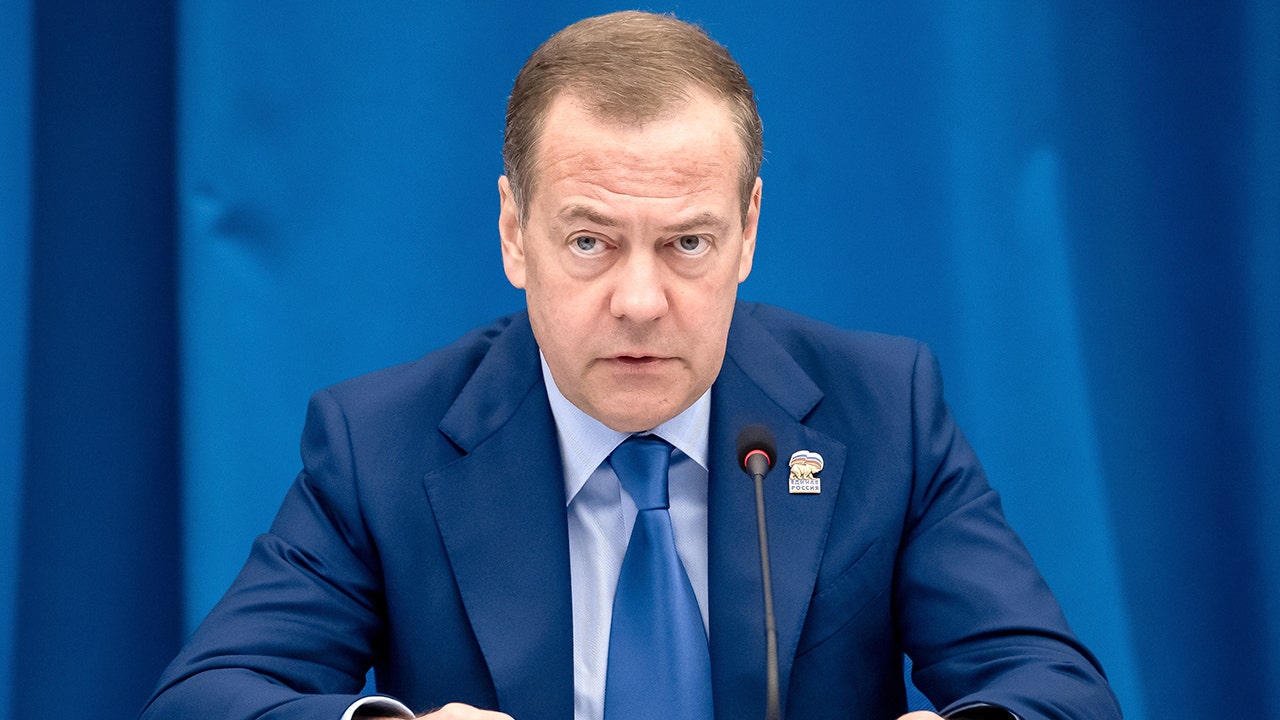
Russia's former president and current deputy chairman of the security council, Dmitry Medvedev, has invoked international law to argue that a nuclear-armed state could use nuclear weapons if its survival were threatened, as reports emerge of Moscow's alleged plans to launch a satellite capable of carrying a nuclear warhead into space by the end of the year.
uncertain
reports → invoke → year
In an article titled "State Sovereignty and Nuclear Weapons: International Legal Aspects of Ensuring National Security", published in the Moscow Journal of International Law, Medvedev, said international legal bodies recognise a state's right to survival as fundamental.
asserted
bodies → title → survival
TASS reported his remarks on Monday.
asserted
TASS → report → Monday
Medvedev referred to the
International Court of Justice's (ICJ) 1996 advisory opinion on the legality of the threat or use of nuclear weapons, which stated: "The Court cannot lose sight of the fundamental right of every State to survival, and thus its right to resort to self-defense [...] [and] cannot conclude definitively whether or not the use of nuclear weapons by a State would be lawful or unlawful in an extreme circumstance of self-defense, in which the very survival of a State would be at stake."
asserted
survival → refer → stake
According to Medvedev, the court envisaged a situation in which a nuclear-armed state could face a threat to its survival, regardless of whether the threat came from another nuclear-armed or non-nuclear state.
uncertain
threat → accord → state
He further argued that "international law does not prohibit a nuclear-armed state from using nuclear weapons - that is, employing the most powerful defensive means at its disposal - for the sake of its own survival."
Medvedev also maintained that such use "would not be considered a crime under international law, nor even a violation of any international legal regime", arguing that the absence of an explicit prohibition was the more significant legal consideration.
In 2024, Russia had vetoed a resolution at the United Nations Security Council (UNSC) aimed at preventing a nuclear arms race in outer space.
asserted
Russia → argue → space

 The Aporia