Just because the U.N. climate talks in Turkey imploded, it doesn’t mean that hope for rescuing an ever-warming world is gone, experts say.
asserted
experts → implode → world
But the road ahead will be tougher, require changes to negotiations and may be more about individual efforts by nations and companies instead of joint action.
uncertain
road → require → action
And the planet will just keep getting hotter.
asserted
planet → keep → ?
The climate talks, called COP31, ended Sunday in division and finger-pointing, without the hoped-for overarching agreement on fighting climate change that the world could follow.
uncertain
world → call → that
The main reason for the collapse was disagreement over mentioning the need to transition away from fossil fuels, the chief cause of global warming.
asserted
reason → mention → warming
“The world cannot afford a repeat of this moment,” United Nations climate chief Simon Stiell said as the negotiations fell apart.
asserted
negotiations → afford → moment
“The fight continues.
asserted
fight → continue → ?
We will never give up.”
asserted
We → give → ?
The Associated Press asked numerous experts to outline what’s next for the U.N. climate process, which reconvenes next year in Ethiopia, and the fight to reduce emissions of heat-trapping gases from the burning of fossil fuels.
asserted
which → ask → fuels
Most of the experts found positives from the collapse, mostly in how it appears to be galvanizing many countries to do something about phasing out coal, oil and natural gas.
asserted
it → find → coal
“This leads to a crisis.
asserted
This → lead → crisis
It is a climate and political crisis,” said Johan Rockström, director of the Potsdam Institute for Climate Impacts Research in Germany.
asserted
Rockström → say → Germany
“But it will hopefully result in taking COP reform more seriously as well as ‘truly getting serious’ in delivery of the Paris Agreement.”
asserted
it → result → Agreement
That 2015 pact requires countries to ratchet up plans to cut carbon emissions and aims to keep global average temperatures out of the danger zone.
asserted
pact → require → zone
The climate doesn’t ‘care about politics’
asserted
climate → care → politics
The Paris deal set goals of limiting long-term warming to well below 2 degrees Celsius (3.6 degrees Fahrenheit) and preferably below 1.5 degrees Celsius (2.7 degrees Fahrenheit) above pre-industrial times.
asserted
deal → set → times
Earlier this year the U.N. conceded that it’s inevitable that the world will blow past that long-term 1.5 degree mark, probably in a year or two.
asserted
world → concede → year
Exceeding it over the long term means “danger in terms of billions of people suffering from droughts, floods, fire, heat waves, disease and human-reinforced storms,” Rockström warned.
asserted
Rockström → exceed → droughts
But the temperature climb isn’t stopping there.
asserted
climb → stop → ?
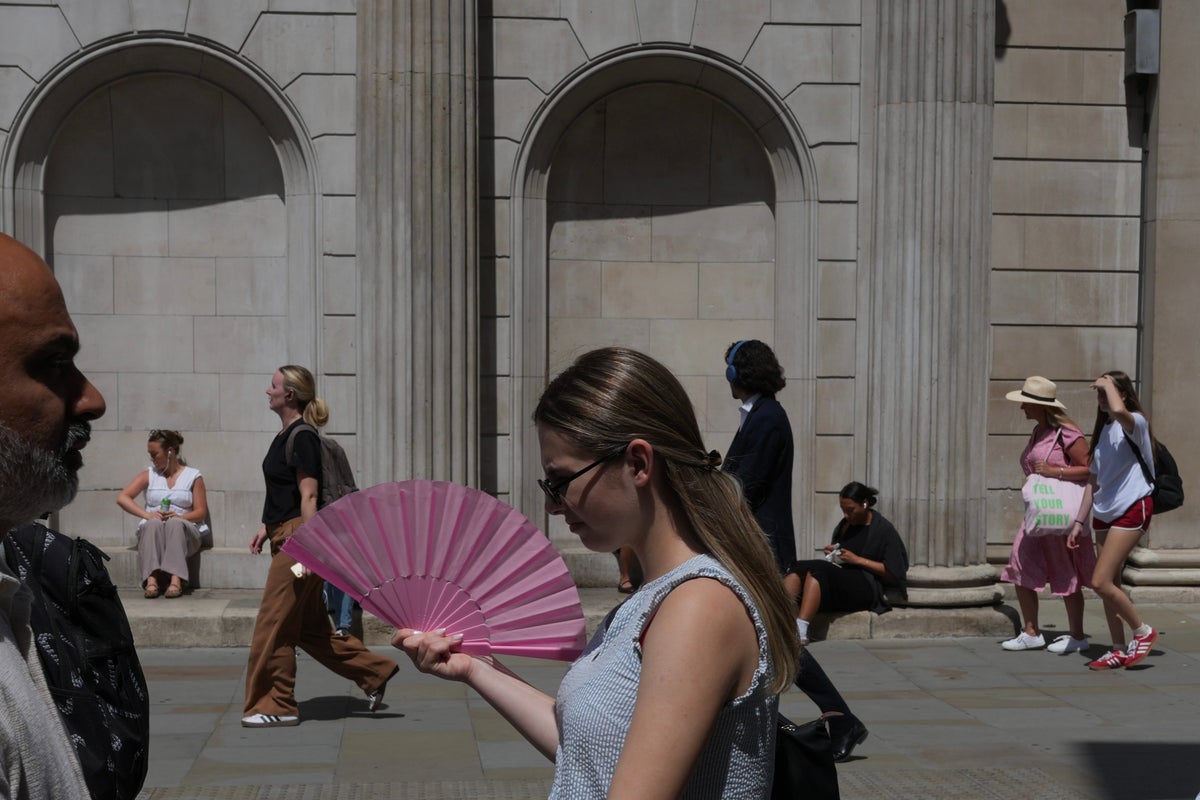
Six times this month, the average global daily temperature was more than 2 degrees Celsius above pre-industrial levels, according to the European climate service Copernicus.
“This is yet another sign that the climate doesn’t really care about our politics — either in the U.S. or COP,” said Berkeley Earth climate scientist Zeke Hausfather.
uncertain
Hausfather → accord → U.S.
Heat-trapping gases keep increasing in the air.
asserted
gases → trap → air
The November temperature spikes show that the world is not only passing the 1.5 mark over the long term, but isn’t too far away from the 2 degree threshold, he said.
asserted
he → show → threshold
But University of Pennsylvania climate scientist Michael Mann argues against making too much of these November heat spikes because they were influenced by the El Niño weather pattern, which is a phenomenon separate from climate change.
asserted
which → argue → change
What happened after past talks failed
Given the need to address suffering from increasing extreme climate events such as the deadly Nepal flood, environmental advocates Mohamed Adow of Power Shift Africa and Tasneem Essop of Climate Action Network International called it “the worst COP ever.”
asserted
Adow → happen → it
Because expectations were low and there wasn’t a big deal needed, this isn’t quite the worst climate talk failure, said climate negotiations historian Joanna DePledge of the University of Cambridge.
asserted
DePledge → be → Cambridge
That belongs to 2000 in The Hague — which had to be continued six months later in Germany — and 2009 in Copenhagen, where a hoped-for deal collapsed, she said.
asserted
she → belong → Copenhagen
She blamed the joint Turkey-Australia leadership of COP31 — as did many experts — for handling the negotiations poorly.
asserted
experts → blame → negotiations
She said there was no need for an overarching final agreement because the purpose of this round of talks was more about implementing past goals.
asserted
purpose → say → goals
Insisting on something big, and then not delivering it, was a mistake, she said.
asserted
she → insist → it
Six years after the failure in Copenhagen, the world agreed to the landmark Paris pact.
asserted
world → agree → pact
Climate Analytics CEO Bill Hare said the failure of Copenhagen led the countries of the world to realize just how important it is to work together.
asserted
it → say → world
And this failure will remind them to “stop running after the fossil fuel producers and companies and begin to deal seriously with the climate change problem,” Hare said.
asserted
Hare → remind → problem
Experts urge a reform of the climate talks
For years, experts have said the world needs to change the entire process of COP, a giant two-week climate Super Bowl that attracts 100,000 people to a closed-in campus.
asserted
that → urge → campus
Many of the outside experts said the key thing is to ditch the requirement for near-unanimous consensus in big final agreements, and make it majority or super-majority rule.
asserted
thing → say → agreements
Mann would also like to apply financial penalties such as embargoes and tariffs to countries that fail to fulfill climate commitments.
asserted
that → like → commitments
He also thinks the talks should not be located in fossil fuel-exporting states — like four of the last five host countries.
asserted
talks → think → countries
“We can no longer continue with this charade where a small number of bad petrostate actors stand in the way of planetary sustainability,” Mann said.
asserted
Mann → continue → sustainability
“The U.N. must change the rules now.”
asserted
U.N. → change → rules
Hope lies in countries’ individual actions
While much of the focus in climate talks is on the overarching agreements, side deals that don’t require consensus are thriving.
asserted
that → lie → consensus
About 80 countries signed on to Turkey’s plan to have 35% of the world’s energy use — including transportation such as cars and planes — come from electricity.
asserted
% → sign → electricity
…and 6 more, not listed.

 The Aporia