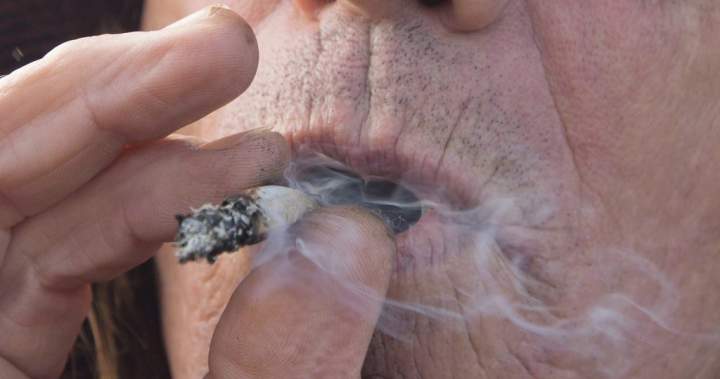
Photo via Global News

Cannabis daily use outstrips alcohol in ‘generational’ shift, study says

Read the original at Global News ↗
Cite

Previl, S. (2026, November 23). Cannabis daily use outstrips alcohol in ‘generational’ shift, study says. Global News. https://globalnews.ca/news/12162484/daily-cannabis-use-outpaces-alcohol-cigarettes-young-ages/

Dated from the outlet's own feed. Check the original for its byline.

Global News · collected 2026-11-23 · by Sean Previl

Quick Summary

A new study published in the Canadian Medical Association Journal reveals that daily cannabis use in Canada now exceeds daily alcohol and cigarette use, particularly among younger demographics. The study, led by Andre McDonald from McMaster University, found that 5.7% of Canadians report daily cannabis use, translating to approximately 1.8 million people. Among 25 to 34-year-olds, almost 11% of men and 6.8% of women use cannabis daily, significantly higher than their daily alcohol or cigarette use rates.
Written by AI on 2026-11-24, from this article's own text only (the story summary below draws on all the coverage).
See how they differ ↓

AI analysis

Story summary

A new study published in the Canadian Medical Association Journal finds that daily cannabis use among Canadian adults is now more common than daily alcohol consumption. The study, led by André McDonald, a psychiatric epidemiologist at McMaster University, and Daniel Myran from North York General Hospital, analyzed data from nearly 100,000 Canadians and revealed that 5.7% of the population reported daily cannabis use, compared to 5.2% for daily alcohol consumption. Among those under 35, daily cannabis use is also higher than daily cigarette smoking. Researchers attribute this trend to a "generational shift" in substance use, with younger Canadians driving the change, potentially impacting long-term public health strategies and regulations.

Written for “Daily Cannabis Use Surpasses Alcohol” on 2026-11-25, grounded in this article and the 6 other(s) covering the same event.

How they differ

5 outlets covered “Daily Cannabis Use Surpasses Alcohol”.

What each outlet says

One AI summary per outlet of its latest article on this story, written from that article alone and checked against it. Open the article for the outlet's own words.

Global NewsThis outlet23 Nov

A new study published in the Canadian Medical Association Journal reveals that daily cannabis use in Canada now exceeds daily alcohol and cigarette use, particularly among younger demographics. The study, led by Andre McDonald from McMaster University, found that 5.7% of Canadians report daily cannabis use, translating to approximately 1.8 million people. Among 25 to 34-year-olds, almost 11% of men and 6.8% of women…

Cannabis daily use outstrips alcohol in ‘generational’ shift, study says (this article)
The Globe and Mail23 Nov

A study published in the Canadian Medical Association Journal reports that adults under 50 in Canada are more likely to use cannabis daily than to drink alcohol daily. The research highlights a shift in substance use patterns among younger adults.

Daily cannabis use surpassing daily drinking: study →2 articles from The Globe and Mail on this story
Toronto Star23 Nov

Researchers at North York General and McMaster University report that daily cannabis use among Canadian adults aged 18 to 49 has surpassed daily alcohol consumption, with 5.7% of this age group using cannabis daily, compared to 5.2% drinking alcohol daily. The study, based on data from nearly 100,000 respondents to the 2023-24 Canadian Community Health Survey, highlights a generational shift in substance use, noting…

Why daily cannabis use in Canada just topped daily alcohol use for adults under 50: 'A generational shift' →2 articles from Toronto Star on this story
CBC23 Nov

A new study published in the Canadian Medical Association Journal reveals that 5.7% of Canadians, or about 1.8 million people, report daily or near-daily cannabis use, surpassing the 5.2% who report daily or near-daily alcohol use. Young Canadians are driving this trend, with those under 35 showing higher rates of daily cannabis use compared to daily alcohol or cigarette use. The study, based on data from nearly…

More Canadians are using cannabis daily than are drinking alcohol daily: study →
Toronto Sun23 Nov

A recent study published in the Canadian Medical Association Journal reports that daily cannabis use is now more common than daily alcohol use among younger Canadians, with 5.7% of participants aged 18 and older reporting daily cannabis use compared to 5.2% for daily alcohol use. Among adults under 35, daily cannabis use surpassed daily alcohol and cigarette use, particularly among those aged 18 to 24. The study…

Cannabis now more popular than alcohol among younger Canadians: study →

Where they agree and split

Framing

How the first headlines put it

Attributed to a source4
Stated as fact1
The headlines (5)

There's been a 'generational shift' from daily drinking to daily cannabis use: study Toronto Star · attributed to a source

More Canadians are using cannabis daily than are drinking alcohol daily: study CBC · attributed to a source

Cannabis now more popular than alcohol among younger Canadians: study Toronto Sun · attributed to a source

Cannabis daily use outstrips alcohol in ‘generational’ shift, study says Global News · attributed to a source

Daily cannabis use more common among Canadian adults than daily alcohol consumption, study finds The Globe and Mail · stated as fact

The full story: what happened, how it changed, and all 7 articles →

Compared with similar articles

This article reads unscored and hedges 21% of its claims. Each row says how that neighbour differs.
CBC News
Hedges 4 of 46 claims Outlet record 70/100
Toronto Star
Hedges 3 of 32 claims Outlet record 65/100
The Globe and Mail
Hedges 4 of 24 claims Outlet record 51/100
The Globe and Mail
Hedges 0 of 2 claims Outlet record 51/100
Toronto Sun
Hedges 1 of 13 claims Outlet record 96/100

Story

Daily Cannabis Use Surpasses Alcohol
Health · 7 article(s) covering the same event. Compare every outlet's account →
How this article was measured signals, leaning charts, publisher record, byline, topics and claims

Signals How these are calculated →

Claims extracted
29
sentences that state something as happening or true
Uncertain
21%
6 of 29 hedged ("reportedly", "may", "according to")
Leaning
not political
takes no side on a contested political question
Publisher signals
63/100
Global News's corrections and hedging, across everything collected from it. Not a measure of accuracy.
Outlets on this story
7
Health
Same framing elsewhere
1
articles that frame the event the way this one does
Analyzed 2026-11-24 · how these are computed

How this is being covered How these are calculated →

Article leaning vs. publisher reliability
Source leaning vs. consistency

Publisher

Global News · 3709 article(s) · 13 correction(s) detected
Running correction rate · 13 correction(s)

Who wrote this

Sean Previl
84 article(s) here · 1 carrying a prediction
Macklem, who will see his term as Bank of Canada governor end in June 2027, spoke about the central bank’s decision earlier this month to renew its monetary policy framework of two per cent for five more years.
Ottawa estimated at the time about 10,000 Canadians would be eligible for cannabis-related record suspensions.
“So over the years, they would have accumulated the most wealth, and they’re in the best position to help their children.”
The drop in alcohol use may also be because youth interact more online compared to in-person social gatherings, he added.
Bell says it’s investigating a cybersecurity incident after some customers’ personal information may have been accessed last week.
- What could more Chinese steel and aluminum mean for Canadians?
Prior to the website going down, an image of Russian players appeared alongside a message accusing the federation of banning a team its opponents couldn’t beat, according to the Associated Press. In a statement on X, the IIHF didn’t comment on the message that was briefly on its website but said it condemned the attack and was taking necessary steps. -
On Monday, Porter told Global News its operation was “back on track,” though added it could not provide more details.
Tiff Macklem, the governor of the Bank of Canada, says he will not be seeking a second term, setting up a search for the next person to lead the country’s central bank into the next decade.
Canadians’ phones, TVs and radios are set to sound off on Wednesday as the country’s national emergency alert system performs its second test of the year.
Also by Sean Previl
Nothing else under this byline is closely related to this article, so these are simply their most recent.
All 84 articles by Sean Previl →

Topics

Canadians McDonald McMaster University Statistics Canada’s the Canadian Medical Association Journal

Subjects

Mizrahi PERSON · 4× Canadians NORP · 3× Andre McDonald PERSON · 1× McDonald ORG · 1× McGill University’s ORG · 1× McMaster University ORG · 1× Research Centre for Cannabis ORG · 1× Romina Mizrahi PERSON · 1× Statistics Canada’s ORG · 1× the Canadian Medical Association Journal ORG · 1×

Narrative

“It’s kind of this reordering of regular substance abuse and it’s really along generational lines where, among young people, there’s a really big shift happening,” said Andre McDonald, lead author of the study and postdoctoral fellow at McMaster University.
framing: mixed · carried by 1 article(s) · first seen 2026-11-24
The drop in alcohol use may also be because youth interact more online compared to in-person social gatherings, he added.

Claims (29 extracted, 6 hedged)

More Canadians are using cannabis on a daily basis than drinking alcohol or smoking cigarettes, with younger age groups leading the way, a new study has found. asserted
study → use → way
The study was published Monday in the Canadian Medical Association Journal and found 5.7 per cent of people reported daily use. asserted
cent → publish → use
It estimates that represents about 1.8 million people. asserted
that → estimate → people
“It’s kind of this reordering of regular substance abuse and it’s really along generational lines where, among young people, there’s a really big shift happening,” said Andre McDonald, lead author of the study and postdoctoral fellow at McMaster University. asserted
McDonald → ’ → University
The study looked at Statistics Canada’s 2023/2024 Canadian Community Health Survey. asserted
study → look → Survey
It found almost 11 per cent of men aged 25 to 34 reported daily use compared to 2.9 per cent daily alcohol consumption and eight per cent for cigarette smoking. asserted
cent → find → smoking
Similar numbers were seen among women, with 6.8 per cent of women 25 to 34 consuming cannabis compared to 1.2 per cent for alcohol and 4.5 for cigarettes. asserted
cent → see → cigarettes
Women 18 to 24 saw a slightly lower rate of cannabis use at 6.6 per cent, but it was approximately 17 times higher than the 0.4 per cent of alcohol use. asserted
it → see → use
Cannabis use decreased among Canadians 50 and above, with just 3.3 per cent of men and 2.3 per cent of women 65 and older reporting daily use. asserted
cent → decrease → use
By comparison, 13 per cent of men reported daily alcohol use, and 6.7 per cent of women reported the same. asserted
cent → report → same
“So it makes sense that in the younger generations, they’re turning away from it, whereas older generations, you know, they’ve been smoking it their entire lives so it’s not like they’re gonna just move away from it,” he said. asserted
he → make → it
The drop in alcohol use may also be because youth interact more online compared to in-person social gatherings, he added. uncertain
he → interact → gatherings
McDonald’s study also found a difference in how people were consuming cannabis, with 3.9 per cent smoking it daily compared to the 1.8 per cent who consumed it using another method, such as vaporizing or swallowing. asserted
who → find → vaporizing
Younger adults, gender-diverse Canadians and people who identified as having poor mental health showed the highest rates of daily cannabis usage. asserted
who → identify → usage
Get weekly health news Cannabis health effects aren’t as prevalent in research compared to cigarettes or alcohol, but psychiatrist Dr. Romina Mizrahi said the higher rate of use among people is not a surprise. asserted
rate → get → people
“This is why we have to discuss the risk for these people who are experiencing some mental health issues because it is possible that some of them may be using cannabis as a self-medication strategy,” said Mizrahi, who is also director of McGill University’s Research Centre for Cannabis. uncertain
who → have → Cannabis
While a big focus for decades has been on the health effects of alcohol and cigarettes, Mizrahi said more recent research is showing cannabis can have an effect on different age groups in various ways. asserted
cannabis → say → ways
For people under 25, Mizrahi said it can increase the risk of mental health conditions, including cannabis-induced psychosis, because the brain is still developing. asserted
brain → say → psychosis
A 2024 study in the medical journal Psychological Medicine estimated teens using cannabis are at 11 times higher risk of developing a psychotic disorder compared to teens not using cannabis. asserted
teens → estimate → cannabis
But Mizrahi adds there are effects older age groups can still experience, with changes to mood and anxiety the most common for people 25 to 34. asserted
changes → add → people
“So as people start using chronically and more significantly and daily above the age of 25 or any age, then it starts to affect their mood, whether they’re sad, their anxiety levels,” she said. asserted
she → start → mood
People know the dangers of cigarette smoke and alcohol, resulting in the ongoing decrease in use. asserted
People → know → use
But Dr. David Luckow said education about cannabis is lacking. asserted
education → say → cannabis
“I’m not so sure that we’ve done a good job talking about the harm of cannabis,” said Luckow, a family physician who works in mental health and addictions. asserted
who → ’m → health
He notes that someone can drink a beer on a Friday night and it’ll be out of their system within an hour or two, but the THC in a marijuana joint could stick around a lot longer even if the effects may not. uncertain
effects → note → joint
That could have a longer effect on the brain over a prolonged period of time. uncertain
That → have → time
It may be difficult to to predict how long the increase in cannabis use could continue, but McDonald said if this trend continues its usage should be re-evaluated. uncertain
usage → predict → use
“We would expect to see that in 20 to 30 years, middle-aged people might have those same preferences,” McDonald said. uncertain
McDonald → expect → preferences
“At that point at a population level, cannabis, even if the health risks aren’t as great as alcohol and tobacco, if so many more people are using it, that maybe at a net level is having a similar impact on population health.” asserted
that → use → health
Give feedback · no sign-in needed

No sign-in needed for now. Your note is sent without a name, so it cannot be answered.

History Support