Photo via ABC News (US)

What led to Democrats' sweeping victories in Georgia: ABC News analysis

Read the original at ABC News (US) ↗
Cite

Oppenheim, O., Prosperini, C., & Baker, Z. (2026, November 23). What led to Democrats' sweeping victories in Georgia: ABC News analysis. ABC News (US). https://abcnews.com/Politics/led-democrats-sweeping-victories-georgia-abc-news-analysis/story?id=138297496

Dated from the outlet's own feed. Check the original for its byline.

ABC News (US) · collected 2026-11-23 · by Oren Oppenheim, Cody Prosperini, Zoe Baker

Quick Summary

ABC News provides an analysis of Democrats' sweeping victories in Georgia, focusing on high voter turnout and increased support from Black voters. Key to these victories were narrower margins of loss among white voters for Democratic candidates compared to previous elections. For example, Governor Keisha Lance Bottoms won by nearly 9 points, and Senator Jon Ossoff won by 18 points, both significant improvements over past results. The analysis also notes that despite a general decrease in turnout for midterms, Black voter turnout dropped less sharply than that of white voters, contributing to the Democrats' success.
Written by AI on 2026-11-24, from this article's own text only (the story summary below draws on all the coverage).

AI analysis

Story summary

In the 2026 elections, Democrats achieved sweeping victories in Georgia, with Keisha Lance Bottoms becoming the first Black woman to be elected governor in American history, winning by nearly a 9-point margin. Democratic Sen. Jon Ossoff also won re-election in a landslide, increasing his victory margin by 17 points from his 2021 runoff victory. According to an ABC News analysis, high turnout and strong support from Black voters, along with a smaller turnout of white voters who showed decreased support for Republicans, contributed to the Democratic gains. Specifically, even if white voters had turned out at a rate similar to Black voters, the increased Democratic support among both Black and white voters who did vote would likely have been enough to secure these victories.

Written for “Democrats' Victories In Georgia Analysis” on 2026-11-24, grounded in this article and the 0 other(s) covering the same event.

Compared with similar articles

This article reads leans left and hedges 14% of its claims. Each row says how that neighbour differs.
Just The News
Leans strongly right further right than this Hedges 1 of 24 claims Outlet record 58/100
“Article A discusses the broader political implications of Democratic wins in red states, while Article B focuses specifically on the factors contributing to Democrats' sweeping victories in Georgia.”

Story

Democrats' Victories In Georgia Analysis
Politics · 1 article(s) covering the same event.
How this article was measured signals, leaning charts, publisher record, byline, topics and claims

Signals How these are calculated →

Claims extracted
21
sentences that state something as happening or true
Uncertain
14%
3 of 21 hedged ("reportedly", "may", "according to")
Leaning
Leans left
of the writing, not the subject · beta estimate
Publisher signals
66/100
ABC News (US)'s corrections and hedging, across everything collected from it. Not a measure of accuracy.
Outlets on this story
1
Politics
Same framing elsewhere
1
articles that frame the event the way this one does
Analyzed 2026-11-24 · how these are computed

How this is being covered How these are calculated →

Article leaning vs. publisher reliability
Source leaning vs. consistency

Publisher

ABC News (US) · 1769 article(s) · 5 correction(s) detected
Running correction rate · 5 correction(s)

Who wrote this

Oren Oppenheim
21 article(s) here · 1 carrying a prediction
Even if white voters turned out at a rate similar to Black voters, in isolation, it is unlikely that these likely Republican votes from white voters that stayed home would have been enough to counteract the increased Democratic support among the Black and white voters who did cast ballots.
The Democratic National Committee announced on Monday that it will hold 12 primary debates in the 2028 presidential primary cycle, while also requiring candidates to denounce any "dark money" spending efforts on their behalf to participate.
Democrat Chuck Hubbard wins recount in North Carolina US House race, unseats Republican Rep. Virginia Foxx The victory gives Democrats their biggest House majority since 1992. Democratic Chuck Hubbard will win the election in North Carolina's 5th congressional district, the Associated Press projected on Sunday, flipping the seat held by longtime Republican Rep. Virginia Foxx. With Hubbard's victory, the Democrats are set to have their biggest majority in three decades in the House of Representatives when the next Congress is sworn in in January.
Obama has previously said he would support amending the Constitution for campaign finance reform and to regulate campaign spending.
Some advice from Mitt Romney Throughout the book, Biden seems convinced that he could have run for reelection and served another four years as president.
Lauren Boebert will lose her seat in Congress to Democrat Laubacher, AP projects The Republican firebrand won't return for a fourth term.
Thousands of affidavit ballots could prove decisive in Mississippi's razor-thin race for U.S. Senate and lawyers representing both Democrat Scott Colom and Republican Sen. Cindy Hyde-Smith are girding for the possiblity of a protracted legal fight over which ballots should be counted. The race could be projected as soon as Wednesday.
Democrat Colom will be Mississippi's first Black senator in more than 100 years, AP projects Colom's win will be the eighth Senate pickup for Democrats.
They're projected to control at least 10 more legislative chambers in 2027.
2026-11-08 · mixed framing · Democrats flip statehouses in midterm wave
3rd place Mississippi Senate candidate says he did not spoil tight race for Democrat The race remains uncalled as of Thursday morning. Independent Ty Pinkins, the third-place candidate in Mississippi's surprisingly tightly contested Senate race, says he does not believe he spoiled the race for the Democrat, and may have ultimately helped him in the final tally.
Also by Oren Oppenheim
Nothing else under this byline is closely related to this article, so these are simply their most recent.
All 21 articles by Oren Oppenheim →
Cody Prosperini
2 article(s) here · 1 carrying a prediction
Even if white voters turned out at a rate similar to Black voters, in isolation, it is unlikely that these likely Republican votes from white voters that stayed home would have been enough to counteract the increased Democratic support among the Black and white voters who did cast ballots.
Much of the apparent surge in turnout is among voters who likely would have voted later in the pre-election period or on Election Day, the analysis shows.
Also by Cody Prosperini
Nothing else under this byline is closely related to this article, so these are simply their most recent.
Zoe Baker
2 article(s) here · 1 carrying a prediction
Even if white voters turned out at a rate similar to Black voters, in isolation, it is unlikely that these likely Republican votes from white voters that stayed home would have been enough to counteract the increased Democratic support among the Black and white voters who did cast ballots.
Much of the apparent surge in turnout is among voters who likely would have voted later in the pre-election period or on Election Day, the analysis shows.
Also by Zoe Baker
Nothing else under this byline is closely related to this article, so these are simply their most recent.

Topics

ABC News Black Democratic Democrats Georgia

Subjects

Black NORP · 9× Democratic NORP · 9× Georgia ORG · 9× Democrats NORP · 5× ABC News ORG · 3× Bottoms PERSON · 3× Ossoff PERSON · 3× American NORP · 1× Keisha Lance Bottoms PERSON · 1× Republicans NORP · 1×

Narrative

Even if white voters turned out at a rate similar to Black voters, in isolation, it is unlikely that these likely Republican votes from white voters that stayed home would have been enough to counteract the increased Democratic support among the Black and white voters who did cast ballots.
framing: assertive · carried by 1 article(s) · first seen 2026-11-24
Even if white voters turned out at a rate similar to Black voters, in isolation, it is unlikely that these likely Republican votes from white voters that stayed home would have been enough to counteract the increased Democratic support among the Black and white voters who did cast ballots.
2026-11-24 · ABC News (US)
What led to Democrats' sweeping victories in Georgia: ABC News analysis · assertive framing

Claims (21 extracted, 3 hedged)

What led to Democrats' sweeping victories in Georgia: ABC News analysis Democratic margins in the state were wide. asserted
margins → lead → state
There's no doubt that high turnout and support from Black voters boosted Democrats' victory in Georgia, but that was just one piece of the puzzle to explain Democrats' improved performance in the state over recent elections. asserted
that → be → elections
A smaller share of white voters turning out, coupled with their decreased support for Republicans than in past elections helped pave the way for Democrats' wide victories in Georgia, according to an ABC News analysis of voter polling, turnout data and election results. uncertain
share → turn → polling
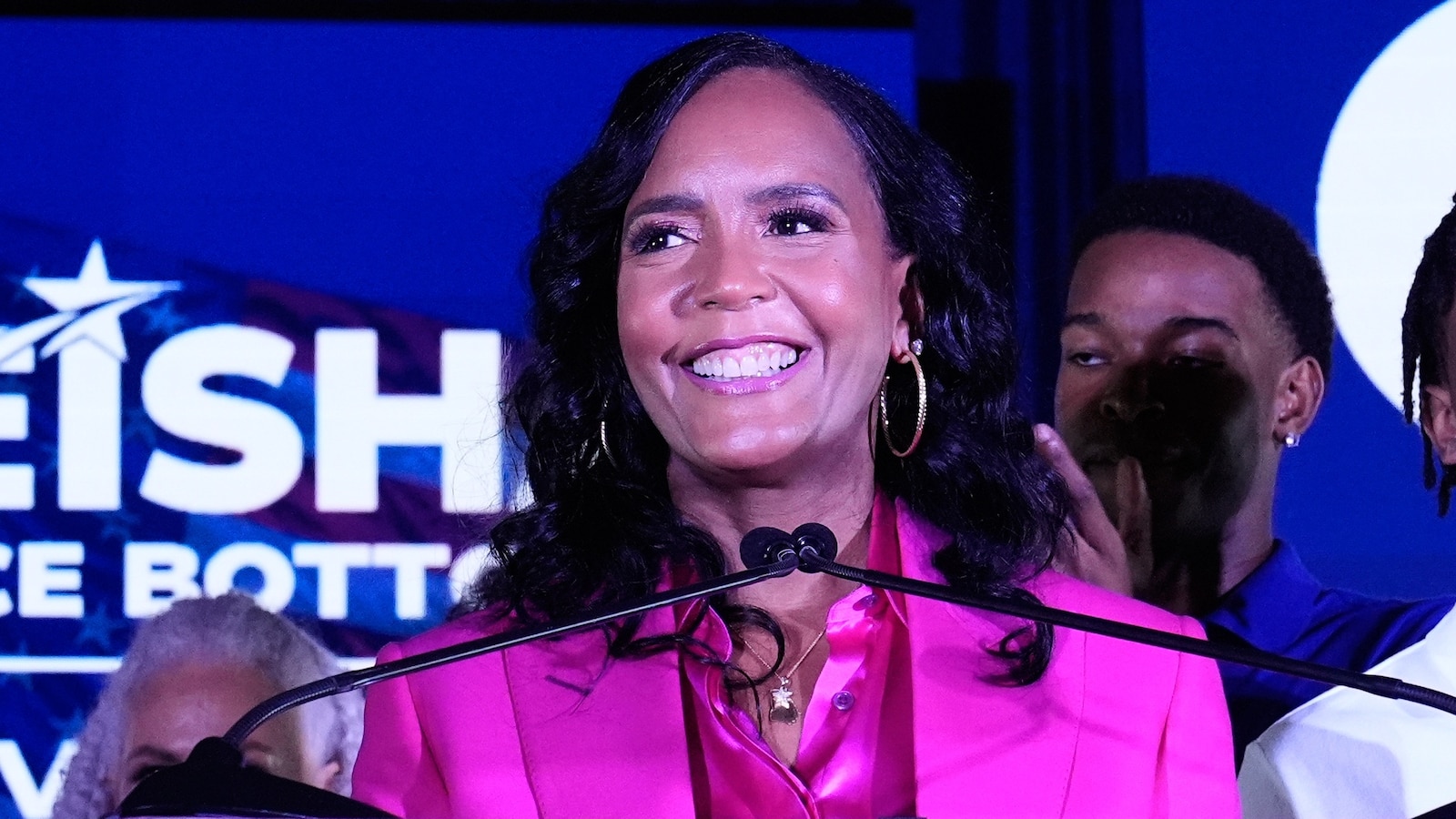
Democratic margins in the state were wide: Keisha Lance Bottoms became the first Black woman to be elected governor in American history, winning by nearly a 9-point margin; the state hasn't seen a Democratic governor since Roy Barnes won by a similar margin in 1998. asserted
Barnes → become → 1998
Democratic Sen. Jon Ossoff was reelected in a landslide, winning by 18 points and improving on his 2021 runoff victory margin by 17 points and President Donald Trump's victory in the state in 2024 by 20 points. Increasing levels of Democratic support among Black and white voters According to the 2026 ABC News Voter Poll and the Associated Press' VoteCast from 2022, Bottoms and Ossoff performed better among white voters than Democratic candidates in the state four years ago. uncertain
Bottoms → reelect → state
Democratic candidates for 2022's gubernatorial and Senate races in Georgia lost the white vote by 49 and 39 points, respectively. asserted
candidates → lose → points
Bottoms and Ossoff narrowed that margin considerably, losing white voters 31 and 19 points, respectively. asserted
Bottoms → narrow → points
Moreover, Democratic candidates in Georgia this year performed slightly better among Black voters than they did in 2022. asserted
they → perform → 2022
Looking at the turnout among Black and white voters in Georgia Georgia's recently released voter file and the ABC News Voter Poll show Black voters' turnout and support were important contributors to the Democrats' big wins in the state. asserted
turnout → look → state
Midterm elections typically have lower turnout rates than presidential years, and 2026 was no different. asserted
2026 → have → years
According to data from voter records firm L2, the turnout rate (the percentage of registered voters that voted) in Georgia's recent midterm was 55%, down about 18 points from 2024 and showed little change from 2022's midterm elections. However, among Black voters, the turnout rate decreased only 12 points from 2024, which is 9 points smaller than the drop for white voters. uncertain
which → accord → voters
Relative to 2022, Black turnout remained almost unchanged, while turnout among white voters dropped 8 points from 2022 to 2026. asserted
turnout → remain → 2026
Even if white voters turned out at a rate similar to Black voters, in isolation, it is unlikely that these likely Republican votes from white voters that stayed home would have been enough to counteract the increased Democratic support among the Black and white voters who did cast ballots. asserted
who → turn → ballots
Looking at turnout by voting frequency The narrowing of the gap between Black and white voters' turnout rates in Georgia is also evident when comparing voters by how frequently they voted in the past four federal elections. asserted
they → look → elections
High-frequency voters are defined as those who have voted in four of the last four elections whereas low-frequency voters are defined as those who have voted in either zero or one of four of the most recent general elections in their state. asserted
who → define → state
Occasional voters refers to those who voted in two or three of the last four elections. asserted
who → refer → elections
Relative to 2022, occasional white voters saw the largest decline in turnout when compared to low- and high-frequency white voters. asserted
voters → see → voters
These occasional voters had an 18-point decline in turnout compared to the 10-point and 6-point declines experienced by low- and high-propensity white voters, respectively. asserted
voters → have → voters
Conversely, compared to 2022, Black turnout remained largely unchanged for the different categories of voters by propensity. asserted
turnout → compare → propensity
Together, these factors contributed to the Black and white turnout gap narrowing greatly in 2026, with moderate- and high-propensity Black voters turning out at higher rates than their white counterparts. asserted
voters → contribute → counterparts
ABC News' Emily Guskin contributed to this report. asserted
Guskin → contribute → report

Give feedback · no sign-in needed

No sign-in needed for now. Your note is sent without a name, so it cannot be answered.

History Support