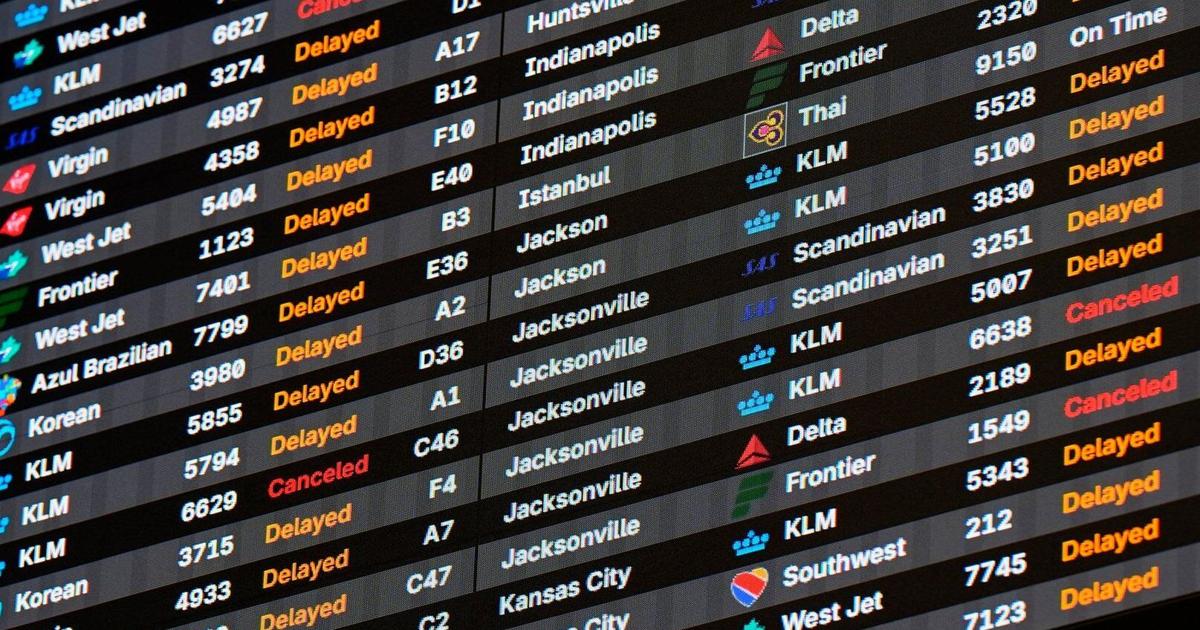
It’s the busiest travel week of the year.
asserted
It → ’ → year
Something like 80 million Americans are expected to travel more than 50 miles this week — with 6 million or so traveling by plane.
asserted
million → expect → plane
Given that everything already appears to be breaking all the time, this is perhaps the worst imaginable time for a “stress test” of our infrastructure.
asserted
this → give → infrastructure
But that’s exactly what’s coming.
asserted
what → ’ → ?
As you probably already know, the omens are not ideal.
asserted
omens → know → ?
On Sunday, an outage at Delta (which began at their headquarters in Atlanta) caused delays all over the country.
asserted
which → begin → country
They also issued a ground stop in the morning.
asserted
They → issue → morning
To make matters worse, if you listen to the reason for the outage, it sounds very similar to what happened at United Airlines just a few days ago.
asserted
what → make → Airlines
It all has to do with some unspecified outage related to Delta’s “weight and balance” system, which is obviously important because it ensures that the plane isn’t overburdened or unbalanced when it takes off.
asserted
it → have → system
I know what you’re thinking: did the weight and balance system somehow break or give up because of all the morbidly obese passengers, each carrying the equivalent of about ten bowling balls worth of lard attached to their gut and their asses?
asserted
system → know → gut
The answer, as far as I know, is no; the fat people didn’t break the system.
asserted
people → know → system
We don’t know what broke it at this point.
asserted
what → know → point
What’s confusing about this latest meltdown is that Delta uses a different “weight and balance” system than United.
asserted
Delta → ’ → United
Both airlines have their own in-house computer program that’s supposed to handle these calculations to make sure the plane has the right distribution of luggage and fat asses.
asserted
has → have → luggage
Delta has the “Automated Load Instruction System” (or ALIS), which dates to the 1990s.
asserted
which → have → 1990s
Meanwhile, United uses a system called “Unimatic,” which they set up in the 1970s.
asserted
they → use → 1970s
While these systems probably have a lot of similarities, they’re also distinct.
asserted
they → have → similarities
They’re not located in the same place.
asserted
They → locate → place
They’re not maintained or built by the same company.
asserted
They → maintain → company
So why are they going down, one after the other, less than one week apart?
asserted
they → go → other
If you’re following the timeline here — on November 13, we had a nationwide ground stop, supposedly due to a router the FAA replaced in Arkansas.
asserted
FAA → follow → Arkansas
Then on November 16 (just three days later), United had a massive outage involving Unimatic.
asserted
United → have → Unimatic
Six days after that, Delta’s ALIS system went down, causing more than 1,000 flight cancellations and delays.
asserted
system → go → cancellations
There has been no explanation from anyone, as far as I can tell, that would shed light on how these two distinct systems could both crash like this.
uncertain
systems → tell → this
You have to wonder if there’s some systemic problem here, and if so, what exactly is being done to solve it — before the computers crash at yet another airline.
asserted
computers → have → airline
Whatever the case, it’s yet another problem for the aviation industry in a very bad year.
asserted
it → ’ → year
2026 is currently on pace for the highest rate of cancellations since 2022, when airlines were still dealing with the effects of the COVID lockdowns.
asserted
airlines → deal → lockdowns
That was supposed to be a once-in-a-lifetime event for aviation.
asserted
That → suppose → aviation
But as we’ve seen in many other industries, COVID was actually the beginning of an indefinite slide into mediocrity, failure, and disruption for air travel.
asserted
COVID → see → travel
To be fair, some of these delays are due to winter storms from earlier this year, runway construction at big airports, and other factors that are difficult to control.
asserted
that → control → airports
But especially in the past few weeks, the disruptions have mostly been linked to outages.
asserted
disruptions → link → outages
There’s reason to believe the problem is only going to get worse.
asserted
problem → ’ → ?
Let’s go through the latest statistics from the Department of Transportation — because if you’re flying soon, this could be useful.
uncertain
this → let → Transportation
Alaska Airlines and Delta had the highest percent of on-time arrivals during this period, at roughly 78%.
asserted
Airlines → have → %
You can see the numbers (Note that this chart includes all the partner carriers, or “codeshare partners” as they’re called).
asserted
they → see → carriers
What’s notable here is that, while most airlines were consistent year-over-year, two of them were not.
asserted
two → ’ → them
Southwest’s on-time performance dropped significantly, from 78% in 2025 to 73.08% in 2026.
asserted
performance → drop → 2026
So that’s a drop of about 5 percentage points.
asserted
that → ’ → points
Meanwhile, JetBlue dropped from 73.4% to 67.7%, another roughly 5 percentage-point drop.
asserted
JetBlue → drop → drop
There’s no clear reason why this happened, although it’s worth pointing out that Southwest did shift to an assigned-seats model at the beginning of this year — which you’d think would’ve helped them.
asserted
you → ’ → them
…and 238 more, not listed.
 The Aporia