Photo via TIME

What to Know About The Supermoon Appearing This Thanksgiving Week

Read the original at TIME ↗
Cite

Kluger, J. (2026, November 23). What to Know About The Supermoon Appearing This Thanksgiving Week. TIME. https://time.com/article/2026/11/23/thanksgiving-beaver-supermoon-what-to-know/

Dated from the outlet's own feed. Check the original for its byline.

TIME · collected 2026-11-23 · by Jeffrey Kluger

Quick Summary

This Thanksgiving week, a supermoon will be visible from November 23 to 25, appearing larger and brighter than usual full moons. A supermoon occurs when the full moon coincides with its closest approach to Earth in its elliptical orbit, making it about 14% larger and 30% brighter compared to a micromoon. Despite some skepticism from astronomers like Neil deGrasse Tyson, the supermoon appears exceptionally large near the horizon due to an optical illusion, although it does not actually change size.
Written by AI on 2026-11-24, from this article's own text only (the story summary below draws on all the coverage).
See how they differ ↓

AI analysis

Story summary

A spectacular full moon known as a supermoon will be visible from Monday, November 23 to Wednesday, November 25, 2026, during Thanksgiving week. This supermoon will be the first of three, with the others occurring on Christmas Eve and January 22. A supermoon is a full moon that coincides with the moon's closest approach to Earth, making it appear larger and brighter than usual. The moon's orbit around Earth is elliptical, with a perigee (closest approach) of about 223,000 miles and an apogee (farthest point) of about 252,000 miles. This Thanksgiving supermoon will be particularly notable for its size and brightness, offering a stunning celestial display visible both in the evening and during the day, though not as prominently.

Written for “Supermoon During Thanksgiving Week” on 2026-11-25, grounded in this article and the 1 other(s) covering the same event.

Compared with similar articles

This article reads unscored and hedges 5% of its claims. Each row says how that neighbour differs.
CBC News
Hedges 0 of 1 claims Outlet record 70/100
Daily Mail
Hedges 4 of 23 claims Outlet record 68/100
“The articles discuss the same general phenomenon but refer to different specific dates and occurrences within the series of supermoons.”

Story

Supermoon During Thanksgiving Week
Science · 2 article(s) covering the same event. See how they differ ↑
How this article was measured signals, leaning charts, publisher record, byline, topics and claims

Signals How these are calculated →

Claims extracted
20
sentences that state something as happening or true
Uncertain
5%
1 of 20 hedged ("reportedly", "may", "according to")
Leaning
not political
takes no side on a contested political question
Publisher signals
60/100
TIME's corrections and hedging, across everything collected from it. Not a measure of accuracy.
Outlets on this story
2
Science
Same framing elsewhere
1
articles that frame the event the way this one does
Analyzed 2026-11-24 · how these are computed

How this is being covered How these are calculated →

Article leaning vs. publisher reliability
Source leaning vs. consistency

Publisher

TIME · 1116 article(s) · 2 correction(s) detected
Running correction rate · 2 correction(s)

Who wrote this

Jeffrey Kluger
11 article(s) here · 1 carrying a prediction
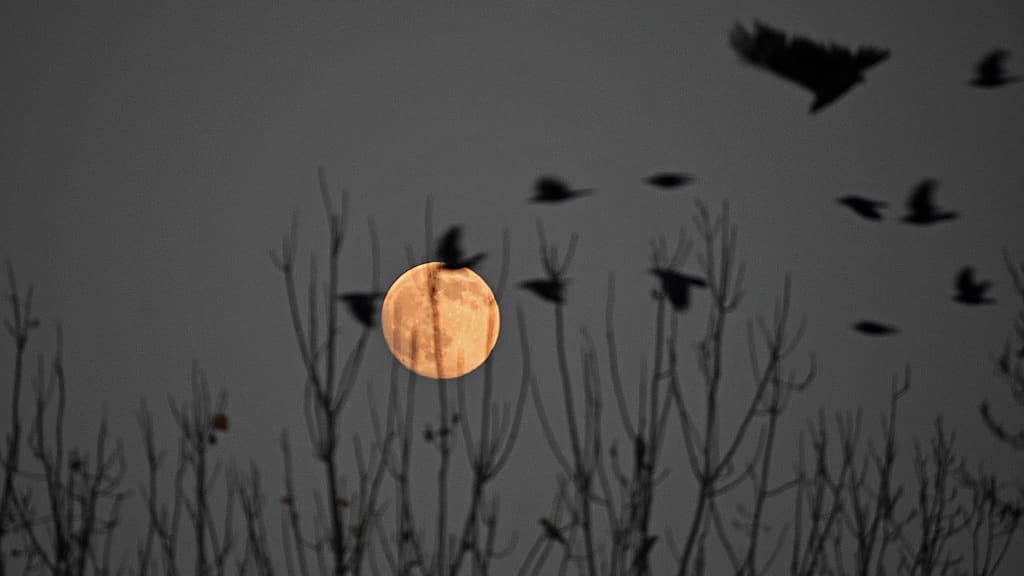
On Monday, Tuesday, and Wednesday, Nov. 23 to 25, a spectacular full moon known as a supermoon will shine overhead, visible both in the evening and, though not as dazzlingly, during the day.
This same pattern has recurred in 2025 and 2026, so the prediction is we will [see] an even larger surge at that time in 2027.” What makes things worse is that while measles is an easy illness to prevent—two doses of the MMR vaccine reduce the risk of contracting the disease by 97%—it is wildly easy to catch and spread.
The little lost boy in Dinwiddie County could not know about the effort the grownups were making to find him.
But even the harshest critics might smile at the news coming out of Dallas-based Colossal Biosciences.
2026-10-14 · assertive framing · AI Is Helping Bring Back the Dodo
In an interview with Fox News, Israeli Prime Minister Benjamin Netanyahu said it was too soon to know if the co-pilot were acting in coordination with Iran, with which Israel is currently at war, in an act of organized terrorism, “but he obviously hated Israelis because he was going to kill about 170 of them on the plane, killing himself too.” U.S. President Donald Trump on Thursday suggested the co-pilot may be linked to Iran, "based on what [he's] hearing," but did not provide any details.
The reasons for the changes are not clear, but greater public awareness of the health risks of drinking may play a role in alcohol’s overall decline.
As long ago as 1985, the U.S. Air Force shot down a defunct American weather satellite with a missile launched by a military jet flying at 31,500 ft., a first test of a technology that could just as easily be used against the space assets of enemy nations.
Every time you welcome a guest into your home, you may be letting in thousands of other ones as well—if you allow your visitors to wear their shoes when they enter.
2026-09-14 · assertive framing · Why You Should Never Wear Shoes in Your House
In those four-plus years on the job, MESSENGER did a lot of work, studying Mercury with seven different scientific instruments—including its Mercury Laser Altimeter, a ranging tool that could measure surface features to within one meter; and a dual imaging system that used two cameras to map the surface in wide- and narrow-angle and black and white and color.
“We are thinking it will be in the early 2030s,” he says.
Also by Jeffrey Kluger
Nothing else under this byline is closely related to this article, so these are simply their most recent.
All 11 articles by Jeffrey Kluger →

Topics

Full Moon NASA

Subjects

NASA ORG · 1× Native American NORP · 1× Neil deGrasse Tyson PERSON · 1×

Narrative

Full moons go by traditional nicknames such as the “wolf moon” in January, honoring the wolves that go howling for food when prey is scarce in the winter, and the “worm moon” in March, a Native American coinage for the worm trails left in the thawing Earth as winter starts to lose its hold.
framing: assertive · carried by 1 article(s) · first seen 2026-11-24
On Monday, Tuesday, and Wednesday, Nov. 23 to 25, a spectacular full moon known as a supermoon will shine overhead, visible both in the evening and, though not as dazzlingly, during the day.

Claims (20 extracted, 1 hedged)

On Monday, Tuesday, and Wednesday, Nov. 23 to 25, a spectacular full moon known as a supermoon will shine overhead, visible both in the evening and, though not as dazzlingly, during the day. asserted
moon → know → day
It will be the first of a run of three supermoons, the other two peaking on Christmas Eve and Jan. 22. asserted
two → peak → Eve
A full moon occurs when the Earth sits between the sun and the moon, allowing solar light to bathe the entirety of the visible hemisphere of the moon. asserted
light → occur → moon
A new moon—or no moon at all—occurs when the moon, in the course of its orbit around our planet, sits between the Earth and the sun, so that its far side is illuminated, leaving nothing for us to see. asserted
us → occur → nothing
Full moons can occur at any point in that ellipse, and that can make a big difference in what we see. asserted
we → occur → what
A full moon at apogee—a so-called micromoon—appears about 7% smaller than a full moon at the average 239,000-mile distance, and fully 14% smaller than a full moon at perigee, which is when the supermoon occurs. asserted
supermoon → call → perigee
No less an authority than astronomer Neil deGrasse Tyson has cast shade on the supermoon experience, posting on X in 2022, “Tonight’s Full Moon, the largest of the year, is 8% larger than an average Full Moon. asserted
Moon → cast → Moon
I’m okay with that, but only if you think a 16-inch pizza is super-duper-sized compared with a 15-inch pizza. asserted
pizza → ’m → pizza
The ne plus ultra of the supermoon experience occurs when the moon is close to the Earth’s horizon and appears radically larger than it does when it is directly overhead. asserted
it → occur → horizon
It’s not—if you hold your thumb at arm’s length and measure it against the size of a giant horizon moon it will be no different from the result you’d get if you do the same when the moon is straight up. asserted
moon → ’ → same
This, as NASA explains, is a result of the straightforwardly named moon illision—something astronomers and skygazers have been puzzling over for millennia, and a number of explanations have been offered for it. asserted
number → explain → it
One line of thought goes that when the moon is close to the ground we unconsciously compare it to small intervening objects—trees, houses, cars—and it appears to dwarf them. asserted
it → go → them
Straight overhead, the moon has nothing to compete with for size except the great bowl of the sky, and thus appears smaller. asserted
moon → have → sky
Additionally, when the moon is low in the sky, its light has to travel about three more miles—the distance from where you’re standing at sea level to the point of the horizon—to reach us. asserted
you → have → us
That causes more of its short-wavelength blue to be scattered away and allows more conspicuous redder and yellower light to reach us. asserted
light → cause → us
Our eyes conflate that vividness with size. asserted
eyes → conflate → size
The coming supermoon will reach its peak at 9:53 a.m. EST on Tuesday—well after sunrise and thus not ideal for viewing. asserted
supermoon → come → viewing
Full moons go by traditional nicknames such as the “wolf moon” in January, honoring the wolves that go howling for food when prey is scarce in the winter, and the “worm moon” in March, a Native American coinage for the worm trails left in the thawing Earth as winter starts to lose its hold. asserted
winter → go → hold
This coming full moon is best known as the “beaver moon,” marking the increasingly cold season in which beavers take to their lodges for shelter. asserted
beavers → come → shelter
According to the Farmer’s Almanac, it is alternately known as the “digging moon”—for the animals that scratch for nuts and shoots in the fall, and the “deer rutting moon,” marking the season when deer look for mates. uncertain
deer → accord → mates

Give feedback · no sign-in needed

No sign-in needed for now. Your note is sent without a name, so it cannot be answered.

History Support