Claims extracted
20
sentences that state something as happening or true
Uncertain
5%
1 of 20 hedged
("reportedly", "may", "according to")
Leaning
not political
takes no side on a contested political question
Publisher signals
60/100
TIME's corrections and
hedging, across everything collected from it. Not a measure of accuracy.
Outlets on this story
2
Science
Same framing elsewhere
1
articles that frame the event the way this one does
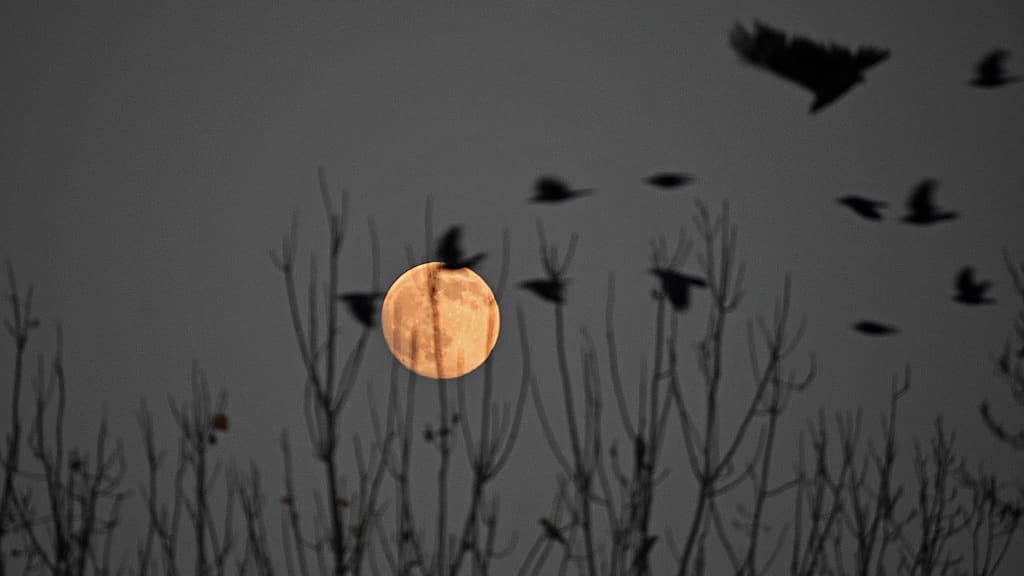
On Monday, Tuesday, and Wednesday, Nov. 23 to 25, a spectacular full moon known as a supermoon will shine overhead, visible both in the evening and, though not as dazzlingly, during the day.
asserted
moon → know → day
It will be the first of a run of three supermoons, the other two peaking on Christmas Eve and Jan. 22.
asserted
two → peak → Eve
A full moon occurs when the Earth sits between the sun and the moon, allowing solar light to bathe the entirety of the visible hemisphere of the moon.
asserted
light → occur → moon
A new moon—or no moon at all—occurs when the moon, in the course of its orbit around our planet, sits between the Earth and the sun, so that its far side is illuminated, leaving nothing for us to see.
asserted
us → occur → nothing
Full moons can occur at any point in that ellipse, and that can make a big difference in what we see.
asserted
we → occur → what
A full moon at apogee—a so-called micromoon—appears about 7% smaller than a full moon at the average 239,000-mile distance, and fully 14% smaller than a full moon at perigee, which is when the supermoon occurs.
asserted
supermoon → call → perigee
No less an authority than astronomer Neil deGrasse Tyson has cast shade on the supermoon experience, posting on X in 2022, “Tonight’s Full Moon, the largest of the year, is 8% larger than an average Full Moon.
asserted
Moon → cast → Moon
I’m okay with that, but only if you think a 16-inch pizza is super-duper-sized compared with a 15-inch pizza.
asserted
pizza → ’m → pizza
The ne plus ultra of the supermoon experience occurs when the moon is close to the Earth’s horizon and appears radically larger than it does when it is directly overhead.
asserted
it → occur → horizon
It’s not—if you hold your thumb at arm’s length and measure it against the size of a giant horizon moon it will be no different from the result you’d get if you do the same when the moon is straight up.
asserted
moon → ’ → same
This, as NASA explains, is a result of the straightforwardly named moon illision—something astronomers and skygazers have been puzzling over for millennia, and a number of explanations have been offered for it.
asserted
number → explain → it
One line of thought goes that when the moon is close to the ground we unconsciously compare it to small intervening objects—trees, houses, cars—and it appears to dwarf them.
asserted
it → go → them
Straight overhead, the moon has nothing to compete with for size except the great bowl of the sky, and thus appears smaller.
asserted
moon → have → sky
Additionally, when the moon is low in the sky, its light has to travel about three more miles—the distance from where you’re standing at sea level to the point of the horizon—to reach us.
asserted
you → have → us
That causes more of its short-wavelength blue to be scattered away and allows more conspicuous redder and yellower light to reach us.
asserted
light → cause → us
Our eyes conflate that vividness with size.
asserted
eyes → conflate → size
The coming supermoon will reach its peak at 9:53 a.m. EST on Tuesday—well after sunrise and thus not ideal for viewing.
asserted
supermoon → come → viewing
Full moons go by traditional nicknames such as the “wolf moon” in January, honoring the wolves that go howling for food when prey is scarce in the winter, and the “worm moon” in March, a Native American coinage for the worm trails left in the thawing Earth as winter starts to lose its hold.
asserted
winter → go → hold
This coming full moon is best known as the “beaver moon,” marking the increasingly cold season in which beavers take to their lodges for shelter.
asserted
beavers → come → shelter
According to the Farmer’s Almanac, it is alternately known as the “digging moon”—for the animals that scratch for nuts and shoots in the fall, and the “deer rutting moon,” marking the season when deer look for mates.
uncertain
deer → accord → mates
 The Aporia