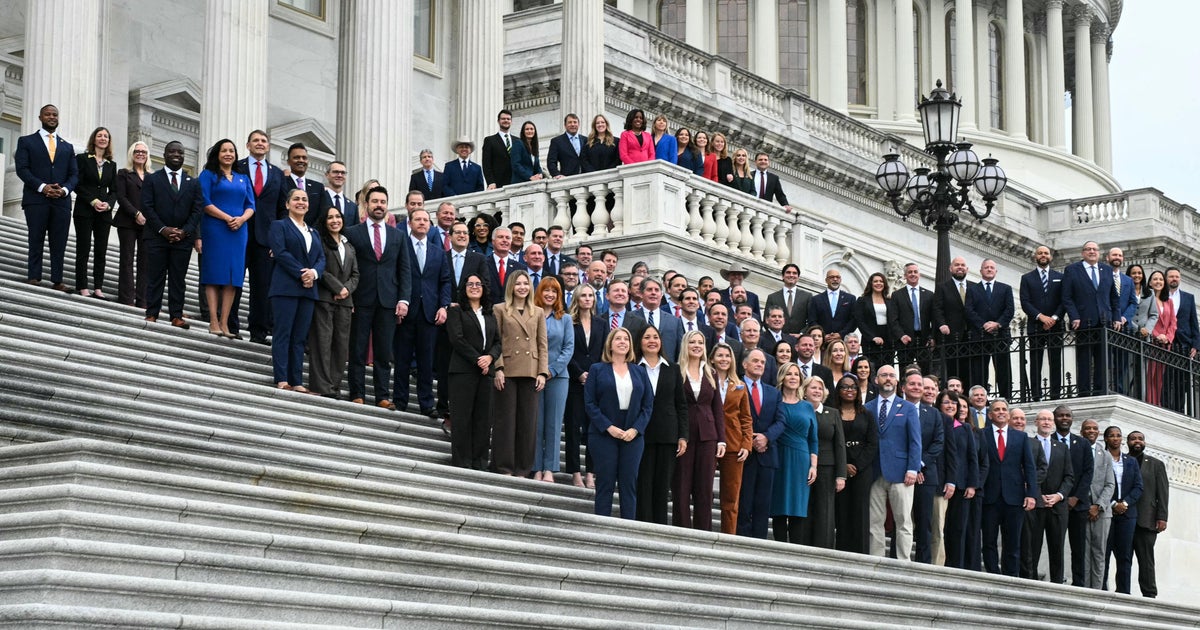
Photo via The Daily Caller

MOREFIELD: Here’s Why Republicans MUST Maintain At Least 41 Seats In 2028. It’s Not What You Think

Read the original at The Daily Caller ↗
Cite

Morefield, S. (2026, November 23). MOREFIELD: Here’s Why Republicans MUST Maintain At Least 41 Seats In 2028. It’s Not What You Think. The Daily Caller. https://dailycaller.com/2026/11/23/scott-morefield-democrats-nuke-filibuster-republicans-silver-lining

Dated from the outlet's own feed. Check the original for its byline.

The Daily Caller · collected 2026-11-23 · by Scott Morefield

Quick Summary

This article is an opinion piece by MOREFIELD discussing the implications of the recent midterm elections for Republicans in the United States. The author notes that Democrats now control 56 Senate seats and at least 258 House seats, marking a significant shift. MOREFIELD argues that Republicans must maintain at least 41 Senate seats in the future to prevent Democrats from implementing structural changes that could solidify their power indefinitely. The article highlights the vulnerability of several Republican-held Senate seats in the upcoming years and warns of potential legislative overreach by Democrats if Republicans fail to maintain their current level of Senate representation.
Written by AI on 2026-11-23, from this article's own text only (the story summary below draws on all the coverage).

AI analysis

Story summary

The Democrats secured a significant victory in the midterm elections, gaining control of the Senate with a 56-44 seat advantage, and controlling at least 258 House seats, marking their largest majority in over three decades. In the final Senate races in Alaska and Mississippi, Democrats triumphed, solidifying their majority. Despite this, Republicans can still block major legislation through the Senate filibuster, which President Donald Trump has indicated a willingness to work around on issues like immigration and healthcare. However, Republican resistance in the Senate could prevent the most extreme legislative changes proposed by Democrats. The article suggests that unless there is a dramatic shift in political tides, Republicans face another electoral disaster in the upcoming years.

Written for “Republicans Senate Strategy 2028” on 2026-11-24, grounded in this article and the 0 other(s) covering the same event.

Compared with similar articles

This article reads leans strongly right and hedges 7% of its claims. Each row says how that neighbour differs.
Toronto Star
Leans strongly left further left than this Hedges 1 of 31 claims Outlet record 65/100
“While both articles discuss the Democrats winning a significant majority in the House, Article A focuses on the specific results and outcome of the 2026 election, while Article B discusses broader implications and future concerns for Republicans.”
The Straits Times
Leans left further left than this Hedges 2 of 31 claims Outlet record 64/100
“While both articles discuss the Democrats winning a significant majority in the House, Article A focuses on the specific results of the election on November 22, 2026, while Article B discusses broader implications for Republicans following the election results, and is dated the day after the initial event.”
The Guardian
Hedges 1 of 27 claims Outlet record 63/100
“While both articles discuss the Democratic gains in the House election, Article B focuses more on the implications for Republicans and the Senate, and does not describe the exact same specific moment or outcome as Article A.”
Washington Examiner
Hedges 1 of 3 claims Outlet record 66/100
“While both articles discuss the Democrats securing 258 House seats, Article A focuses on the specific race between Chuck Hubbard and Virginia Foxx, while Article B provides a broader context and analysis of the overall election results and implications for Republicans.”
The Hindu
Hedges 2 of 30 claims Outlet record 78/100
“Both articles discuss the Democrats' victory in the House election, but Article B focuses more on the implications for Republicans and mentions additional context about Senate races, indicating it covers a broader narrative rather than a single specific event.”
The Independent
Leans strongly left further left than this Hedges 1 of 32 claims Outlet record 59/100
“Article A describes the Democrats securing at least 258 House seats in the midterm elections, while Article B discusses the broader implications of the election results for Republicans and the Senate. Although related, they do not describe the same specific event.”
Fox News
Leans right further left than this Hedges 2 of 32 claims Outlet record 65/100
“Article A discusses the implications of the 2026 election results for Republicans in 2028, while Article B focuses on the difficulties Republicans face in the 2028 Senate election cycle due to the 2026 results. While related, they describe different aspects of different events.”
CBS News
Hedges 4 of 32 claims Outlet record 66/100
“Article A describes the specific moment Democrats secured their 258th seat, while Article B discusses the broader implications and outcomes of the 2026 midterm elections for Republicans.”
November 23, 2026 Different event
Letters from an American
Leans left further left than this Hedges 5 of 71 claims
“While both articles discuss the outcomes of the 2026 midterm elections, they focus on different aspects and details, suggesting they may not be describing the same specific event or moment in time.”

Story

Republicans Senate Strategy 2028
Politics · 1 article(s) covering the same event.
How this article was measured signals, leaning charts, publisher record, byline, topics and claims

Signals How these are calculated →

Claims extracted
43
sentences that state something as happening or true
Uncertain
7%
3 of 43 hedged ("reportedly", "may", "according to")
Leaning
Leans strongly right
of the writing, not the subject · beta estimate
Publisher signals
92/100
The Daily Caller's corrections and hedging, across everything collected from it. Not a measure of accuracy.
Outlets on this story
1
Politics
Same framing elsewhere
1
articles that frame the event the way this one does
Analyzed 2026-11-23 · how these are computed

How this is being covered How these are calculated →

Article leaning vs. publisher reliability
Source leaning vs. consistency

Publisher

The Daily Caller · 451 article(s) · 1 correction(s) detected
Running correction rate · 1 correction(s)

Who wrote this

Scott Morefield
2 article(s) here · 1 carrying a prediction
And as undecided House races continue to go blue at an astonishing rate, that party will also control at least 258 House seats, the largest majority either party has held in more than three decades.
Following last week’s disastrous midterm wipeout, caused in large part by President Donald Trump’s ill-advised war with Iran, the current administration has become so toxic that it has become widely assumed that anyone even remotely associated with it will have zero chance to win the GOP nomination, much less the presidency, in 2028.
Also by Scott Morefield
Nothing else under this byline is closely related to this article, so these are simply their most recent.

Topics

Alaska Democrats House Republicans Senate

Subjects

Democrats NORP · 11× Republicans NORP · 9× Senate ORG · 8× House ORG · 3× Alaska GPE · 2× GOP ORG · 2× Trump PERSON · 2× Donald Trump PERSON · 1× Iran GPE · 1× Mississippi GPE · 1×

Narrative

The question, then, isn’t so much whether Democrats will have control, but whether they will have enough control to implement the structural changes they’ve been itching to implement that they believe will cement their power indefinitely without nuking the Senate filibuster.
framing: assertive · carried by 1 article(s) · first seen 2026-11-23
And as undecided House races continue to go blue at an astonishing rate, that party will also control at least 258 House seats, the largest majority either party has held in more than three decades.

Claims (43 extracted, 3 hedged)

In the wake of what already had been a devastating midterm election cycle for Republicans, the races left to be called have yielded zero bright spots. asserted
races → leave → spots
The final two Senate races to be decided, in Alaska and Mississippi of all places, have gone to Democrats, making the final margin 56-44. asserted
margin → decide → Democrats
And as undecided House races continue to go blue at an astonishing rate, that party will also control at least 258 House seats, the largest majority either party has held in more than three decades. asserted
party → continue → decades
Republicans, however, still retain enough seats to block most significant legislation with the Senate filibuster. asserted
Republicans → retain → filibuster
While President Donald Trump, ever true to form, has indicated a willingness to work with Democrats on issues like immigration and healthcare, enough GOP resistance in the Senate could keep the worst at bay. uncertain
resistance → indicate → bay
I say “for now” because we all know where things are headed. asserted
things → say → ?
Those of us who knew the electoral disaster that awaited us as soon as Trump launched his ill-fated war with Iran have known longer, but have sadly been powerless to change the destination. asserted
Trump → know → destination
Unless the political tides dramatically (and miraculously) shift, we are headed, of course, to another likely GOP electoral disaster in 2028 — one that will give Democrats the power trifecta. asserted
that → shift → trifecta
The House majority is too large to overcome, even if the Blue tide pulls away and Republicans claw back a few seats in traditionally Red districts. asserted
Republicans → overcome → districts
And thanks to the massive losses this year — a year they traditionally should have had an advantage — Republicans won’t have any shot at the Senate for 6 years, at best. asserted
Republicans → have → years
The question, then, isn’t so much whether Democrats will have control, but whether they will have enough control to implement the structural changes they’ve been itching to implement that they believe will cement their power indefinitely without nuking the Senate filibuster. asserted
they → have → filibuster
Democrats obviously won’t try anything over the next two years with Trump in office. asserted
Democrats → try → office
But two years from now, Republicans will need to avoid losing four seats to stave off the worst. asserted
Republicans → need → worst
The problem is that they have a near-zero shot at unseating any Democratic senators, and they’ll be defending likely vulnerable seats in North Carolina, Iowa, Kansas, Alaska, and Wisconsin. asserted
they → have → Carolina
Lose four or five of those, and we’re all toast. asserted
we → lose → those
That’s because, like in 2009, when Democrats had a brief 60-seat majority and passed the Affordable Care Act, they won’t even need to do anything to the Senate filibuster to run roughshod over every freedom we hold dear. asserted
we → ’ → freedom
In other words, they can do what they want and leave the filibuster intact to keep Republicans at bay if they ever manage to wrest back control. asserted
they → do → control
That’s the worst-case scenario. asserted
That → ’ → ?
You think Obamacare was bad. asserted
Obamacare → think → ?
Imagine two years of Democrats running roughshod over everything, yet being mostly powerless to reverse it once Republicans are in power again. asserted
Republicans → imagine → power
However, if Republicans can manage to keep at least 41 Senate seats, they’ll force the Democrats’ hand. asserted
they → manage → hand
Even if Schumer and some traditionalists oppose doing away with the filibuster, their base will demand action, and I could easily see pressure mounting to the point that they are forced to finally end this longstanding tradition. uncertain
they → oppose → tradition
In the long run, though, and hear me out, Democrats finally nuking the filibuster and passing their craziest stuff could turn out to be a silver lining to the pain we are all about to experience. uncertain
we → hear → pain
How, you ask? asserted
you → ask → ?
It’s a great question, because the answer is counterintuitive. asserted
answer → ’ → ?
We all know that current Senate Majority Leader John Thune never had the courage to nuke the filibuster himself. asserted
Thune → know → filibuster
His stated reason was that he doesn’t want to be responsible for what Democrats will do with the power once unleashed. asserted
Democrats → state → power
It’s cowardly, and I believe he should have done it anyway, but it’s also not entirely wrong. asserted
it → ’ → it
Which means that, once Democrats do it, Republicans in power going forward will also have the ability not just to reverse what the Democrats did, but to pass virtually anything they want, with no guilt attached. asserted
guilt → mean → anything
To get to this point intellectually, though, you have to trust in your beliefs. asserted
you → get → beliefs
Leftists think their policies will result in Utopia. asserted
policies → think → Utopia
We know, or at least we believe, that they will result in economic devastation and, ultimately, the kind of tyranny experienced by all societies subjected to Marxist rule. asserted
they → know → rule
We also know that, as they always do, the left will massively overplay their hand in terms of what Americans will tolerate. asserted
Americans → know → what
We just have to wait for the pendulum to swing back, and be ready to pounce without the filibuster in place to hold us back. asserted
pendulum → have → us
And hopefully by then we will have elected some true America First politicians who can get the job done. asserted
job → elect → politicians
Bottom line: Republicans NEED to work hard to keep at least 41 Senate seats next cycle. asserted
Republicans → need → seats
Not to stop Democrats from implementing their agenda — because that’s not going to work — but to force their hand in eliminating the filibuster. asserted
that → stop → filibuster
Yes, the Senate should move slowly and deliberately, and there are plenty of mechanisms to ensure that happens. asserted
that → move → mechanisms
But without the filibuster as a crutch, legislation can be brought up and passed the old-fashioned way, issue by issue, instead of parties relying on packing everything into giant omnibus bills. asserted
parties → bring → bills
Politicians will finally be forced to reveal exactly what they are for and what they are against, and the American people can decide what they truly want. asserted
they → force → what
…and 3 more, not listed.

Give feedback · no sign-in needed

No sign-in needed for now. Your note is sent without a name, so it cannot be answered.

History Support