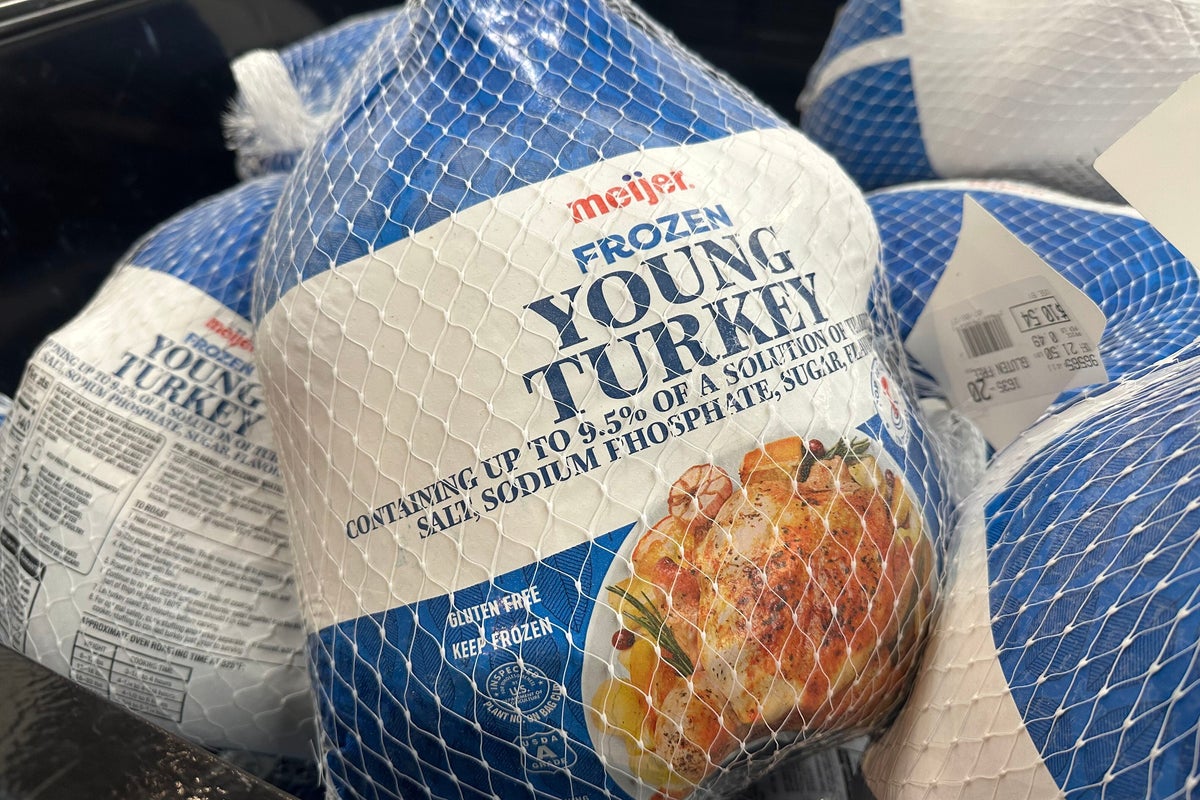
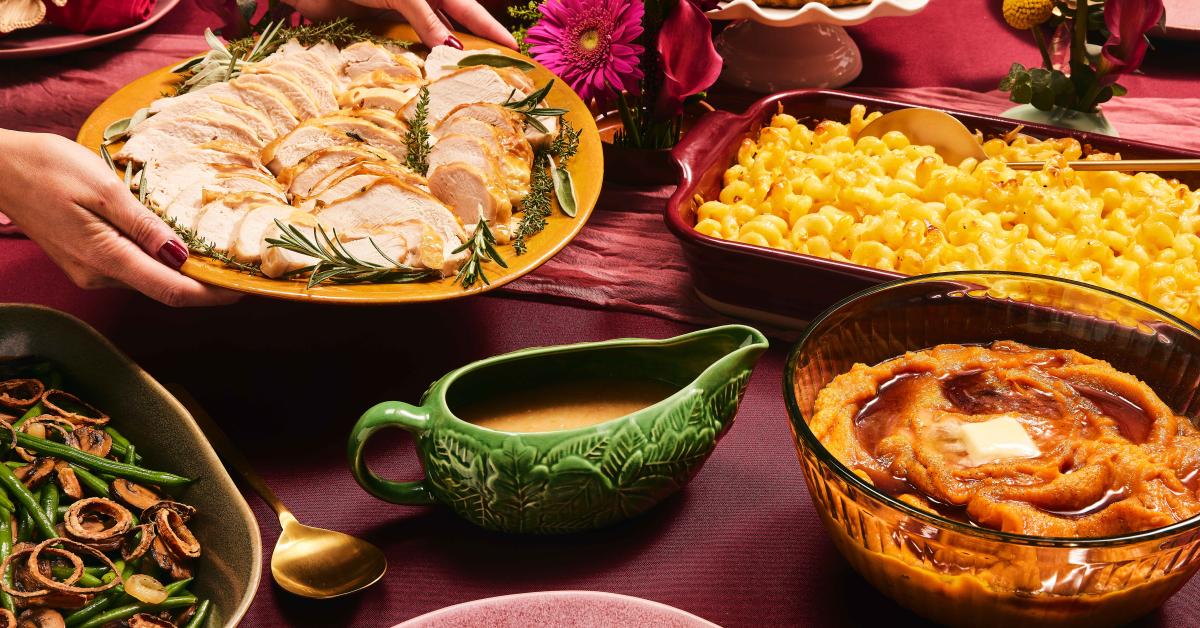
The American Farm Bureau Federation (AFBF) estimates that the cost of Thanksgiving dinner this year will be up more than 6% compared to last year, with steep turkey prices and higher fuel costs driving up the bill.
asserted
prices → estimate → bill
The average 10-person dinner will cost $58.63, compared to $55.18 in 2025, according to the bureau’s annual report.
uncertain
dinner → cost → report
This is the first year the bureau has reported a rise in the cost of the dinner since 2022, when prices hit a record high of $64.05.
asserted
prices → report → 64.05
The agricultural organization’s estimates are based on hundreds of volunteer shoppers from all 50 states and Puerto Rico reporting prices for a standard list of items at their local grocery store.
asserted
hundreds → base → store
Thanksgiving dinners in the Northeast are set to be the most expensive, while dinners in the South will again be the least expensive in the country, according to the survey.
uncertain
dinners → set → survey
“We see regional differences based on where shoppers choose to shop,” says Dr. Faith Parum, deputy chief economist at the AFBF.
asserted
Parum → see → AFBF
She tells TIME that the cost of transportation differs across the country, too, as “depending on supply chains, more fuel may be needed and that gets factored into food costs.
uncertain
that → tell → costs
The analysis points toward turkey prices as the main driver for the higher Thanksgiving dinner cost.
asserted
analysis → point → cost
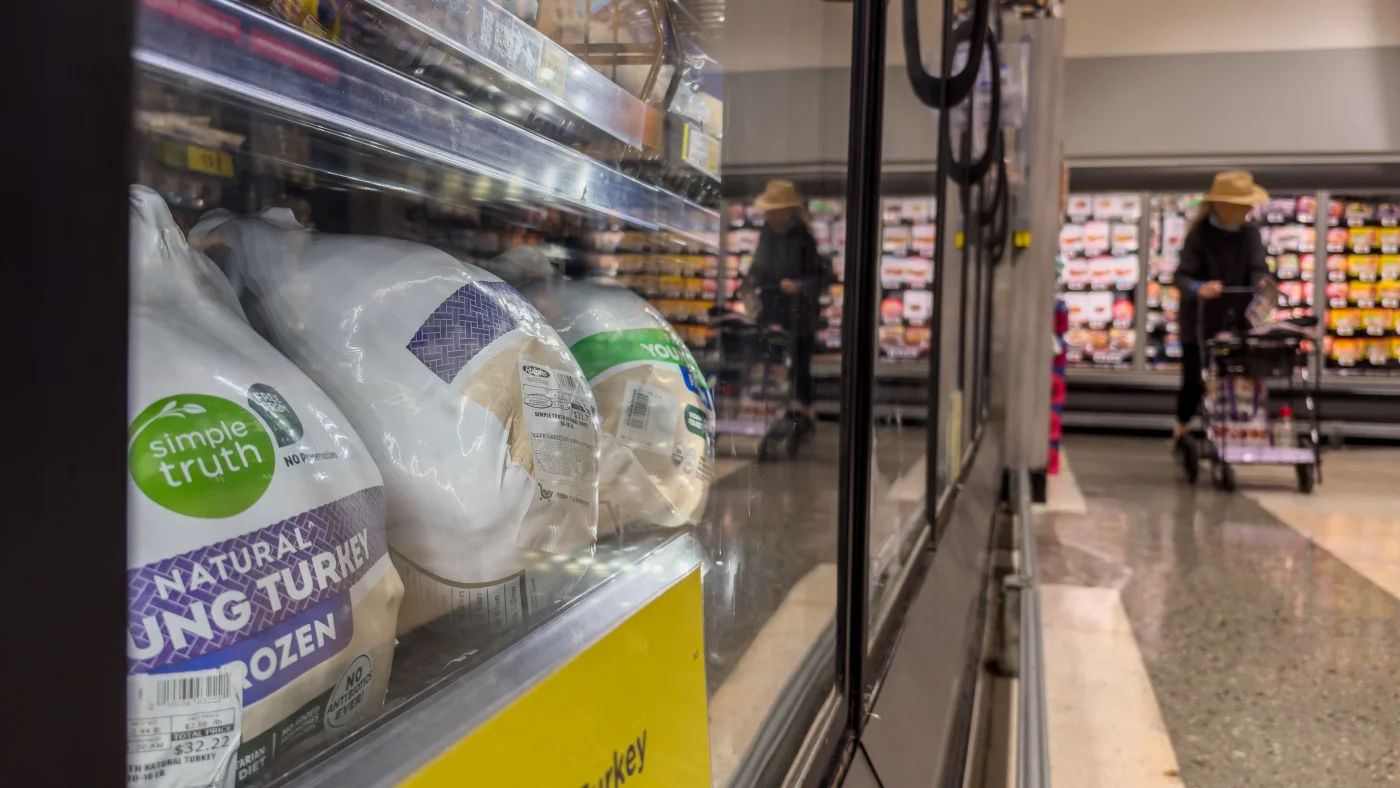
The bureau notes that the average price of a 16-pound frozen bird stands at $23.68, an increase of $2.38, or 10%, from 2025.
asserted
price → note → 2025
Data from the U.S. Department of Agriculture (USDA) says that the average market price of 8-16lb turkeys has increased from 135.8 cents/lb last year to 175.5 cents/lb in 2026, a rise of 29.2%.
asserted
price → say → %
Parum says one of the main impacts on turkey prices for Americans this year is a higher global demand.
asserted
one → say → Americans
“Lean protein has really boosted demand worldwide for things like chicken and turkey,” she explains.
asserted
she → boost → chicken
Total U.S. exports of turkey meat for 2026 are projected to reach 461 million pounds by the end of the year, compared to 420 million pounds last year, according to the USDA.
uncertain
exports → project → USDA
Other holiday essentials including milk, rolls, and cranberries have also driven up the cost of Thanksgiving dinner.
asserted
essentials → include → dinner
Energy costs have pushed up the price of turkey and other perishable items
Since the start of President Donald Trump’s war with Iran in February, severe disruption to the Strait of Hormuz, a vital trade route through which around a fifth of global oil production flowed before the conflict, has upended fuel costs.
asserted
fifth → push → costs
Diesel hit a record average of $6.53 per gallon in the U.S. in September, according to the American Automobile Association.
uncertain
Diesel → hit → Association
Diesel is essential to the process of food production (it's used in heavy machinery and vehicles) and is also pivotal to the transportation of goods.
asserted
it → use → goods
If you remember food price inflation after Russia invaded Ukraine [in 2022], a lot of that was due to high energy prices, so we're seeing similar things now
asserted
we → remember → things
,” says Parum, pointing to the high Thanksgiving prices seen in 2022, also due in part to inflation felt after the COVID pandemic.
asserted
Parum → say → pandemic
Ricky Volpe, a professor in agribusiness at California Polytechnic State University, says that spikes in energy prices have hit poultry production particularly hard.
asserted
spikes → say → production
“The poultry supply chain is highly elastic, where we see upstream cost impacts pass through quickly and pretty efficiently," he says, noting how energy is a major upstream cost.
asserted
energy → see → ?
“Unfortunately for holiday shoppers, the recent surge in energy prices reflects that.”
asserted
surge → reflect → that
Volpe says that cattle, for example, are fed and grown over a longer period of time than turkeys, and are therefore less impacted by immediate energy price shocks.
asserted
cattle → say → shocks
As a perishable commodity, turkey also requires extra refrigeration during processing and transport compared to long shelf-life goods, hence the higher impact of energy prices compared to non-perishables.
asserted
turkey → require → perishables
Milk also saw some of the largest year-over-year percentage gains.
asserted
Milk → see → gains
“It’s a product that is obviously highly perishable, requires careful temperature control, has a relatively brief supply chain from the dairy to the retail sector, and is very energy intensive,” says Volpe.
asserted
Volpe → ’ → sector
Experts also cite a labor shortage in the agricultural industry as being a contributing factor to higher Thanksgiving dinner costs.
asserted
Experts → cite → costs
The employment of agricultural workers is set to decline by 2% by 2035, according to the Bureau of Labor Statistics.
uncertain
employment → set → Statistics
Furthermore, a survey conducted by Purdue University in May found that 44% of farm owners who hire labor said they had at least some or a lot of difficulty hiring this year.
uncertain
they → conduct → difficulty
Increased prices for cranberries primarily stem from “high labor and diesel costs,” says Parum.
asserted
Parum → stem → costs
“We're really seeing a labor shortage in the United States for agricultural workers.”
asserted
We → see → workers
Turkey flocks continue to recover numbers after bird influenza spikes
Turkey prices are also high due to a series of spikes in highly pathogenic avian influenza (HPAI) cases in recent years.
asserted
prices → continue → years
Rises in the number of cases in 2022, 2023 and 2024 hit egg-laying hens and turkey, in particular.
asserted
Rises → hit → hens
“We have seen a decrease in the number of cases, but it still takes time for those flocks to fully recover,” says Parum.
asserted
Parum → see → time
The cost of turkey feed has also been on the rise this year, which has pushed up the price for consumers.
asserted
which → push → consumers
Turkey feed in the U.S. is usually made up of corn and soybeans, both of which have become more costly to produce for farmers this year compared to last.
asserted
feed → make → last
According to the USDA, total operating costs for a planted acre of corn in 2025 was $455.80, compared to $496.92 in its 2026 forecast.
uncertain
costs → accord → forecast
For soybeans, this cost stood at $250.88, compared to a 2026 projection of $266.45.
asserted
cost → stand → 266.45
“The cost of planting was really high in the last season,” says Jada Thompson, an associate professor in agricultural economics and agribusiness at the University of Arkansas.
asserted
Thompson → say → Arkansas
“The cost of urea and fertilizer was so high that it was affecting farmers’ break-even price,” she adds, pointing to this factor as one reason for increased planting costs.
asserted
she → affect → costs
…and 10 more, not listed.

 The Aporia