Photo via Fox News

Mystery of unknown skeleton buried at Westminster Abbey may finally be solved after 150 years

Read the original at Fox News ↗
Cite

Margolis, A. (2026, November 23). Mystery of unknown skeleton buried at Westminster Abbey may finally be solved after 150 years. Fox News. https://www.foxnews.com/travel/mystery-unknown-skeleton-buried-westminster-abbey-may-finally-solved-150-years

Dated from the outlet's own feed. Check the original for its byline.

Fox News · collected 2026-11-23 · by Andrea Margolis

Quick Summary

Archaeologist Warwick Rodwell may have solved the mystery of an unidentified skeleton found in 1869 at Westminster Abbey. The remains, initially believed to be those of Valerius Amandinus, a wealthy 4th-century Briton, are now thought to belong to either Aelfwig or Wulnoth, high-ranking monks who died in the 11th century. Carbon dating places the bones between 987 and 1052 A.D., aligning with both monks' lifetimes. The study, published in the Journal of the British Archaeological Association, also reveals that the Roman sarcophagus was reused, hinting at the recycling of burial sites in medieval times.
Written by AI on 2026-11-23, from this article's own text only (the story summary below draws on all the coverage).

AI analysis

Story summary

An archaeologist may have finally solved the mystery of an unknown skeleton buried at Westminster Abbey, one of London's most popular tourist sites, dating back to 1869. The skeleton was found inside a Roman limestone sarcophagus inscribed for Valerius Amandinus, a wealthy 4th-century Briton, but the remains do not match the inscription. A distinctive early medieval Latin cross carved on the sarcophagus lid puzzled experts for over 150 years. Warwick Rodwell, a consultant archaeologist at Westminster Abbey, led the recent study published in the Journal of the British Archaeological Association, suggesting the skeleton could belong to a high-ranking medieval abbot who died around 1000 AD. The study follows a 2025 excavation required before the construction of the new King Charles III Sacristy, set to open in 2027.

Written for “Mystery Skeleton at Westminster Abbey” on 2026-11-24, grounded in this article and the 0 other(s) covering the same event.

Compared with similar articles

Nothing to compare against. No article is close enough to this one for the pipeline to have linked or judged the pair.

Story

Mystery Skeleton at Westminster Abbey
Science · 1 article(s) covering the same event.
How this article was measured signals, leaning charts, publisher record, byline, topics and claims

Signals How these are calculated →

Claims extracted
17
sentences that state something as happening or true
Uncertain
24%
4 of 17 hedged ("reportedly", "may", "according to")
Leaning
not political
takes no side on a contested political question
Publisher signals
65/100
Fox News's corrections and hedging, across everything collected from it. Not a measure of accuracy.
Outlets on this story
1
Science
Same framing elsewhere
1
articles that frame the event the way this one does
Analyzed 2026-11-23 · how these are computed

How this is being covered How these are calculated →

Article leaning vs. publisher reliability
Source leaning vs. consistency

Publisher

Fox News · 8676 article(s) · 18 correction(s) detected
Running correction rate · 18 correction(s)

Who wrote this

Andrea Margolis
73 article(s) here · 1 carrying a prediction
We continue to stand united as Allies and will continue to support Ukraine."
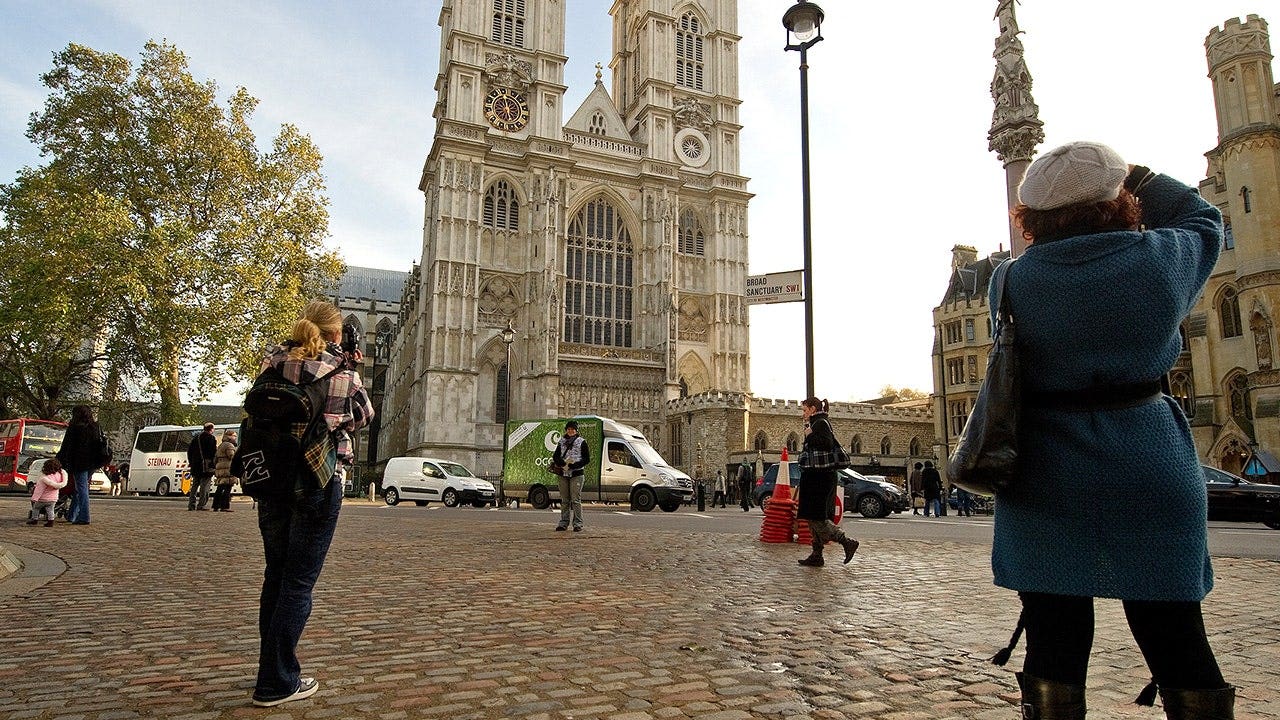
An archaeologist may have finally solved the mystery of the unknown skeleton buried on the grounds of Westminster Abbey, one of London's most popular tourist sites — and the answer points to a 1,000-year-old recycling job.
Her death occurred roughly a decade after another high-profile demise at the same zoo, when Harambe, a 17-year-old western lowland gorilla, was fatally shot by zoo staff in May 2016 after a young boy climbed into his enclosure.
Meagan Schulman, a Fordham University doctoral candidate who specializes in 17th-century piracy and was not involved in the research, told the AP that, since Jones was already a privateer authorized to raid commercial ships of rivals, he could already be considered a pirate.
"The head quickly disappeared before I could get a photo," the man said.
The embassy said some 50 European leaders were expected to attend the ninth European Political Community summit and an informal European Council meeting to discuss strategic priorities under Ireland's EU presidency.
Jennifer Adams, director of tourism for Okaloosa County, previously told local outlet WUWF that the site could open to divers within a day or two of the sinking. "As soon as she goes down, she’ll be ready to dive in the next day or so," Adams said.
The ship is expected to sink in about 180 feet of water, roughly 25 miles southwest of Destin, Florida.
"We will continue to monitor the situation and provide updates," the consulate wrote Saturday.
"We feel very vulnerable in this moment because this harm that our CCC community members are feeling right now could have happened to any of us," he told the outlet.
Also by Andrea Margolis
Nothing else under this byline is closely related to this article, so these are simply their most recent.
All 73 articles by Andrea Margolis →

Topics

Briton Latin London Roman SWNS

Subjects

Rodwell PERSON · 4× SWNS ORG · 3× Briton NORP · 1× Charles III PERSON · 1× Latin NORP · 1× London GPE · 1× Roman NORP · 1× Valerius Amandinus PERSON · 1× Warwick Rodwell PERSON · 1× the Journal of the British Archaeological Association ORG · 1×

Narrative

"But either would fit equally well if we assume the Abbot was in his early twenties when the appointment was made and close to 50 when he died." Another clue, Rodwell said, was that the occupant was honored with a "fine" sarcophagus — even if it was recycled.
framing: mixed · carried by 1 article(s) · first seen 2026-11-23
An archaeologist may have finally solved the mystery of the unknown skeleton buried on the grounds of Westminster Abbey, one of London's most popular tourist sites — and the answer points to a 1,000-year-old recycling job.

Claims (17 extracted, 4 hedged)

An archaeologist may have finally solved the mystery of the unknown skeleton buried on the grounds of Westminster Abbey, one of London's most popular tourist sites — and the answer points to a 1,000-year-old recycling job. uncertain
answer → solve → job
The research centers on an unidentified skeleton that was found at Westminster Abbey in 1869, according to news agency SWNS. uncertain
that → center → SWNS
The skeleton was found inside a Roman limestone sarcophagus bearing an inscription for Valerius Amandinus, a wealthy 4th-century Briton — but the remains inside don't belong to him. asserted
remains → find → him
When the skeleton was excavated at Westminster Abbey in 1869, archaeologists noticed that a distinctive early medieval Latin cross was sculpted on the lid. asserted
cross → excavate → lid
The symbol puzzled experts for over 150 years because it didn't match the Roman-era casket. asserted
it → puzzle → casket
The recent study, published in the Journal of the British Archaeological Association, was led by Warwick Rodwell, a consultant archaeologist at Westminster Abbey, SWNS said. asserted
SWNS → publish → Abbey
Rodwell's work followed a 2025 excavation of the Abbey's vestry, which was required ahead of construction on the new King Charles III Sacristy set to open in 2027. asserted
which → follow → 2027
In the study, Rodwell argues the skeleton may belong to one of two high-ranking medieval monks who died in the 11th century. uncertain
who → argue → century
The two candidates are monks named Aelfwig, who died around 1020, and his successor Wulnoth, who died in 1049. asserted
who → name → 1049
Carbon dating placed the bones between 987 and 1052 A.D., which lines up with both individuals' lifetimes. asserted
which → place → lifetimes
"We do not know the date of birth of either," Rodwell said, as SWNS noted. asserted
SWNS → know → either
"But either would fit equally well if we assume the Abbot was in his early twenties when the appointment was made and close to 50 when he died." Another clue, Rodwell said, was that the occupant was honored with a "fine" sarcophagus — even if it was recycled. asserted
it → fit → sarcophagus
The man was likely between 35 and 49 years old when he died, and stood 5 feet, 9 inches tall. asserted
he → die → feet
Researchers also found white lime residue inside the stone casket outlining where a wooden coffin had once sat before decaying over the centuries. asserted
coffin → find → centuries
The discovery is one of many recent skeletal finds across England that have shed light on the country's medieval past. asserted
that → shed → past
In 2025, archaeologists excavating a former department store site at the University of Gloucestershire uncovered 317 skeletons and the ruins of a medieval church. asserted
archaeologists → excavate → church
At the Tower of London, archaeologists in spring 2025 uncovered the remains of 20 people — including a 14th-century mass grave possibly linked to the Black Death — during a major excavation. uncertain
archaeologists → uncover → excavation

Give feedback · no sign-in needed

No sign-in needed for now. Your note is sent without a name, so it cannot be answered.

History Support