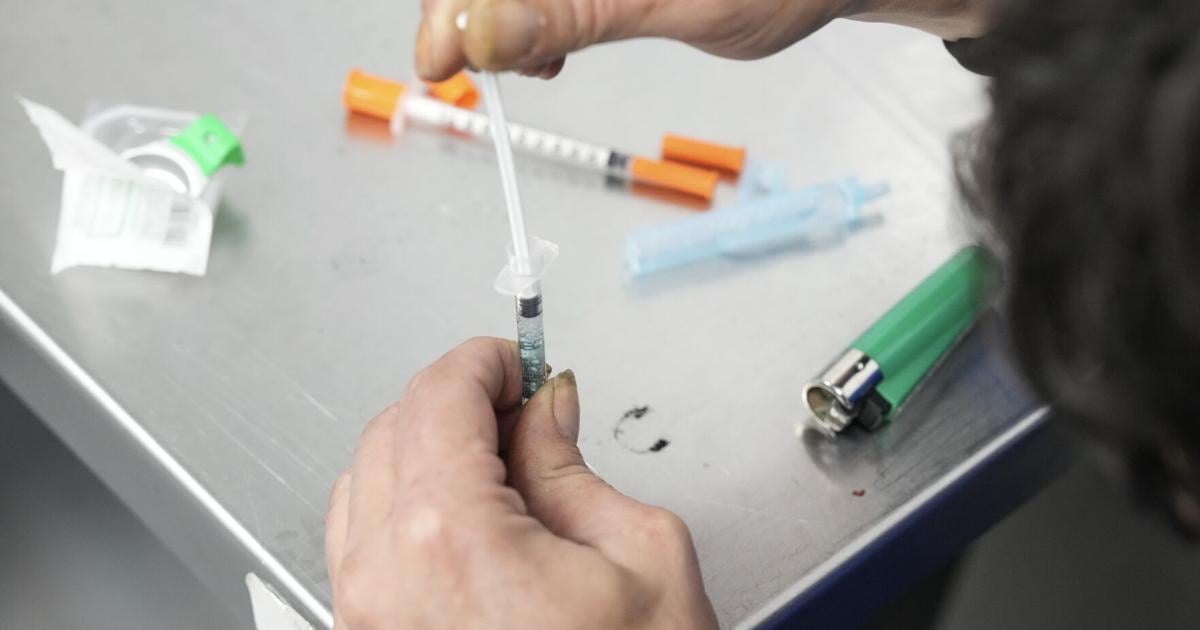
Photo via Toronto Star

Why daily cannabis use in Canada just topped daily alcohol use for adults under 50: 'A generational shift'

Read the original at Toronto Star ↗
Cite

Mosleh, O. (2026, November 23). Why daily cannabis use in Canada just topped daily alcohol use for adults under 50: 'A generational shift'. Toronto Star. https://www.thestar.com/news/gta/why-daily-cannabis-use-in-canada-just-topped-daily-alcohol-use-for-adults-under-50-a-generational-shift/article_e5d9348b-2a3a-41a2-97a1-c630412b1886.html

Dated from the outlet's own feed. Check the original for its byline.

Toronto Star · collected 2026-11-23 · by Omar Mosleh

Quick Summary

Researchers at North York General and McMaster University report that daily cannabis use among Canadian adults aged 18 to 49 has surpassed daily alcohol consumption, with 5.7% of this age group using cannabis daily, compared to 5.2% drinking alcohol daily. The study, based on data from nearly 100,000 respondents to the 2023-24 Canadian Community Health Survey, highlights a generational shift in substance use, noting that men aged 25 to 34 are the most likely to use cannabis daily at 11%, while women in the same age range report 6.8% daily cannabis use. Researchers call for stricter regulations and increased public health messaging to address the potential long-term health risks associated with daily cannabis use.
Written by AI on 2026-11-23, from this article's own text only (the story summary below draws on all the coverage).
See how they differ ↓

AI analysis

Story summary

A new study published in the Canadian Medical Association Journal finds that daily cannabis use among Canadian adults now surpasses daily alcohol consumption, with approximately 1.8 million Canadians using cannabis daily or nearly daily. The study, based on data from nearly 100,000 respondents to the 2023-2024 Canadian Community Health Survey, reveals that adults under 50 are more likely to use cannabis daily than to drink alcohol daily. Among those under 35, daily cannabis use is more common than daily cigarette smoking, especially among women. Lead author André McDonald, a postdoctoral fellow at McMaster University’s Peter Boris Centre for Addictions Research, emphasizes the need for public health efforts to focus on cannabis use, given its potential long-term health implications.

Written for “Daily Cannabis Use Surpasses Alcohol in Canada” on 2026-11-23, grounded in this article and the 4 other(s) covering the same event.

How they differ

3 outlets covered “Daily Cannabis Use Surpasses Alcohol in Canada”.

What each outlet says

One AI summary per outlet of its latest article on this story, written from that article alone and checked against it. Open the article for the outlet's own words.

Toronto StarThis outlet23 Nov

Researchers at North York General and McMaster University report that daily cannabis use among Canadian adults aged 18 to 49 has surpassed daily alcohol consumption, with 5.7% of this age group using cannabis daily, compared to 5.2% drinking alcohol daily. The study, based on data from nearly 100,000 respondents to the 2023-24 Canadian Community Health Survey, highlights a generational shift in substance use, noting…

Why daily cannabis use in Canada just topped daily alcohol use for adults under 50: 'A generational shift' (this article)2 articles from Toronto Star on this story
The Globe and Mail23 Nov

A study published in the Canadian Medical Association Journal reports that adults under 50 in Canada are more likely to use cannabis daily than to drink alcohol daily. The research highlights a shift in substance use patterns among younger adults.

Daily cannabis use surpassing daily drinking: study →2 articles from The Globe and Mail on this story
CBC23 Nov

A new study published in the Canadian Medical Association Journal reveals that 5.7% of Canadians, or about 1.8 million people, report daily or near-daily cannabis use, surpassing the 5.2% who report daily or near-daily alcohol use. Young Canadians are driving this trend, with those under 35 showing higher rates of daily cannabis use compared to daily alcohol or cigarette use. The study, based on data from nearly…

More Canadians are using cannabis daily than are drinking alcohol daily: study →

Where they agree and split

Framing

How the first headlines put it

Attributed to a source2
Stated as fact1
The headlines (3)

There's been a 'generational shift' from daily drinking to daily cannabis use: study Toronto Star · attributed to a source

More Canadians are using cannabis daily than are drinking alcohol daily: study CBC · attributed to a source

Daily cannabis use more common among Canadian adults than daily alcohol consumption, study finds The Globe and Mail · stated as fact

The full story: what happened, how it changed, and all 5 articles →

Compared with similar articles

This article reads unscored and hedges 13% of its claims. Each row says how that neighbour differs.
Toronto Star
Hedges 3 of 32 claims Outlet record 65/100
CBC News
Hedges 4 of 46 claims Outlet record 70/100
The Globe and Mail
Hedges 4 of 24 claims Outlet record 51/100

Story

Daily Cannabis Use Surpasses Alcohol in Canada
Health · 5 article(s) covering the same event. Compare every outlet's account →
How this article was measured signals, leaning charts, publisher record, byline, topics and claims

Signals How these are calculated →

Claims extracted
46
sentences that state something as happening or true
Uncertain
13%
6 of 46 hedged ("reportedly", "may", "according to")
Leaning
not political
takes no side on a contested political question
Publisher signals
65/100
Toronto Star's corrections and hedging, across everything collected from it. Not a measure of accuracy.
Outlets on this story
5
Health
Same framing elsewhere
1
articles that frame the event the way this one does
Analyzed 2026-11-23 · how these are computed

How this is being covered How these are calculated →

Article leaning vs. publisher reliability
Source leaning vs. consistency

Publisher

Toronto Star · 17096 article(s) · 33 correction(s) detected
Running correction rate · 33 correction(s)
2026-11-17
Correction
2026-10-26
Correction
2026-10-24
Correction
2026-10-07
Correction
2026-09-24
Correction

Who wrote this

Omar Mosleh
5 article(s) here · 1 carrying a prediction
He said the trend signals a need for governments and public health authorities to tailor their messaging and regulations to ensure young people who otherwise wouldn’t start using cannabis don’t start because of how accessible and increasingly acceptable it is.
The change will mark a major shift in how people with opioid use disorder access potent pharmaceutical opioids such as hydromorphone from a safe source.
For her part, Prosser said she’s not a natural public speaker, but it’s what Ashtyn would have wanted.
The aging population is a major factor, but there was also rapid expansion of pharmaceutical opioids (especially OxyContin) in the mid- to late 1990s, following by a steep decline the 2010s, which may have left some people switching to street opioids.
A court is set to hear victim impact statements on Wednesday from loved ones about how their lives were torn apart due to the actions of Kenneth Law, the Mississauga man who sold poisons to hundreds of people and who pleaded guilty to helping 14 Ontarians die by suicide.
Also by Omar Mosleh
Nothing else under this byline is closely related to this article, so these are simply their most recent.

Topics

Canadian McMaster University North York General the Canadian Medical Association Journal the University of Toronto’s

Subjects

Myran PERSON · 4× Canadian NORP · 2× North York General ORG · 2× Simpson PERSON · 2× Canadian Community Health Survey ORG · 1× Daniel Myran PERSON · 1× Department of Family and Community Medicine ORG · 1× McMaster University ORG · 1× the Canadian Medical Association Journal ORG · 1× the University of Toronto’s ORG · 1×

Narrative

Even if we’re just more accurately capturing current use right now, the prevalence of use is really high,” said Myran, who is the Cheesbrough Research Chair at North York General, a clinician scientist and associate professor at the University of Toronto’s Department of Family and Community Medicine.
framing: assertive · carried by 1 article(s) · first seen 2026-11-23
He said the trend signals a need for governments and public health authorities to tailor their messaging and regulations to ensure young people who otherwise wouldn’t start using cannabis don’t start because of how accessible and increasingly acceptable it is.

Claims (46 extracted, 6 hedged)

Daily cannabis use has surpassed daily drinking among Canadian adults under 50, in what researchers are calling a “generational shift” with long-term health implications. asserted
researchers → surpass → implications
A study published Monday in the Canadian Medical Association Journal, led by researchers at North York General and McMaster University, found that 5.7 per cent of Canadian adults ages 18 to 49 reported daily cannabis use, or roughly 1.81 million people. asserted
cent → publish → use
In contrast, the data showed 5.2 per cent reported drinking alcohol daily, while 8.5 per cent were smoking cigarettes daily. asserted
cent → show → cigarettes
Senior author Dr. Daniel Myran said the findings are significant because there are risks associated with long-term daily use of cannabis. asserted
findings → say → cannabis
He said the trend signals a need for governments and public health authorities to tailor their messaging and regulations to ensure young people who otherwise wouldn’t start using cannabis don’t start because of how accessible and increasingly acceptable it is. asserted
it → say → cannabis
“It’s a real generational shift in what substances people are using ... asserted
people → ’ → substances
Even if we’re just more accurately capturing current use right now, the prevalence of use is really high,” said Myran, who is the Cheesbrough Research Chair at North York General, a clinician scientist and associate professor at the University of Toronto’s Department of Family and Community Medicine. asserted
who → capture → Medicine
The researchers pulled the data from nearly 100,000 respondents to the 2023-24 Canadian Community Health Survey. asserted
researchers → pull → Survey
They are calling for stronger warnings on product packaging about the risks of regular cannabis use, stricter rules and enforcement around promotion, and targeted prevention strategies to reduce usage in younger adults, youth and people vulnerable to mental illnesses. asserted
They → call → illnesses
With a legal market, “if the government should choose, there are a variety of levers that they could pull to start mitigating harms related to cannabis use,” Myran said. uncertain
Myran → choose → use
Daily cannabis use now also exceeds daily cigarette smoking in people under 35. asserted
use → exceed → 35
Men 25 to 34 were the most likely to use daily, at 11 per cent, compared to 2.9 per cent who said they drink daily and eight per cent who smoke tobacco regularly. asserted
who → use → tobacco
Among women in that cohort, 6.8 per cent reported daily cannabis use compared to 1.2 per cent who drink daily and 4.5 per cent who smoke tobacco daily. asserted
who → report → tobacco
“We were expecting there to be huge overlap between people who use cannabis daily, tobacco daily and alcohol daily … asserted
who → expect → cannabis
there’s much less overlap than you would think,” Myran said. asserted
Myran → ’ → ?
While legalization is one major driving force, there are other factors. asserted
legalization → drive → ?
Researchers credit long-term tobacco control policies and changing social norms for a decline in cigarette smoking among younger adults, while cannabis has seen greater availability and social acceptance since legalization. asserted
cannabis → credit → legalization
“I think that there is essentially a consensus in society that tobacco use is harmful, and that we desire it to be as low as possible,” Myran said. asserted
Myran → think → society
“That is not the societal view that we have for alcohol and cannabis,” adding that cannabis use is associated with “individual liberties, recreation and enjoyment”. asserted
use → have → liberties
The study found that 41 per cent of adults who reported daily cannabis use started after legalization in 2018. asserted
who → find → 2018
Adults ages 18 to 24 were most likely to report they started post-legalization (85.4 per cent). asserted
they → report → legalization
Cannabis stigma ‘changed massively’ asserted
stigma → change → ?
Bret Simpson, a daily cannabis user, experimented a few times in high school but didn’t start using regularly until a few years before legalization, when grey market stores became more common. asserted
stores → experiment → legalization
Now he sticks to sanctioned stores, which he finds more reliable. asserted
he → stick → stores
Simpson said stigma around cannabis use has “changed massively” in his social circle, adding that once it became legal, he no longer felt he had to “try to like escape down an alley” to get high. asserted
he → say → alley
“I had a history of never letting on to my employer or family that I was doing any sorts of drugs at all,” Simpson said. asserted
Simpson → have → drugs
“And then that changed pretty much overnight with legalization.” asserted
that → change → legalization
Daily cannabis use was more common among people with mood disorders (14.7 per cent) and anxiety (12.2 per cent) compared to people who didn’t report any mental health issues. asserted
who → compare → issues
Myran said that could be because people are using cannabis to self-medicate for their symptoms, or cannabis use could be contributing to anxiety and depression. uncertain
use → say → anxiety
Long-term daily cannabis use has been strongly linked to anxiety and depression, and emerging evidence suggests it could be a risk factor for lung disease, heart attacks and strokes, depending on the method of consumption. uncertain
it → link → consumption
Evidence on cancer risk is limited and mixed, and researchers say we need stronger data on the harms of using cannabis regularly. asserted
we → mix → cannabis
The study examined over 1,000 adults and found that the effects of heavy cannabis use may be long-lasting. uncertain
effects → examine → use
The study examined over 1,000 adults and found that the effects of heavy cannabis use may be long-lasting. uncertain
effects → examine → use
Smoking is still the primary method of consumption for daily cannabis users, with 3.9 per cent of respondents saying they smoked daily compared to 1.8 per cent who said they used products like vapes or edibles. asserted
they → say → vapes
“One of the arguments (for legalization) was people are going to start doing non-combustible methods, and it’s going to be better for their lung health … that doesn’t seem to be what’s occurring,” Myran said. asserted
Myran → go → health
Mike Dunn, owner of 1922 Cannabis Retail in Moss Park, said he has seen growth in demand for products that are easier to consume such as pre-rolled joints, edibles and vapes. asserted
that → say → joints
“Potency is less and less of a question over the six years we’ve been open,” Dunn said. asserted
Dunn → say → years
“If anything it’s the opposite, with more people asking for lower THC and lighter products. asserted
people → ’ → THC
Problems with the promotion of cannabis Myran said he’s concerned with the prevalence of high-potency THC products, which he said are more closely linked to addiction and mental health problems, as well as being concerned with how cannabis is promoted. asserted
cannabis → say → problems
A previous study he co-authored found widespread violations of the Cannabis Act on retailer websites, including “inducement-related content,” endorsements or testimonials, content that appeals to youth and health or cosmetic benefit claims, all of which are prohibited. uncertain
all → co → which
…and 6 more, not listed.
Give feedback · no sign-in needed

No sign-in needed for now. Your note is sent without a name, so it cannot be answered.

History Support