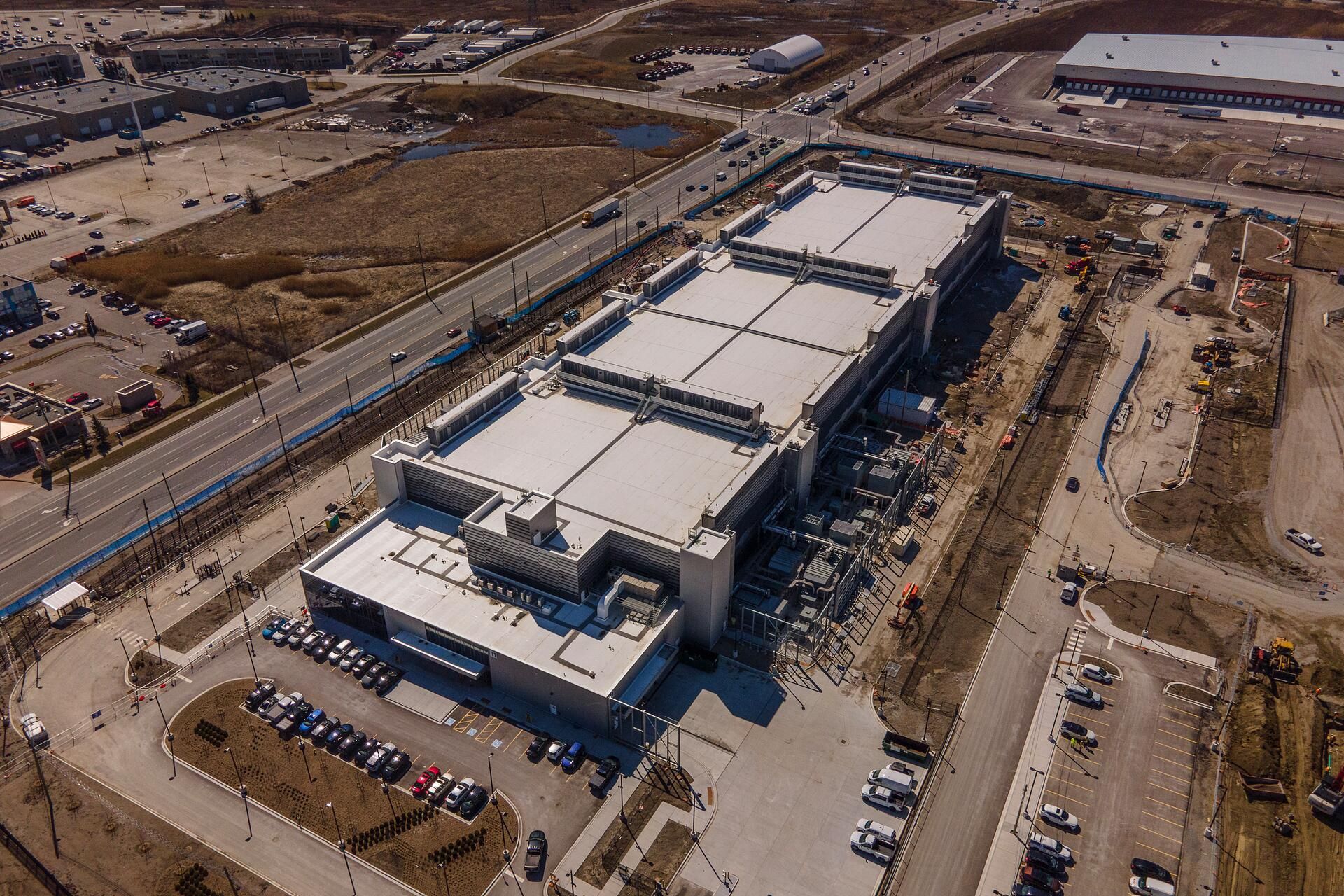
Photo via Toronto Sun

Data centres in Ontario: Easy delivery but the questions run deep

Read the original at Toronto Sun ↗
Cite

Anderson, G. (2026, November 22). Data centres in Ontario: Easy delivery but the questions run deep. Toronto Sun. https://torontosun.com/news/data-centres-ontario-easy-delivery-but-the-questions-run-deep

Dated from the outlet's own feed. Check the original for its byline.

Toronto Sun · collected 2026-11-22 · by Gordon Anderson

Quick Summary

The Toronto Sun begins a three-part series examining data centers in Ontario, focusing on their role in delivering digital services and the controversies surrounding them. Data centers, which house computer equipment for storing, processing, and transmitting digital information, are essential for everyday services like streaming and AI applications. However, they face public protests due to high electricity and water consumption, land usage concerns, and worries about digital sovereignty and the impact of AI. For example, a typical AI-focused data center can consume as much electricity annually as 100,000 households, while larger facilities can use up to five million gallons of water daily.
Written by AI on 2026-11-22, from this article's own text only.

AI analysis

Why this leaning score
The article's own words the score was based on. Each is quoted verbatim and was checked against the article text before being stored, so you can find it in the original.
Reading Leans left (beta estimate) Confidence high
Leaning: leans left for article 172317 (high confidence, 1 verified quote) · logged 2026-11-22

Compared with similar articles

Nothing to compare against. No article is close enough to this one for the pipeline to have linked or judged the pair.
How this article was measured signals, leaning charts, publisher record, byline, topics and claims

Signals How these are calculated →

Claims extracted
35
sentences that state something as happening or true
Uncertain
11%
4 of 35 hedged ("reportedly", "may", "according to")
Leaning
Leans left
of the writing, not the subject · beta estimate
Publisher signals
96/100
Toronto Sun's corrections and hedging, across everything collected from it. Not a measure of accuracy.
Outlets on this story
unclustered
not grouped into a story yet
Same framing elsewhere
1
articles that frame the event the way this one does
Analyzed 2026-11-22 · how these are computed

How this is being covered How these are calculated →

Article leaning vs. publisher reliability
Source leaning vs. consistency

Publisher

Toronto Sun · 675 article(s) · 0 correction(s) detected
No corrections detected for this publisher. That may mean careful reporting, or simply that nothing has been checked.

Who wrote this

Gordon Anderson
15 article(s) here · 1 carrying a prediction
In this three-part series, the Toronto Sun will explore the role of data centres in our province.
“This idea first came to us in late June when we were thinking about ways we could make a difference in our community,” 16-year-old Humdaan Waheed told the Toronto Sun.
“When I next hug my niece, who like Zorawar is 2yrs old, I will give her an extra hug just for him.”
The accused include Stanley Udeh, 46, of Brampton; Odewale Abraham, 57, of Toronto; Oluyemi Sodade, 51, of Toronto; Tosin Damilola Oyebade, 45, of Toronto; Oluwaseyi Olawale Bameke, 39, of Toronto; Gbolahan Qudus Babatunde, 29, of Vaughan; Olushola Oke, 42, of Toronto; Karamveer Singh, 26, of Brampton; Henrik Gancz, 57, of no fixed address; Kenneth Okafor, 58, of no fixed address; Jaspreet Singh, 25, of no fixed address and Darryl Davance, 25, of Saint Jerome, Que. Some of the accused face possible removal from Canada, though Milinovich didn’t get specific, saying, “many of the individuals we have arrested will also face immigration enforcement action.” Abeid Morgan, director, intelligence and investigations operations division with the CBSA, said he could not get into specifics about the number of accused facing deportation. “Legally, I am not able to publicize that because it is protected under the federal Privacy Act,” Morgan told the Toronto Sun.
“We know there are about 99,000 people in Mississauga who live below the poverty line, but only 43,000 of them will go to a food bank,” Food Banks Mississauga CEO Meghan Nicholls told the Toronto Sun.
Instead of making life more expensive by sending speeding tickets to drivers weeks after the fact, we’re supporting road-safety measures that will prevent speeding in the first place, keep costs down and keep our streets safe.”
Electric wheelchairs or other mobility devices used by people with disabilities will continue to be allowed on the TTC system.
No lineup at security, no lineup at customs.” The same sentiments could not be echoed on the Pearson’s departures website, as several U.S.-bound flights were delayed, as of 12:30 p.m. on Saturday, with flights to Chicago and Detroit both cancelled.
A Brampton man is appealing to the public for help funding an expensive gene therapy treatment that may save his young son’s life.
On Remembrance Day, Canadians will honour the sacrifices of their service members in all wars, conflicts and peacekeeping missions.
Also by Gordon Anderson
Nothing else under this byline is closely related to this article, so these are simply their most recent.
All 15 articles by Gordon Anderson →

Topics

Netflix Spotify The International Energy Agency York University the Toronto Sun

Subjects

Ontario GPE · 3× Canadian NORP · 1× Netflix ORG · 1× Spotify ORG · 1× The International Energy Agency ORG · 1× The University of Toronto ORG · 1× The World Resources Institute ORG · 1× Vic Fedeli PERSON · 1× York University ORG · 1× the Toronto Sun ORG · 1×

Narrative

The World Resources Institute says medium-sized data centre facilities can consume 300,000 gallons (approximately 1.16 million litres) of water daily, while larger facilities can consume as much as five million gallons (approximately 19 million litres) of water every 24 hours.
framing: assertive · carried by 1 article(s) · first seen 2026-11-22
In this three-part series, the Toronto Sun will explore the role of data centres in our province.
2026-11-22 · Toronto Sun
Data centres in Ontario: Easy delivery but the questions run deep · assertive framing

Claims (35 extracted, 4 hedged)

In this three-part series, the Toronto Sun will explore the role of data centres in our province. asserted
Sun → explore → province
In our first instalment, we look at their general purpose and touch on some of the controversy that surrounds this technology From artificial intelligence tools to navigation apps and streaming platforms, delivering information to consumers in a timely fashion is routine. asserted
delivering → look → fashion
But the infrastructure behind the simple delivery mechanism is complex and surrounded by plenty of concerns. asserted
infrastructure → surround → concerns
Simply put, a data centre is a facility that houses computer equipment for storing, processing, and transmitting digital information. asserted
that → put → information
When you open an app, save photos, or play online games, you’re using a data centre. asserted
you → open → centre
Local businesses, hospitals, governments, and schools rely on them to deliver services. asserted
businesses → rely → services
Types of data centres include artificial intelligence, cloud, colocation and hyperscale. asserted
Types → include → intelligence
Artificial intelligence centres are specialized facilities built to train and run artificial intelligence and machine learning models. asserted
centres → build → intelligence
Hyperscale data centres are built to run cloud computing and artificial intelligence workloads. asserted
centres → build → computing
Cloud computing is simply storing and running data, files and programs over the internet. asserted
computing → store → internet
Everyday services that utilize the cloud include Netflix and Spotify. asserted
that → utilize → Netflix
A colocation data centre rents cabinets, racks, cages, or private suites to businesses so they can house their servers. asserted
they → rent → servers
Public protests against these projects mainly revolve around the large amounts of water and electricity consumed. asserted
protests → revolve → water
Other issues that rankle the public include land usage concerns, air and noise pollution, digital sovereignty and general anxiety surrounding AI. asserted
that → rankle → AI
The International Energy Agency says a typical AI-focused data centre consumes as much electricity annually as 100,000 households, but the largest ones could consume 20 times as much. uncertain
ones → say → much
A recent York University study says that a 122-megawatt data centre, running at 50% to 80% capacity, would consume approximately 534,360 to 854,976 megawatt hours annually, equivalent to the electricity consumption of roughly 49,000 to 78,000 households. asserted
centre → say → households
The University of Toronto prepared a study for city council back in July. asserted
University → prepare → July
The study says data centres could represent up to 13% of all electricity consumed in Ontario by 2035. uncertain
centres → say → 2035
The World Resources Institute says medium-sized data centre facilities can consume 300,000 gallons (approximately 1.16 million litres) of water daily, while larger facilities can consume as much as five million gallons (approximately 19 million litres) of water every 24 hours. asserted
facilities → say → water
Data centres require water to keep servers cool enough to function. asserted
centres → require → servers
Fresh water is cheap, abundant, and absorbs heat remarkably well. asserted
water → absorb → heat
Cloud here to stay The surge in cloud computing and artificial intelligence is propelling the data centre boom. asserted
surge → stay → boom
According to the province, the digital expansion underway could bring economic benefits like increased tax revenues, job creation and infrastructure investment. uncertain
expansion → accord → revenues
In its Data Centre Playbook, the Ontario government says the data centre business could generate $122 billion in future economic growth, while creating more than 17,000 new jobs every year. uncertain
business → say → jobs
“We think many (municipalities) are very eager,”Economic Development Minister Vic Fedeli said in a recent interview. asserted
Fedeli → think → interview
It creates jobs, it creates a huge tax base for them, it puts a place for our Canadian data to be in a secure place.” asserted
data → create → place
Ontario is considered a preferred location with its relatively cool climate, available land, low-cost energy, grid stability, and skilled construction workers. asserted
Ontario → consider → climate
Because the province does not have a single centralized public registry for all data centres, exact counts in the city vary by source. asserted
counts → have → source
If not already finished, construction is expected to wrap before the end of the year. asserted
construction → finish → year
Equipment installation, testing, and preparation activities will continue until sometime late next year. asserted
installation → continue → ?
Toronto doesn’t have a moratorium on data centres. asserted
Toronto → have → centres
Neither do Brampton, Burlington, Hamilton, Richmond Hill, Oshawa and Vaughan. asserted
Brampton → do → ?
Oakville currently has a one-year moratorium on data centres. asserted
Oakville → have → centres
Mississauga also has a one-year pause, with an option to add an additional year. asserted
Mississauga → have → year
Next up: Part 2 will focus on the concerns from local communities that have moratoriums in place. asserted
that → focus → place

Give feedback · no sign-in needed

No sign-in needed for now. Your note is sent without a name, so it cannot be answered.

History Support