Photo via Times of India

A teenage girl found headless in a Northern Ireland bog in 2023 died up to 2,300 years ago, and a mock coroner’s inquest in Belfast has now pieced together her height, diet and how she was struck

Read the original at Times of India ↗
Cite

TOI Lifestyle Desk. (2026, November 22). A teenage girl found headless in a Northern Ireland bog in 2023 died up to 2,300 years ago, and a mock coroner’s inquest in Belfast has now pieced together her height, diet and how she was struck. Times of India. https://timesofindia.indiatimes.com/science/archaeology/unraveling-the-mystery-of-the-ballymacombs-more-woman-a-teens-violent-death-revealed-after-2300-years-in-a-northern-ireland-bog/articleshow/136055031.cms

Dated from the outlet's own feed. Check the original for its byline.

Times of India · collected 2026-11-22 · by TOI Lifestyle Desk

Quick Summary

In October 2023, the remains of a young woman dating back to the Iron Age (343 BCE to 1 BCE) were discovered in a bog near Bellaghy in County Derry, Northern Ireland. The remains, nicknamed the Ballymacombs More Woman, were initially thought to belong to a teenage girl but were later identified as a woman aged 17 to 22. A mock coroner’s inquest in Belfast used advanced scientific techniques to determine that the woman was likely decapitated, possibly as part of a ritual sacrifice. The investigation also revealed details about her diet and physical condition, aiming to piece together aspects of her life and death over 2,000 years ago.
Written by AI on 2026-11-22, from this article's own text only (the story summary below draws on all the coverage).
See how they differ ↓

AI analysis

Story summary

A coroner's investigation held on November 17, 2026, at the Ulster Museum in Belfast, concluded that the remains of a young Iron Age woman found in 2023 near Bellaghy in County Londonderry were those of a female between 15 and 22 years old who was decapitated more than 2,000 years ago. The investigation, chaired by Coroner Joe McCrisken, was not a formal inquest but followed the structure and methodology of a coroner’s investigation, drawing on archaeological, forensic, and scientific evidence. The remains, named Ballymacombs More Woman, were discovered in a bog and suggest she may have been part of a tradition of ritualized killing or sacrifice, a practice documented among bog body discoveries across northwestern Europe during the Iron Age. National Museums NI led the research, involving representatives from Queen’s University Belfast, the National Museum of Ireland, and other international institutions.

Written for “Mystery of 2000YearOld Bog Body” on 2026-11-23, grounded in this article and the 3 other(s) covering the same event.
Why this leaning score
This article does not take a side on a contested political question, so it has no leaning score. That is an answer rather than a gap: a match report or a rescue can be warmly or critically written without being left or right, and scoring it anyway is how approval of a subject gets recorded as a political position.
No political leaning scored for article 172049 · logged 2026-11-22

How they differ

4 outlets covered “Mystery of 2000YearOld Bog Body”.

What each outlet says

One AI summary per outlet of its latest article on this story, written from that article alone and checked against it. Open the article for the outlet's own words.

Times of IndiaThis outlet22 Nov

In October 2023, the remains of a young woman dating back to the Iron Age (343 BCE to 1 BCE) were discovered in a bog near Bellaghy in County Derry, Northern Ireland. The remains, nicknamed the Ballymacombs More Woman, were initially thought to belong to a teenage girl but were later identified as a woman aged 17 to 22. A mock coroner’s inquest in Belfast used advanced scientific techniques to determine that the…

A teenage girl found headless in a Northern Ireland bog in 2023 died up to 2,300 years ago, and a mock coroner’s inquest in Belfast has now pieced together her height, diet and how she was struck (this article)
Evening Standard17 Nov

In 2023, the remains of a young Iron Age woman, aged 15-22, were discovered in bogland near Bellaghy in County Londonderry, Northern Ireland. She was found to have been deliberately decapitated with a bladed weapon over 2,000 years ago, possibly in a ritualized killing. A coronial probe, chaired by Coroner Joe McCrisken, was conducted as an educational exercise to investigate the circumstances of her death…

Coronial probe after remains of young Iron Age woman found in Co Londonderry →
BBC17 Nov

Archaeologists in Northern Ireland discovered the remains of a 15 to 22-year-old woman from the Iron Age in 2023, buried in a bog near Bellaghy, County Londonderry. A coroner's investigation at the Ulster Museum in Belfast concluded that she was deliberately decapitated, likely with a bladed weapon. This marks the first time a museum has held such an investigation for an ancient individual, aiming to uncover details…

Mystery of 2,000-year-old bog body solved in 'first of its kind' investigation →
The Guardian18 Nov

A coroner’s investigation concluded that the remains of a woman, found in a County Derry bog in October 2023, were decapitated over 2,000 years ago. The woman, aged 15 to 22, was initially thought to be male but was later identified as female and named Ballymacombs More Woman. The coroner’s inquest-style inquiry, held on Monday, used archaeological and forensic evidence to reconstruct her story, suggesting her death…

Body found in Derry bog decapitated more than 2,000 years ago, coroner finds →

Where they agree and split

Framing

How the first headlines put it

Stated as fact2
The headlines (2)

Coronial probe after remains of young Iron Age woman found in Co Londonderry Evening Standard · stated as fact

Mystery of 2,000-year-old bog body solved in 'first of its kind' investigation BBC · stated as fact

The full story: what happened, how it changed, and all 4 articles →

Compared with similar articles

This article reads unscored and hedges 19% of its claims. Each row says how that neighbour differs.
The Guardian
Hedges 2 of 18 claims Outlet record 64/100

Story

Mystery of 2000YearOld Bog Body
Science · 4 article(s) covering the same event. Compare every outlet's account →
How this article was measured signals, leaning charts, publisher record, byline, topics and claims

Signals How these are calculated →

Claims extracted
37
sentences that state something as happening or true
Uncertain
19%
7 of 37 hedged ("reportedly", "may", "according to")
Leaning
not political
takes no side on a contested political question
Publisher signals
58/100
Times of India's corrections and hedging, across everything collected from it. Not a measure of accuracy.
Outlets on this story
4
Science
Same framing elsewhere
1
articles that frame the event the way this one does
Analyzed 2026-11-22 · how these are computed

How this is being covered How these are calculated →

Article leaning vs. publisher reliability
Source leaning vs. consistency

Publisher

Times of India · 5589 article(s) · 7 correction(s) detected
Running correction rate · 7 correction(s)

Who wrote this

TOI Lifestyle Desk
87 article(s) here · 1 carrying a prediction
While the precise circumstances of her death remain unknown, researchers suggested that it may have been connected to ritualised killing or sacrifice, a practice associated with several Iron Age bog bodies discovered across north-western Europe.
Cheeky as it may sound, the 68-year-old Californian has spent nearly four decades examining sharks and rays brought in by fishers, identifying 56 species previously unknown to science along the way.
Sometimes, all it takes is a little collective effort and a community willing to restore what has been neglected.
What initially began as a repair project grew into a $53.2 million renovation, with work that will continue into 2027, the center has reported.
The conservation easements will also allow the land to continue operating as a working forest while protecting it from future development.
That is what you would expect if their clocks were running behind.
Some chinchillas had eyes so swollen and filled with discharge that they could not open them.
The dispute arose when planning approval left important details of the subdivision unresolved, despite the seller having represented that the land would be divided into 15 lots.
The organisation, which was founded in 2019, has spent much of this time studying the conditions around City Island to understand whether native oysters could survive and eventually establish a self-sustaining reef.
On October 29, 2026, the New Hampshire Fish and Game Department announced that 20 acres of Great Bay would be closed to shellfish harvesting from November 1, 2026, through October 31, 2031.
Wire or desk byline, not an individual reporter.
Also by TOI Lifestyle Desk
Nothing else under this byline is closely related to this article, so these are simply their most recent.
All 87 articles by TOI Lifestyle Desk →

Topics

Belfast Bellaghy County Derry National Museums NI Northern Ireland

Subjects

Belfast GPE · 2× National Museums NI ORG · 2× Northern Ireland GPE · 2× PSNI ORG · 2× Ballymacombs More Woman PERSON · 1× Bellaghy GPE · 1× County Derry GPE · 1× Eileen Murphy PERSON · 1× Queen’s University Belfast ORG · 1× the Ballymacombs More Woman GPE · 1×

Narrative

“It was an honour to undertake the osteological analysis of Ballymacombs More Woman and to be able to reconstruct the last moments of her life and what happened to her body when she died,” said Professor Eileen Murphy of Queen’s University Belfast, who conducted the examination of the remains.
framing: assertive · carried by 1 article(s) · first seen 2026-11-22
While the precise circumstances of her death remain unknown, researchers suggested that it may have been connected to ritualised killing or sacrifice, a practice associated with several Iron Age bog bodies discovered across north-western Europe.

Claims (37 extracted, 7 hedged)

She who has no name, no identity and no parents to tell her story. asserted
who → have → story
Yet, more than 2,000 years after her death, the remains of a young woman, discovered in a Northern Ireland bog, are revealing fragments of a life that time had nearly erased. asserted
time → discover → that
The only thing we knew about her was that she was a woman. asserted
she → know → her
No name, no family history, no account of the life she lived or the circumstances that led to her death. asserted
that → live → death
Even after more than 2,000 years, her identity remains unknown. asserted
identity → remain → years
There is something deeply unsettling about how little of her story has survived, particularly when the history of ancient societies has so often been pieced together through the lives, achievements and accounts of men. asserted
history → be → men
Now, through an unusual investigation in Belfast, researchers are attempting to give a voice to a woman whose story was never recorded, using the few physical traces she left behind. asserted
she → attempt → traces
According to National Museums NI, which led the research into the discovery, the remains were initially believed to belong to a female aged between 13 and 17. uncertain
remains → accord → 13
However, further osteoarchaeological examination revealed that the individual was most likely a young woman aged between 17 and 22. asserted
individual → reveal → 17
Dating back to the Iron Age, between 343 BCE and 1 BCE, the remains were discovered in October 2023 near Bellaghy in County Derry, Northern Ireland. asserted
remains → date → Derry
Following the discovery, she was named the Ballymacombs More Woman, after the townland where her remains were found, in keeping with the naming convention used for similar archaeological discoveries. asserted
remains → follow → discoveries
Piecing together the life she left behind 2000 years old headless woman (Image courtesy of PSNI) asserted
she → piece → PSNI
“It was an honour to undertake the osteological analysis of Ballymacombs More Woman and to be able to reconstruct the last moments of her life and what happened to her body when she died,” said Professor Eileen Murphy of Queen’s University Belfast, who conducted the examination of the remains. asserted
who → undertake → remains
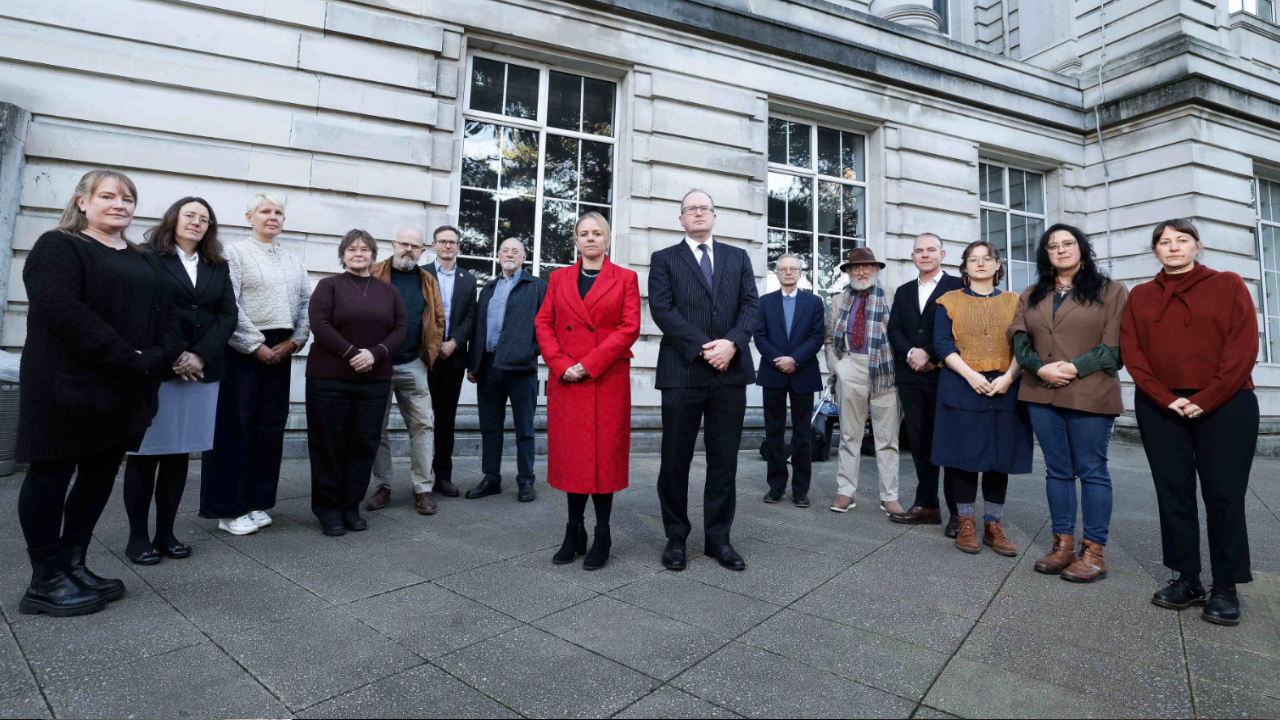
The findings were presented at a special coroner-style investigation held at the Ulster Museum in Belfast, bringing together archaeologists, forensic specialists and researchers to piece together the story of the young woman who lived more than 2,000 years ago. asserted
who → present → woman
The investigation established that the woman was between 15 and 22 when she died during the Iron Age. asserted
she → establish → Age
Scientific analysis showed that she had been deliberately decapitated, most likely from behind with a bladed weapon. asserted
she → show → weapon
While the precise circumstances of her death remain unknown, researchers suggested that it may have been connected to ritualised killing or sacrifice, a practice associated with several Iron Age bog bodies discovered across north-western Europe. uncertain
it → remain → Europe
But the investigation was not limited to the circumstances of her death. asserted
investigation → limit → death
Researchers used advanced techniques, including micro-CT scanning, digital mapping and 3D imaging, alongside specialist examinations of her bones, hair, skin and nails. asserted
Researchers → use → bones
These techniques have helped researchers piece the mosaic together, one part at a time. asserted
researchers → help → time
They also helped establish details about her diet, health, physical condition and appearance, offering a rare glimpse into the life of an individual from the Iron Age. asserted
They → help → Age
The remains of 2000 years old headless Woman (Image courtesy of PSNI) Professor Murphy said the scientific study had yielded a significant amount of information about the young woman and contributed to a better understanding of Iron Age people in Ireland. asserted
study → say → Ireland
The investigation also sought to approach the remains with care, recognising that the discovery was not simply an archaeological specimen but once belonged to a living person who was part of a community. asserted
who → seek → community
What the evidence reveals about her final moments Jen Gossman, Conservation specialist at National Museums NI, and Niamh Baker, Curator of Archaeology examining the woven artefact found with Ballymacombs More Woman. asserted
reveals → reveal → Woman
The bog preserved what time would otherwise have taken away, but it could not preserve the full story of how she died. uncertain
she → preserve → story
What researchers found, however, offered some disturbing clues. asserted
found → find → clues
An examination of her remains revealed that the young woman had been deliberately decapitated, most likely by a sharp-bladed weapon used from behind. asserted
woman → reveal → weapon
The nature of the injuries suggests that her death was violent, although the exact circumstances surrounding it remain unknown. uncertain
circumstances → suggest → it
Researchers have considered whether she may have been the victim of a ritual killing or human sacrifice, a possibility often discussed in connection with Iron Age bog bodies found across north-western Europe. uncertain
she → consider → Europe
Such discoveries have led archaeologists to examine the relationship between bog burials, violence and ritual practices in ancient societies. asserted
discoveries → lead → societies
However, without further evidence, it is difficult to establish why she was killed or what role she may have held in the community she belonged to. uncertain
she → establish → community
Her remains also offered clues about the world she inhabited. asserted
she → offer → world
The condition of her bones, together with scientific analysis of her hair, skin and nails, helped researchers investigate her diet, health and physical condition. asserted
researchers → help → diet
Each finding added another small piece to the picture, turning what initially appeared to be an unidentified set of human remains into evidence of an individual life. asserted
what → add → life
More than two millennia after her death, the Ballymacombs More Woman still has no known name or family history. asserted
Woman → have → name
Yet the investigation has made it possible to understand something about the person behind the remains. asserted
it → make → remains
Her story may never be complete, but the evidence she left behind has ensured that she is no longer simply an unknown woman preserved in a bog. uncertain
she → leave → bog
Give feedback · no sign-in needed

No sign-in needed for now. Your note is sent without a name, so it cannot be answered.

History Support