She who has no name, no identity and no parents to tell her story.
asserted
who → have → story
Yet, more than 2,000 years after her death, the remains of a young woman, discovered in a Northern Ireland bog, are revealing fragments of a life that time had nearly erased.
asserted
time → discover → that
The only thing we knew about her was that she was a woman.
asserted
she → know → her
No name, no family history, no account of the life she lived or the circumstances that led to her death.
asserted
that → live → death
Even after more than 2,000 years, her identity remains unknown.
asserted
identity → remain → years
There is something deeply unsettling about how little of her story has survived, particularly when the history of ancient societies has so often been pieced together through the lives, achievements and accounts of men.
asserted
history → be → men
Now, through an unusual investigation in Belfast, researchers are attempting to give a voice to a woman whose story was never recorded, using the few physical traces she left behind.
asserted
she → attempt → traces
According to
National Museums NI, which led the research into the discovery, the remains were initially believed to belong to a female aged between 13 and 17.
uncertain
remains → accord → 13
However, further osteoarchaeological examination revealed that the individual was most likely a young woman aged between 17 and 22.
asserted
individual → reveal → 17
Dating back to the Iron Age, between 343 BCE and 1 BCE, the remains were discovered in October 2023 near Bellaghy in County Derry, Northern Ireland.
asserted
remains → date → Derry
Following the discovery, she was named the Ballymacombs More Woman, after the townland where her remains were found, in keeping with the naming convention used for similar archaeological discoveries.
asserted
remains → follow → discoveries
Piecing together the life she left behind
2000 years old headless woman (Image courtesy of PSNI)
asserted
she → piece → PSNI
“It was an honour to undertake the osteological analysis of Ballymacombs More Woman and to be able to reconstruct the last moments of her life and what happened to her body when she died,” said Professor Eileen Murphy of Queen’s University Belfast, who conducted the examination of the remains.
asserted
who → undertake → remains
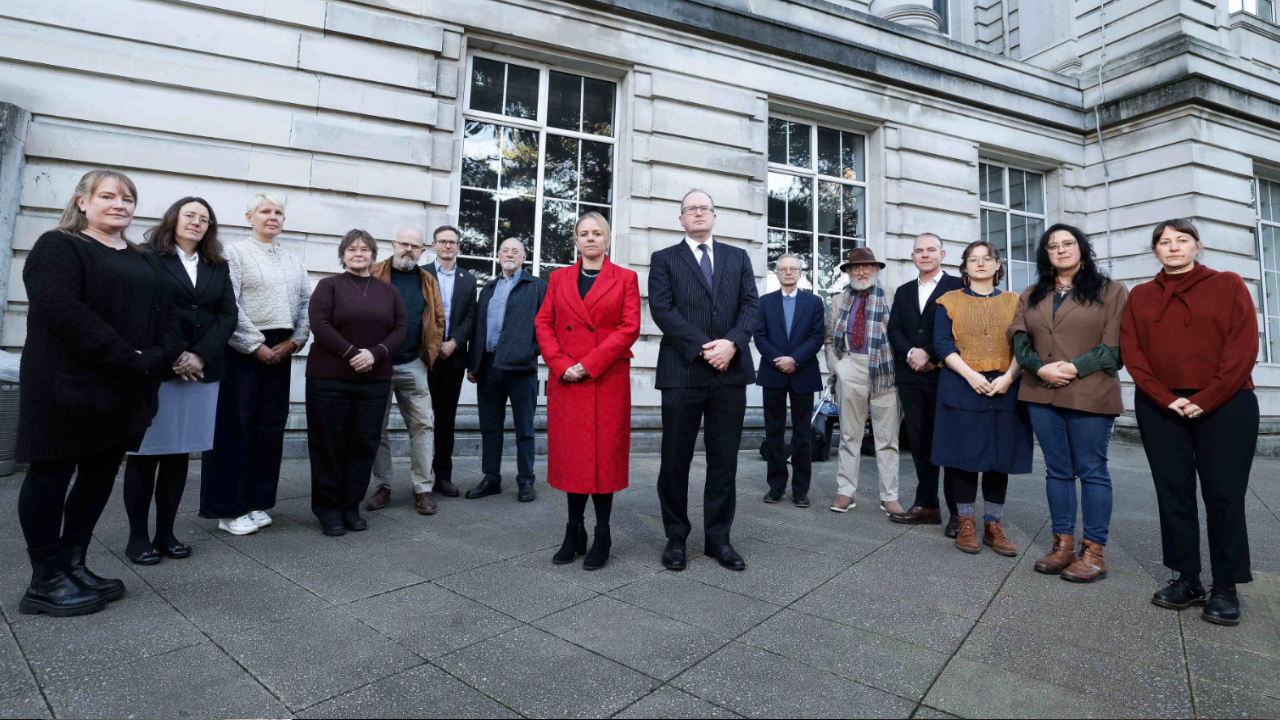
The findings were presented at a special coroner-style investigation held at the
Ulster Museum in Belfast, bringing together archaeologists, forensic specialists and researchers to piece together the story of the young woman who lived more than 2,000 years ago.
asserted
who → present → woman
The investigation established that the woman was between 15 and 22 when she died during the Iron Age.
asserted
she → establish → Age
Scientific analysis showed that she had been deliberately decapitated, most likely from behind with a bladed weapon.
asserted
she → show → weapon
While the precise circumstances of her death remain unknown, researchers suggested that it may have been connected to ritualised killing or sacrifice, a practice associated with several Iron Age bog bodies discovered across north-western Europe.
uncertain
it → remain → Europe
But the investigation was not limited to the circumstances of her death.
asserted
investigation → limit → death
Researchers used advanced techniques, including micro-CT scanning, digital mapping and 3D imaging, alongside specialist examinations of her bones, hair, skin and nails.
asserted
Researchers → use → bones
These techniques have helped researchers piece the mosaic together, one part at a time.
asserted
researchers → help → time
They also helped establish details about her diet, health, physical condition and appearance, offering a rare glimpse into the life of an individual from the Iron Age.
asserted
They → help → Age
The remains of 2000 years old headless Woman (Image courtesy of PSNI)
Professor Murphy said the scientific study had yielded a significant amount of information about the young woman and contributed to a better understanding of Iron Age people in Ireland.
asserted
study → say → Ireland
The investigation also sought to approach the remains with care, recognising that the discovery was not simply an archaeological specimen but once belonged to a living person who was part of a community.
asserted
who → seek → community
What the evidence reveals about her final moments
Jen Gossman, Conservation specialist at National Museums NI, and Niamh Baker, Curator of Archaeology examining the woven artefact found with Ballymacombs More Woman.
asserted
reveals → reveal → Woman
The bog preserved what time would otherwise have taken away, but it could not preserve the full story of how she died.
uncertain
she → preserve → story
What researchers found, however, offered some disturbing clues.
asserted
found → find → clues
An examination of her remains revealed that the young woman had been deliberately decapitated, most likely by a sharp-bladed weapon used from behind.
asserted
woman → reveal → weapon
The nature of the injuries suggests that her death was violent, although the exact circumstances surrounding it remain unknown.
uncertain
circumstances → suggest → it
Researchers have considered whether she may have been the victim of a ritual killing or human sacrifice, a possibility often discussed in connection with Iron Age bog bodies found across north-western Europe.
uncertain
she → consider → Europe
Such discoveries have led archaeologists to examine the relationship between bog burials, violence and ritual practices in ancient societies.
asserted
discoveries → lead → societies
However, without further evidence, it is difficult to establish why she was killed or what role she may have held in the community she belonged to.
uncertain
she → establish → community
Her remains also offered clues about the world she inhabited.
asserted
she → offer → world
The condition of her bones, together with scientific analysis of her hair, skin and nails, helped researchers investigate her diet, health and physical condition.
asserted
researchers → help → diet
Each finding added another small piece to the picture, turning what initially appeared to be an unidentified set of human remains into evidence of an individual life.
asserted
what → add → life
More than two millennia after her death, the Ballymacombs More Woman still has no known name or family history.
asserted
Woman → have → name
Yet the investigation has made it possible to understand something about the person behind the remains.
asserted
it → make → remains
Her story may never be complete, but the evidence she left behind has ensured that she is no longer simply an unknown woman preserved in a bog.
uncertain
she → leave → bog
 The Aporia