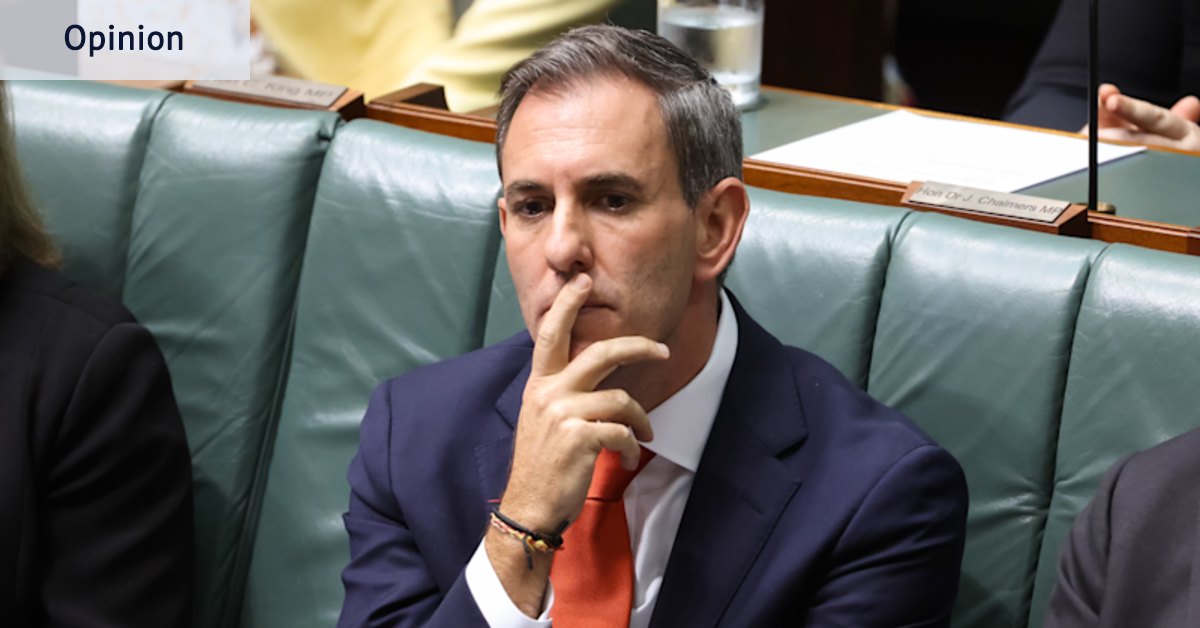
Photo via The Sydney Morning Herald

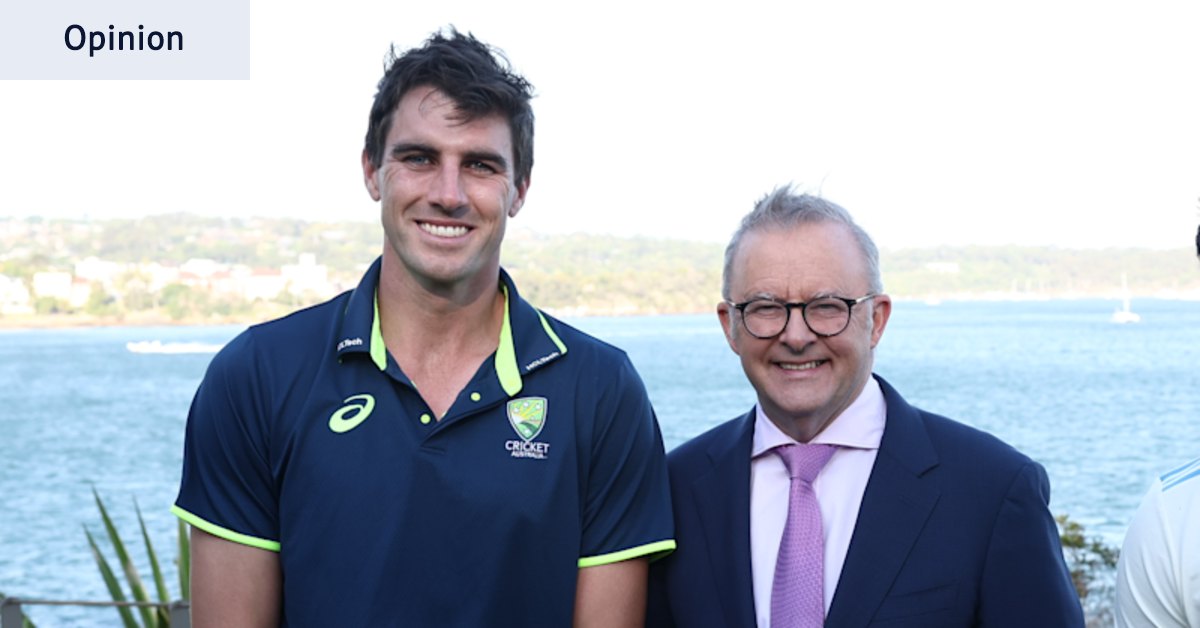
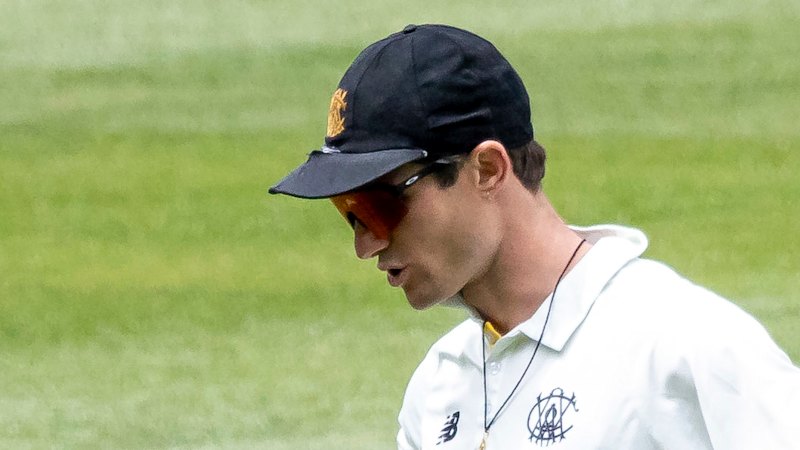
What politicians could learn from the weakest part of Pat Cummins’ press conference

Read the original at The Sydney Morning Herald ↗
Cite

Kelly, S. (2026, November 22). What politicians could learn from the weakest part of Pat Cummins’ press conference. The Sydney Morning Herald. https://www.smh.com.au/politics/federal/what-politicians-could-learn-from-the-weakest-part-of-pat-cummins-press-conference-20261123-p61g1d.html?ref=rss&utm_medium=rss&utm_source=rss_feed

Dated from the outlet's own feed. Check the original for its byline.

The Sydney Morning Herald · collected 2026-11-22 · by Sean Kelly

Quick Summary

The article discusses Pat Cummins' press conference response to Usman Khawaja’s claim of racial discrimination, focusing on Cummins’ demand for evidence and his certainty that race has not influenced captaincy decisions. The piece argues that Cummins’ approach contrasts with how racism often operates without clear evidence, and explores the concept of mutual agreement to the rules of a game, both in cricket and broader social contexts. It suggests that Cummins’ reaction highlights a disconnect between those who experience discrimination and those who deny it.
Written by AI on 2026-11-22, from this article's own text only (the story summary below draws on all the coverage).

AI analysis

Story summary

In a recent press conference, Pat Cummins, the Australian cricket captain, addressed claims by teammate Usman Khawaja that he had been racially discriminated against in captaincy decisions. Cummins responded that Khawaja needed evidence for such serious accusations, expressing disbelief that race could dictate who becomes captain. Despite Cummins previously showing awareness of racial issues, such as halting champagne celebrations to include Khawaja, a Muslim, his current stance came across as dismissive. The exchange highlights the ongoing debate about racial equality in sports leadership roles and the challenges of proving such claims.

Written for “Pat Cummins Press Conference” on 2026-11-22, grounded in this article and the 0 other(s) covering the same event.
Why this leaning score
The article's own words the score was based on. Each is quoted verbatim and was checked against the article text before being stored, so you can find it in the original.
Reading Leans left (beta estimate) Confidence medium
Leaning: leans left for article 171995 (medium confidence, 1 verified quote) · logged 2026-11-22

Compared with similar articles

This article reads leans left and hedges 15% of its claims. Each row says how that neighbour differs.
BBC News
Hedges 2 of 18 claims Outlet record 65/100
“The articles describe different specific events: the first is about Cricket Australia supporting Pat Cummins after the sandpaper scandal, while the second focuses on Cummins' press conference response to racial discrimination claims.”
The Sydney Morning Herald
Hedges 8 of 101 claims Outlet record 61/100
“The articles discuss different aspects of the Sandpapergate incident and its aftermath, not the same specific press conference or event.”

Story

Pat Cummins Press Conference
Sports · 1 article(s) covering the same event.
How this article was measured signals, leaning charts, publisher record, byline, topics and claims

Signals How these are calculated →

Claims extracted
46
sentences that state something as happening or true
Uncertain
15%
7 of 46 hedged ("reportedly", "may", "according to")
Leaning
Leans left
of the writing, not the subject · beta estimate
Publisher signals
61/100
The Sydney Morning Herald's corrections and hedging, across everything collected from it. Not a measure of accuracy.
Outlets on this story
1
Sports
Same framing elsewhere
1
articles that frame the event the way this one does
Analyzed 2026-11-22 · how these are computed

How this is being covered How these are calculated →

Article leaning vs. publisher reliability
Source leaning vs. consistency

Publisher

The Sydney Morning Herald · 7921 article(s) · 18 correction(s) detected
Running correction rate · 18 correction(s)

Who wrote this

Sean Kelly
8 article(s) here · 1 carrying a prediction
I just don’t think that’s the case … saying that if you’re Australian captain, you have to be a certain skin colour – I couldn’t disagree with that statement more.”
Two weeks ago, Australian technology juggernaut Canva announced it would sack, restructure or relocate more than 1200 of its employees.
It’s mostly forgotten now, but Whitlam could be a sharp critic of the Hawke government.
In his new history of Wikipedia, journalist Richard Cooke writes that we may be witnessing the “beginning of the end of the encyclopaedic age”.
When, they asked, would Labor come to its senses and realise it needed to break its promise to deliver Scott Morrison’s stage 3 tax cuts?
Still, unless Labor can find a way of seizing the initiative, it will be wishing those months away.
So immigration, which has recently fallen, wasn’t the cause – but cutting it could now help.
On Saturday, the Coalition announced a solution: it would hire military veterans.
Also by Sean Kelly
Nothing else under this byline is closely related to this article, so these are simply their most recent.
All 8 articles by Sean Kelly →

Topics

Ashes Australian Muslim

Subjects

Australian NORP · 5× Cummins PERSON · 5× Khawaja PERSON · 4× Bill Woodfull PERSON · 1× Cricket Australia ORG · 1× Muslim NORP · 1× Pat Cummins’ PERSON · 1× Paul Kelly PERSON · 1× Usman Khawaja’s PERSON · 1× pre-Cummins PERSON · 1×

Narrative

And his willingness to treat racism as a real thing that should be taken seriously has been demonstrated before: in 2022, he stopped his players celebrating their Ashes’ victory with champagne because it effectively excluded Khawaja, a Muslim.
framing: assertive · carried by 1 article(s) · first seen 2026-11-22
I just don’t think that’s the case … saying that if you’re Australian captain, you have to be a certain skin colour – I couldn’t disagree with that statement more.”
2026-11-22 · The Sydney Morning Herald
What politicians could learn from the weakest part of Pat Cummins’ press conference · assertive framing

Claims (46 extracted, 7 hedged)

The words that shocked me most in Pat Cummins’ famous press conference had nothing to do with sandpaper. asserted
that → shock → sandpaper
Asked about Usman Khawaja’s contention that he had been overlooked in captaincy considerations because of race, Cummins said: “It’s a pretty big statement. asserted
It → ask → race
If you are going to say that, I think you have to have evidence. asserted
you → go → evidence
I just don’t think that’s the case … saying that if you’re Australian captain, you have to be a certain skin colour – I couldn’t disagree with that statement more.” asserted
I → think → statement
To Cummins’ credit, his first words were an acknowledgment of the claim’s importance: of the things said recently, it had been “the most serious”. uncertain
it → say → things
And his willingness to treat racism as a real thing that should be taken seriously has been demonstrated before: in 2022, he stopped his players celebrating their Ashes’ victory with champagne because it effectively excluded Khawaja, a Muslim. asserted
it → treat → Khawaja
The Australian cricket captain’s awareness of the quiet assumptions that are often part of the way in which racism operates is part of what made the absolute certainty of Cummins’ statement a surprise. asserted
certainty → operate → statement
Argue with Khawaja, by all means, but to say he couldn’t disagree more indicates a remarkable sureness about the motivations of others. asserted
he → argue → others
And to demand “evidence” from Khawaja goes against the ways that discrimination tends to work. asserted
discrimination → demand → that
The “evidence” tends to lie not in tell-tale documents but in observable patterns about the world. asserted
evidence → tend → world
Those outside find it harder to ignore. asserted
it → find → ?
This is one way to think about playing cricket – or any game. asserted
This → think → cricket
When you agree to play, you sign up to the rules. asserted
you → agree → rules
We think of rules as a set of instructions. asserted
We → think → instructions
But we could also think of them as a type of duty – something we owe, by choice, to others. uncertain
we → think → others
When we agree to play, we are offering the other team a promise about our behaviour. asserted
we → agree → behaviour
We are also offering them the chance to win because we are pledging to restrain ourselves: not to do anything we can to secure victory. asserted
we → offer → victory
In doing so, we make ourselves vulnerable, submitting to restrictions as a type of gift to our opponents. asserted
ourselves → do → opponents
In return, they give us the same gift. asserted
they → give → gift
This is part of what cricketing great Bill Woodfull meant when he said the words that singer Paul Kelly later paraphrased like this: “There are two sides out there today and only one of them’s playing cricket”. asserted
one → cricket → cricket
If the two sides are playing different games, there is no game at all. asserted
sides → play → games
When a national team is playing, we – spectators and especially fans – also enter into that relationship. asserted
we → play → relationship
The players give us a similar gift: that we comprehend the nature of that contest and can therefore participate emotionally. asserted
we → give → contest
That had been fraying for some time; the incident simply severed the last remaining threads. asserted
incident → fray → threads
The punishments were too harsh, but that is because their purpose, perhaps not entirely conscious, was to draw a line under an era. asserted
purpose → draw → era
What marked that era was the increasing exclusion of the public from a shared understanding of what cricket was supposed to be. asserted
cricket → mark → what
And so you can see why – at an emotional level – Cummins might have been so forceful on both racism and his lack of knowledge about sandpaper being brought onto the field. uncertain
Cummins → see → field
He has played such a significant role in shifting Australian cricket culture and opening it back up: inviting the public back into a shared understanding. asserted
He → play → understanding
Khawaja’s claims on both topics seem separate but together risked unsettling what had seemed settled: not the facts of Sandpapergate so much as the idea that there was a shared understanding of the way Australian cricket worked. Unfortunately, Cummins’ confident dismissals belonged in spirit to the pre-Cummins era, the one Cricket Australia is still struggling to break free of: We understand how things work and you don’t. uncertain
you → seem → era
You think there is a problem, based on what you’ve observed? asserted
you → think → what
But it should not have required that step for there to be an acknowledgment of the problem. asserted
it → require → problem
That is why one of the most important observations about recent events was made by journalist Osman Faruqi, who argued the largest issue was “who creates the culture and what impact that culture has”. asserted
culture → make → impact
This relates to racism – and is broader, too. asserted
This → relate → racism
If a small group of people come to believe they have total dominion over culture, any pretence of a shared understanding will eventually break down. asserted
pretence → come → understanding
This is exactly what has happened in our national politics, as growing numbers of people come to understand the country no longer works in the way they were led to believe. asserted
they → happen → way
You can’t work hard and expect to buy a house. asserted
You → work → house
The rich are not playing the same game as the rest of us. asserted
rich → play → us
Meanwhile, those in charge have continued to assure us that things are working exactly the way they are supposed to. asserted
they → continue → us
This is what Cricket Australia does not seem entirely to have grasped yet: that people, on more topics than just cricket, are tired of being told “it’s being looked after” when it’s clearly not. asserted
it → seem → cricket
The strongest parts came where he embraced nuance: explaining where knowledge was limited and complexity reigned. asserted
complexity → come → nuance
…and 6 more, not listed.

Give feedback · no sign-in needed

No sign-in needed for now. Your note is sent without a name, so it cannot be answered.

History Support