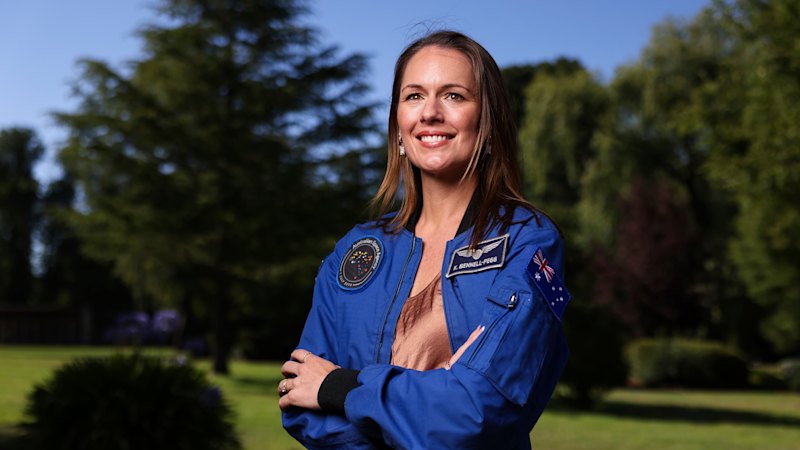
Ecologist Dr Michelle McKemey and botanist Professor John Hunter were surveying plants on the Northern Tablelands of NSW in the aftermath of Black Summer when they spied a grove of strange blue-green trees muscling from a granite outcrop.
asserted
they → survey → outcrop
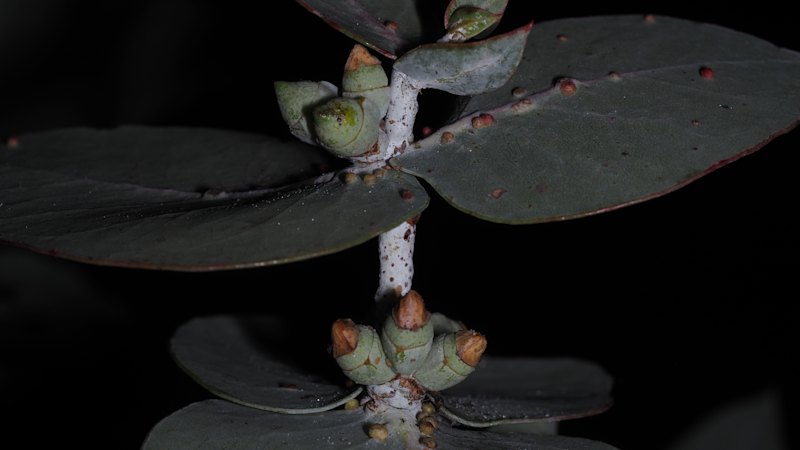
The silvery foliage and fibrous, dark, flaky bark of the small eucalypt, McKemey recalled, was “unlike anything I’d ever seen before”.
asserted
I → recall → anything
In a discovery traditional owners have likened to the uncovering of the Wollemi Pine, the enchanting trees growing only on a tiny, sacred parcel of Kamilaroi bushland near Tingha would turn out to be a new-to-science species of eucalypt.
asserted
trees → liken → eucalypt
With only about 1000 known individuals of Eucalyptus bunawanjan, or the Bunawanjan Box – named after the Aboriginal word for the landform it was found on – researchers are filing an emergency listing for the species to be designated as critically endangered.
asserted
species → know → listing
The entire known range of the new species is a 21-hectare slope of steep granite, and researchers found only five saplings.
asserted
researchers → know → saplings
“The trees really stand out when you’re looking at them,” said elder and Banbai ranger Aunty Lesley Patterson, who guided scientists from the University of New England during their research and collaborated on the discovery.
asserted
who → stand → discovery
“You can tell the difference between the normal eucs and Eucalyptus bunawanjan – they’ve got these small round leaves, and they’re a lighter green.”
Those distinctive oval leaves shade the grounds of a sacred women’s place, Patterson said.
asserted
Patterson → tell → place
“It’s a women’s area.
asserted
It → ’ → ?
There are a lot of plants there that are medicinal, and there’s running water.
asserted
that → be → plants
It’s a sacred place for women to go and meet up, or to see a doctor.”
asserted
women → ’ → doctor
That meant the site could be accessed only by women.
uncertain
site → mean → women
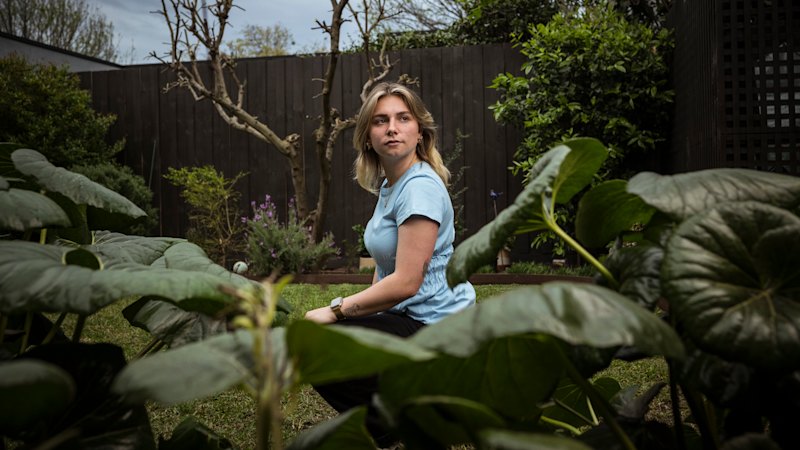
An all-female research team, including Patterson, McKemey, master’s student Claire Hewitt and UNE Associate Professor Rose Andrew, assembled to study the trees.
asserted
team → include → trees
“That’s never happened to me before,” Andrew said of working with an all-female team.
asserted
Andrew → happen → team
The researchers soon discovered the new species had fascinating traits, including “neoteny”, which occurs when an organism retains juvenile traits into adulthood.
asserted
organism → discover → adulthood
Eucalyptus bunawanjan keeps its smaller, rounded, waxy juvenile leaves as it grows.
asserted
it → keep → leaves
Normally, only adult foliage would be seen sprouting next to buds, gumnuts and flowers, but in this new species “the buds and flowers spring out from right next to those juvenile leaves”, Andrew said.
asserted
Andrew → see → leaves
Only the largest trees – the tallest being about 17 metres – had long, adult, sickle-shaped gum leaves.
asserted
tallest → have → leaves
The new species is also identifiable by its number of buds, which pop open to reveal flowers before they’re pollinated and become fruit in the form of gumnuts.
asserted
they → pop → gumnuts
Eucalypt buds usually come in sevens, but Eucalyptus bunawanjan’s flowers form mostly in trios.
asserted
flowers → come → trios
Andrew, an expert in molecular plant ecology, and the research team took leaf samples and sent them for genetic analysis in Canberra, which confirmed the tree was an undescribed species.
asserted
tree → take → Canberra
Its closest relative is Eucalyptus banksii, or the Tenterfield woollybutt, which also sports egg-shaped juvenile leaves alongside long, curved adult foliage.
asserted
which → sport → foliage
“It’s capable of surviving in a habitat that most of its relatives can’t handle,” Andrew said of the new species, which is described in the journal Telopea.
asserted
which → ’ → journal
Work will now turn to learning more about the tree’s ecology and the animal species it may support in this rugged, dry and at times snowy landscape.
uncertain
it → turn → landscape
The research team consulted heavily with Aboriginal elder Uncle Gregory Livermore, president of the Mooki and Bassendean Associations Incorporated, which owns the property the trees were found on.
asserted
trees → consult → property
“Straightaway, I thought, ‘Well, here’s our own version of the Wollemi pine,’” Livermore, who used to marvel at the prehistoric pines at Mount Annan Botanical Gardens, said.
asserted
who → think → Gardens
“I never thought we’d come home and find our own.
asserted
we → think → own
“It’s the women’s responsibility now to look after it,” he said.
asserted
he → ’ → it
Due to its precarious existence and location on sacred Aboriginal land, the public is asked not to seek out Eucalyptus bunawanjan.
asserted
public → ask → bunawanjan
“We don’t want thousands of people coming up and going in there and disregarding Aboriginal culture, particularly men going on Country and not following protocols,” Livermore said.
asserted
Livermore → want → protocols
“I’m trying to comprehend that this tree is found nowhere else.
asserted
tree → try → ?
What else is there that we don’t know about?”
asserted
we → know → that
McKemey said cultural burning led by Aboriginal custodians – a gentle, low-heat method of burning that regenerates country – in the area surrounding the sacred grove would help protect the new species from bushfires.
asserted
that → say → bushfires
“When we do the listing, it will be listed as critically endangered, and hopefully as an emergency listing under the EPBC and biodiversity conservation acts,” McKemey said.
asserted
McKemey → do → EPBC
“It’s these Aboriginal rangers and landholders all across Australia who have these incredible little pockets of rare and threatened species that are really disproportionately looking after areas of biodiversity that we all value as Australians.”
asserted
we → ’ → Australians
The Examine newsletter explains and analyses science with a rigorous focus on the evidence.
asserted
newsletter → explain → evidence
 The Aporia