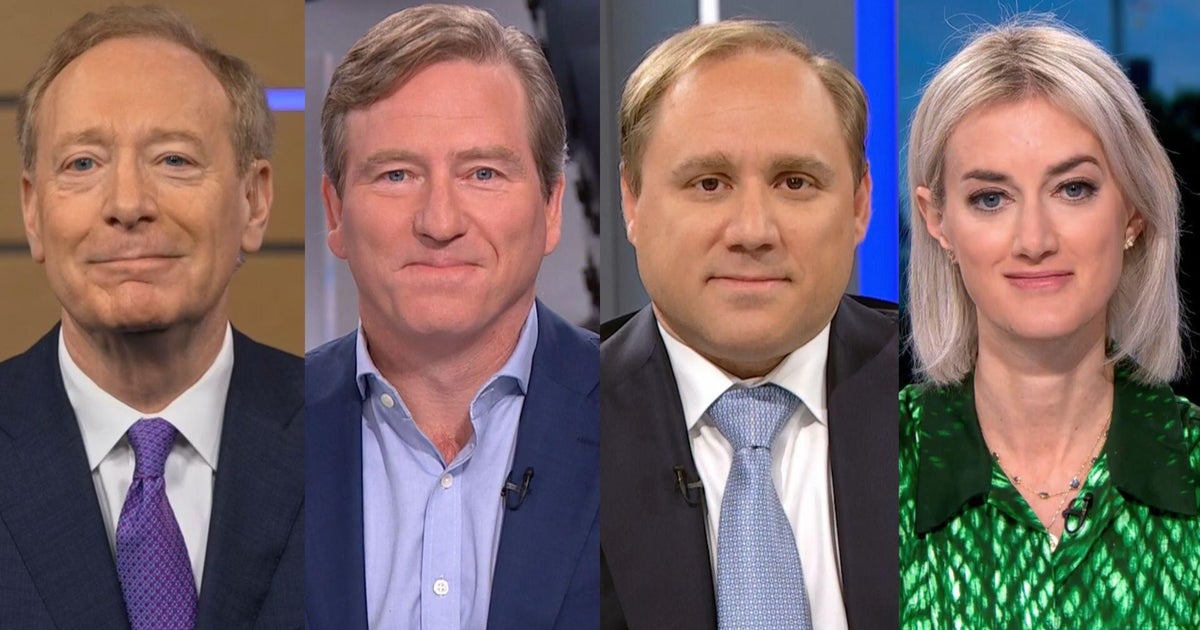
Photo via CBS News

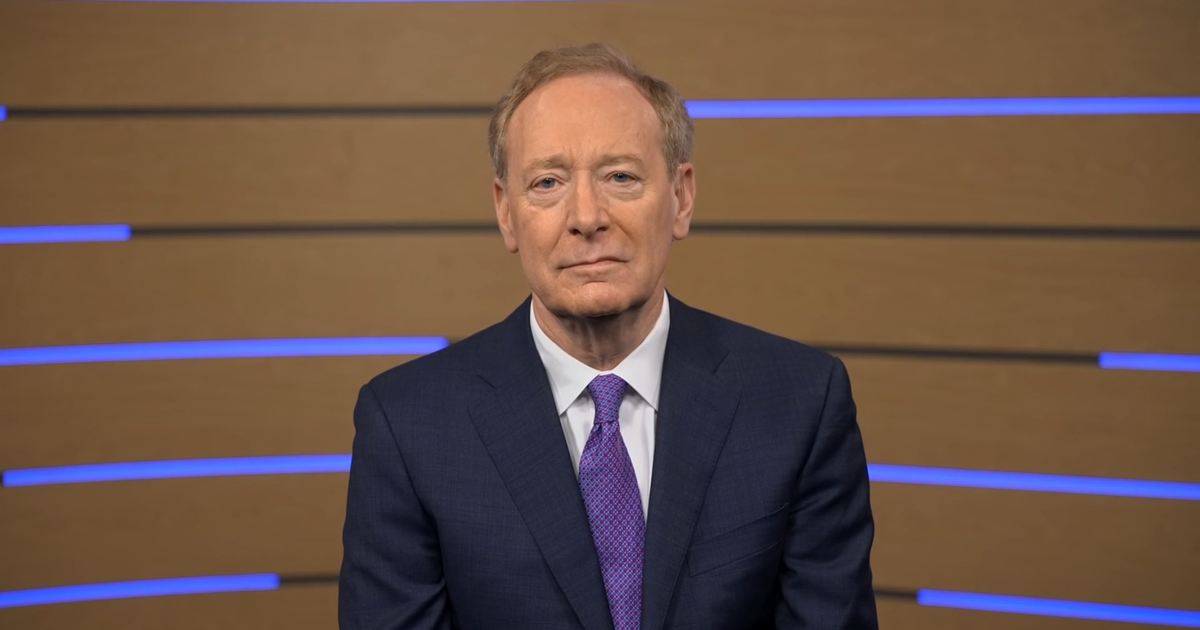
Transcript: Brad Smith, Microsoft president and vice chair, on "Face the Nation with Margaret Brennan," Nov. 22, 2026

Read the original at CBS News ↗
Cite

Transcript: Brad Smith, Microsoft president and vice chair, on "Face the Nation with Margaret Brennan," Nov. 22, 2026. (2026, November 22). CBS News. https://www.cbsnews.com/news/transcript-brad-smith-microsoft-on-face-the-nation-with-margaret-brennan-nov-22-2026/

Dated from the outlet's own feed. Check the original for its byline.

CBS News · collected 2026-11-22

Quick Summary

Brad Smith, president and vice chair of Microsoft, appeared on "Face the Nation with Margaret Brennan" on November 22, 2026, to discuss a global Microsoft outage that lasted for 24 hours on November 12. Smith clarified that the outage was not due to a cyberattack or AI, but rather a combination of software updates and a shift in network traffic. He emphasized Microsoft's commitment to transparency and outlined steps the company has taken and plans to take to prevent future disruptions. Smith acknowledged that AI has made it easier to identify and exploit software vulnerabilities, highlighting the need for rapid patching to stay ahead of potential threats.
Written by AI on 2026-11-22, from this article's own text only (the story summary below draws on all the coverage).
See how they differ ↓

AI analysis

Story summary

On the CBS News show "Face the Nation with Margaret Brennan," House Minority Leader Hakeem Jeffries, Treasury Secretary Scott Bessent, and Microsoft President Brad Smith appeared to discuss various topics. Jeffries, set to become the next House Speaker after Democrats win control of Congress, indicated a willingness to work with President Trump on issues like healthcare, despite political differences. He emphasized Democrats' focus on affordability, healthcare expansion, and immigration reform, and suggested bipartisan cooperation could be possible. Additionally, the program featured discussions on recent technology outages and their connection to artificial intelligence, with cybersecurity experts providing insights.

Written for “Face The Nation with Margaret Brennan” on 2026-11-23, grounded in this article and the 10 other(s) covering the same event.
Why this leaning score
This article does not take a side on a contested political question, so it has no leaning score. That is an answer rather than a gap: a match report or a rescue can be warmly or critically written without being left or right, and scoring it anyway is how approval of a subject gets recorded as a political position.
No political leaning scored for article 171956 · logged 2026-11-22

How they differ

2 outlets covered “Face The Nation with Margaret Brennan”.

What each outlet says

One AI summary per outlet of its latest article on this story, written from that article alone and checked against it. Open the article for the outlet's own words.

CBS NewsThis outlet22 Nov

Brad Smith, president and vice chair of Microsoft, appeared on "Face the Nation with Margaret Brennan" on November 22, 2026, to discuss a global Microsoft outage that lasted for 24 hours on November 12. Smith clarified that the outage was not due to a cyberattack or AI, but rather a combination of software updates and a shift in network traffic. He emphasized Microsoft's commitment to transparency and outlined steps…

Transcript: Brad Smith, Microsoft president and vice chair, on "Face the Nation with Margaret Brennan," Nov. 22, 2026 (this article)10 articles from CBS News on this story
The Guardian22 Nov

Incoming US House Speaker Hakeem Jeffries discussed his party’s agenda on CBS News’s Face the Nation, emphasizing affordability, healthcare reform, and fixing the immigration system. He expressed openness to working with Republicans on these issues, particularly on healthcare. Jeffries also highlighted his support for legislation banning congressional stock trading as an anti-corruption measure. This interview took…

Hakeem Jeffries willing to cross political aisle to work on Democrats’ agenda →

Compared with similar articles

This article reads unscored and hedges 6% of its claims. Each row says how that neighbour differs.
CBS News
Hedges 0 of 1 claims Outlet record 66/100

Story

Face The Nation with Margaret Brennan
Politics · 11 article(s) covering the same event. See how they differ ↑
How this article was measured signals, leaning charts, publisher record, byline, topics and claims

Signals How these are calculated →

Claims extracted
78
sentences that state something as happening or true
Uncertain
6%
5 of 78 hedged ("reportedly", "may", "according to")
Leaning
not political
takes no side on a contested political question
Publisher signals
66/100
CBS News's corrections and hedging, across everything collected from it. Not a measure of accuracy.
Outlets on this story
11
Politics
Same framing elsewhere
1
articles that frame the event the way this one does
Analyzed 2026-11-22 · how these are computed

How this is being covered How these are calculated →

Article leaning vs. publisher reliability
Source leaning vs. consistency

Publisher

CBS News · 6053 article(s) · 11 correction(s) detected
Running correction rate · 11 correction(s)

Who wrote this

No reporter is named on this article.

Topics

Microsoft Seattle

Subjects

Microsoft ORG · 7× Brad Smith PERSON · 3× MARGARET BRENNAN PERSON · 3× SMITH PERSON · 3× Americans NORP · 1× MARGARET BRENNAN: PERSON · 1× Seattle GPE · 1×

Narrative

Around the world, people who have technology are using these systems to identify the vulnerabilities and patch at a pace we have never seen before, to beat the bad actors so they can't use them to hack in, but especially when you have older infrastructure, especially when you're trying to patch at such a pace, especially when you have to go so fast that you can't take as much time to test what you're changing in the code, you do increase the risk of something going wrong, and that's what we've seen over the last week.
framing: assertive · carried by 1 article(s) · first seen 2026-11-22
But that makes it sound like there are some pretty big risks that we may not yet be anticipating.

Claims (78 extracted, 5 hedged)

The following is the transcript of the interview with Microsoft president and vice chair Brad Smith that aired on "Face the Nation with Margaret Brennan" on Nov. 22, 2026. asserted
that → follow → Nov.
We turn now to the president and vice chairman of Microsoft, Brad Smith, who joins us from Seattle. asserted
who → turn → Seattle
So we've been talking about these outages at companies. asserted
we → talk → companies
Microsoft had a global outage for 24 hours, hobbled corporations. asserted
Microsoft → have → corporations
It was tough for us here in the news business not to have our email working on November 12 or so. asserted
email → have → November
Microsoft said it was linked to a technical issue, not a cyber hack. asserted
it → say → issue
What is the company doing to make sure this doesn't happen again? asserted
this → do → What
And did AI play a role here? asserted
AI → play → role
Well, the first thing we always need to do when this happens is apologize, and we have, and I want to do so again. asserted
I → need → ?
And you're right; it was not linked to AI. asserted
it → link → AI
It was basically a perfect storm of software that was updated four months earlier, and then it interacted with a new update and a shift in network traffic. asserted
it → update → traffic
You know, we have taken steps. asserted
we → know → steps
We've published two reports in the last 10 days. asserted
We → publish → days
We've worked to be transparent, showing minute by minute to the public what happened. asserted
what → work → public
We've taken nine steps already, as we laid out in our report. asserted
we → take → report
There's 13 more steps we're going to take. asserted
we → be → ?
We've learned a lot. asserted
We → learn → lot
It was painful, especially for everybody who relies on us. asserted
who → rely → us
We get it, and I think this combination is going to make us stronger going forward. asserted
us → get → it
It's just constantly what we have to do in an age of such complex technology. asserted
we → have → technology
Well, as you know, it was a series of events. asserted
it → know → events
It wasn't just Microsoft, but we saw tech outages and all sorts of complications. asserted
we → see → complications
It's raised questions about what AI's role is generally. asserted
role → raise → questions
I heard you say it wasn't a factor for Microsoft, but when you look across the country right now, I mean, do you think that we are applying AI tools to look for vulnerabilities and then doing these automated updates in such a way that, frankly, like our old infrastructure, just isn't prepared for. asserted
that → hear → infrastructure
I think that is part of the really important question, and you can think about what's happening with all of these outages, at least in substantial part, as sort of AI ripple effects. asserted
what → think → effects
What AI did earlier this year was basically make it much easier for people to find vulnerabilities in code, and then you can either use that knowledge to patch the code, or if you're a bad actor, you can use that knowledge to try to hack into systems. asserted
you → make → systems
So what happened is we've set off, in effect, a race. asserted
we → happen → race
Around the world, people who have technology are using these systems to identify the vulnerabilities and patch at a pace we have never seen before, to beat the bad actors so they can't use them to hack in, but especially when you have older infrastructure, especially when you're trying to patch at such a pace, especially when you have to go so fast that you can't take as much time to test what you're changing in the code, you do increase the risk of something going wrong, and that's what we've seen over the last week. asserted
we → have → week
I think we have to be prepared, frankly, for the coming months because this isn't the type of thing that just gets done in a couple of weeks. asserted
that → think → weeks
The whole information infrastructure of the world is in effect being upgraded right now. asserted
infrastructure → upgrade → effect
But that makes it sound like there are some pretty big risks that we may not yet be anticipating. uncertain
we → make → that
What are Americans supposed to do? asserted
Americans → suppose → What
Well, what I would say for all of us is three things. asserted
say → say → us
First, if you get an update on your phone or your laptop with a patch, apply it because I think that's going to keep your technology far safer. asserted
that → get → technology
Second, for all the organizations in the world, people are having to update their patching practices. asserted
people → have → practices
They're having to change the way their IT teams work together, they're having to upgrade their- their legacy infrastructure, and I think there's a huge opportunity for the government and the tech sector to work more closely together. asserted
government → have → infrastructure
Jay Clayton is really, I think, focused on advancing this in the administration asserted
I → think → administration
I think that's critical, and we're going to need better sharing of threat intelligence, better concerted action. asserted
we → think → intelligence
I want to ask you about something I asked the Treasury Secretary about just a few moments ago. asserted
I → want → Secretary
On the Microsoft website, it says your company has more than 600 data centers in 34 countries. asserted
company → say → countries
…and 38 more, not listed.
Give feedback · no sign-in needed

No sign-in needed for now. Your note is sent without a name, so it cannot be answered.

History Support