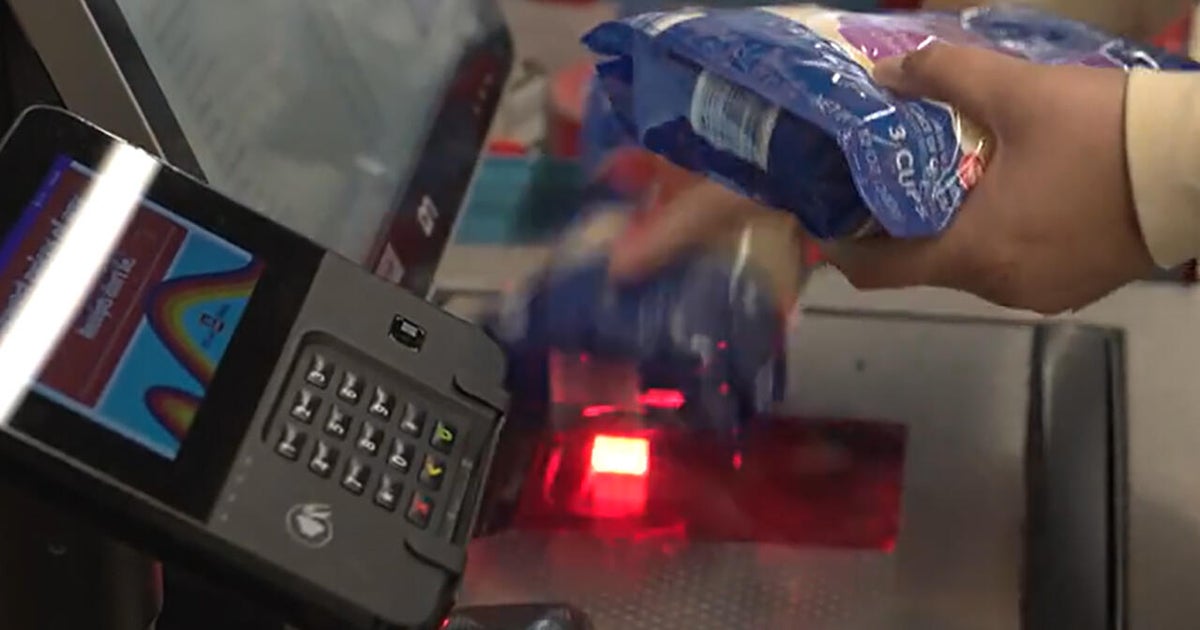
Each one is an ear-piercing reminder of how just much more we're paying for groceries this Thanksgiving – 32% more, to be exact – than we paid in 2020, according to the Bureau of Labor Statistics.
uncertain
we → pierce → Statistics
One mother shopping with her daughter told us, "Feels like all my money goes to food."
asserted
money → shop → food
The USDA doesn't report food insecurity figures like they used to; that survey was discontinued last year.
asserted
survey → report → figures
What we do know is, in 2024 nearly 14% of Americans said they were struggling to eat, making this Thanksgiving yet another exercise in the art of the possible.
asserted
Thanksgiving → know → possible
First, consumers are changing where we shop.
asserted
we → change → ?
Discount grocery chains like Aldi, Lidl, and Food 4 Less are reporting greater and greater market shares, giving traditional supermarkets, like Kroger, a real run for their money.
asserted
chains → report → money
David Rinaldo, chief operating officer at Aldi, says there used to be a stigma around discount stores.
asserted
Rinaldo → operate → stores
Now, Aldi is on track to open 150 stores this year alone.
asserted
Aldi → open → stores
"I never would have dreamed we'd ever get to the point that it would be that mainstream, that people would come to a limited assortment discount grocer to be where they shop," Rinaldo said.
asserted
Rinaldo → dream → grocer
Cheaper in-house brands, contracted out to manufacturers that make them for stores like Aldi and others – assembly lines tailored to a specific market.
asserted
that → contract → market
They aren't the no-name generic brands you might remember from the 1970s and '80's.
uncertain
you → remember → 1970s
It's what fills 92% of what's on Aldi's shelves.
asserted
what → fill → shelves
Private labels, says Rinaldo, aren't the exception; they're now the trend.
asserted
they → say → ?
"I think there's been a movement with private label," he said.
asserted
he → think → label
"Nine out of the last ten years, private label has grown faster than national brands.
asserted
label → grow → brands
But it's not just where American are buying groceries; it's how they're paying for them that is changing.
asserted
that → buy → them
According to a recent survey by the Urban Institute in Washington, D.C., about 35% of us are using credit cards to buy groceries.
uncertain
% → accord → groceries
But unlike past years, 1 in 4 customers is having trouble paying off that food debt.
asserted
customers → have → debt
"That's a substantial share of families that are needing to turn to credit to purchase their groceries, and then taking on debt in the process of doing so," said Cassandra Martinchek, a senior researcher associate at the Urban Institute.
asserted
Martinchek → need → Institute
She says it's not just credit cards we should be concerned about – it's digital lay-away services (like Klarna, Splitit, Affirm, Sezzle and Zip) that people are increasingly using to buy food.
asserted
people → say → food
They're called BNPL, or Buy Now Pay Later apps, that often charge little to no interest.
asserted
that → call → interest
According to the same survey, 1 in 10 is using them to buy groceries, but more than a third of those shoppers also missed a payment.
uncertain
third → accord → payment
Martinchek said, "This strategy can help them meet their needs right now, but it could be consequential for their future financial stability and also mobility."
uncertain
it → say → stability
She was using a Buy Now Pay Later app for her groceries before she got engaged, but as a single mom she fell behind.
asserted
she → use → mom
"It felt a bit like a rat race for a little while, like I couldn't keep up," she said.
asserted
she → feel → while
Williams stressed to be on a rotating line of credit where she was always owing: "I really could never just afford to just buy the groceries I needed, because I was busy paying off the last groceries I needed," she said.
uncertain
she → stress → groceries
Her delinquent payment meant her account was locked.
asserted
account → mean → ?
Before she could go shopping for more groceries again, she had to pay off the entire balance.
uncertain
she → go → balance
"I couldn't afford $200 in groceries the first time, I can't afford $160 today, all of this, and you can't use the app anymore," Williams said.
asserted
Williams → afford → app
"And after 30 days, it starts to take a hit on your credit as well."
asserted
it → start → credit
Like millions of others this Thanksgiving, Williams feels like she shouldn't be struggling to eat, least not on her salary.
asserted
she → feel → salary
She has a master's degree, teaches English at the University of North Carolina at Greensboro, and has a second job as a social media influencer to boot.
asserted
She → have → influencer
"If it was just like, you know, 28-year-old poor money management issues, that's one thing," she said.
asserted
she → know → ?
"But if this is what it looks like for me, what does that look like for everybody else?"
asserted
that → look → everybody
Unlike the price of gas, which is finally starting to come down, for now, the price of groceries hasn't.
asserted
price → start → groceries
And Williams feels it at the end of the month: "I'm like, okay, payday is on the 28th.
asserted
payday → feel → 28th
If it's like the 24th, we are stretching to get by," she said.
asserted
she → stretch → 24th
She is planning to do a potluck-style Thanksgiving this year – it seems, few can afford feeding family, extended family, and friends of family as well without everyone pitching in.
asserted
everyone → plan → family
If there IS something to be thankful for, the increase in grocery prices is expected to slow by next Thanksgiving.
asserted
increase → be → Thanksgiving
 The Aporia