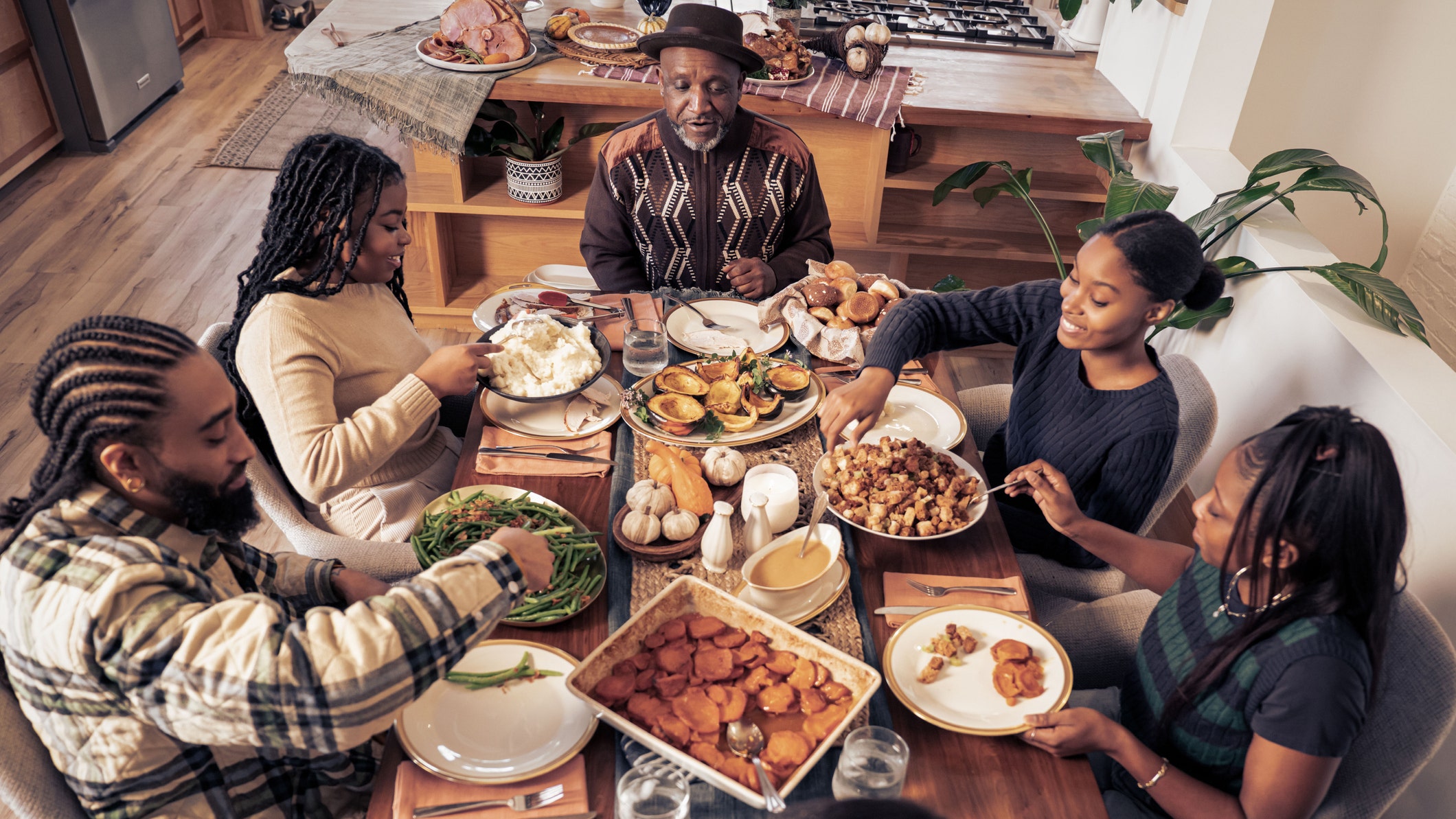
Every two years, Thanksgiving, that most American of holidays, falls just a few weeks after a major national election, and it can be a dicey mixture of loud voices, hurt feelings and anger.
asserted
it → fall → voices
"A few weeks ago I started seeing patients who are concerned about the upcoming holiday," psychotherapist Jonathan Alpert told Fox News Digital.
asserted
Alpert → see → Digital
"They are concerned about how they will deal with their Trump-loving uncle or their blue-haired cousin.
asserted
they → concern → uncle
Some have talked about sitting out the holiday, which I don’t think is the answer."
asserted
I → talk → holiday
Polling data backs up what Alpert is seeing on the couch, as do conversations this columnist has had with Americans who have lost relationships over politics in the past decade or so.
asserted
who → back → decade
According to a 2026 UC Irvine poll, between 26-37% of people have had relationships irreparably harmed by politics.
uncertain
% → accord → politics
Honestly, the figure seems a bit low to me, as almost everyone I have spoken with, and it's a lot of people, say the red vs blue wars have at least strained some friendships.
asserted
wars → seem → friendships
What is curious about this phenomenon is that, while political arguments over a holiday meal have been all but a cliche for decades in the United States, it is only over the past 10 years or so that we have seen, in a widespread way, people cutting others out of their lives over the political and social turmoils of the day.
asserted
people → see → day
Alpert, who has made quite a study of Trump Derangement Syndrome, lays the cause, if not the blame of our current, cantankerous condition at the feet of the president.
asserted
who → make → president
"When Trump entered politics, that's when I started to see this polarization reach this point of cutting off relatives," he said.
asserted
he → enter → relatives
"Prior to Trump, I never saw it."
asserted
I → see → it
To understand how a healthy society can come to such a place, it is useful to look at examples of the phenomenon from the past.
asserted
it → understand → past
In 1790, Compte Roger de Demas had returned to a Paris on the verge of revolution after several years abroad in the military.
asserted
Demas → return → military
His description of what he found feels eerily familiar: "Conversation had become habitually serious and profound, and the grace and geniality that used to constitute its charm had altogether vanished; the conflict of opinions had killed all confidence and intimacy …
asserted
conflict → find → confidence
Society had generated into factions, conversation into debate, and pleasures into a mere means of distraction.
asserted
Society → generate → distraction
Alpert noted this myopic attitude towards politics as well, saying of those immune to it, "They … have more that they care about in their life than politics, maybe they’ve got families or careers or hobbies, or sports, they have more going on in their lives.
asserted
they → note → lives
It's the people who give politics top priority, those are the people who are suffering.
asserted
who → give → priority
"
And who often make those around them suffer with their constant droning from either political side.
asserted
those → make → side
We do have to ask, on the other side of the etiquette ledge, if we lose something when families and friends can’t discuss the issues of the day, or feel the need to censor themselves.
asserted
families → have → themselves
For Alpert, at least for now, this seems like a sacrifice we have to make.
asserted
we → seem → sacrifice
"If we get back to a time when people could just have spirited debates and heated discussions and not to the point where they demonize their Republican uncle, just because he’s a Republican, then sure, I’m all for that.
uncertain
I → get → that
But we’ve gotten to such a dangerous place where we are calling people, ‘Hitler,’ or ‘evil.’
asserted
we → get → people
It would be nice to get back to that time, and perhaps we can hope that two years from now, without Trump on the ballot literally or figuratively anymore, we can return to the old rhetorical normal.
asserted
we → get → normal
For normalcy to return, however, for old relationships to be mended and new ones to never again be cut asunder, it will take more than the mere absence of Trump, even if he was the catalyst of our season of discontent.
asserted
he → return → discontent
Rather, it is a choice we must all make to listen more and judge less.
asserted
we → make → ?
All of us can help to bring grace, geniality and charm back to the Thanksgiving table starting this year, not necessarily by avoiding politics, but by being reminded, by the warm hearth of home that there is much, much more to life.
asserted
All → help → life
 The Aporia