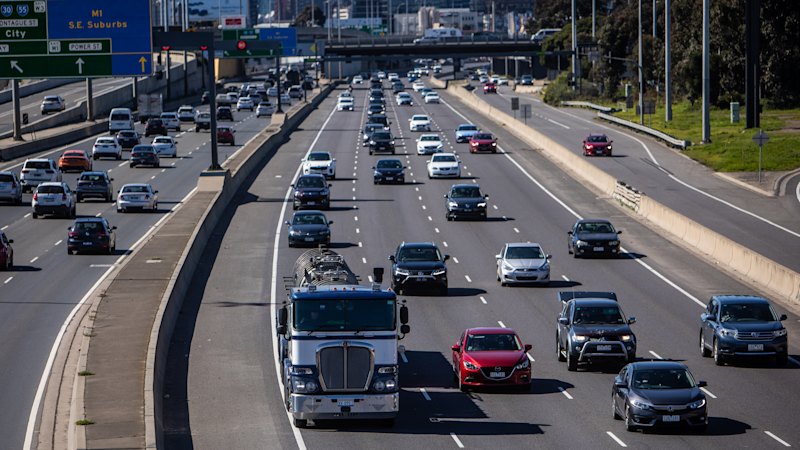
Photo via The Sydney Morning Herald

Call to keep Australia’s last oil refineries on a lifeline as fuel reserves run down

Read the original at The Sydney Morning Herald ↗
Cite

Harris, R. (2026, November 22). Call to keep Australia’s last oil refineries on a lifeline as fuel reserves run down. The Sydney Morning Herald. https://www.smh.com.au/politics/federal/call-to-keep-australia-s-last-oil-refineries-on-a-lifeline-as-fuel-reserves-run-down-20261122-p61g60.html?ref=rss&utm_medium=rss&utm_source=rss_feed

Dated from the outlet's own feed. Check the original for its byline.

The Sydney Morning Herald · collected 2026-11-22 · by Rob Harris

Quick Summary

A non-partisan think tank, the Grattan Institute, has proposed a strategy for Australia to underwrite its remaining oil refineries in Geelong and Brisbane beyond 2030, while transitioning towards clean fuel production. This comes as Australia faces the depletion of its commercial crude oil reserves by 2035 and a surge in fuel import costs, driven by the war in Iran, which has increased the fuel import bill by $18 billion and imposed $3 billion in additional federal budget costs. The Grattan blueprint aims to deliver a net $55 billion benefit to the budget by 2050 and reduce household annual fuel bills by more than $3300, while also advocating for at least half of the fuel needed for road transport, aviation, and mining industries to be sourced domestically by the same year.
Written by AI on 2026-11-22, from this article's own text only (the story summary below draws on all the coverage).

AI analysis

Story summary

The Grattan Institute, a non-partisan think tank, has called on the Australian government to extend financial support to the country's last two oil refineries in Geelong and Brisbane beyond 2030. The institute also recommends abandoning plans to subsidize a third refinery and removing billions of dollars in diesel tax concessions from major mining companies to accelerate the transition to clean fuels. This proposal comes as Australia faces a significant increase in fuel import costs, estimated to have risen by $18 billion due to the war in Iran, driving inflation and adding over $3 billion to the federal budget. The Grattan Institute's report predicts that commercial crude oil reserves will be exhausted within a decade, and it estimates that its reforms would save the government a net $55 billion by 2050 while reducing household fuel bills by more than $3300 annually.

Written for “Australia Oil Refinery Crisis” on 2026-11-22, grounded in this article and the 0 other(s) covering the same event.

Compared with similar articles

This article reads leans strongly left and hedges 6% of its claims. Each row says how that neighbour differs.
The Guardian
Leans strongly left Hedges 2 of 29 claims Outlet record 64/100
“While both articles discuss similar topics related to Australia's fuel security and the Grattan Institute's recommendations, they describe different aspects and strategies proposed for addressing the issue, not the same specific event.”

Story

Australia Oil Refinery Crisis
Economy/Business · 1 article(s) covering the same event.
How this article was measured signals, leaning charts, publisher record, byline, topics and claims

Signals How these are calculated →

Claims extracted
17
sentences that state something as happening or true
Uncertain
6%
1 of 17 hedged ("reportedly", "may", "according to")
Leaning
Leans strongly left
of the writing, not the subject · beta estimate
Publisher signals
61/100
The Sydney Morning Herald's corrections and hedging, across everything collected from it. Not a measure of accuracy.
Outlets on this story
1
Economy/Business
Same framing elsewhere
1
articles that frame the event the way this one does
Analyzed 2026-11-22 · how these are computed

How this is being covered How these are calculated →

Article leaning vs. publisher reliability
Source leaning vs. consistency

Publisher

The Sydney Morning Herald · 7890 article(s) · 16 correction(s) detected
Running correction rate · 16 correction(s)

Who wrote this

Rob Harris
37 article(s) here · 1 carrying a prediction
Australia’s last two oil refineries would receive an extended taxpayer lifeline but be forced to transition towards clean fuel production as the nation exhausts its commercial crude oil reserves within a decade under a radical overhaul of the country’s fuel security strategy.
The Australian Radiation Protection and Nuclear Safety Agency, which advises the federal government on the health effects of electromagnetic radiation, has also dismissed concerns that keeping phones in trouser pockets could damage sperm or fertility.
In her first public statement since leaving hospital, Haines confirmed she had entered the next stage of her recovery but would remain in Melbourne for the foreseeable future.
Club officials, however, conceded they were often given to individuals they knew would not use them.
Political divisions are increasingly spilling into personal relationships, with more than one in five young Australians admitting they would rule out friendships with people who hold different political views.
The report, from Strategic Analysis Australia, challenges lobbying by companies including OpenAI and Anthropic, which have warned they will not train their most advanced AI models in Australia unless copyright protections are relaxed.
Finance Minister Katy Gallagher has refused to guarantee Labor will cut more than it spends in the upcoming budget update, despite warning that mounting pressures are forcing the government to examine every program ahead of a likely interest rate rise.
“Some commanders were alert to this data and rumours that accompanied it while others were not, which may suggest an abandonment of curiosity,” the report found.
A damning new report prepared for the Albanese government reveals almost two-thirds of homelessness providers are turning away desperate Australians they would once have helped, with some rejecting as many people as they take in.
She said many of those who had helped elect Haines were struggling to comprehend how the democratic process they had worked to strengthen could become the target of such violence.
Also by Rob Harris
Nothing else under this byline is closely related to this article, so these are simply their most recent.
All 37 articles by Rob Harris →

Topics

Australia Brisbane Geelong Grattan The Grattan Institute

Subjects

Australia GPE · 9× Grattan ORG · 4× Geelong GPE · 2× Albanese NORP · 1× Alison Reeve PERSON · 1× Brisbane GPE · 1× Iran GPE · 1× Reeve PERSON · 1× The Grattan Institute ORG · 1× Viva Energy’s ORG · 1×

Narrative

The Grattan Institute, a non-partisan think tank, has urged the federal government to underwrite refineries in Geelong and Brisbane beyond 2030, abandon plans to subsidise a third refinery and strip the nation’s biggest mining companies of billions of dollars in diesel tax concessions to accelerate electrification.
framing: assertive · carried by 1 article(s) · first seen 2026-11-22
Australia’s last two oil refineries would receive an extended taxpayer lifeline but be forced to transition towards clean fuel production as the nation exhausts its commercial crude oil reserves within a decade under a radical overhaul of the country’s fuel security strategy.
2026-11-22 · The Sydney Morning Herald
Call to keep Australia’s last oil refineries on a lifeline as fuel reserves run down · assertive framing

Claims (17 extracted, 1 hedged)

Australia’s last two oil refineries would receive an extended taxpayer lifeline but be forced to transition towards clean fuel production as the nation exhausts its commercial crude oil reserves within a decade under a radical overhaul of the country’s fuel security strategy. asserted
nation → receive → strategy
The Grattan Institute, a non-partisan think tank, has urged the federal government to underwrite refineries in Geelong and Brisbane beyond 2030, abandon plans to subsidise a third refinery and strip the nation’s biggest mining companies of billions of dollars in diesel tax concessions to accelerate electrification. asserted
Institute → urge → electrification
The blueprint, released on Sunday, comes as modelling reveals the war in Iran has already blown out Australia’s fuel import bill by $18 billion, fuelled inflation and imposed more than $3 billion in additional costs on the federal budget. asserted
war → release → budget
As the Albanese government foreshadows a tightening of federal spending, Grattan estimates its reforms would deliver a net $55 billion benefit to the budget by 2050 while cutting the typical household’s annual fuel bill by more than $3300. asserted
reforms → foreshadow → 3300
The report calls on the government to source at least half the fuel needed to power Australia’s road transport, aviation and mining industries domestically by 2050, including through electrification. asserted
report → call → electrification
Australia consumes about 60 billion litres of liquid fuel annually, 97 per cent of which is either imported directly or manufactured from foreign crude oil. asserted
cent → consume → oil
Grattan’s energy and climate change program director Alison Reeve said successive governments had failed to develop a strategy to reduce Australia’s reliance on imported fuels. asserted
governments → say → fuels
“This dependence on imported fuel is no longer tenable – it keeps us tethered to increasingly chaotic global events we cannot control,” Reeve said. asserted
Reeve → import → events
The report argues there is a compelling case to extend financial support for Viva Energy’s Geelong refinery and Ampol’s Lytton facility, which together produce almost all of Australia’s sovereign liquid fuel supplies. asserted
which → argue → supplies
However, with 86 per cent of their output already dependent on imported crude, the report recommends making subsidies conditional on sovereign fuel production and requiring both companies to demonstrate credible steps towards switching to clean fuels. asserted
subsidies → import → fuels
Australia has just 34 billion litres of commercially viable crude oil reserves remaining, which, at current extraction rates, would be exhausted by 2035. asserted
which → have → 2035
The government has paid out just $37 million under its refinery underwriting scheme since 2021 because both facilities have largely operated profitably. asserted
facilities → pay → 2021
But Grattan warns the cost could climb to at least $200 million annually as the ageing plants require expensive upgrades and refining margins come under pressure. uncertain
margins → warn → pressure
The report challenges the political consensus behind building a third oil refinery, backed by Labor, the Coalition and One Nation, arguing Australia would need to increase crude oil production sixfold before refining capacity became a constraint. asserted
capacity → challenge → production
Among its most politically contentious recommendations, Grattan proposes capping diesel fuel tax credits for mining companies at $35 million per corporate group annually, reducing government spending by $76 billion by 2050 and cutting annual diesel consumption by 3.5 billion litres. asserted
Grattan → propose → litres
While other developed economies have substantially reduced their reliance on diesel over the past 25 years, Australia now consumes more diesel for every dollar of economic output than it did in 2000. asserted
it → develop → 2000
Subscribers can sign up to our weekly Inside Politics newsletter. asserted
Subscribers → sign → newsletter

Give feedback · no sign-in needed

No sign-in needed for now. Your note is sent without a name, so it cannot be answered.

History Support