Left to die, Narelle Simmons bore the unmistakable marks of domestic violence across her bruised frame, hidden under a blanket with a pillow over her face for over a week.
asserted
Simmons → leave → week
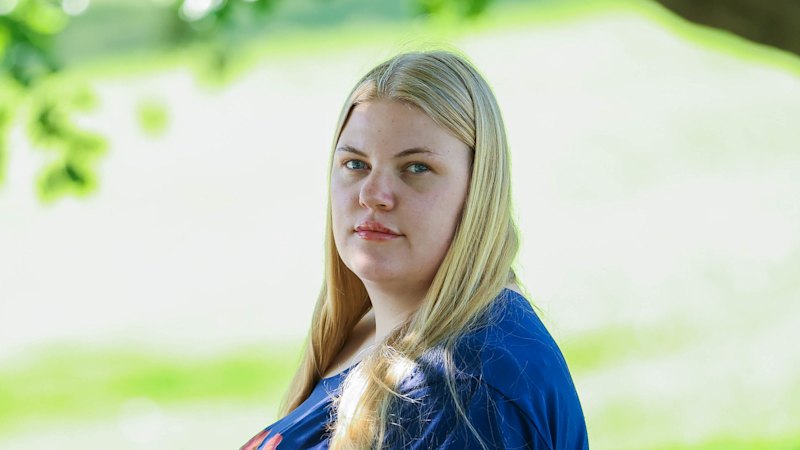
Her daughter, Tayla Richardson, never got to say goodbye.
asserted
daughter → get → goodbye
When funeral directors warned her that viewing her mother’s decaying remains could traumatise her, she had listened.
uncertain
she → warn → her
She was used to seeing her mother’s flesh brutalised.
asserted
flesh → see → ?
Trapped in an abusive relationship, Richardson says her mother had been duct-taped, degraded, trampled, kicked, burned and chased with a hammer.
asserted
mother → trap → hammer
Richardson says the last time she saw her mum alive in September 2021, Narelle had “been beaten from her forehead down to her chin.
asserted
Narelle → say → chin
She was purple and yellow, and she had scratch marks all up and down her arms.”
asserted
she → have → arms
She gave her mum money, told her she loved her and said she would call soon.
asserted
she → give → her
The following month, Narelle was left to endure a lonely death on a mattress in her Cranbourne home.
asserted
Narelle → leave → home
Her partner, Craig Jennion, was nowhere to be found.
asserted
partner → find → ?
Now, five years later, Richardson is calling for legislation change that would protect other women from suffering the same fate, and punish those who leave their “loved ones” for dead.
asserted
who → call → ones
In Victoria, there is no specific law to criminalise the failure to alert Triple Zero when someone is in dire need of medical help.
asserted
someone → be → help
Gross negligence manslaughter is a charge – but it doesn’t capture the circumstances of some cases.
asserted
it → capture → cases
It is a gap in the law the devastated families of victims of those who have been left to die alone without potentially life-saving medical treatment are fighting to change.
asserted
who → devastate → treatment
In October 2021, Richardson, then just 21 years old, realised she hadn’t heard from her mother in over a week.
asserted
she → realise → week
When she couldn’t reach her on the phone, she called the Cranbourne police station and asked them to conduct a welfare check.
asserted
she → reach → check
By the time officers entered Narelle’s home and found her body, she had been lying there for nine days.
asserted
she → enter → days
Richardson says she instantly knew Jennion was involved.
asserted
Jennion → say → ?
When Jennion eventually handed himself in, he told them he’d beaten Narelle.
asserted
he → hand → Narelle
He admitted he’d punched her twice in the face and elbowed her in the back of the head.
asserted
he → admit → head
He told them that the next morning when he woke, he had tried CPR before fleeing the scene.
asserted
he → tell → scene
He was arrested and later charged, but not with causing Narelle’s death – a post-mortem exam determined she had died as a result of drug and alcohol complications, pneumonia, chest injuries and haemothorax.
Instead, Jennion was charged with common assault and failing to report a reportable death.
asserted
Jennion → arrest → death
He served five months in prison.
asserted
He → serve → prison
“He’s living scot-free,” Richardson says.
asserted
Richardson → live → ?
“I saw him.
asserted
I → see → him
When I ran into him, he’s got a tattoo of my mum’s name on the back of his leg.
asserted
he → run → leg
“You have taken away, from an entire family, the right to say goodbye.
asserted
You → take → goodbye
How does that only deserve a couple of months?”
A legislative blind spot
As families rally for change – and with an election next week – the Victorian Labor Party has committed to introducing a specific law that would criminalise the act of abandoning a person who needs medical help in an intimate partner relationship.
asserted
who → deserve → relationship
Attorney-General Sonya Kilkenny says a number of recent coroners’ reports had identified a “gap” in the justice system that allows perpetrators of domestic violence who abandon their partners in a time of need to avoid prosecution.
asserted
who → say → prosecution
“It’s terrible, and I think when you talk to people about this notion of a partner abandoning his partner when they need medical assistance or medical support in circumstances where there have been family violence, and you look at that act of abandonment as that final act of control, you know that is wrong
asserted
that → ’ → control
,” she says.
asserted
she → say → ?
“You know it is wrong, and we need a justice system that can address that and hold that person accountable.
asserted
person → know → that
We need to create a criminal offence, she explains, that has never existed in the state.
asserted
that → need → state
An offence that will send “a very strong message to all of the community that this is no longer acceptable, and we will be criminalising this kind of conduct in family violence circumstances”.
asserted
we → send → circumstances
Kilkenny says the act of abandonment is an “act of final control by a perpetrator”.
asserted
act → say → perpetrator
The Liberals have also committed to the new legislation.
asserted
Liberals → commit → legislation
Shadow attorney-general James Newbury says it’s clear “we need action”.
asserted
we → say → action
“The Liberals and Nationals will consider creating both a new offence where a victim in medical need is abandoned and establishing that such abandonment is an example of family violence, in relation to the Family Violence Protection Act 2008 (Vic),” he says.
asserted
he → consider → Act
Parents fight a justice system they say let them down
The new offence is something the family of 26-year-old Amy Bowden have also been calling for nationwide since their daughter’s death.
asserted
family → fight → death
In February 2024, Amy had overdosed on heroin.
asserted
Amy → overdose → heroin
…and 23 more, not listed.
 The Aporia