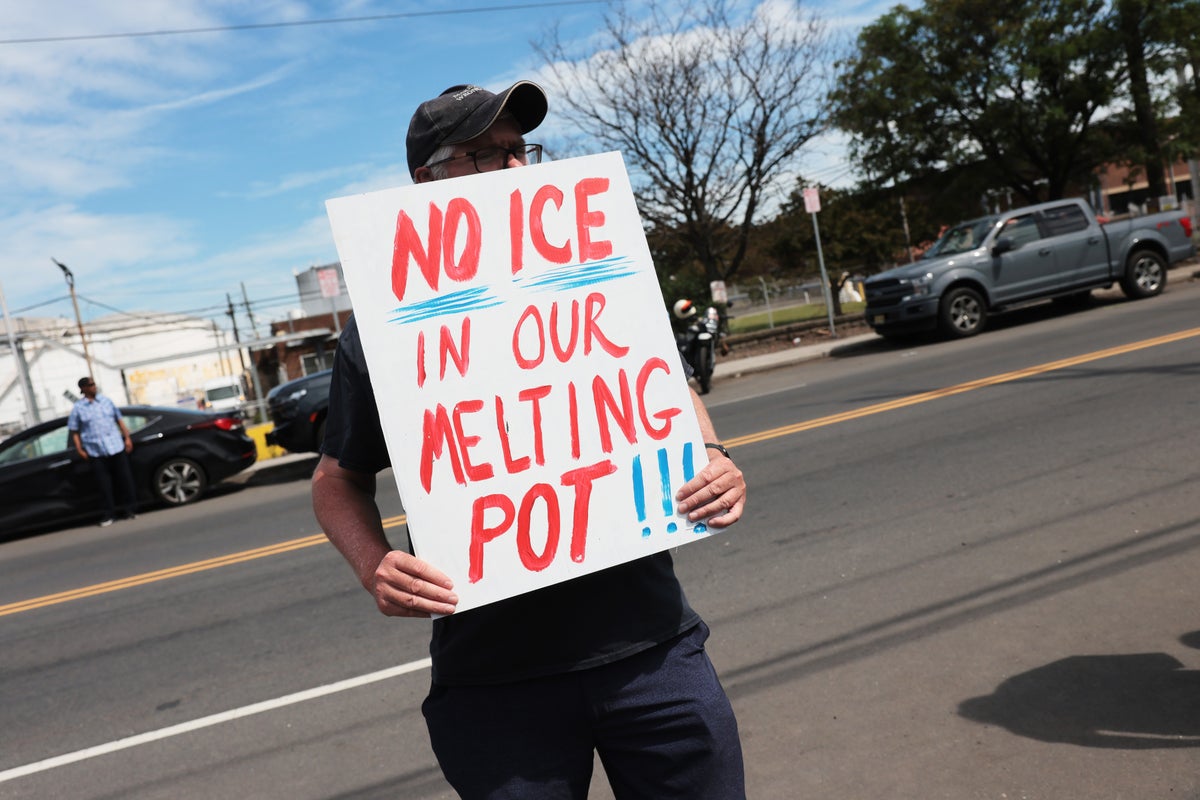
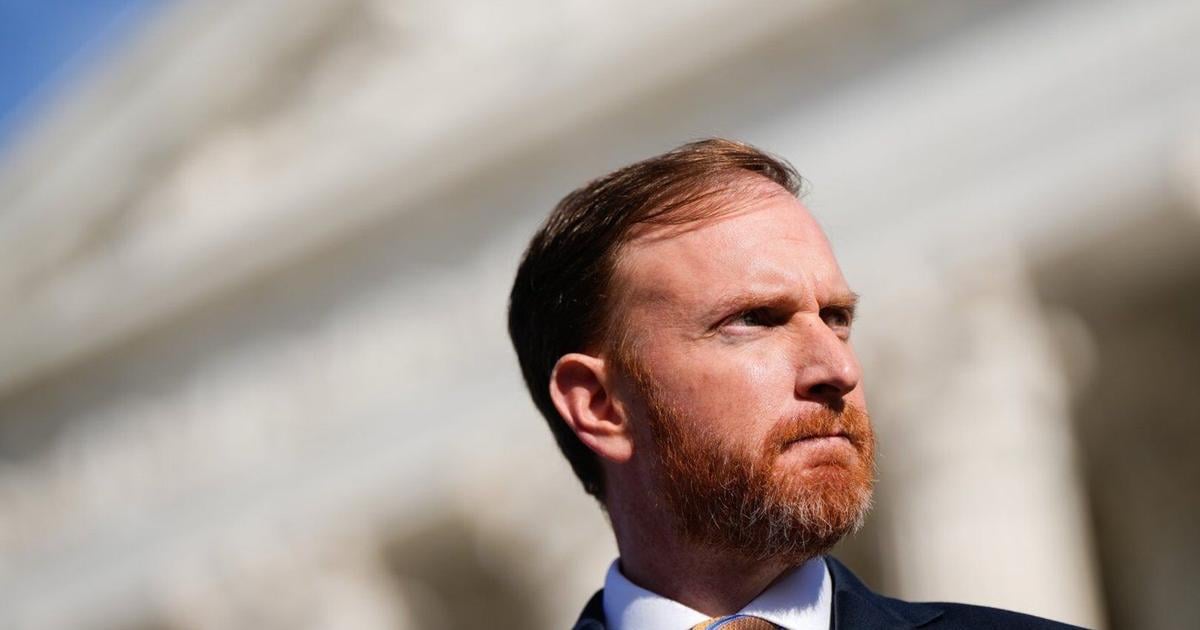
As he ran for sheriff in North Carolina against a longtime incumbent who had joined forces with the Trump administration’s immigration crackdown, Shannon Long found his campaign van was an obstacle with some voters.
asserted
van → run → voters
The trust between law enforcement and Alamance County’s growing Latino community was so fractured, Long said, that the vehicle emblazoned with “sheriff” made it a struggle to get some people to speak with him.
asserted
people → grow → him
“They’ve been living in fear.
asserted
They → live → fear
They feel like they don’t have a voice.
asserted
they → feel → voice
They have been suppressed, oppressed; a lot of them are depressed.
asserted
lot → suppress → them
So they feel that they live in a community where they don’t belong,” Long, a pastor, business owner and former sheriff’s deputy, told The Associated Press two weeks after defeating Republican Sheriff Terry Johnson in a campaign that some activists, voters and local officials say turned partly on questions about immigration enforcement and the treatment of Latino residents.
asserted
activists → feel → residents
Johnson is one of a few sheriffs around the country who were ousted by challengers critical of their cooperation with President Donald Trump’s push for mass deportations of people in the country illegally.
asserted
who → oust → country
While only a smattering, the results could spell trouble for other sheriffs who are seen as participants in Trump’s crackdown and possibly hinder agreements that have become a cornerstone of the administration’s efforts.
uncertain
that → spell → efforts
Johnson was among the first sheriffs to allow his deputies to enforce federal immigration laws under what’s known as a 287(g) agreement with U.S. Immigration and Customs Enforcement.
asserted
what → allow → Enforcement
Long, who ran as an independent, promised to curtail cooperation with ICE, which continues to rely on the cooperative pacts to boost arrest numbers despite a one-time infusion of $75 billion from Congress and hiring about 12,000 officers.
asserted
which → run → officers
The administration has more than 2,700 such pacts with state and local agencies, up from 135 when Trump began his second term.
asserted
Trump → have → term
The agreements, predominantly in the South, have deputized over 29,000 local law officers and resulted in more than 6,600 arrests in July, about 15% of all ICE arrests, according to government data obtained by the Deportation Data Project that was analyzed by the advocacy group fwd.us.
uncertain
that → deputize → group
The AP reviewed about 250 elections held this month for sheriffs whose offices had 287(g) agreements, identifying races in Indiana, Maryland, North Carolina, Wisconsin and elsewhere in which ICE pacts played a role in a candidate’s defeat.
asserted
pacts → review → defeat
Many sheriffs who ran this year were unopposed.
asserted
who → run → ?
But the ICE agreements could become a focus again in two years, when sheriffs from Florida, Texas and other states with large numbers of 287(g) agreements are up for election.
uncertain
sheriffs → become → election
A new sheriff is coming to ‘No Chance Alamance’
Alamance County is a longtime Republican stronghold of just under 200,000 residents that sits between Greensboro and the Research Triangle metropolitan area that includes Raleigh, Durham and Chapel Hill.
asserted
that → come → Raleigh
It has become more politically competitive as its population has grown increasingly diverse — from 750 residents who identified as Hispanic in the 1990 census to nearly 25,000 in 2020.
asserted
who → become → 2020
The sheriff’s office currently participates in the 287(g) program, a spokesman confirmed, though last year it ended an agreement to house ICE detainees.
asserted
it → participate → detainees
Johnson, who is white, was first elected in 2002 and has been a prominent and polarizing figure.
asserted
who → elect → 2002
He has insisted he welcomes lawful immigrants and denied persistent allegations — including in a Justice Department lawsuit over a decade ago that ended with a settlement — that his office racially profiled minority residents.
asserted
office → insist → residents
The county acquired the moniker “No Chance Alamance” because of a perceived sense of unjust policing and a lack of political representation among Black and Latino residents, school board member Seneca Rogers said.
asserted
Rogers → acquire → residents
Johnson initially said in a phone call that immigration policy could have contributed to his loss.
uncertain
policy → say → loss
But in a brief interview later, he said it likely didn’t and laid blame with his long tenure and a national political environment that was brutal for Republicans, acutely so in North Carolina, where Democratic former Gov. Roy Cooper flipped a U.S. Senate seat, winning by nearly 20 percentage points.
asserted
Cooper → say → points
He said he always followed the law and protected public safety.
asserted
he → say → safety
Activists and longtime residents said the Latino community — and to some extent, the Black community — feared engaging with the sheriff’s office and described a sense that non-white residents were far likelier to be pulled over or detained after a traffic stop.
asserted
residents → say → stop
Some people were afraid to call 911 or even go to work, said community organizer Leslie Arevalo.
asserted
Arevalo → call → work
Voter Renee Russell said the sheriff’s cooperation with ICE gave a false impression of Alamance as unwelcoming.
asserted
cooperation → say → Alamance
She was excited to see fresh leadership.
asserted
She → excite → leadership
Long will be the county’s first Black sheriff, local media reported.
asserted
media → report → ?
But Republican state Sen. Amy Galey, whose district includes the county, defended Johnson’s record.
asserted
district → include → record
She said he had worked to improve training opportunities and mental health services.
asserted
he → say → opportunities
Although Galey didn’t think immigration played a big role in the race, she wondered if hard-line ICE tactics elsewhere could have contributed to simmering concerns about law enforcement more broadly.
uncertain
tactics → think → enforcement
Candidates who ba
cked ICE cooperatio
n lost elsewhere
The sheriff’s office in Frederick County, Maryland, northwest of Washington, D.C., was another longtime participant in the 287(g) program.
asserted
office → ba → program
Since 2008, the county detained and turned over 1,884 people to ICE, Republican Sheriff Chuck Jenkins said.
asserted
Jenkins → detain → ICE
But that came to a halt this year when Democratic Gov. Wes Moore signed a law banning immigration enforcement pacts with the federal government.
asserted
Moore → come → government
Public sentiment also turned against Jenkins, who said the program made the community safer but acknowledged it likely cost him reelection.
asserted
it → turn → reelection
He was defeated by Democrat Karl Bickel, a retired U.S. Department of Justice employee who had lost four previous elections to Jenkins and pledged not to cooperate with ICE.
asserted
who → defeat → ICE
“In general, people are fed up with the sheriff’s negativeness about immigrants,” said retired social worker Carol Antoniewicz, who distributed emails, social media posts and campaign literature in support of Bickel.
asserted
who → feed → Bickel
In Wisconsin’s Winnebago County, ICE’s arrest and detention of a schoolteacher weeks before Election Day sparked backlash against anyone seemingly supportive of immigration officers, including a Republican vying to replace a retiring sheriff.
asserted
arrest → spark → sheriff
“Any kind of perceived alignment definitely is considered a liability at this point,” said Molly Smiltneek, a local advocate and immigration lawyer who attended a vigil for the teacher.
asserted
who → perceive → teacher
…and 9 more, not listed.
 The Aporia