That is 0 articles you have read today.
The Aporia is free and carries no advertising, so readers are the only
thing paying for it. If you are getting this much out of it, a small
donation is what keeps it independent.
You have read 0 articles today.
That is more than the 15 a day The Aporia gives away,
and well past what it can carry on nothing. Your allowance resets at
midnight.
There is no advertising here and nothing about you is sold, so readers
are the only thing paying for it. If the site is worth this much of
your day, it is worth a few dollars.
Everything else stays open: the front page, the
directory and search do
not count against this, and neither does re-opening something you have
already read today.
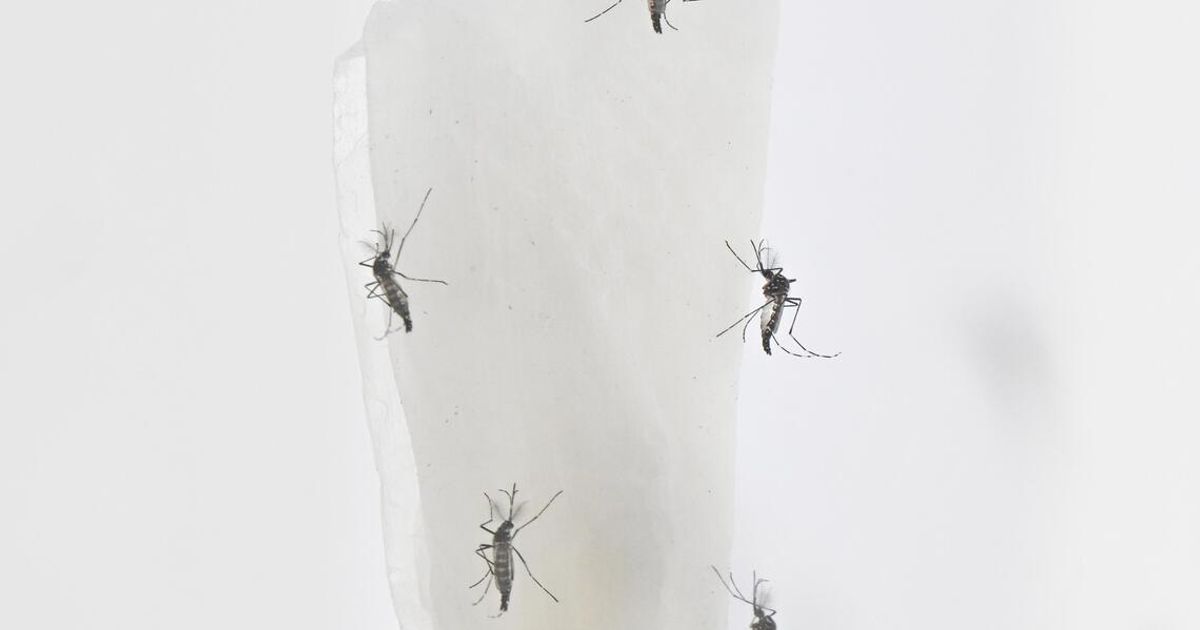
Photo via Toronto Star
Scientists report strong new evidence that specially bred mosquitoes can fend off dengue
Neergaard, L. (2026, November 21). Scientists report strong new evidence that specially bred mosquitoes can fend off dengue. Toronto Star. https://www.thestar.com/news/world/scientists-report-strong-new-evidence-that-specially-bred-mosquitoes-can-fend-off-dengue/article_565b60cb-52cb-55bb-8ed8-8d0d1497d968.html
Neergaard, Lauran. “Scientists report strong new evidence that specially bred mosquitoes can fend off dengue.” Toronto Star, 21 Nov. 2026, https://www.thestar.com/news/world/scientists-report-strong-new-evidence-that-specially-bred-mosquitoes-can-fend-off-dengue/article_565b60cb-52cb-55bb-8ed8-8d0d1497d968.html.
Neergaard, Lauran. “Scientists report strong new evidence that specially bred mosquitoes can fend off dengue.” Toronto Star, November 21, 2026. https://www.thestar.com/news/world/scientists-report-strong-new-evidence-that-specially-bred-mosquitoes-can-fend-off-dengue/article_565b60cb-52cb-55bb-8ed8-8d0d1497d968.html.
Dated from the outlet's own feed. Check the original for its byline.
Toronto Star
· collected 2026-11-21 · by Lauran Neergaard
Quick Summary
Scientists in Brazil found that children living in areas with specially bred mosquitoes had significantly lower rates of dengue and chikungunya infections. The study, involving over 5,700 children, provides strong evidence supporting the use of genetically modified mosquitoes as a strategy to combat these viruses, moving beyond traditional methods like pesticides and bite prevention.
Written by AI on 2026-11-21,
from this article's own text only (the story summary below draws on all the coverage).
Scientists have reported strong evidence that specially bred mosquitoes can significantly reduce the spread of dengue and chikungunya viruses. The study, conducted in Brazil with over 5,700 children, found that neighborhoods populated by Wolbachia-carrying mosquitoes experienced about a 69% reduction in dengue and chikungunya infections compared to similar areas. This finding was presented at the American Society of Tropical Medicine and Hygiene meeting on November 21, 2026. The research suggests that breeding mosquitoes unable to transmit these viruses could be a viable alternative to relying solely on pesticides and avoiding bites. Meanwhile, Florida is currently grappling with a large outbreak of dengue, making the findings particularly relevant for other regions facing similar challenges.
Written for “Specially Bred Mosquitoes Combat Dengue” on 2026-11-21,
grounded in this article and the 2 other(s) covering the same event.
Why this leaning score
This article does not take a side on a contested political
question, so it has no leaning score. That is an
answer rather than a gap: a match report or a rescue can be warmly
or critically written without being left or right, and scoring it
anyway is how approval of a subject gets recorded as a political
position.
No political leaning scored for article 169895 · logged 2026-11-21
One AI summary per outlet of its latest article on this story, written from that article alone and checked against it. Open the article for the outlet's own words.
Toronto StarThis outlet21 Nov
Scientists in Brazil found that children living in areas with specially bred mosquitoes had significantly lower rates of dengue and chikungunya infections. The study, involving over 5,700 children, provides strong evidence supporting the use of genetically modified mosquitoes as a strategy to combat these viruses, moving beyond traditional methods like pesticides and bite prevention.
Scientists report strong new evidence that specially bred mosquitoes can fend off dengue (this article)The Independent21 Nov
A new study in Brazil shows that specially bred mosquitoes carrying Wolbachia bacteria significantly reduce dengue and chikungunya infections by about 69% in children. The research, involving over 5,700 children, was presented at the American Society of Tropical Medicine and Hygiene. As Florida faces its largest dengue outbreak since the 1940s with over 650 locally acquired cases, this biological approach offers a…
Scientists have reported a significant reduction in dengue and chikungunya infections among children in Brazilian neighborhoods where specially bred mosquitoes carrying Wolbachia bacteria were released. The study, involving over 5,700 children, found a 69% decrease in infections compared to similar neighborhoods without these mosquitoes. The findings, presented at the American Society of Tropical Medicine and…
"It's a big step forward for science, for oncology, because this vaccine will apply to many different cancers," said Dr. Michael Atkins, deputy director of Georgetown University's Lombardi Comprehensive Cancer Center.
“It’s a big step forward for science, for oncology, because this vaccine will apply to many different cancers,” said Dr. Michael Atkins, deputy director of Georgetown University’s Lombardi Comprehensive Cancer Center.
WASHINGTON (AP) — Children who lived in Brazilian neighborhoods buzzing with a special kind of mosquito were far less likely to catch dengue or another worrisome virus, chikungunya, researchers reported Saturday.
asserted
researchers → live → dengue
The major study of more than 5,700 children in one of the world’s dengue hot spots offers new evidence that breeding mosquitoes unable to transmit these viruses can be a viable strategy rather than solely relying on pesticides and trying to avoid getting bitten.
asserted
breeding → offer → pesticides
Give feedback · no sign-in needed
No sign-in needed for now. Your note is sent without a name, so it cannot be answered.
 The Aporia