The Aporia
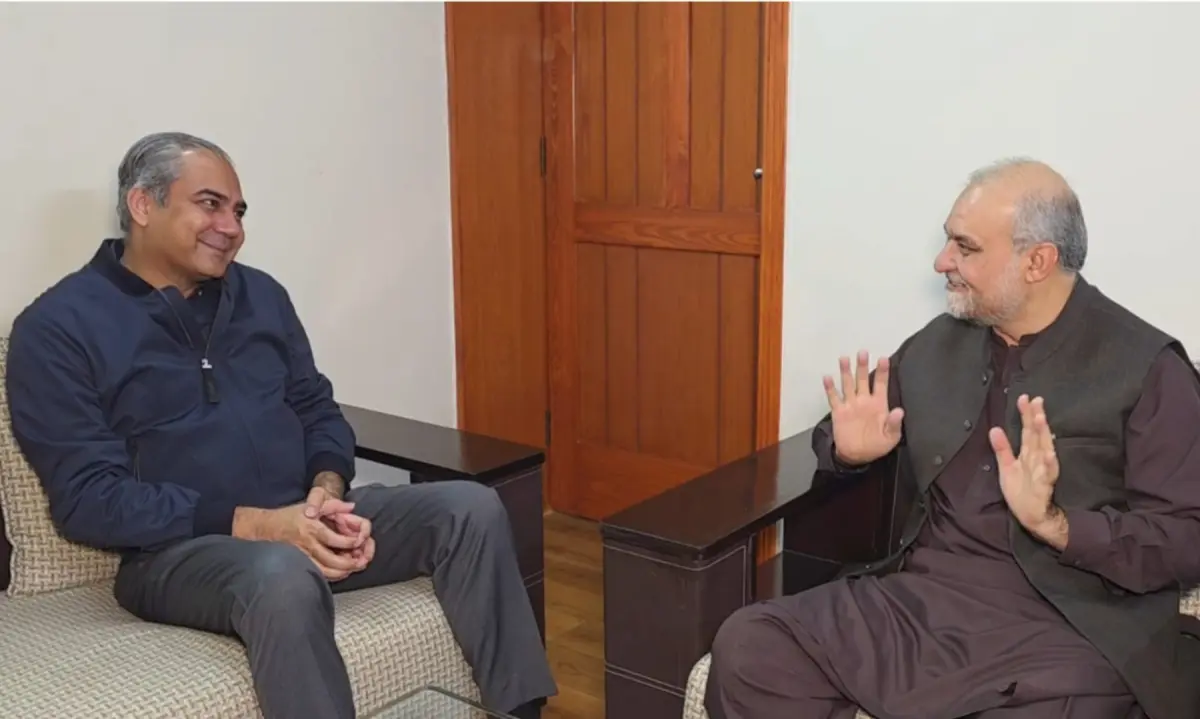
News Desk. (2026, November 21). Interior minister meets JI chief in Lahore, discusses country's 'overall situation'. Dawn. https://www.dawn.com/news/2046126/interior-minister-meets-ji-chief-in-lahore-discusses-countrys-overall-situation
News Desk. “Interior minister meets JI chief in Lahore, discusses country's 'overall situation'.” Dawn, 21 Nov. 2026, https://www.dawn.com/news/2046126/interior-minister-meets-ji-chief-in-lahore-discusses-countrys-overall-situation.
News Desk. “Interior minister meets JI chief in Lahore, discusses country's 'overall situation'.” Dawn, November 21, 2026. https://www.dawn.com/news/2046126/interior-minister-meets-ji-chief-in-lahore-discusses-countrys-overall-situation.
Dated from the outlet's own feed. Check the original for its byline.
On November 21, 2026, Interior Minister Mohsin Naqvi met with Jamaat-i-Islami (JI) chief Hafiz Naeemur Rehman in Lahore to discuss the "overall situation" in the country and the challenges facing the public. During the meeting, Rehman reiterated JI’s demand for immediate government action to address poverty, inflation, and economic difficulties. He highlighted the continuous increase in prices of essential commodities such as flour, sugar, cooking oil, and pulses, which has made life extremely difficult for ordinary citizens. While acknowledging some relief through a reduction in petrol prices, Rehman urged the government to completely abolish the petroleum levy. Both parties agreed to continue consultations in the future to address these issues.
Rehman highlighted that the “continuous increase” in the prices of flour, sugar, cooking oil, pulses, and other essential commodities had made life extremely difficult for ordinary citizens.
Rehman contended that salaried employees and the working class had become unable to meet household expenses on their limited incomes, adding that children’s education and healthcare were also increasingly becoming unaffordable for ordinary citizens.
The JI chief demanded that the government effectively control the prices of essential commodities, provide genuine relief in electricity and gas bills, and take strict action against hoarders and profiteers.
He maintained that the people needed practical relief rather than mere announcements, and that the government should shift the burden onto the privileged class instead of placing it on the public.