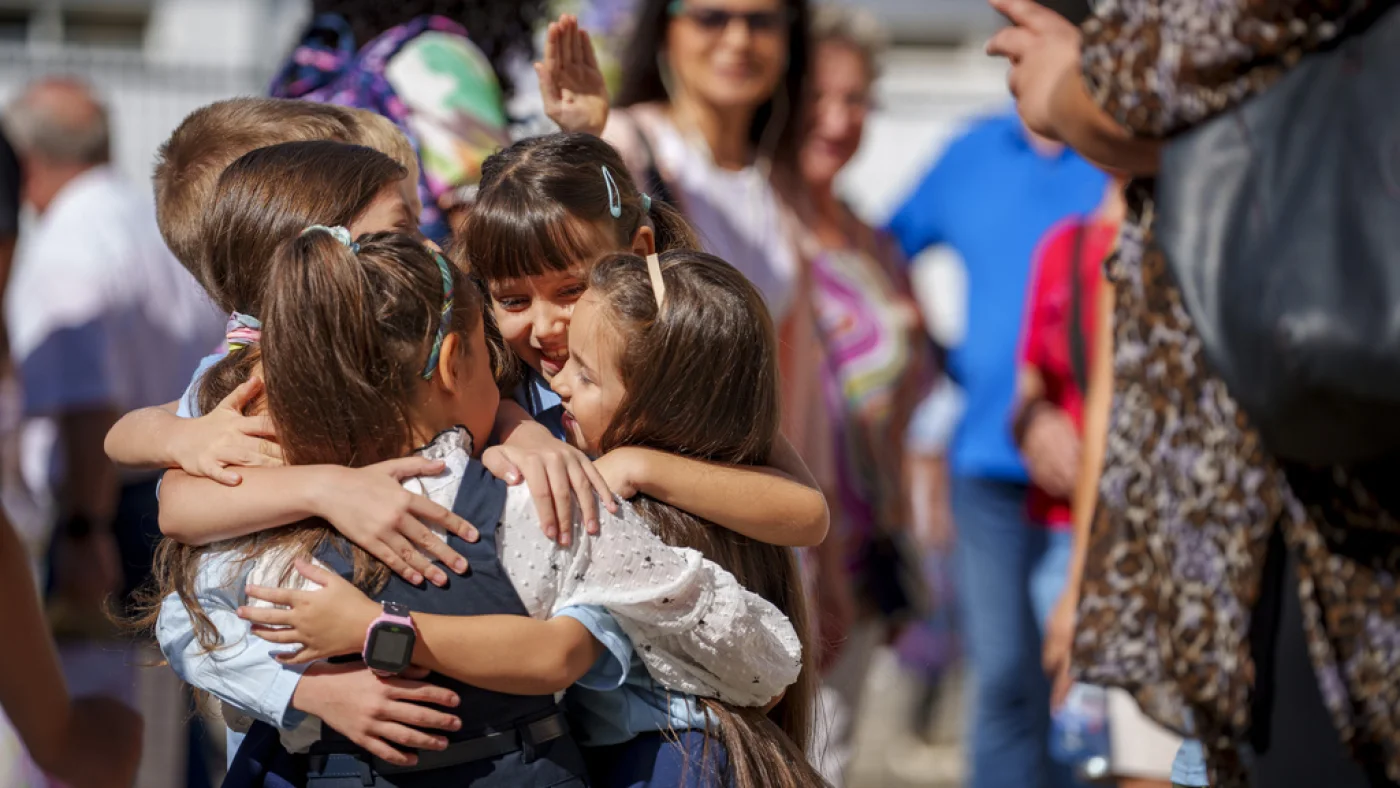
Photo via NPR

Perspective: Defining 'human'

Read the original at NPR ↗
Cite

Simon, S. (2026, November 21). Perspective: Defining 'human'. NPR. https://www.npr.org/2026/11/21/nx-s1-6041585/perspective-defining-human

Dated from the outlet's own feed. Check the original for its byline.

NPR · collected 2026-11-21 · by Scott Simon

Quick Summary

This article is a perspective piece discussing the Cambridge Dictionary's choice of "human" as the Word of the Year for 2026. The author contrasts human attributes, such as responsibility, the pursuit of joy, and emotional complexity, with the limitations of artificial intelligence. The piece emphasizes the importance of recognizing human qualities in an increasingly tech-driven world.
Written by AI on 2026-11-22, from this article's own text only (the story summary below draws on all the coverage).
See how they differ ↓

AI analysis

Story summary

The Cambridge Dictionary has named "human" its Word of the Year for 2026, defining it as having the "qualities, faults, and feelings that people have, as opposed to gods, animals, or machines." This choice reflects growing concerns about the impact of artificial intelligence on human identity and reliance on technology. The dictionary's chief editor, Colin McIntosh, stated that the increasing presence of AI makes it necessary to explicitly denote human qualities. The selection of "human" underscores a cultural shift where people are reconsidering the extent of their dependence on AI, with fears about losing human attributes in the process.

Written for “Cambridge Dictionary Chooses 'Human” on 2026-11-22, grounded in this article and the 10 other(s) covering the same event.
Why this leaning score
The article's own words the score was based on. Each is quoted verbatim and was checked against the article text before being stored, so you can find it in the original.
Reading Leans strongly left (beta estimate) Confidence high 2 quote(s) discarded as not found in the article
Leaning: leans strongly left for article 169774 (high confidence, 3 verified quotes) · logged 2026-11-22

How they differ

11 outlets covered “Cambridge Dictionary Chooses 'Human”.

What each outlet says

One AI summary per outlet of its latest article on this story, written from that article alone and checked against it. Open the article for the outlet's own words.

NPRThis outlet21 Nov

This article is a perspective piece discussing the Cambridge Dictionary's choice of "human" as the Word of the Year for 2026. The author contrasts human attributes, such as responsibility, the pursuit of joy, and emotional complexity, with the limitations of artificial intelligence. The piece emphasizes the importance of recognizing human qualities in an increasingly tech-driven world.

Perspective: Defining 'human' (this article)
Evening Standard18 Nov

Cambridge Dictionary has named "human" as its Word of the Year, reflecting concerns about the impact of artificial intelligence on human life and the growing distinction people draw between human work and AI. The dictionary’s editor highlighted both the potential benefits and risks of AI, emphasizing the importance of careful integration to improve human lives. Other notable word contenders were "agent,"…

Cambridge Dictionary announces Word of the Year - and it’s link to AI →
The Straits Times18 Nov

Cambridge Dictionary named “human” as its Word of the Year for 2026, reflecting concerns about the impact of artificial intelligence on society. According to Francesca Woodward from Cambridge University Press, the choice highlights global discussions about human qualities and the changing understanding of what it means to be human in the age of AI. The selection was influenced by increased dictionary searches and…

‘Human’ is Cambridge Dictionary’s word of the year →
ABC News (AU)18 Nov

Cambridge Dictionary has named "human" as its Word of the Year, highlighting concerns about the influence of artificial intelligence and its impact on employment. Cambridge University Press board member Francesca Woodward notes that the word reflects people’s contemplation of what it means to be human in an era of rapid technological advancement. The dictionary also observed an increase in the use of "human" in…

Cambridge Dictionary names 'human' word of the year in rebuttal to AI →
CBC18 Nov

The Cambridge Dictionary selected "human" as its word of the year for 2026, responding to increasing concerns about artificial intelligence. This choice reflects how AI has prompted a renewed focus on human attributes and creations. The dictionary highlighted the word's use in phrases like "human-written" and "human-generated," emphasizing the value placed on uniquely human contributions in an AI-dominated world.

Would AI have come up with a better word of the year than the Cambridge Dictionary? →
Show 5 more outlets
Daily Mail18 Nov

Cambridge Dictionary has named 'human' as its Word of the Year for 2026, highlighting the renewed significance of the term as AI increasingly blurs the lines between people and machines. This choice reflects growing concerns and debates about uniquely human qualities in the age of advanced AI, with notable figures like Bill Gates and Geoffrey Hinton advocating for preserving human-centric roles and values.

Cambridge Dictionary names 'human' the Word of the Year 2026 - as AI 'blurs the boundaries between people and machines' →
The Guardian18 Nov

Cambridge Dictionary named "human" its word of the year for 2026, reflecting the growing importance of distinguishing natural human intelligence from artificial intelligence. The dictionary emphasized the word’s use to highlight human qualities, faults, and feelings in contrast to machines, amid debates about AI consciousness and its impact on human reliance and identity. Colin McIntosh, a dictionary editor, noted…

‘Human’ wins Cambridge dictionary’s word of the year →
Times of India18 Nov

Cambridge Dictionary named 'human' its Word of the Year for 2026, reflecting the growing importance of human qualities in a world dominated by artificial intelligence. The selection highlights how the rise of AI has led to a renewed appreciation of human creativity, emotion, and connection. Cambridge Dictionary’s chief editor, Colin McIntosh, noted that this year saw a significant re-evaluation of what it means to…

'Human': Cambridge’s 'word of the year' is a counterbalance to AI →
New York Post18 Nov

Cambridge Dictionary selected “human” as its word of the year for 2026, reflecting growing concerns about artificial intelligence. According to lexicographer Colin McIntosh, the choice highlights how discussions about AI are prompting people to reconsider what it means to be human. The dictionary defines “human” as having qualities, faults, and feelings distinct from machines, emphasizing a cultural shift in…

Cambridge Dictionary chooses ‘human’ as word of the year in response to AI fears →
BBC18 Nov

Cambridge Dictionary named "Human" as its Word of the Year, defining it as having qualities, faults, and feelings that distinguish people from gods, animals, or machines. Chief editor Colin McIntosh explained that the rise of AI necessitates emphasizing human qualities. Examples include actors challenging AI's impact on creativity and tech leaders discussing the importance of AI improving human lives. The word's…

'Human' is Cambridge Dictionary Word of the Year →

Where they agree and split

Framing

How the first headlines put it

Attributed to a source1
Stated as fact9
The headlines (10)

Cambridge Dictionary announces Word of the Year - and it’s link to AI Evening Standard · attributed to a source

‘Human’ is Cambridge Dictionary’s word of the year The Straits Times · stated as fact

Cambridge Dictionary chooses 'human' as word of the year in response to AI fears Toronto Star · stated as fact

Cambridge Dictionary names 'human' word of the year in rebuttal to AI ABC News (Australia) · stated as fact

Would AI have come up with a better word of the year than the Cambridge Dictionary? CBC · stated as fact

Cambridge Dictionary names 'human' the Word of the Year 2026 - as AI 'blurs the boundaries between people and machines' Daily Mail · stated as fact

‘Human’ wins Cambridge dictionary’s word of the year The Guardian · stated as fact

'Human': Cambridge’s 'word of the year' is a counterbalance to AI Times of India · stated as fact

Cambridge Dictionary chooses ‘human’ as word of the year in response to AI fears New York Post · stated as fact

'Human' is Cambridge Dictionary Word of the Year BBC · stated as fact

The full story: what happened, how it changed, and all 11 articles →

Compared with similar articles

This article reads leans strongly left and hedges 17% of its claims. Each row says how that neighbour differs.
The Straits Times
Hedges 2 of 18 claims Outlet record 64/100
CBC News
Hedges 0 of 10 claims Outlet record 60/100
The Guardian
Leans right further right than this Hedges 1 of 15 claims Outlet record 64/100
Times of India
Leans left further right than this Hedges 1 of 14 claims Outlet record 59/100
Toronto Star
Hedges 0 of 2 claims Outlet record 65/100
ABC News (AU)
Hedges 2 of 24 claims Outlet record 67/100
Daily Mail
Leans strongly left Hedges 4 of 35 claims Outlet record 69/100
New York Post
Hedges 1 of 11 claims Outlet record 66/100
BBC News
Hedges 3 of 22 claims Outlet record 65/100

Story

Cambridge Dictionary Chooses 'Human
Technology · 11 article(s) covering the same event. Compare every outlet's account →
How this article was measured signals, leaning charts, publisher record, byline, topics and claims

Signals How these are calculated →

Claims extracted
18
sentences that state something as happening or true
Uncertain
17%
3 of 18 hedged ("reportedly", "may", "according to")
Leaning
Leans strongly left
of the writing, not the subject · beta estimate
Publisher signals
60/100
NPR's corrections and hedging, across everything collected from it. Not a measure of accuracy.
Outlets on this story
11
Technology
Same framing elsewhere
1
articles that frame the event the way this one does
Analyzed 2026-11-22 · how these are computed

How this is being covered How these are calculated →

Article leaning vs. publisher reliability
Source leaning vs. consistency

Publisher

NPR · 1388 article(s) · 5 correction(s) detected
Running correction rate · 5 correction(s)

Who wrote this

Scott Simon
11 article(s) here · 1 carrying a prediction
Unlike "parasocial," their 2025 word, which refers to an unreciprocated emotional connection, perhaps with a chatbot, or 2018's word, "nomophobia," which is an irrational fear of having no mobile phone service–although, given all the recent cyber-struggles, why would that be irrational?
2026-11-21 · assertive framing · Perspective: Defining 'human'
After several secretary-less weeks, President Trump declared in an online post that he would ask Dana White, the head of the UFC, to take the job, calling him "a violent Fighter and Warrior."
I would tell the Martha's Vineyard set to give it a try."
Deadline reports that at least three actors will be screen tested: Jack Lowden, Josh O' Connor, and Callum Turner, who are all fine, experienced British actors and...how do I say this? Hunks.
2026-10-24 · assertive framing · Perspective: The next James Bond
Maybe we should repeat that number: $10 billion dollars.
2026-10-17 · mixed framing · Perspective: Midterm money madness
Sen. Eric Schmitt of Missouri may not have been exactly hawk-eyed at a Senate Judiciary Committee hearing this week when he asked former special counsel Jack Smith if he had gone to an Atlanta Hawks basketball game in February 2024.
2026-10-03 · assertive framing · Opinion: A Hawk is not the same as a Hawkeye
When President John F. Kennedy ordered US ships to blockade Cuba to prevent the Soviet Union from installing nuclear missiles in 1962, he told Americans, "We will not prematurely or unnecessarily risk the costs of worldwide nuclear war in which even the fruits of victory would be ashes in our mouth."
She began the book remembering her old tomcat, who would jump through the bedroom window after prowling outside her home in rural Virginia.
2026-09-19 · assertive framing · Opinion: Remembering Annie Dillard, nature writer
I still remember — I will always remember —walking the streets of Lower Manhattan through rows of faces in photographs pasted on lampposts and walls with urgent, wrenching words: "Have you seen my wife?" "Last seen, 8:20 AM, Tuesday."
2026-09-12 · assertive framing · OPINION: 25 years on, a nation still mourns
Blue is a giant stick figure with what seems to be four limbs, standing on what might be one leg, while the other is lifted.
2026-09-05 · mixed framing · Opinion: A sculpture in perpetual motion, removed
Also by Scott Simon
Nothing else under this byline is closely related to this article, so these are simply their most recent.
All 11 articles by Scott Simon →

Topics

Cambridge The Cambridge Dictionary

Subjects

Cambridge GPE · 2× The Cambridge Dictionary ORG · 1×

Narrative

Unlike "parasocial," their 2025 word, which refers to an unreciprocated emotional connection, perhaps with a chatbot, or 2018's word, "nomophobia," which is an irrational fear of having no mobile phone service–although, given all the recent cyber-struggles, why would that be irrational?
framing: assertive · carried by 1 article(s) · first seen 2026-11-22
Unlike "parasocial," their 2025 word, which refers to an unreciprocated emotional connection, perhaps with a chatbot, or 2018's word, "nomophobia," which is an irrational fear of having no mobile phone service–although, given all the recent cyber-struggles, why would that be irrational?
2026-11-22 · NPR
Perspective: Defining 'human' · assertive framing

Claims (18 extracted, 3 hedged)

Perspective: Defining 'human' The Cambridge Dictionary has revealed its Word of the Year for 2026. asserted
Dictionary → define → 2026
It won't need much explanation. asserted
It → need → explanation
Unlike "parasocial," their 2025 word, which refers to an unreciprocated emotional connection, perhaps with a chatbot, or 2018's word, "nomophobia," which is an irrational fear of having no mobile phone service–although, given all the recent cyber-struggles, why would that be irrational? asserted
that → refer → struggles
And perhaps humanity could stand some recognition in times when people see Artificial Intelligence seep into our lives the way ancient dinosaurs may have watched the asteroid plunge through the atmosphere, and think, "They're coming for us!" uncertain
They → stand → us
though I suspect a few T-Rexes might have said, "Hey, don't worry! uncertain
Rexes → suspect → ?
We're too big to fail!" asserted
We → fail → ?
Cambridge defines "human" as: "(h)aving the qualities, faults, and feelings that people have, as opposed to gods, animals, or machines," but they don't specify much about what those qualities, faults and feelings are. asserted
qualities → define → much
I'd say that humans have a sense of responsibility. asserted
humans → say → responsibility
We can say, "I'm sorry, that's my fault," when we screw up or fall short, as opposed to screens that just flash, SYSTEM OVERLOAD or UPDATE IN PROGRESS, 12% COMPLETE. asserted
that → say → PROGRESS
Humans seek joy, not just continued existence. asserted
Humans → seek → joy
Humans like jokes and prayers. asserted
Humans → like → jokes
We're driven by feelings, not just steered by algorithms. asserted
We → drive → algorithms
Love, fear, anger, desire, joy, and courage, excited by events, nerves and hormones – combine to make us unpredictable, irreverent and unreliable. asserted
us → excite → events
But our experiences can also instill judgement; an appreciation for what's important; what endures; and what makes the lives we have worth living and savoring. asserted
we → instill → judgement
Making human the 2026 Word of the Year may remind us that we human beings, unlike any robots we have yet devised, have a sense of our own fragility. uncertain
we → make → fragility
We know we don't last forever. asserted
we → know → ?
And so it is important to strive, laugh, and love while we have the chance. asserted
we → strive → chance
The Cambridge dictionary leaves what human truly means to us. asserted
human → leave → us
Give feedback · no sign-in needed

No sign-in needed for now. Your note is sent without a name, so it cannot be answered.

History Support