Strait of Hormuz attacks have increased to highest level since Iran war began
asserted
war → increase → level
The attacks could complicate U.S.-led efforts to keep oil flowing.
uncertain
attacks → complicate → oil
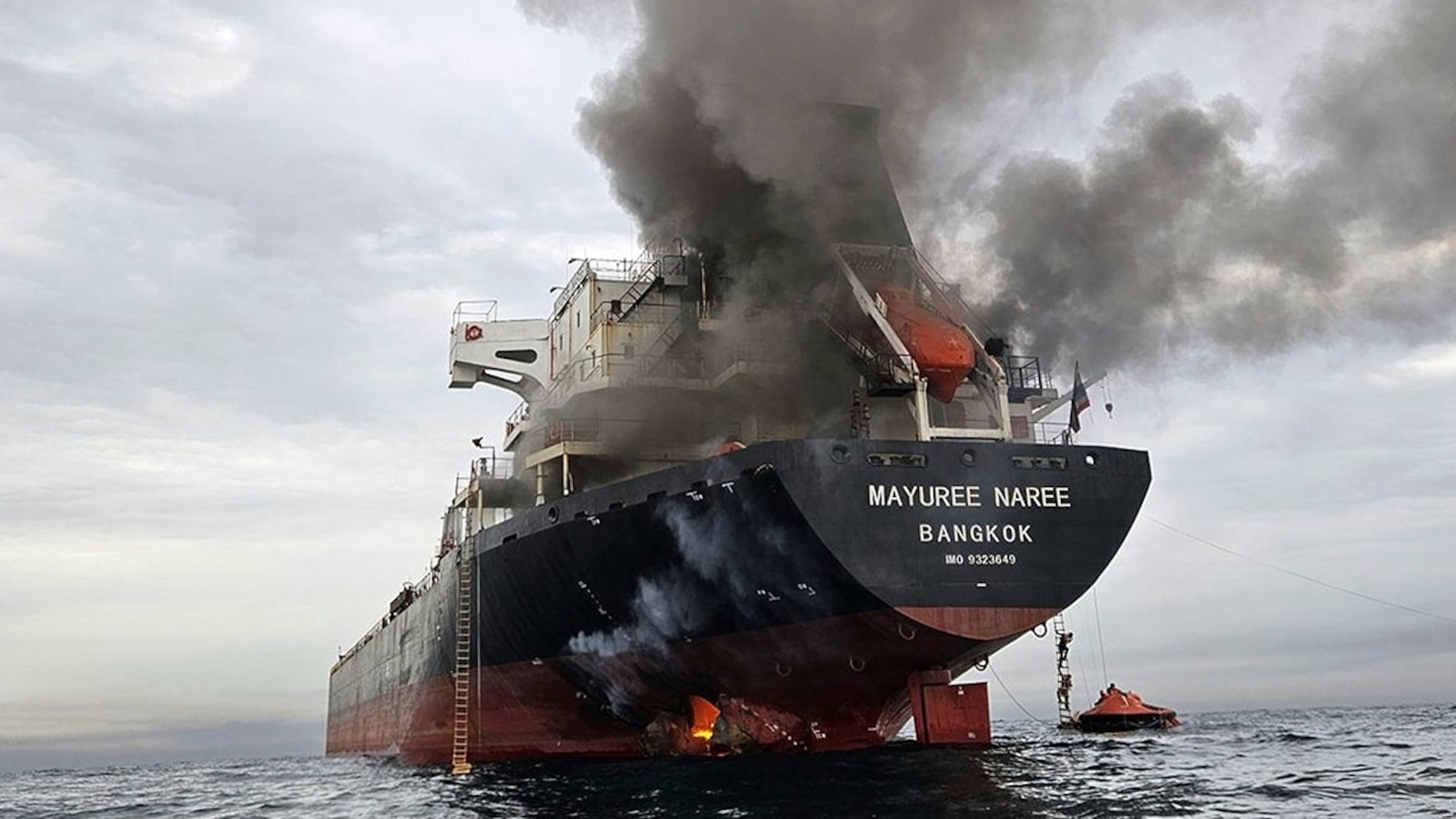
Reported attacks in and around the Strait of Hormuz have been higher in number in October and November than any previous months since the war between the U.S., Israel and Iran began in late February, according to data compiled by maritime organizations.
uncertain
war → report → organizations
The attacks appear to be a bid to complicate U.S.-led efforts to keep oil flowing through the economically crucial Strait of Hormuz despite an Iranian-declared blockade, experts told ABC News.
asserted
experts → appear → News
The United Kingdom Maritime Trade Operations Centre (UKMTO) reported 31 attacks in and around the Strait of Hormuz in October, and about 19 in November, as of Nov. 18.
asserted
Centre → report → Nov.
Previously, a total of 53 incidents had been reported to the UKMTO between March and September of this year, averaging 10 to 15 incidents total across both Strait of Hormuz and surrounding gulfs in previous months.
asserted
total → report → months
The International Maritime Organization (IMO), a United Nations agency, has slightly more conservative numbers, with 34 attacks confirmed in and around the Strait of Hormuz in October and November so far.
asserted
attacks → have → October
This too, is still a marked increase from previous numbers the IMO had collected, which number roughly 50 in and around the Strait of Hormuz between March and September.
asserted
which → collect → March
The IMO has tallied 138 attacks on vessels in total across the Middle East since the war began.
asserted
war → tally → East
The positions of attacked tankers reported to the UKMTO indicate that most attacked vessels were in the very southern portion of the Strait of Hormuz, staying close to the Omani coastline, according to the maritime group's data.
uncertain
vessels → attack → data
What experts say Iran aims to accomplish
"Iran's objective remains to keep the Omani route, which is described as a U.S.-facilitated route, a very high-risk passage and to keep the energy recovery inconsistent," Noam Raydan, senior fellow at the Washington Institute for Near East Policy, told ABC News.
asserted
Raydan → say → News
"Washington and its regional partners have found ways to keep oil flowing through the Strait of Hormuz," Hamidreza Azizi, senior Iran analyst at the International Crisis Group (ICG) think tank, told ABC News.
asserted
Azizi → find → News
"Tehran now seems determined to make these arrangements more costly and less reliable."
asserted
arrangements → seem → ?
The workaround developed by the U.S. involves "ship-to-ship" (STS) transfers in which smaller tankers cross the strait with tracking systems switched off, and transfer cargos to larger tankers once safely on the other side, Sina Toossi, senior fellow with the Center for International Policy, told ABC News.
asserted
Toossi → develop → News
Iran is now responding in "a cycle of adaptation and counter-adaptation," he said.
asserted
he → respond → adaptation
"Tehran has escalated its attacks to make the STS system more dangerous, costly, and ultimately unviable.
asserted
system → escalate → attacks
Iran's broader objective is to demonstrate that normal oil exports cannot continue while the US maintains its blockade of Iran, and to generate enough economic pressure to force Washington to negotiate an end to the conflict," Toossi said.
asserted
Toossi → demonstrate → conflict
The U.S. has maintained a naval blockade, stopping Iranian and Iran-linked ships from going in and out of the Gulf of Oman, starting April 13, with a brief pause from June 18 to July 13.
asserted
U.S. → maintain → July
Attacks not isolated to ships crossing the strait
Strikes have not been limited to ships.
asserted
Attacks → isolate → ships
On Nov. 8, Iran attacked the Omani island of Didamar in the strait itself, according to satellite images and video verified by ABC News.
uncertain
Iran → attack → News
The island hosts radar and satellite communications technology.
asserted
island → host → radar
Iranian state media said Iran had struck what it described as "enemy navigation aid systems."
asserted
it → say → systems
Oman, a U.S. partner, did not comment on the attack.
asserted
Oman → comment → attack
Strikes have also not been isolated to ships actively crossing the strait.
asserted
Strikes → isolate → strait
ABC News has verified at least one incident in which a ship was attacked by a drone appearing to belong to Iran, despite not making any attempt to cross the strait.
asserted
ship → verify → strait
In early October, the Panama-flagged supertanker Gem No. 2 had been idle off the coast of the United Arab Emirates in the Persian Gulf, outside the Strait of Hormuz, for nearly five months.
asserted
supertanker → flag → months
It was fully loaded with a cargo of two million barrels of Saudi crude oil, per maritime intelligence company Kpler, and was one of the hundreds of ships the International Maritime Organization estimates is stuck in the Persian Gulf since the U.S. and Israel attacked Iran.
asserted
U.S. → load → Iran
What happened to Gem No. 2?
asserted
What → happen → .
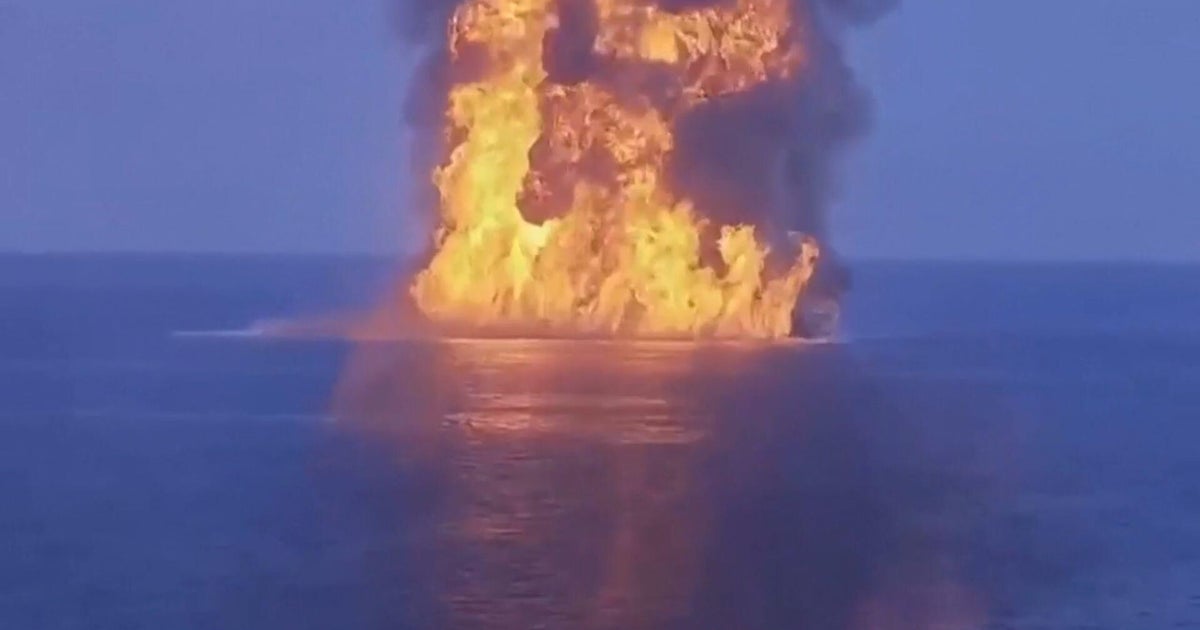
Two crew members who were on board Gem No. 2 say the ship never attempted to cross the Strait of Hormuz, and that it was attacked by one drone on Oct. 9 and then at least three others on Oct. 10, the latter attack sparking a massive fire and forcing the ship's evacuation, according to videos filmed by the crew obtained and verified by ABC News.
uncertain
attack → say → News
Hours after the vessel was struck for a second time and evacuated, the Iranian Revolutionary Guards Corps (IRGC) said in an online post that the vessel had struck a naval mine while attempting to cross the Strait of Hormuz through an "unauthorized" route.
asserted
vessel → strike → route
Satellite images taken in the days after it was abandoned confirm Gem No. 2's position off the coast of the UAE, well outside the Strait of Hormuz.
asserted
it → take → Hormuz
ABC News showed images taken by the crew of the wreckage of the drone that struck the ship on Oct. 9 to Fabian Hinz, a researcher who studies drone warfare.
asserted
who → show → warfare
Hinz said the wreckage in the images belongs to a jet-powered Hadid-110, built by Iran.
asserted
wreckage → say → Iran
Iran continues to say the ship hit a mine.
asserted
ship → continue → mine
Large tankers targeted:
asserted
tankers → target → ?
Analyst
Azizi, the ICG's Iran analyst, suggested that "large oil tankers seem to be receiving particular attention, whether they are moving through the strait or operating elsewhere in the Persian Gulf."
"One possible explanation is that Tehran wants to discourage the use of supertankers and prevent the development of alternative shipping arrangements that could make the blockade less effective," he said.
uncertain
he → suggest → arrangements
It's not clear why Gem No. 2 was allegedly targeted, but the vessel would have been an easy target, according to Samir Madani, co-founder of TankerTrackers.com.
uncertain
vessel → target → TankerTrackers.com
Madani told ABC News he noticed Gem No. 2 before the attack because the tanker's location transmission services were turned on, revealing its location publicly.
asserted
services → tell → location
Both Azizi and Toossi describe Iran's actions in the Strait of Hormuz as having "strategic logic."
asserted
Azizi → describe → logic
"Ultimately, the objective goes beyond disrupting oil exports.
asserted
objective → go → exports
…and 3 more, not listed.
 The Aporia