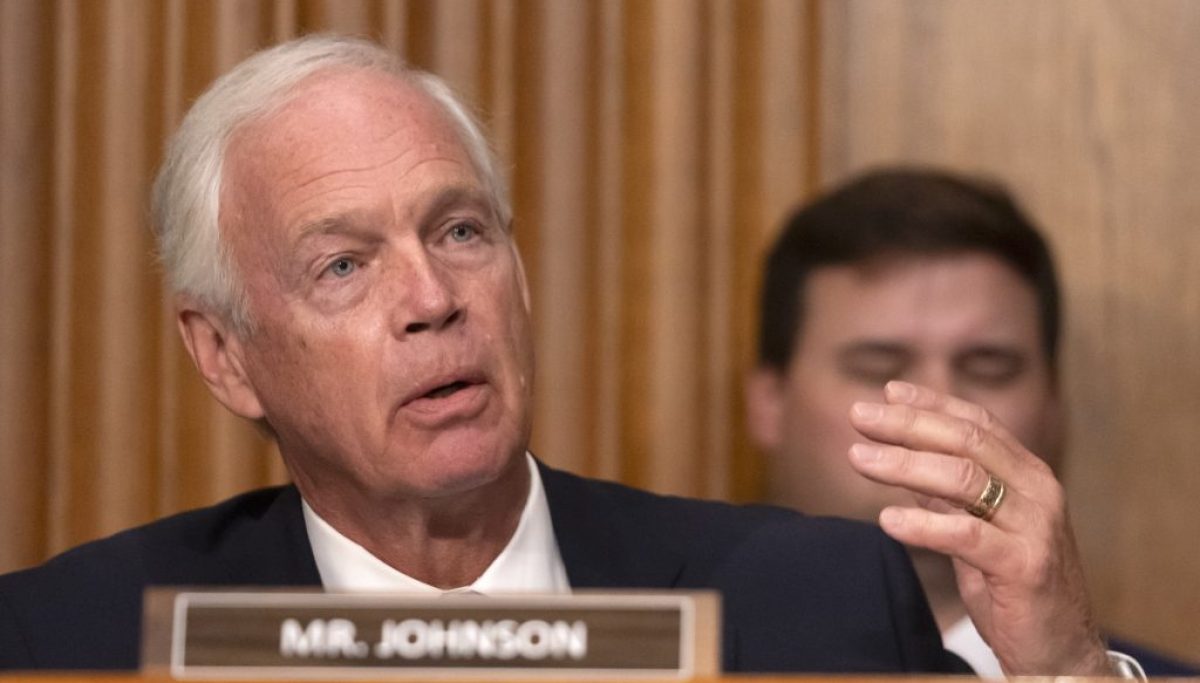
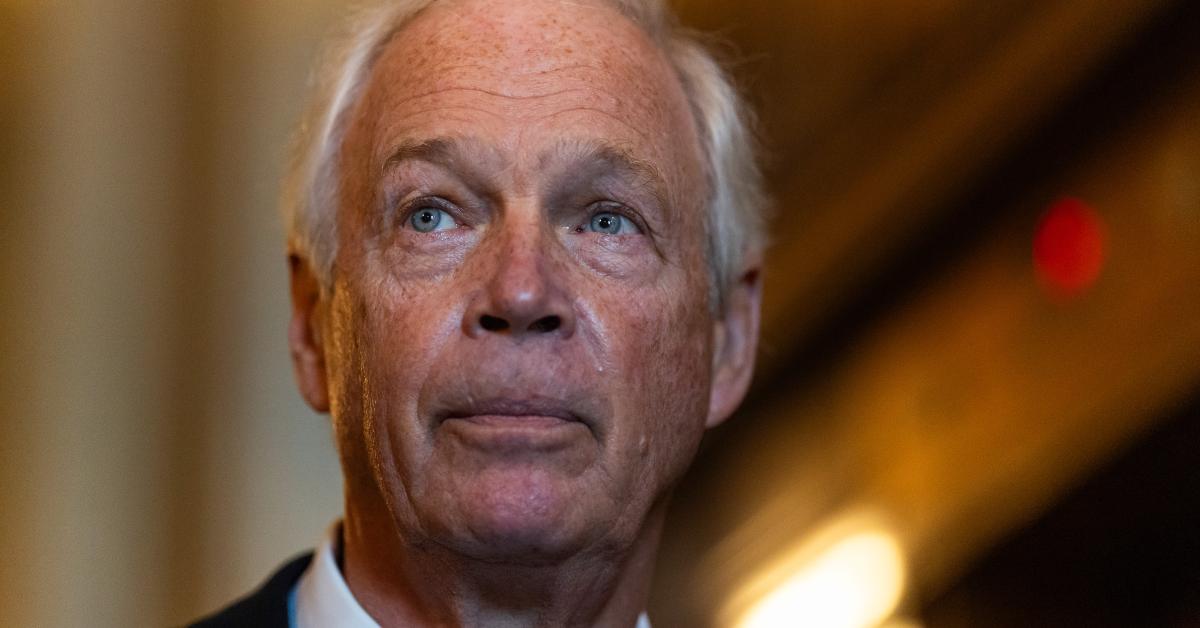
Photo via Fox News

Millions could lose paid benefits due to Congress ignoring decades of Social Security warnings: experts

Read the original at Fox News ↗
Cite

Miller, A. (2026, November 21). Millions could lose paid benefits due to Congress ignoring decades of Social Security warnings: experts. Fox News. https://www.foxnews.com/politics/millions-could-lose-paid-benefits-due-congress-ignoring-decades-social-security-warnings-experts

Dated from the outlet's own feed. Check the original for its byline.

Fox News · collected 2026-11-21 · by Alex Miller

Quick Summary

Experts are warning that millions of Americans could lose paid benefits from Social Security due to reforms made in 1977, which ignored earlier warnings from a panel of economists. Senate Budget Committee Chair Ron Johnson recently released a report calling Social Security a "Ponzi scheme" and blaming the 1977 reforms for setting up the current solvency crisis. Andrew Biggs of the American Enterprise Institute and Romina Boccia of the Cato Institute agree that tying benefit growth to wages instead of inflation overpromised benefits and created an unsustainable program. Congress has since lacked the political will to address this issue.
Written by AI on 2026-11-21, from this article's own text only (the story summary below draws on all the coverage).
See how they differ ↓

AI analysis

Story summary

Experts warn that millions could lose paid benefits from Social Security due to Congress ignoring warnings from a panel of top economists, including a Nobel laureate, decades ago. The Senate Budget Committee Chair, Ron Johnson, recently released a report describing Social Security as a "Ponzi scheme" and stating that the program's insolvency began in the 1970s when lawmakers chose to tie benefit growth to wages rather than inflation, despite warnings to the contrary. Andrew Biggs, a senior fellow of the American Enterprise Institute, told Fox News Digital that since 1977, Congress has taken minimal action to address the issues within Social Security. Johnson’s report highlights that had lawmakers followed the panel's advice to tie benefits to inflation, Social Security would likely be sustainable today. The changes implemented in 1977, signed into law by former President Jimmy Carter, have since put the program on a path toward crisis.

Written for “Social Security Warning Ignored” on 2026-11-21, grounded in this article and the 1 other(s) covering the same event.
Why this leaning score
The model judged this article politically coded and scored it +0.65, but 1 quote(s) could not be found in the article and the other 5 are attributed speech rather than the article's own narration, so the score is not published.
Written under an earlier scoring contract, which gave a paragraph rather than checkable quotes. Re-analysing this article replaces it.
Leaning score withheld for article 169641: no verified evidence · logged 2026-11-21

How they differ

2 outlets covered “Social Security Warning Ignored”.

What each outlet says

One AI summary per outlet of its latest article on this story, written from that article alone and checked against it. Open the article for the outlet's own words.

Fox NewsThis outlet21 Nov

Experts are warning that millions of Americans could lose paid benefits from Social Security due to reforms made in 1977, which ignored earlier warnings from a panel of economists. Senate Budget Committee Chair Ron Johnson recently released a report calling Social Security a "Ponzi scheme" and blaming the 1977 reforms for setting up the current solvency crisis. Andrew Biggs of the American Enterprise Institute and…

Millions could lose paid benefits due to Congress ignoring decades of Social Security warnings: experts (this article)
New York Post21 Nov

Experts warn that millions may face cuts to their Social Security benefits due to changes made by Congress in 1977, which ignored previous warnings from a panel of economists. The changes tied benefit growth to wages instead of inflation, leading to an unsustainable program structure. Senate Budget Committee Chair Ron Johnson and others argue that this decision, rather than addressing the issue, exacerbated the…

Millions could face Social Security cuts after Congress ignored decades of warnings: experts →

Compared with similar articles

This article reads unscored and hedges 19% of its claims. Each row says how that neighbour differs.
New York Post
Hedges 6 of 32 claims Outlet record 66/100
Reason
Leans strongly right Hedges 0 of 43 claims Outlet record 67/100
“The articles discuss different aspects of Social Security's financial issues and do not describe the same specific incident or time.”
Just The News
Hedges 0 of 11 claims Outlet record 59/100
“While both articles discuss Social Security's financial issues and mention Senator Ron Johnson's report, they describe different aspects of the issue and are not reporting on the exact same specific event or moment in time.”
Fox News
Hedges 0 of 15 claims Outlet record 66/100
“The articles discuss related issues regarding Social Security but describe different specific events or reports.”
Washington Examiner
Leans left Hedges 1 of 6 claims Outlet record 67/100
“The articles discuss different aspects of the same general issue (Social Security), with Article A focusing on Senator Ron Johnson's bill and its implications, while Article B discusses warnings from economists and Congressional inaction over decades.”
Just The News
Hedges 0 of 7 claims Outlet record 59/100
“Article A describes Sen. Ron Johnson's specific criticism of Social Security as a 'legal Ponzi scheme', while Article B discusses broader warnings and reforms to Social Security over decades, mentioning a report by Johnson but not the same specific incident.”

Story

Social Security Warning Ignored
Politics · 2 article(s) covering the same event. See how they differ ↑
How this article was measured signals, leaning charts, publisher record, byline, topics and claims

Signals How these are calculated →

Claims extracted
27
sentences that state something as happening or true
Uncertain
19%
5 of 27 hedged ("reportedly", "may", "according to")
Leaning
withheld
no quote in the article backed the model's score
Publisher signals
66/100
Fox News's corrections and hedging, across everything collected from it. Not a measure of accuracy.
Outlets on this story
2
Politics
Same framing elsewhere
1
articles that frame the event the way this one does
Analyzed 2026-11-21 · how these are computed

How this is being covered How these are calculated →

Article leaning vs. publisher reliability
Source leaning vs. consistency

Publisher

Fox News · 8414 article(s) · 16 correction(s) detected
Running correction rate · 16 correction(s)

Who wrote this

Alex Miller
65 article(s) here · 1 carrying a prediction
Democrats convincingly grabbed control of the Senate and will hold a large 56-44 majority when the new Congress is sworn in at the start of the new year, they also won control of the House and multiple governors' seats flip from red to blue, as well.
A panel filled with top economists, including a Nobel Peace Prize winner, warned Congress decades ago that their reforms to Social Security could spell disaster.
Senate Republicans scored a major win after advancing a massive bill that would overhaul America’s permitting system in a bid to turbocharge infrastructure and energy development in the country.
As Social Security hurtles toward insolvency — meaning the fund will run out of money and be unable to pay 100% of scheduled benefits on time — Johnson warned in the report first obtained by Fox News Digital that "once a Ponzi scheme begins to collapse, it can’t be fixed." "It can only be liquidated, with late investors often receiving only pennies on the dollar for their end-of-scheme investments," Johnson said.
Kennedy, who is a member of the Transportation, Housing and Urban Development Appropriations Subcommittee, which controls the purse strings over the DOT, said that he was more than "willing to appropriate money to fix this," but needed to understand the problem first. "I mean, we had an outage today, some problems with a number of our banks," Kennedy said.
The longtime Democratic leader has remained confident, but quiet, about his chances of retaining his job, posting shortly after Van Hollen’s announcement last week that he welcomed "discussion about the future of our caucus and the important work ahead," but asserted, "I have the votes to continue serving as Democratic leader." Schumer’s allies, like Democratic Senatorial Campaign Committee Chair Kirsten Gillibrand, D-N.Y., argue that he has led Senate Democrats to a 55-seat majority, which could expand by another seat if Alaska flips.
Like other Democrats and progressives, Moor wants to abolish Immigration and Customs Enforcement (ICE), but he would "like to see immigration law enforced."
In part, it was meant to develop a plan that would carry them through the final weeks of this year — that was agreed upon during the meeting, but not without its own drama after the fact on who could lay claim to the GOP’s 54-day blitz.
And he is willing to go further than Schumer ever has on one issue: terminating the filibuster.
Senate Democrats are getting an opportunity they haven’t had in decades: a different option for who their leader could be.
Also by Alex Miller
Nothing else under this byline is closely related to this article, so these are simply their most recent.
All 65 articles by Alex Miller →

Topics

Congress Fox News Digital Senate Budget Committee Social Security the American Enterprise Institute

Subjects

Social Security ORG · 10× Congress ORG · 8× Biggs PERSON · 4× Fox News Digital ORG · 3× Johnson PERSON · 3× Americans NORP · 2× Boccia PERSON · 2× Social Security’s ORG · 2× Andrew Biggs PERSON · 1× the American Enterprise Institute ORG · 1×

Narrative

She agreed with Johnson that Social Security was effectively a "Ponzi scheme," and said "there's this misconception that a lot of Americans think that Social Security is a retirement savings program." "But for that, you would actually need to have savings occur in the system, and there would need to be assets that would be invested in earning returns," Boccia said.
framing: assertive · carried by 1 article(s) · first seen 2026-11-21
A panel filled with top economists, including a Nobel Peace Prize winner, warned Congress decades ago that their reforms to Social Security could spell disaster.

Claims (27 extracted, 5 hedged)

A panel filled with top economists, including a Nobel Peace Prize winner, warned Congress decades ago that their reforms to Social Security could spell disaster. uncertain
reforms → fill → disaster
Now, experts tell Fox News Digital that group from a bygone era was right, as the safety-net program hurtles toward a crisis that could affect millions. uncertain
that → tell → millions
"Social Security benefits were put on autopilot back in 1977," Andrew Biggs, a senior fellow of the American Enterprise Institute, told Fox News Digital. asserted
Biggs → put → Digital
"Since then, Congress has done as little as it possibly could." uncertain
it → do → little
Senate Budget Committee Chair Ron Johnson, R-Wis., unveiled a report on the decades-old program that blasted it as a "Ponzi scheme," and warned that Social Security’s slide into insolvency began in the 1970s, when, despite warnings, lawmakers opted to tie benefit growth to wages rather than inflation. asserted
lawmakers → unveil → inflation
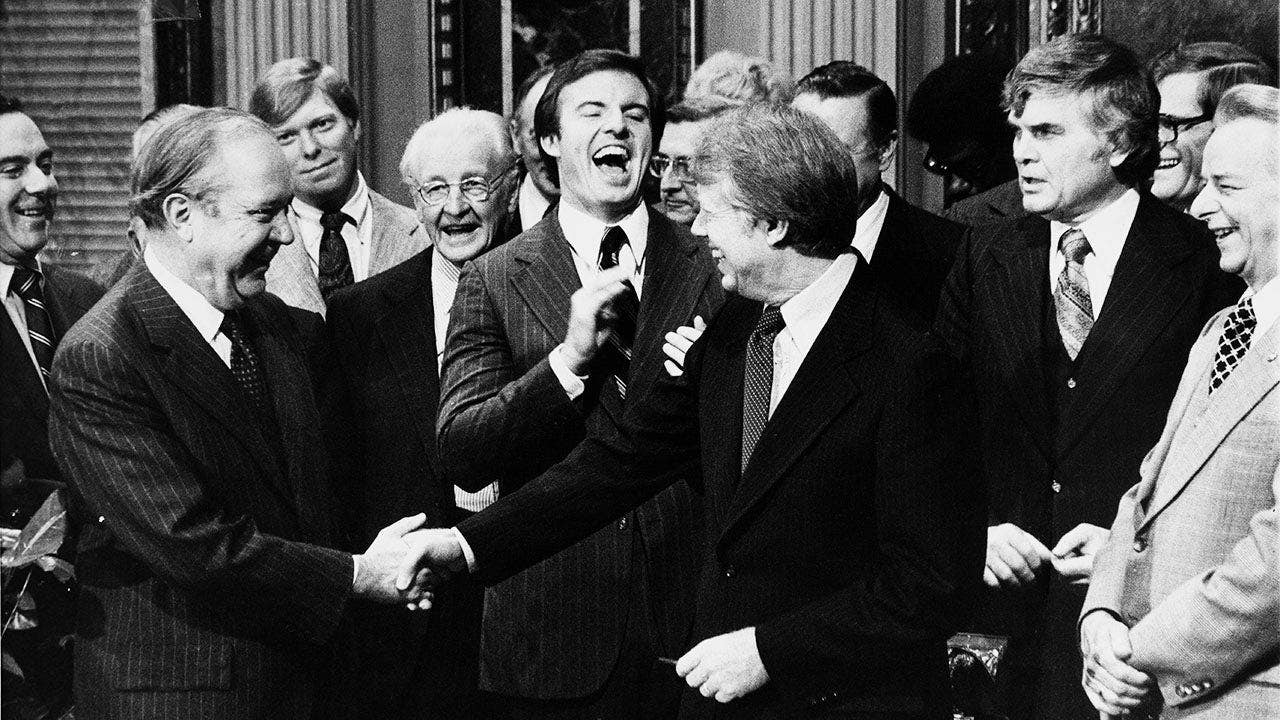
Johnson wrote in his report that at the time, an expert panel was formed that warned lawmakers that if they were to tie benefits to inflation, "Social Security would likely be sustainable today." Still, lawmakers at the time ran with their own amendments to the program, which were signed into law by former President Jimmy Carter in December 1977. " asserted
which → write → December
What they said in 1977 was if you index benefit growth to wages, you're effectively building a solvency crisis into the program," Biggs said. asserted
Biggs → say → program
"You are over-promising, you're going to build in benefits that the current system can't afford to pay, and you're committing future taxpayers to pay rates of taxes that the taxpayers in 1977 weren't willing to pay. asserted
taxpayers → promise → 1977
In the decades since, Congress has done little to change the program. asserted
Congress → do → program
Romina Boccia, the Cato Institute’s director of budget and entitlement policy, told Fox News Digital that’s largely because lawmakers have not had the political will to do it. asserted
lawmakers → tell → it
She agreed with Johnson that Social Security was effectively a "Ponzi scheme," and said "there's this misconception that a lot of Americans think that Social Security is a retirement savings program." "But for that, you would actually need to have savings occur in the system, and there would need to be assets that would be invested in earning returns," Boccia said. asserted
Boccia → agree → returns
We're talking about a pay-as-you-go program." asserted
you → talk → program
One of the side effects of Congress’ lack of action to rein in the program is that the wage growth formula relies on workers in the economy contributing with their paychecks. asserted
workers → rein → paychecks
Boccia noted that as the decades have gone on, "We've seen a severe decline in the number of workers compared to the number of retirees collecting benefits as a result of a decline in fertility." asserted
We → note → fertility
Congress’ last real successful effort to reform Social Security came in the early 1980s, Biggs noted, when lawmakers were forced to step in to deal with the "funding crisis" hitting the program. asserted
lawmakers → reform → program
They raised taxes. asserted
They → raise → taxes
They increased the retirement age. asserted
They → increase → age
So they did this with months to spare to fix Social Security," Biggs said. asserted
Biggs → do → Security
"It's not something they wanted to do, but they were forced to do." asserted
they → want → ?
"Now in 2032, we're going to face the same situation, where Congress will be forced to take action sometime before the trust fund runs out in 2032, not because they want to, but because they're forced to do it," he continued. asserted
he → go → it
If Social Security’s trust fund runs dry by 2032, Americans’ benefits would be slashed and the onus of paying for the shortfall would add trillions more to the nation’s debt. asserted
onus → run → debt
But Johnson, in his report, declared that the Social Security problem could not be fixed between now and then because of Congress’ inaction for the last several decades, and he suggested that the solution would be to repeal a possible benefits reduction as the program’s trust fund heads toward insolvency in just under seven years. uncertain
fund → declare → years
Biggs, who was part of former President George W. Bush’s effort to reform Social Security over two decades ago, said that had Congress taken action "25 years ago, you could fix Social Security in barely noticeable ways." uncertain
you → reform → ways
"There is no easy fix to Social Security today, and that stems entirely from the fact that every year, when Congress has had the opportunity to fix Social Security, they chose to duck the issue for political reasons and kick the can down the road," Biggs said. asserted
Biggs → be → road
Boccia disagreed with Johnson’s solution and contended that the real answer was one that lawmakers of yesterday and today would be hesitant to approach — raising taxes. "The real way to think about this is that there's almost no way to imagine Congress would let those benefit cuts take effect," Boccia said. asserted
Boccia → disagree → effect
So most likely they're going to try to find a different solution." asserted
they → go → solution
"The last time the trust fund was running out of money in 1982, Congress put together a commission and then voted on a bill that increased taxes and reduced benefits, including raising the social security retirement age," she continued. asserted
she → run → age
Give feedback · no sign-in needed

No sign-in needed for now. Your note is sent without a name, so it cannot be answered.

History Support