Campaigners have welcomed a call for scrutiny of consent laws by a survivor of drug-facilitated rape but said action must also focus on wider issues around sexual assault.
asserted
action → welcome → assault
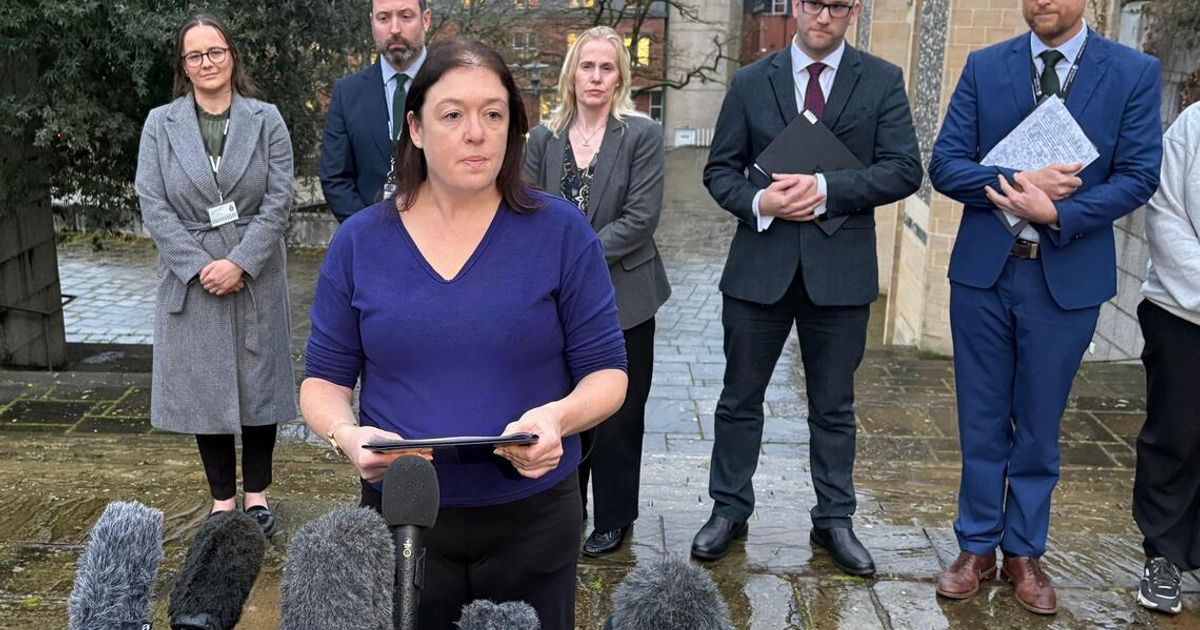
Joanne Young, who was drugged and raped by her husband and sexually abused by men he invited into their home, warned of “serious questions about how the law deals with consent”.
Philip Young, 50, advertised Joanne Young, his then wife, on dating and swinging websites, presenting it as a “kink” for both of them, Winchester crown court heard.
asserted
court → drug → them
In fact, he had been sedating her, plunging her into an “inanimate state” in which anything could be done to her by the men who answered the adverts, jurors were told.
uncertain
jurors → sedate → adverts
The former Conservative councillor pleaded guilty earlier in the year to dozens of charges of abuse against his former wife, who has waived her right to anonymity.
asserted
who → plead → anonymity
As four men were convicted of sexual offences against her on Thursday, Young, 49, said: “No one should be able to give [consent] on your behalf.”
asserted
one → convict → behalf
Her daughter, Alex Young, also called for a change in the law to make it clear that third-party consent cannot ever be used as an argument in a court of law.
asserted
consent → call → law
Barristers and campaigners said there was no law that stated third-party consent was a valid defence as they called for a public debate and further education about consent.
asserted
they → say → consent
Kate Parker, a criminal barrister and founder of the charity Schools Consent Project, said: “The law currently has nothing in it which allows someone to point to another person and say: ‘Because of what they told me, I believed the other person to be consenting.’
asserted
person → say → me
You can’t effectively outsource consent to a third party, the law has never had that within it.
asserted
law → outsource → it
The Sexual Offences Act 2003 certainly doesn’t have that in it.
asserted
Act → have → it
“What is instead happening is defence counsel in this case, and in cases like this, are pointing to a defence you can run, which is to say that the defendant genuinely and reasonably thought that the victim was consenting.”
asserted
victim → happen → defence
The trial heard that the four men, who were strangers to each other, failed to seek consent from Joanne Young before they engaged in sexual activity with her.
asserted
they → hear → her
The defendants claimed they had been duped by Philip Young and believed she was consenting.
asserted
she → claim → Young
Parker said it was right that a defendant should be able to say what was in his or her mind at the time of an alleged offence.
asserted
what → say → offence
“I think that’s a sort of cornerstone of our law.
asserted
that → think → law
But I hope that these arguments carry less and less traction with juries when generally there is more knowledge as to what the laws around consent are,” she said.
asserted
she → hope → consent
“I hope that as time goes by, juries become more aware and members of the public become more aware as to what the law on consent is, so no one can say: ‘Because a third party told me so and I acted on it, I thought I was legally safe.’”
asserted
I → hope → it
Harriet Wistrich, a solicitor and the director of the Centre for Women’s Justice, said the jury in the Young case had ultimately rejected the defence.
asserted
jury → say → defence
“It should be obvious in the law that somebody can’t consent on somebody else’s behalf.
asserted
somebody → consent → behalf
But you could explicitly make it the case,” she said.
uncertain
she → make → ?
“Defence barristers should robustly defend their clients.
asserted
barristers → defend → clients
That’s their job.
asserted
That → ’ → ?
But they shouldn’t overstep the mark by relying on myths and stereotypes.”
asserted
they → overstep → myths
Ciara Bergman, the chief executive of Rape Crisis England & Wales, agreed the law on consent should be scrutinised.
asserted
law → agree → consent
The Sexual Offences Act 2003 states: “A person consents if he agrees by choice, and has the freedom and capacity to make that choice.”
asserted
he → state → choice
She said: “We can look at strengthening existing laws.
asserted
We → say → laws
But really we have to get to the root of the problem, which is about the understanding of consent.
asserted
which → have → consent
“The existing law is already clear.
asserted
law → exist → ?
This is about how that law is interpreted and it is regularly misinterpreted and misapplied.
asserted
it → interpret → ?
That happens all the time by defendants, by barristers, by juries, and so this is highlighting a lack of understanding that consent is specific: it’s not a one-time event, it’s ongoing, it’s highly dependent on the actual situation at the time.
asserted
it → happen → time
The fact that someone is unconscious necessarily means they can’t consent.
asserted
they → mean → ?
“The other thing about these cases is that drugging someone is the opposite of consent.
asserted
drugging → drug → consent
What is emerging from these organised drug-facilitated sexual abuse cases is a growing recognition of the attraction that some people have to a woman not being able to consent.”
asserted
woman → emerge → that
Prof Miranda Horvath, the director of the Institute for Social Justice and Crime at the University of Suffolk, said incorrect beliefs about consent should be “robustly challenged”.
asserted
beliefs → say → consent
“It is incredibly important that people understand that legally nobody can give consent on your behalf, and this underlines the importance of clear education on consent through society, from young people right through to adults,” she said.
asserted
she → understand → adults
“Rape and serious sexual offences are a direct choice made by perpetrators, and a lack of understanding on whether a sexual partner has given consent cannot be an acceptable excuse.”
asserted
partner → make → consent
The Labour MP Jess Phillips said the government should look at whether the law should be tightened.
asserted
law → say → ?
“It is absolutely right that the government should strength-test whether there is a way of really asserting in the law that consent cannot ever come from a third party – we need to be absolutely satisfied that that is the case,” she said.
asserted
she → test → party
“There is an argument that while the law states that consent cannot come from a third party, we still see it being used as a defence.
asserted
it → be → defence
Perhaps if we look at tightening the law, these men would have had to plead guilty and Joanne Young would have been spared this trial.”
asserted
Young → look → trial
…and 3 more, not listed.
 The Aporia