Photo via NBC News

Trump formally ends minting of the penny after nearly 250 years of production

Read the original at NBC News ↗
Cite

Guilfoil, K. (2026, November 21). Trump formally ends minting of the penny after nearly 250 years of production. NBC News. https://www.nbcnews.com/politics/white-house/trump-formally-ends-minting-penny-nearly-250-years-production-rcna600580

Dated from the outlet's own feed. Check the original for its byline.

NBC News · collected 2026-11-21 · by Kyla Guilfoil

Quick Summary

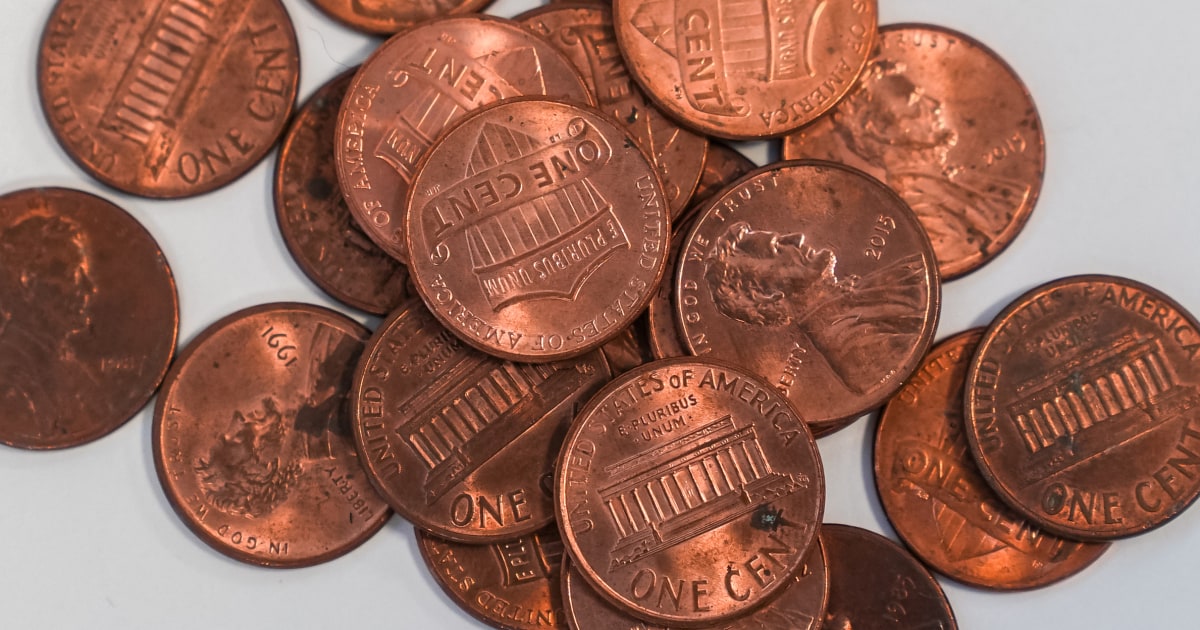
President Donald Trump signed the Common Cents Act, which directs the federal government to stop minting pennies, after both the House and Senate passed the bill by voice vote. Rep. Lisa McClain, the bill’s author, noted that it costs nearly four cents to produce a single penny, resulting in annual savings of $85 million once penny production ceases. The U.S. Mint stopped making pennies in November 2025, nine months after Trump first called for their discontinuation, and the government will continue to recirculate existing pennies indefinitely.
Written by AI on 2026-11-22, from this article's own text only.

AI analysis

Why this leaning score
This article does not take a side on a contested political question, so it has no leaning score. That is an answer rather than a gap: a match report or a rescue can be warmly or critically written without being left or right, and scoring it anyway is how approval of a subject gets recorded as a political position.
No political leaning scored for article 169242 · logged 2026-11-22

Compared with similar articles

Nothing to compare against. No article is close enough to this one for the pipeline to have linked or judged the pair.
How this article was measured signals, leaning charts, publisher record, byline, topics and claims

Signals How these are calculated →

Claims extracted
22
sentences that state something as happening or true
Uncertain
5%
1 of 22 hedged ("reportedly", "may", "according to")
Leaning
not political
takes no side on a contested political question
Publisher signals
74/100
NBC News's corrections and hedging, across everything collected from it. Not a measure of accuracy.
Outlets on this story
unclustered
not grouped into a story yet
Same framing elsewhere
1
articles that frame the event the way this one does
Analyzed 2026-11-22 · how these are computed

How this is being covered How these are calculated →

Article leaning vs. publisher reliability
Source leaning vs. consistency

Publisher

NBC News · 2739 article(s) · 5 correction(s) detected
Running correction rate · 5 correction(s)

Who wrote this

Kyla Guilfoil
35 article(s) here · 1 carrying a prediction
However, he said in a phone interview with Fox News earlier in the day that he believes the government could “do tremendous things on healthcare” after Democrats take control of Congress in January.
While the FBI has not addressed who may have breached the system in this case, the agency did announce an investigation in September of a notorious hacking group that claimed it had stolen data on agents through the agency’s job portal.
“This legislation will save $85 million per year by permanently ending penny production — it’s common sense!”
Trump insisted in the weeks leading up to Election Day that the two Sullivan candidates would confuse voters and said that he was the one who encouraged the lawsuit. “I’m the one that said do it,” he told reporters during his midterm blitz in October.
Cairncross will be replaced by Kirsten A. Davies, who currently serves as the chief information officer at the Defense Department, a source close to the White House told NBC News.
In the interview, Musk said that he thinks Democratic Gov.-elect Gina Hinojosa will be “quite moderate” when she takes office.
Sen.-elect Scott Colom’s taste in footwear may have just added a new incentive for high school seniors to keep up their grades.
To be confirmed as CISA director, LoSapio requires the committee to vote to advance his nomination to the full Senate, whose vote by a simple majority will determine whether he is confirmed.
“There will be more victories, and there will be more defeats,” he said.
Scott requested that Lutnick testify “for a public hearing regarding recent public reports about Nvidia and the Department of Commerce’s role that raises national security concerns.” “Given the Department of Commerce’s central role in issuing and enforcing export control regulations, your testimony before the Committee will be essential in our oversight of these efforts,” Scott wrote.
Also by Kyla Guilfoil
Nothing else under this byline is closely related to this article, so these are simply their most recent.
All 35 articles by Kyla Guilfoil →

Topics

Common Cents Act Senate The U.S. Mint Washington the Treasury Department

Subjects

The U.S. Mint ORG · 6× Senate ORG · 2× the Treasury Department ORG · 2× Donald Trump PERSON · 1× House ORG · 1× Lisa McClain PERSON · 1× Mich. GPE · 1× Trump PERSON · 1× Washington GPE · 1× the Federal Reserve ORG · 1×

Narrative

Both the House and the Senate passed the measure by voice vote, meaning no notable opposition. “It costs nearly FOUR cents to make just one penny,” the bill’s author, Rep. Lisa McClain, R-Mich., said Sept. 29 on X a day after Senate passage.
framing: assertive · carried by 1 article(s) · first seen 2026-11-22
“This legislation will save $85 million per year by permanently ending penny production — it’s common sense!”

Claims (22 extracted, 1 hedged)

Washington is officially done with spending a pretty penny on penny production. asserted
Washington → do → production
President Donald Trump on Friday signed the bipartisan Common Cents Act, which formally directs the federal government to stop minting the penny. asserted
which → sign → penny
Both the House and the Senate passed the measure by voice vote, meaning no notable opposition. “It costs nearly FOUR cents to make just one penny,” the bill’s author, Rep. Lisa McClain, R-Mich., said Sept. 29 on X a day after Senate passage. asserted
author → pass → passage
“This legislation will save $85 million per year by permanently ending penny production — it’s common sense!” asserted
it → save → production
The U.S. Mint last year put the immediate annual savings of discontinuing penny production at $56 million. asserted
Mint → put → million
The government stopped making pennies in November 2025, nine months after Trump called for the Treasury Department to stop production, writing at the time that the process was “so wasteful!” asserted
process → stop → time
However, the U.S. Mint said it would still produce collector versions to be produced in “limited quantities.” asserted
it → say → quantities
The penny can still be used as legal tender “for all debts, public charges, taxes, and dues,” according to the new law. uncertain
penny → use → law
The Treasury Department said last year that the Federal Reserve will continue to recirculate the approximately 114 billion pennies that are in existence “for as long as possible.” asserted
that → say → existence
The new measure also provides a procedure for stores and businesses that accept cash payments to round their prices to the nearest amount divisible by 5 cents. asserted
that → provide → cents
And, as the nickel replaces the penny at the bottom of the U.S. Mint’s currency list, that coin can now be manufactured with an inner layer of zinc and an outer layer of nickel. asserted
coin → replace → nickel
It is currently produced with nickel and copper, which costs more than zinc. asserted
which → produce → zinc
Congress passed the Coinage Act in 1792, and the U.S. Mint began producing the penny, known officially as the cent, the following year. asserted
Mint → pass → cent
In its nearly 250 years in production, the penny has had multiple facades. asserted
penny → have → facades
It wasn’t until 1909 that it was given its modern-day face, featuring President Abraham Lincoln. asserted
it → give → Lincoln
The first penny, produced in 1787, had a sundial design created by Benjamin Franklin. asserted
penny → produce → Franklin
After the U.S. Mint took over, the penny was slightly bigger and included the image of a woman representing Liberty on one side and 15 chain links on the other. asserted
penny → take → other
The next penny debuted in 1857, taking on a smaller shape and displaying a flying eagle design on one side and a wreath on the other. asserted
penny → debut → other
It also changed from being 100% copper to 88% copper and 12% nickel. asserted
It → change → copper
Two years later, an “Indian Head” design was added to one side. asserted
design → add → side
The most recent design from the U.S. Mint was issued in 2010, featuring its “Union Shield” theme. asserted
design → issue → theme
It shows a shield on the tails side of the coin to represent “Lincoln’s preservation of the United States as a single country,” the U.S. Mint wrote. asserted
Mint → show → country

Give feedback · no sign-in needed

No sign-in needed for now. Your note is sent without a name, so it cannot be answered.

History Support