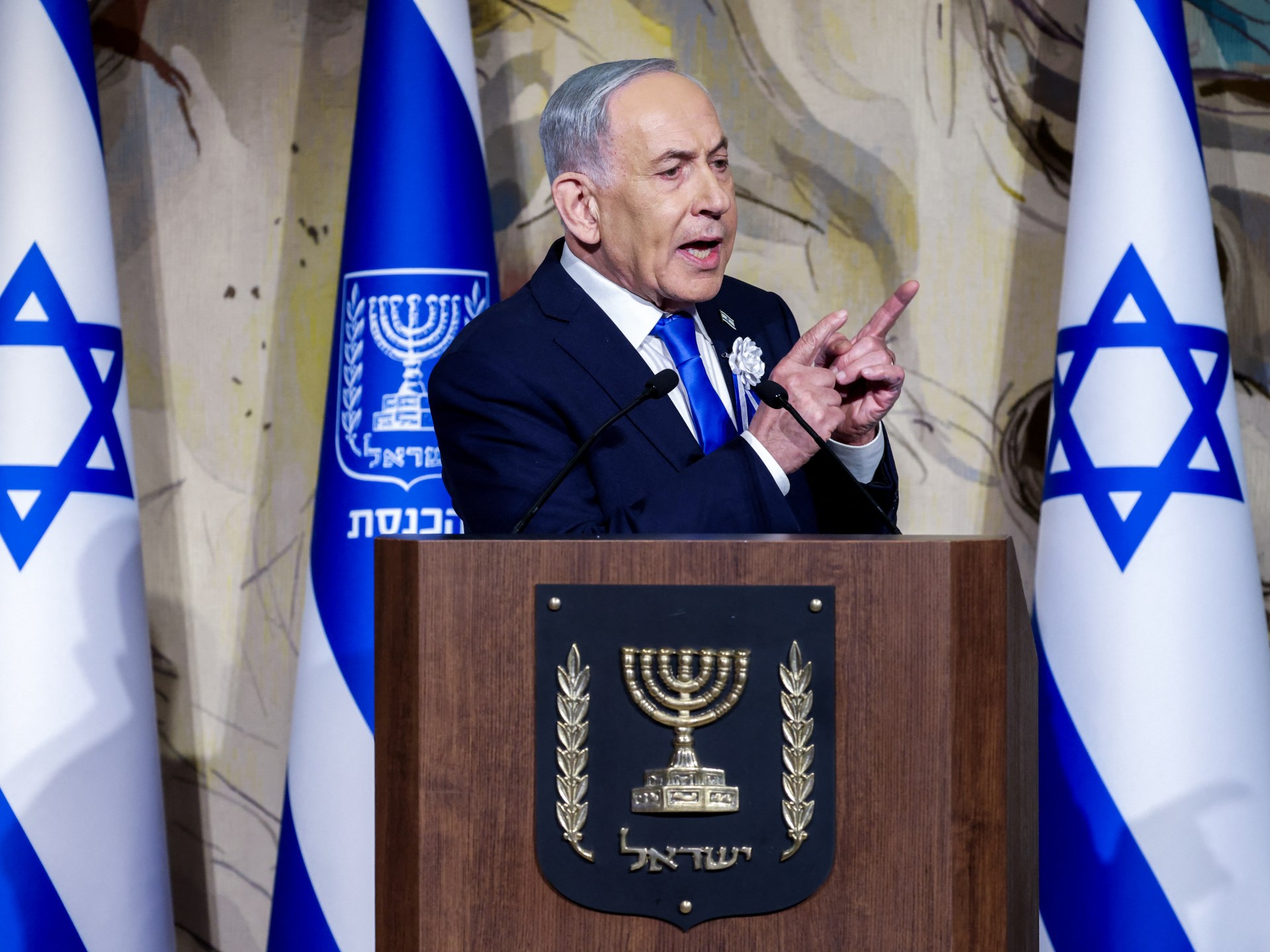
Photo via Al Jazeera

10 years after divisive Brexit referendum, UK weighs a ‘Breturn’ to the EU

Read the original at Al Jazeera ↗
Cite

Cordall, S. S. (2026, November 20). 10 years after divisive Brexit referendum, UK weighs a ‘Breturn’ to the EU. Al Jazeera. https://www.aljazeera.com/news/2026/11/20/10-years-after-divisive-brexit-referendum-uk-weighs-a-breturn-to-the-eu?traffic_source=rss

Dated from the outlet's own feed. Check the original for its byline.

Al Jazeera · collected 2026-11-20 · by Simon Speakman Cordall

Quick Summary

Ten years after the divisive Brexit referendum, the United Kingdom is reconsidering its decision to leave the European Union, with some calling for a return, dubbed "Breturn." The recent UK-EU summit in Brussels resulted in agreements to ease trade restrictions and expand opportunities for young people to live and work across borders. A poll shows that 62 percent of the UK public, excluding undecided respondents, favor rejoining the EU, signaling a shift in public sentiment. However, the political process for rejoining without another referendum is complex and uncertain.
Written by AI on 2026-11-20, from this article's own text only (the story summary below draws on all the coverage).

Compared with similar articles

This article reads leans left and hedges 30% of its claims. Each row says how that neighbour differs.
ABC News (AU)
Hedges 4 of 29 claims Outlet record 67/100
Al Jazeera
Leans left Hedges 0 of 4 claims Outlet record 60/100
“Both articles discuss the UK and EU moving towards better relations a decade after the Brexit vote, but they do not describe the same specific incident or agreement.”
Daily Mail
Leans strongly right further right than this Hedges 3 of 76 claims Outlet record 69/100
“Article A discusses a broader context of the UK reconsidering its Brexit decision, while Article B focuses on a specific critique of Andy Burnham's stance and a 'deal' with the EU, which are different specific events.”
BBC News
Leans left Hedges 2 of 19 claims Outlet record 65/100
“Article A discusses the broader context and public sentiment about Brexit ten years after the referendum, while Article B focuses on a specific speech by Andy Burnham and negotiations ahead of an EU summit.”
BBC News
Leans right further right than this Hedges 9 of 50 claims Outlet record 65/100
“The articles discuss the ongoing debate and possible reconsideration of Brexit years later, but they do not describe the same specific incident or occurrence.”
Evening Standard
Leans right further right than this Hedges 3 of 23 claims Outlet record 64/100
“The articles discuss different aspects of the broader Brexit topic, with Article A focusing on a specific moment where the Prime Minister considers rejoining the EU, while Article B provides a broader context of the UK potentially reconsidering its Brexit decision after 10 years.”
City AM
Leans right further right than this Hedges 5 of 22 claims Outlet record 95/100
“While both articles discuss the UK's potential rejoining of the EU after the initial Brexit referendum, they describe different aspects and do not clearly refer to the same specific event or moment in time.”
Al Jazeera
Leans strongly left further left than this Hedges 1 of 20 claims Outlet record 60/100
“While both articles discuss the UK's reconsideration of its relationship with the EU after Brexit, they describe different specific events and contexts.”
Al Jazeera
Hedges 4 of 37 claims Outlet record 60/100
“While both articles discuss the UK and EU reaching an agreement to improve relations a decade after Brexit, Article A focuses on the specific deal and its outcomes, whereas Article B discusses the broader context of buyer's remorse and the implications of the deal in the context of past divisions.”
The Guardian
Hedges 4 of 29 claims Outlet record 64/100
“Article A discusses the broader context of UK considering a return to the EU a decade after the initial Brexit referendum, while Article B focuses on a specific political speech by Andy Burnham advocating for closer ties with the EU.”

Story

Brexit Referendum Anniversary
Politics · 1 article(s) covering the same event.
How this article was measured signals, leaning charts, publisher record, byline, topics and claims

Signals How these are calculated →

Claims extracted
37
sentences that state something as happening or true
Uncertain
30%
11 of 37 hedged ("reportedly", "may", "according to")
Leaning
Leans left
of the writing, not the subject · beta estimate
Publisher signals
60/100
Al Jazeera's corrections and hedging, across everything collected from it. Not a measure of accuracy.
Outlets on this story
1
Politics
Same framing elsewhere
1
articles that frame the event the way this one does
Analyzed 2026-11-20 · how these are computed

How this is being covered How these are calculated →

Article leaning vs. publisher reliability
Source leaning vs. consistency

Publisher

Al Jazeera · 6234 article(s) · 4 correction(s) detected
Running correction rate · 4 correction(s)

Who wrote this

Simon Speakman Cordall
25 article(s) here · 1 carrying a prediction
Could the UK Breturn?
As the long and complex negotiations to form Israel’s next government drag on, hopes are high that former military chief Gadi Eisenkot will be able to form a coalition that marks a break from the far-right and divisive politics of the previous administration.
Smotrich, meanwhile, has warned his ultra-Orthodox political allies against entering negotiations with Eisenkot, saying he will “dump them” once he uses their votes to oust Netanyahu.
Israeli media have also reported repeated confrontations between Netanyahu and military chief Eyal Zamir, who has resisted proposals for military action against Iran, warning that they could trigger a wider conflict.
Only such a government will be able to meet challenges of this magnitude.
Two days later, Netanyahu returned to the theme of existential threat in a further video, calling upon the leaders of the more successful bloc to recognise the “needs of the hour” and join, under his leadership, a single unified government that would also include the ultra-Orthodox parties, at least one of which is understood to be in talks with Eisenkot, as well as the prime minister’s controversial allies on the far right, Bezalel Smotrich and Itamar Ben-Gvir.
Prime Minister Benjamin Netanyahu has long sold himself as the leader who will ensure that ties with the United States, the country’s most important ally, remain strong.
The survey indicated that Washington’s close relationship with Tel Aviv had become more of a liability than an asset for many in the electorate, Telhami noted, “with most saying specifically Israel would be a factor in their vote.
2026-11-04 · assertive framing · Netanyahu bet on Trump – but both lost
Recommended Stories list of 4 items- list 1 of 4Israel election: When will government be formed, who will lead it? - list 2 of 4Israeli officials say results stand as Netanyahu claims election ‘stolen’ - list 3 of 4The future of the Palestinian vote in Israel - list 4 of 4Arab parties back Eisenkot: What’s the latest in Israel’s coalition talks?
Recommended Stories list of 4 items- list 1 of 4Israel election result shows no overall majority as vote count complete - list 2 of 4‘Arab voice doesn’t count’: Jewish Israeli blocs reject Palestinian support - list 3 of 4Coalition wrangling, a second election: How Israel could break the deadlock - list 4 of 4Why is Netanyahu accusing Palestinian Israeli parties of fraud?
Also by Simon Speakman Cordall
Nothing else under this byline is closely related to this article, so these are simply their most recent.
All 25 articles by Simon Speakman Cordall →

Topics

4Britain 4EU 4UK Brussels the United Kingdom

Subjects

Burnham PERSON · 3× Brussels GPE · 2× 4Britain GPE · 1× 4EU ORG · 1× 4UK GPE · 1× British NORP · 1× Leave ORG · 1× Ursula von der Leyen PERSON · 1× the European Commission ORG · 1× the United Kingdom GPE · 1×

Narrative

The agreements, which cover three main areas – easing trade restrictions, expanding opportunities for young people to live and work across borders, and addressing carbon levies – were characterised by Burnham as “a good deal for Britain” and regarded as first steps towards bringing the UK back into the EU’s orbit. Does the UK want to rejoin? Some in the UK believe that leaving the single market and customs union brought little tangible benefit while creating additional paperwork, border checks and barriers to trade with the UK’s largest export market.
framing: mixed · carried by 1 article(s) · first seen 2026-11-20
Could the UK Breturn?

Claims (37 extracted, 11 hedged)

A decade after the narrow vote to leave the EU, the United Kingdom is showing every sign of buyer’s remorse. asserted
Kingdom → leave → remorse
For many, the bitterly fought contest over the referendum on whether to leave the EU was unpleasant and divisive. asserted
contest → fight → EU
Burnham says Brexit is what the UK’s ‘enemies’ wanted - list 3 of 4Britain’s Brexit woes: ‘I didn’t vote to leave in the way that we did’ - list 4 of 4EU and UK agree a reset deal to end ‘decade of drift’ Couples and families reportedly split over where they stood on the referendum. uncertain
they → say → referendum
Each side of the debate – Leave and Remain – became a cipher for how people saw themselves and their country in a changing world. asserted
people → remain → world
As the campaign unfolded amid accusations of foreign influence and dirty tricks, the murder of a politician, a debate over economics and political sovereignty, a visceral fight intensified over identity, belonging and competing visions of what it meant to be British. asserted
it → unfold → what
Critics and pro-Brexit slammed various exit deals that successive governments negotiated with Brussels as somehow a betrayal of what had originally been a binary choice. asserted
what → slam → betrayal
The EU, the trading bloc the UK sat uneasily within for nearly half a century, remains the country’s biggest trading partner. asserted
UK → sit → century
On Friday, in a joint news conference with Ursula von der Leyen, president of the European Commission, following the latest UK-EU summit in Brussels, UK Prime Minister Andy Burnham hailed the first in a series of expected deals with the EU as rebuilding “the bridges that were broken all those years ago”. asserted
that → follow → bridges
The agreements, which cover three main areas – easing trade restrictions, expanding opportunities for young people to live and work across borders, and addressing carbon levies – were characterised by Burnham as “a good deal for Britain” and regarded as first steps towards bringing the UK back into the EU’s orbit. Does the UK want to rejoin? Some in the UK believe that leaving the single market and customs union brought little tangible benefit while creating additional paperwork, border checks and barriers to trade with the UK’s largest export market. asserted
leaving → cover → market
Others have no regrets about leaving the bloc. asserted
Others → have → bloc
According to polling expert Sir John Curtice, surveys show an average of 62 percent favour rejoining, against 38 percent for staying out, once undecided respondents are excluded. “Whatever the nuances, the UK public are certainly in a different place on the EU than [they were] in 2016,” he told Al Jazeera. uncertain
he → accord → Jazeera
Could the UK Breturn? uncertain
UK → breturn → ?
According to some analysts, the government – which is not bound by a single written constitution – could, with the EU’s agreement, begin the process of rejoining without holding another referendum, or even including the commitment in an election manifesto. uncertain
which → accord → manifesto
However, doing so would inevitably be politically difficult and, according to Professor Curtice, almost certain to be highly unpopular. uncertain
doing → do → Curtice
“The Brexit referendum in 2016 was not legally binding,” Sionaidh Douglas-Scott, the chair in Law at Queen Mary University of London, wrote by email. asserted
Scott → write → email
“Legally, it could have been ignored altogether. uncertain
it → ignore → ?
But it was thought to be politically unacceptable to ignore the public’s vote in the referendum. asserted
it → think → referendum
And political parties can ignore their election manifesto pledges at their peril,” she said, referring to parties’ reliance on public trust to support any agenda. asserted
she → ignore → agenda
“I suspect Burnham might be tempted to have a referendum on the issue of rejoining the EU, feeling that public opinion had changed sufficiently to render a rejoin vote likely, although that’s by no means certain,” she said. uncertain
she → suspect → means
“Some senior members of the [governing Labour] party … clearly feel that rejoining should be a manifesto pledge. asserted
rejoining → govern → party
So, politically, steps might be taken to make it more acceptable. uncertain
it → take → ?
Meanwhile, questions remained over the terms on which the UK might rejoin the bloc, whether it would be required to adopt the euro – a prospect it had previously resisted – and what form the EU itself might take following elections in some of its most influential member states, including France, Germany and Spain. uncertain
EU → remain → France
Polling suggests a distinction between support for closer relations with the EU as opposed to support for full membership. uncertain
Polling → suggest → membership
While some surveys put support for rejoining at about 35 percent when closer ties were offered as an alternative, Curtice said support for closer relations was often less firmly held. asserted
support → put → relations
“Much of that support is soft – people say they somewhat support rather than strongly support” closer ties, he explained. asserted
he → say → ties
By contrast, around half of those supporting rejoining the EU say they “strongly support” it, suggesting a deeper commitment to that option. asserted
they → support → option
Similarly, at home, many of the more prominent figures of the original campaign to leave Europe have resurfaced and appear to be marshalling their forces against any return or realignment. asserted
many → leave → return
Reform UK leader Nigel Farage, one of Brexit’s most prominent campaigners, returned to Brussels on Thursday to oppose the prime minister’s efforts. asserted
Farage → return → efforts
Other figures associated with the Leave campaign have also re-emerged, including former Prime Minister Boris Johnson and his former cabinet ally, Michael Gove, now a magazine editor. asserted
figures → associate → Johnson
They have revived loosely sourced claims about the financial cost of rejoining the EU – or even of having remained a member. uncertain
They → revive → EU
The campaign group Stay Out, for instance, puts the annual cost at 39.3 billion pounds (approximately $51.4bn), equivalent to 750 million pounds (about $982m) a week. asserted
group → put → pounds
“I think we should think about two things when we think about Brexit and the potential to rejoin: trauma and salience,” Anand Menon, professor at King’s College London and director of UK in a Changing Europe, said. asserted
Menon → think → Europe
“Some people felt traumatised by the first debate and don’t want to revisit it. asserted
people → feel → it
At the same time, the issue has lost its salience. asserted
issue → lose → salience
The public don’t consider it one of the main issues facing the country,” he said. asserted
he → consider → country
“If you cast your mind back to 2016, those supporting Leave, like Nigel Farage, took the EU, which the public never really thought about, and linked it in the public’s mind to something they absolutely did: immigration. asserted
they → cast → something
“If Burnham is going to try to get the sort of energy he’ll need to see the process through, he’s going to need to do something similar, though what, I don’t know.” asserted
I → go → something

Give feedback · no sign-in needed

No sign-in needed for now. Your note is sent without a name, so it cannot be answered.

History Support