Photo via NPR

Trump initially accepted the midterm results, but most GOP voters doubt they were fair

Read the original at NPR ↗
Cite

Parks, M. (2026, November 20). Trump initially accepted the midterm results, but most GOP voters doubt they were fair. NPR. https://www.npr.org/2026/11/20/nx-s1-6047605/midterm-election-distrust-republicans

Dated from the outlet's own feed. Check the original for its byline.

NPR · collected 2026-11-20 · by Miles Parks

Quick Summary

A recent poll by the University of California San Diego reveals that fewer than half of Republican voters nationwide consider the midterm elections "free and fair," with only 52% trusting that votes were counted accurately. In contrast, after President Trump’s 2024 victory, over 80% of Republicans expressed confidence in the vote-counting process. This decline in trust among Republicans highlights the lingering impact of Trump's false claims about election corruption. While 66% of Americans overall view the midterms as fair, this national sentiment masks a significant partisan divide.
Written by AI on 2026-11-21, from this article's own text only (the story summary below draws on all the coverage).

AI analysis

Story summary

As of November 20, 2026, President Trump initially accepted the results of the midterm elections, despite his party's losses, but a new poll from the University of California San Diego reveals that less than half of Republican voters nationwide consider the midterm elections "free and fair." Only 52% of Republicans expressed trust in the accuracy of vote counting, a significant drop from the 80% who had confidence after the 2024 election that Trump won. This distrust is attributed to Trump's repeated false claims about election corruption. In contrast, 66% of all Americans believe the midterms were fair.

Written for “Trump Accepts Midterm Results” on 2026-11-22, grounded in this article and the 0 other(s) covering the same event.

Compared with similar articles

This article reads leans strongly right and hedges 19% of its claims. Each row says how that neighbour differs.
Fox News
Leans right further left than this Hedges 3 of 20 claims Outlet record 66/100
“The articles discuss different aspects of the same general election outcomes and their implications but do not describe the same specific incident or occurrence.”

Story

Trump Accepts Midterm Results
Politics · 1 article(s) covering the same event.
How this article was measured signals, leaning charts, publisher record, byline, topics and claims

Signals How these are calculated →

Claims extracted
27
sentences that state something as happening or true
Uncertain
19%
5 of 27 hedged ("reportedly", "may", "according to")
Leaning
Leans strongly right
of the writing, not the subject · beta estimate
Publisher signals
60/100
NPR's corrections and hedging, across everything collected from it. Not a measure of accuracy.
Outlets on this story
1
Politics
Same framing elsewhere
1
articles that frame the event the way this one does
Analyzed 2026-11-21 · how these are computed

How this is being covered How these are calculated →

Article leaning vs. publisher reliability
Source leaning vs. consistency

Publisher

NPR · 1391 article(s) · 5 correction(s) detected
Running correction rate · 5 correction(s)

Who wrote this

Miles Parks
10 article(s) here · 1 carrying a prediction
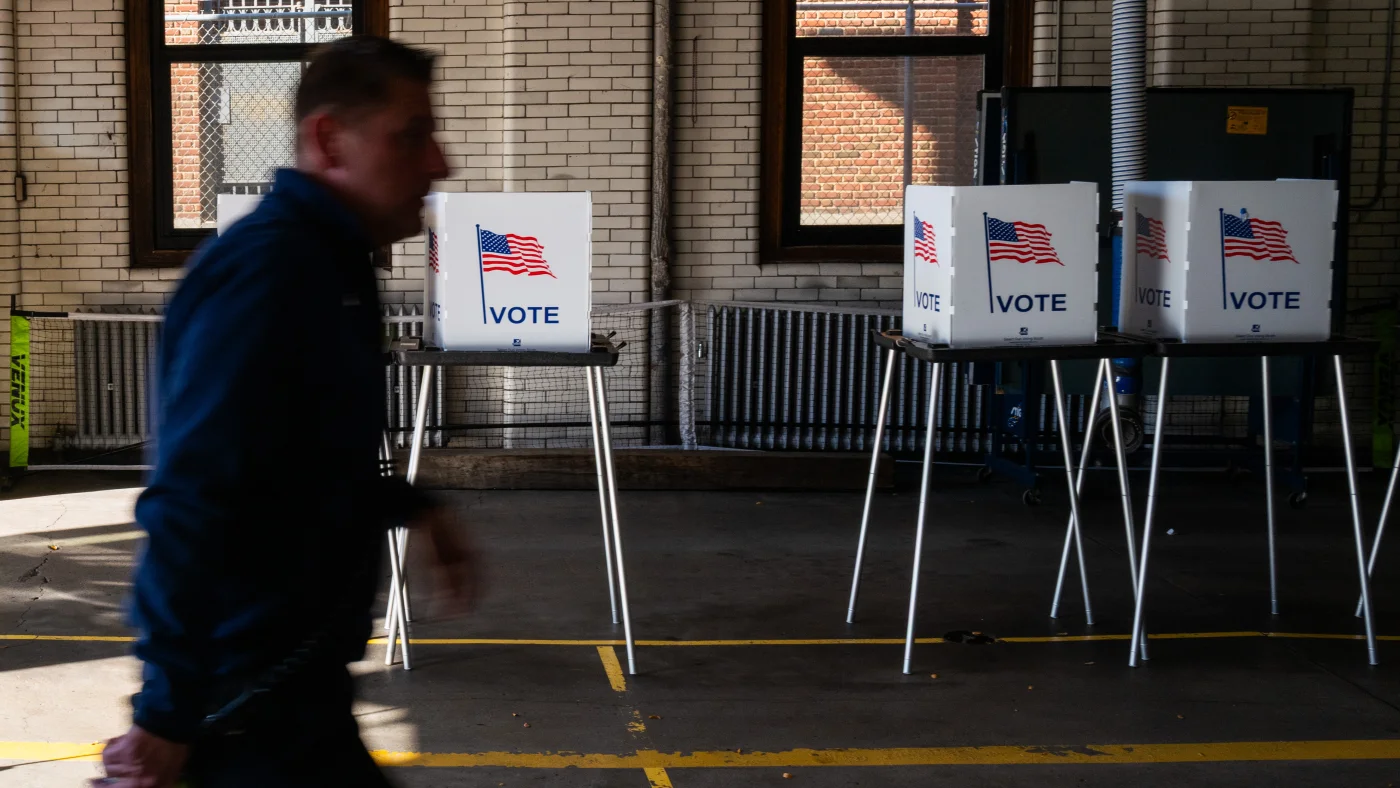
Trump initially accepted the midterm results, but most GOP voters doubt they were fair President Trump may have initially accepted the results of his party's midterm losses, but data released Friday shows there is still broad distrust in the elections process among Republicans. Less than half of Republican voters nationwide considered the midterm elections "free and fair," according to new polling by the University of California San Diego.
" "Until we have the certified results, the individual counties will be the best source of the latest and most up-to-date information," Watson said in a statement.
When it comes to election pressure, this year's Georgia or Michigan could be anywhere
A DOJ spokesperson, Kiersten Pels, told NPR those details will be shared "closer to the election."
But an initial review by local officials suggests the list is "unreliable" and that some people on it had indicated in records they were born in the U.S. and therefore may be citizens.
DOJ charges 28 in California with voting crimes as election tensions escalate The Justice Department announced on Monday it was charging 28 noncitizens with election crimes in California, signaling a further escalation over the state's voting system that looks like it will continue through Election Day and beyond.
"You'd have a limited number of workers, and you'd have a limited amount of space, and you'd be doing everything that you possibly could.
Will that impact turnout?
An internal Department of Homeland Security email raises new questions about the agency's efforts to hunt for non-U.S. citizens who may be on state voter rolls or have cast ballots in the past.
Judges may face unprecedented decisions this election.
Also by Miles Parks
Nothing else under this byline is closely related to this article, so these are simply their most recent.
All 10 articles by Miles Parks →

Topics

Democrats GOP Republicans U.S. UC San Diego's

Subjects

Republicans NORP · 8× Trump PERSON · 8× Democrats NORP · 2× GOP ORG · 2× Kousser PERSON · 2× Republican NORP · 2× U.S. GPE · 2× UC San Diego's ORG · 2× Thad Kousser PERSON · 1× the University of California San Diego ORG · 1×

Narrative

But that post-election increase in trust was buoyed by Democrats and independents — many of whom worried before Election Day about potential federal interference at the polls that didn't come to pass.
framing: assertive · carried by 1 article(s) · first seen 2026-11-21
Trump initially accepted the midterm results, but most GOP voters doubt they were fair President Trump may have initially accepted the results of his party's midterm losses, but data released Friday shows there is still broad distrust in the elections process among Republicans. Less than half of Republican voters nationwide considered the midterm elections "free and fair," according to new polling by the University of California San Diego.

Claims (27 extracted, 5 hedged)

Trump initially accepted the midterm results, but most GOP voters doubt they were fair President Trump may have initially accepted the results of his party's midterm losses, but data released Friday shows there is still broad distrust in the elections process among Republicans. Less than half of Republican voters nationwide considered the midterm elections "free and fair," according to new polling by the University of California San Diego. uncertain
elections → accept → California
Just 52% of Republicans said they trusted votes were counted accurately. asserted
votes → say → Republicans
Loading... In comparison, after the 2024 election that Trump won, more than 80% of Republicans said they had confidence in the vote-counting process. asserted
they → load → process
While trust in elections often dips for voters of the losing party, the GOP has seen bigger swings in confidence in recent years, as Trump has falsely claimed that U.S. elections are corrupt. asserted
elections → dip → years
"There are still a lot of people who remain unconvinced that they can trust elections," said Thad Kousser, a co-director of UC San Diego's Center for Transparent and Trusted Elections. asserted
Kousser → be → Elections
"And they're predominantly located in one [political] party." asserted
they → locate → party
Overall, a wide majority — 66% — of Americans said they think the midterms were fair. asserted
midterms → say → Americans
That represents an improvement from before the election, when less than half of U.S. adults said they expected free and fair contests. asserted
they → represent → contests
But that post-election increase in trust was buoyed by Democrats and independents — many of whom worried before Election Day about potential federal interference at the polls that didn't come to pass. asserted
that → buoy → pass
"It would be a mistake to [look at the 66%] and think, 'Oh, everyone has a pretty good view of the election,'" said Lauren Prather, also a co-director of UC San Diego's election center. asserted
Prather → look → center
"It really buries the lede a little bit about the partisan gap. asserted
It → bury → gap
The widespread doubt among Republicans may be a reality check for those wondering whether Trump's brand of election denial has run its course in American politics. uncertain
brand → wonder → politics
On the one hand, there will be fewer politicians who deny or question election results in office next year. asserted
who → deny → office
And the vast majority of election-denying candidates running for positions involved in overseeing statewide elections lost their races this year, according to tracking by the advocacy group States United Action. uncertain
majority → deny → group
Election experts have also celebrated as Trump and high-profile losing candidates on the ballot this year conceded their losses. asserted
Trump → celebrate → losses
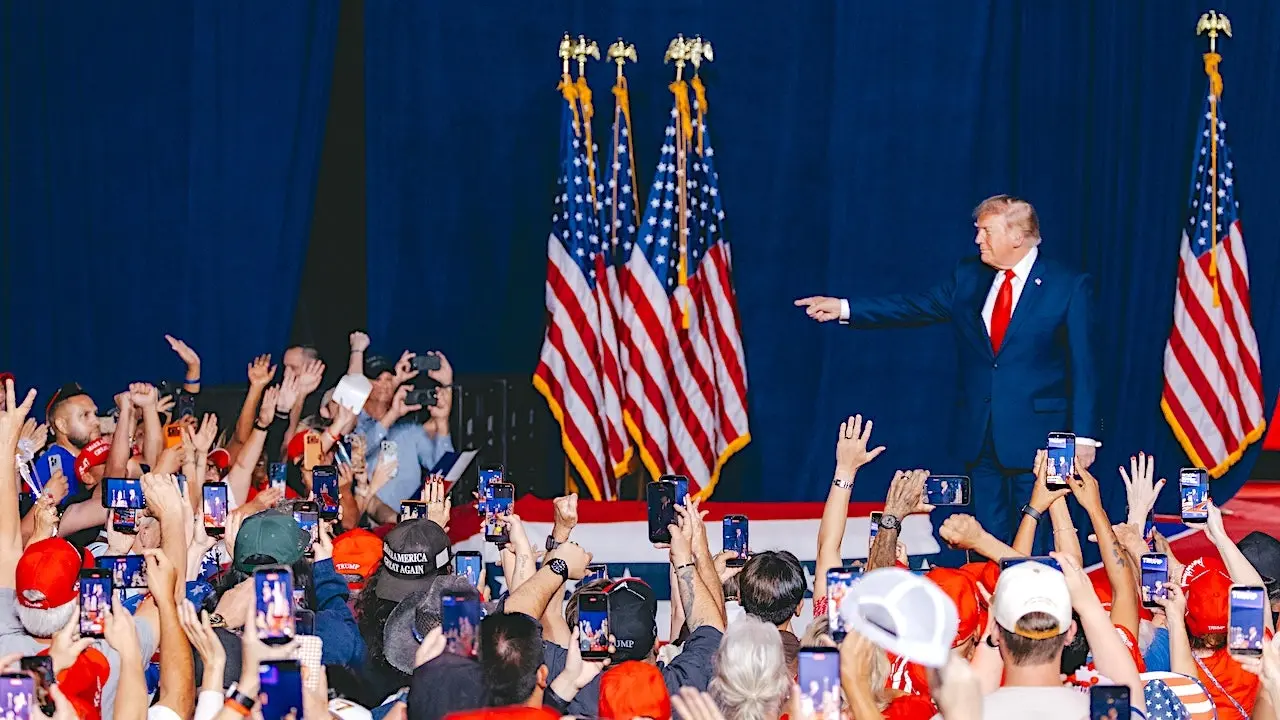
"Sure, I'll accept [the results]," Trump told Fox News' Bret Baier on election night, as it became clear Democrats would retake the House and Senate. asserted
Democrats → accept → House
" But just a few days later, he began conspiracy theorizing about those same results. asserted
he → begin → results
"Does anybody really believe that this 'Election' was honest," Trump posted online. asserted
Trump → believe → ?
The new polling from UC San Diego shows that among Republicans, there still may be a receptive audience to such claims. uncertain
polling → show → claims
When asked if politicians are discussing voter fraud too much, too little or about the right amount, just 15% of Republicans answered "too much." asserted
% → ask → Republicans
"There is both demand among the Republican base for continued focus on this issue, and as we saw even after the election, politicians are continuing to supply it," Kousser said. asserted
Kousser → be → it
"As long as those two dynamics are there, there's still going to be a market for these concerns." asserted
dynamics → be → concerns
To be clear, in most elections — domestically and internationally — supporters of the losing party usually see a dip in trust. asserted
supporters → lose → trust
"It's sort of like asking people after an overtime basketball game, do you trust the referees?" Kousser said. asserted
Kousser → ask → referees
But in an ideal world, he said that oscillation would be more like 10 percentage points in either direction. asserted
oscillation → say → direction
The numbers do still represent an improvement from 2020, however. asserted
numbers → represent → 2020
At that time, leading up to the Jan. 6 riot at the U.S. Capitol in 2021, just 22% of Republicans said they had confidence in the nationwide vote count, according to similar polling done by MIT's Election Data and Science Lab. uncertain
they → lead → Lab

Give feedback · no sign-in needed

No sign-in needed for now. Your note is sent without a name, so it cannot be answered.

History Support