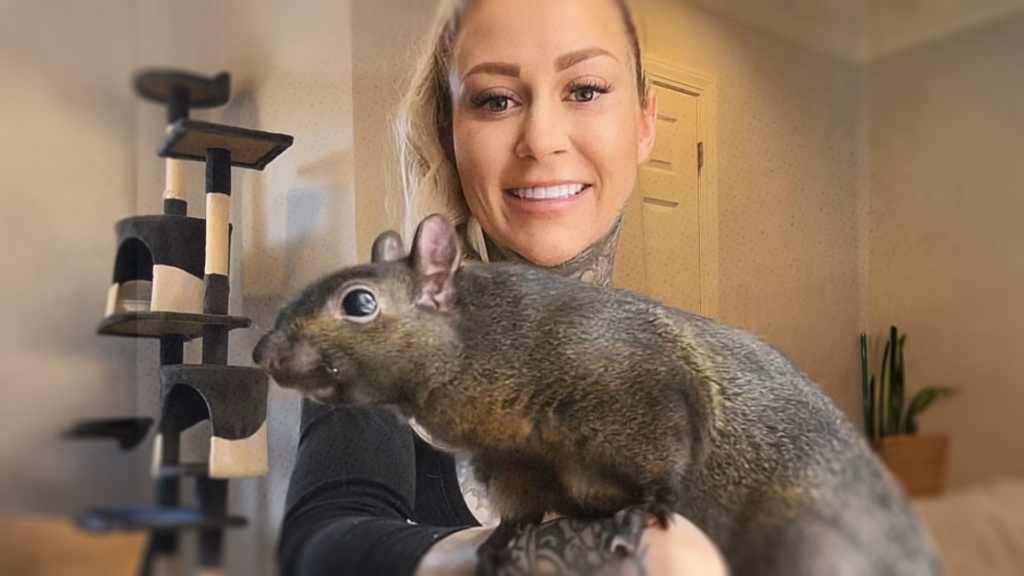
A mother who became a convicted criminal and landed on a state child abuse registry for letting her son go on a short walk has been admitted to the Virginia bar.
asserted
son → become → bar
It was an open question whether Karyann Parkinson, whose story was first reported by Lenore Skenazy in Reason, would be prohibited from practicing law after her conviction for delinquency of a minor, which intersected closely with her law school graduation.
asserted
which → report → graduation
Gaining admission, after all, requires passing a rigorous character and fitness test.
asserted
Gaining → gain → test
What does that say?
asserted
that → say → What
In June, Parkinson said her 5-year-old son, Sam, could go to the community pond in their gated community, located in Williamsburg, Virginia, to collect goose feathers.
uncertain
son → say → feathers
"It's a short walk, along a sidewalk separated from the street by 10 feet of grass," Skenazy wrote in September.
asserted
Skenazy → separate → September
"Sam would have to cross two streets with crosswalks, which [Parkinson had] seen him do safely hundreds of times—including six times that morning, she says.
asserted
she → have → times
Off he went while she made lunch."
asserted
she → go → lunch
A passerby alerted security, which led to a guard, three police officers, and two Child Protective Services (CPS) workers coming to the home.
asserted
guard → alert → home
That muscular response ultimately resulted in Parkinson facing the delinquency of a minor charge, along with CPS placing her on the Virginia Child Abuse and Neglect Central Registry for the next seven years.
asserted
CPS → result → years
The Williamsburg Commonwealth's Attorney, whose office did not respond to a request for comment, prosecuted the criminal case.
asserted
office → respond → case
Judge Brian J. Smalls convicted Parkinson of the first-degree misdemeanor in August and imposed a six-month suspended jail sentence.
asserted
Smalls → convict → sentence
"The judge, in my view, did not apply the law properly," says Jonathan Adler, a professor of law at William and Mary, where Parkinson attended law school.
asserted
Parkinson → apply → school
"The fact that the bar reached that conclusion, I view it as reinforcing my assessment of the case…
asserted
I → reach → case
.I have believed from the beginning that Karyann was prosecuted because she was not cooperative, because she didn't effectively waive her rights, didn't confess error or show sufficient gratitude or deference to the police and CPS.
asserted
she → believe → police
Everything I saw at trial was entirely consistent with that."
asserted
I → see → that
The law at issue is S.B. 1367, the so-called reasonable childhood independence legislation, which both chambers of the Virginia Legislature passed unanimously in 2023.
asserted
chambers → call → 2023
Under the statute, a child should not be considered "abused or neglected" for engaging in independent activities without adult supervision, so long as those activities "are appropriate based on the child's age, maturity, and physical and mental abilities" and the lack of supervision is not "so grossly negligent as to endanger the health or safety of the child."
asserted
lack → consider → child
The independent activities specified in the text include "traveling to or from school or nearby locations by bicycle or on foot, playing outdoors, or remaining at home for a reasonable period of time."
asserted
activities → specify → time
That statute would appear tailor-made to exonerate Parkinson.
asserted
statute → appear → Parkinson
But the drama becomes a little less nightmare and a little more Twilight Zone when you consider the bill's author: former Virginia state Sen. Jill Vogel (R–Winchester), an attorney who now runs her own private practice, where Parkinson had worked the previous summer and where she was set to return after graduation.
asserted
she → become → graduation
"I could not have imagined that you could have something that's quite this much of a full-circle moment as I'm having right now," says Vogel.
uncertain
Vogel → imagine → moment
"[Parkinson] calls me to say, 'I'm starting my job, and this has just happened to me in Williamsburg, and I was prosecuted under your statute.'
asserted
I → call → statute
I was flabbergasted.
asserted
I → flabbergast → ?
Did that make sense to the law's architect?
asserted
that → make → architect
"This is exactly the kind of case where the goal was that this statute would apply in a way that would recognize the opportunity for the child to be evaluated and for someone to conclude that that was safe," Vogel tells me.
asserted
Vogel → apply → me
"It would seem to me that it's also the case that other careful people evaluating the qualifications of Karyann as a lawyer did not have any doubts about her character and fitness.
asserted
people → seem → character
I don't believe that they concluded that she is somebody who is endangering children."
asserted
who → believe → children
The disparity in outcomes is mirrored, at least in part, by a disparity in process.
asserted
disparity → mirror → process
Parkinson's trial was decided by a Virginia juvenile court judge, without a jury.
asserted
trial → decide → jury
Her placement on the child abuse registry, meanwhile, was determined solely by an administrative process.
asserted
placement → determine → process
Parkinson says she landed there without CPS interviewing her or her son.
asserted
CPS → say → her
The panel initially put Parkinson's application on hold pending the outcome of her trial.
asserted
panel → put → trial
Following the proceedings, it evaluated testimony from William and Mary's law school dean, among other professors, and concluded Parkinson had the requisite moral integrity, a trait not typically associated with child abusers.
asserted
Parkinson → follow → abusers
"The irony here is that we give greater deference to a person's ability to practice law and earn a living than we do to the constitutional right to direct the care and upbringing of one's children.
asserted
we → give → children
It was easier for the state of Virginia to bring criminal charges, administrative consequences, and the continued surveillance of social services than it was for them to curtail my opportunity to practice law," Parkinson tells me.
asserted
Parkinson → bring → me
Yet my privileges received more protection than my rights, to say nothing of Sam's."
asserted
privileges → receive → Sam
 The Aporia