With huge changes looming in Congress, the fate of a controversial warrantless surveillance law underlying many of former National Security Agency contractor Edward Snowden’s disclosures is up for debate.
asserted
fate → loom → debate
And, instead of waiting for an influx of progressives in the next Congress to shake up the conversation, establishment Democrats are pushing to renew the law before the Republican-dominated Senate and House flip over.
asserted
Senate → wait → law
The might, however, run into the same foes who have held up the renewal of Section 702 of the Foreign Intelligence Surveillance Act — chief among them Sen. Ron Wyden, D-Ore.
Wyden and other privacy advocates said they are opposed to passing the law during the lame-duck period without major reforms.
uncertain
they → run → reforms
One long-sought-after goal is a warrant requirement.
asserted
goal → seek → ?
Wyden told The Intercept this week that he has never felt so close to achieving real reform.
asserted
he → tell → reform
“I would very much like to see a FISA program that would ensure both liberty and security,” Wyden said.
asserted
Wyden → like → liberty
I think we’ve now got a huge following on both sides of the aisle.”
asserted
we → think → aisle
The surveillance law has long sparked complicated maneuvering in Congress, where the warrant question scrambles traditional partisan divides.
asserted
question → spark → divides
The law, which allows the NSA to collect communications of Americans made from or to recipients abroad, expired in June.
asserted
NSA → allow → June
Existing court orders, however, meant that the NSA and other agencies can continue to collect reams of intelligence from foreign communications until March 17, 2027.
asserted
NSA → exist → March
President Donald Trump inflamed the debate over renewal this spring by tapping a loyalist mortgage official, Bill Pulte, to briefly lead the Office of the Director of National Intelligence.
asserted
Trump → inflame → Intelligence
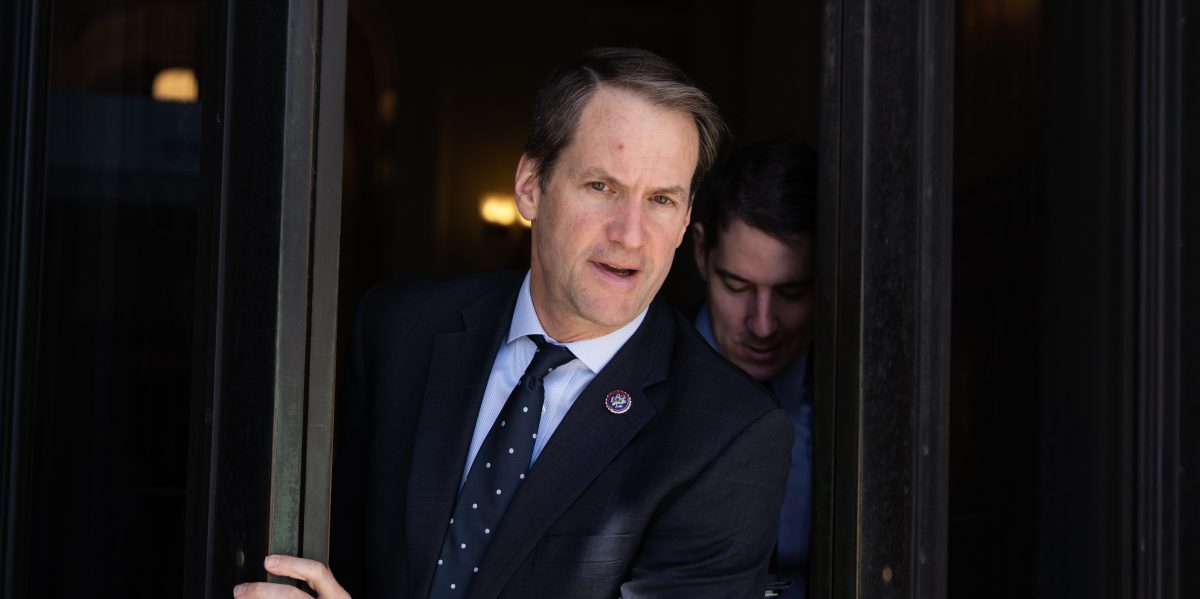
Top Democratic members on the House and Senate intelligence committees, Rep. Jim Himes of Connecticut and Sen. Mark Warner of Virginia, want a renewal this year.
asserted
members → want → renewal
Warner acknowledged in comments to reporters this week that the only way the controversial law can pass is if it’s tacked on to a larger piece of “must-pass” legislation.
asserted
it → acknowledge → legislation
“We need FISA,” he said.
asserted
he → need → FISA
“I think the only way to get it done is if it gets attached to something, at this point.
asserted
it → think → point
But none of this gets easier in a new Congress.”
asserted
none → get → Congress
to replace the current government funding law, which expires December 11
asserted
which → replace → law
Both bills will already involve fraught negotiations over funding for the Iran war.
asserted
bills → involve → war
The ranking Democrat on the House Armed Services Committee told Punchbowl News that he opposes adding FISA to the defense law.
asserted
he → tell → law
Senate Judiciary Committee ranking member Dick Durbin, D-Ill., told The Intercept that he is doubtful a renewal can pass this year.
asserted
renewal → tell → Intercept
“I don’t think that’s realistic,” said Durbin, whose committee has dual jurisdiction over the law.
asserted
committee → think → law
“I think it’s time to sit down and make some meaningful changes to FISA.”
asserted
it → think → FISA
The Democrats joining Trump loyalists in favor of renewal before a new Congress is sworn in were bolstered by testimony from Director of National Intelligence Jay Clayton at a Tuesday hearing.
asserted
Congress → join → hearing
Clayton, who said the lapse of the authorization hadn’t caused a substantial decline in the number of foreign communications collected, argued that the law needs to be renewed soon to prevent internet communication companies from refusing to comply with the law.
asserted
law → say → law
The push from Democrats such as Himes and Warner has outraged progressive groups who favor adding a warrant requirement.
asserted
who → outrage → requirement
They argue that voting on the law now before the next Congress would represent a betrayal of the voters.
asserted
voting → argue → voters
“Even with the rejection of the status quo that we saw at the ballot box earlier this month, the leadership, possibly of both parties, seem to be pulling the same tactics, possibly leaving members with a ‘take it or leave it’ proposition,” said Hajar Hammado, a senior policy adviser at the group Demand Progress.
uncertain
Hammado → see → group
Senate Minority Leader Chuck Schumer, D-N.Y., and House Minority Leader Hakeem Jeffries, D-N.Y., have not said whether they support passing a renewal of the law this year.
asserted
they → say → law
Jeffries said Tuesday that there were open discussions between Himes and House Judiciary Committee ranking member Jamie Raskin, who favors stricter limits on the spying program.
asserted
who → say → program
One representative-elect who campaigned on reform, Brad Lander, told The Intercept last week that he is agnostic on the timing of FISA renewal — as long as a warrant requirement is included.
asserted
requirement → campaign → renewal
“We should add a warrant requirement,” Lander said.
asserted
Lander → add → requirement
“If that can happen now, great, but if it’s not going to happen now, we should wait and do it in the new Congress.”
asserted
we → happen → Congress
Latest Stories
Sean Duffy’s FAA Fiasco
Aviation journalist Jeff Wise breaks down some misconceptions about air traffic control while the nation waits for answers on the ground stop.
asserted
nation → break → stop
Voices
Elon Musk Thinks You’re an Idiot
The man with a custom dark MAGA hat rebrands: “I’m not sure what MAGA means.”
asserted
MAGA → think → what
Just Rinse It Off, Army Says Before Blowing Up Five Tons of Lead Compound
The Army appears to be winging its detonation of unstable lead azide at its Iowa ammunition plant.
asserted
Army → rinse → plant
 The Aporia