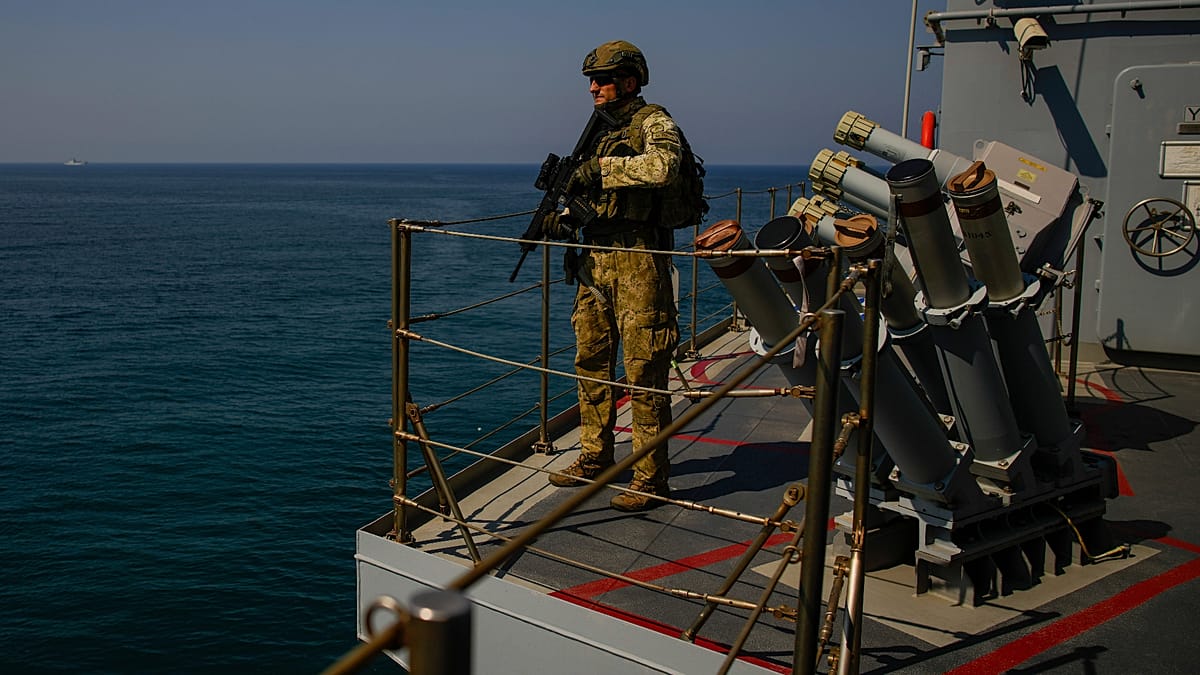
Photo via Euronews

217-day underwater patrol of UK's nuclear submarine HMS Vengeance worries experts

Read the original at Euronews ↗
Cite

Uren, C. (2026, November 20). 217-day underwater patrol of UK's nuclear submarine HMS Vengeance worries experts. Euronews. https://www.euronews.com/2026/11/20/217-day-underwater-patrol-of-uks-nuclear-submarine-hms-vengeance-worries-experts

Dated from the outlet's own feed. Check the original for its byline.

Euronews · collected 2026-11-20 · by Cagla Uren

Quick Summary

HMS Vengeance, a UK nuclear submarine, has completed a 217-day mission, surpassing the previous record of 205 days set by another submarine. This extended deployment is viewed by experts as a sign of maintenance issues rather than strength, with the original design of the Vanguard class submarines intended for missions of three to four months. The extended periods at sea impose significant psychological and logistical challenges on the crew, who remain isolated and without contact for long durations.
Written by AI on 2026-11-22, from this article's own text only (the story summary below draws on all the coverage).
See how they differ ↓

AI analysis

Story summary

On November 15, 2026, HMS Vengeance, a Trident nuclear submarine, returned to Faslane naval base in Scotland after a record-breaking 217-day underwater deployment, surpassing the previous 205-day record. The submarine left on April 12, 2026, and its crew of 140 sailors were greeted by senior government officials, including Defence Secretary Wes Streeting. The submarine's extended patrol has raised concerns about the physical and mental health impacts on the crew, as well as the reliability of aging submarines. Defence Secretary Streeting emphasized that Britain's nuclear deterrent is "unwavering" and not up for negotiation with Russia, despite Moscow's demands for concessions in its war in Ukraine. The submarine's return highlights the strain on both the sailors and the maintenance capabilities of the Royal Navy's submarine fleet.

Written for “British Trident Submarine Returns Home” on 2026-11-22, grounded in this article and the 6 other(s) covering the same event.

How they differ

4 outlets covered “British Trident Submarine Returns Home”.

What each outlet says

One AI summary per outlet of its latest article on this story, written from that article alone and checked against it. Open the article for the outlet's own words.

EuronewsThis outlet20 Nov

HMS Vengeance, a UK nuclear submarine, has completed a 217-day mission, surpassing the previous record of 205 days set by another submarine. This extended deployment is viewed by experts as a sign of maintenance issues rather than strength, with the original design of the Vanguard class submarines intended for missions of three to four months. The extended periods at sea impose significant psychological and…

217-day underwater patrol of UK's nuclear submarine HMS Vengeance worries experts (this article)
Daily Mail17 Nov

Peter Hitchens criticizes the British government's handling of the return of the aging nuclear submarine HMS Vengeance, which spent a record 217 days at sea before docking at Faslane. Hitchens argues that the long deployment highlights the deteriorating state of Britain's nuclear submarine fleet and the strain on its crew, while Defence Secretary Wes Streeting attempts to frame the event as a triumph of resilience…

Terrible truth about Britain's nuclear submarines, by PETER HITCHENS: There's bad news in three grim dimensions... even if they're trying to hide it →4 articles from Daily Mail on this story
The Guardian15 Nov

A Trident nuclear submarine, HMS Vengeance, has completed a record-breaking seven-month underwater deployment, surpassing the previous 205-day record. The submarine returned to Faslane naval base in Scotland, where it was greeted by government officials. This extended deployment raises concerns about the psychological and physical strain on the crew and the reliability of aging submarines. The increase in patrol…

Trident nuclear submarine concludes record underwater deployment →
BBC15 Nov

A Royal Navy submarine, HMS Vengeance, has returned to its base after a record-breaking 217-day patrol, the longest deployment for a British vessel. The submarine, which carries Trident nuclear missiles, departed from Faslane on April 12 and was welcomed back by Defence Secretary Wes Streeting. The crew faced extended isolation and challenging conditions, with some crew members visible on deck as the submarine…

Trident submarine returns home after record-breaking undersea patrol →

Compared with similar articles

This article reads unscored and hedges 12% of its claims. Each row says how that neighbour differs.
BBC News
Hedges 6 of 26 claims Outlet record 65/100

Story

British Trident Submarine Returns Home
Politics · 7 article(s) covering the same event. See how they differ ↑
How this article was measured signals, leaning charts, publisher record, byline, topics and claims

Signals How these are calculated →

Claims extracted
33
sentences that state something as happening or true
Uncertain
12%
4 of 33 hedged ("reportedly", "may", "according to")
Leaning
not political
takes no side on a contested political question
Publisher signals
60/100
Euronews's corrections and hedging, across everything collected from it. Not a measure of accuracy.
Outlets on this story
7
Politics
Same framing elsewhere
1
articles that frame the event the way this one does
Analyzed 2026-11-22 · how these are computed

How this is being covered How these are calculated →

Article leaning vs. publisher reliability
Source leaning vs. consistency

Publisher

Euronews · 1570 article(s) · 1 correction(s) detected
Running correction rate · 1 correction(s)

Who wrote this

Cagla Uren
3 article(s) here · 1 carrying a prediction
The aim of this strategy is to ensure that even if Britain's other military infrastructure were badly damaged in a major attack, the country could still respond with nuclear weapons from the sea. However, submarines in the fleet spending long periods in maintenance increases the burden on the boats that are able to deploy.
Turkey and Pakistan will undertake a "rapid deployment" of troops to Saudi Arabia as part of a new mutual defence alliance, the three countries said Monday, as the Gulf kingdom faces escalating attacks from Yemen's Houthis.
Bailiffs boarded the Caspian Airlines Boeing 737 as passengers sat ready for departure and served a €3 million debt order before it could take off.
Also by Cagla Uren
Nothing else under this byline is closely related to this article, so these are simply their most recent.

Topics

Britain HMS Vengeance The Royal Navy's Vanguard Vanguard class

Subjects

Britain GPE · 4× The Royal Navy's ORG · 4× Cullen PERSON · 1× David Cullen PERSON · 1× Scotland GPE · 1× The Guardian ORG · 1× the Royal Navy ORG · 1×

Narrative

The submarine has beaten the 205 day record for a deployment set by HMS Vanguard in April. However, these two back to back records are seen less as a display of the Royal Navy's strength and more as a sign of problems within the nuclear submarine fleet.
framing: assertive · carried by 1 article(s) · first seen 2026-11-22
The aim of this strategy is to ensure that even if Britain's other military infrastructure were badly damaged in a major attack, the country could still respond with nuclear weapons from the sea. However, submarines in the fleet spending long periods in maintenance increases the burden on the boats that are able to deploy.

Claims (33 extracted, 4 hedged)

The Royal Navy's HMS Vengeance nuclear submarine has set a new record by completing a 217-day mission. asserted
submarine → set → mission
For about seven months, the crew had almost no contact with the outside world. asserted
crew → have → world
HMS Vengeance, one of the Royal Navy's nuclear armed submarines, has returned to Scotland after completing a 217 day deployment. asserted
Vengeance → return → deployment
The submarine has beaten the 205 day record for a deployment set by HMS Vanguard in April. However, these two back to back records are seen less as a display of the Royal Navy's strength and more as a sign of problems within the nuclear submarine fleet. asserted
records → beat → fleet
According to experts, the steadily lengthening deployments are linked to delays in completing maintenance on ageing submarines and to the heavy psychological pressure on personnel. uncertain
deployments → accord → personnel
Designed for three month missions, now staying underwater for seven Nuclear submarine specialist David Cullen told UK daily The Guardian on 15 November that Vanguard class submarines were originally designed for missions of roughly three months. asserted
submarines → design → months
Cullen added that even that time span was seen as a long time to remain "underwater in a metal box with no contact to the outside world". asserted
span → add → world
Vanguard class submarines, which carry a crew of about 140, initially undertook missions lasting three to four months. asserted
which → carry → missions
In the past even 100 day deployments were rare, whereas today some patrols are said to last more than twice that. asserted
patrols → say → past
Longer missions mean that already cramped submarines have to carry larger quantities of food and other supplies. asserted
submarines → mean → food
The crew have to live for months alongside extra provisions stored in passageways and any other usable space. asserted
crew → have → passageways
The UK government links the extended deployments to budget cuts, which it says have slowed submarine maintenance work. asserted
which → link → work
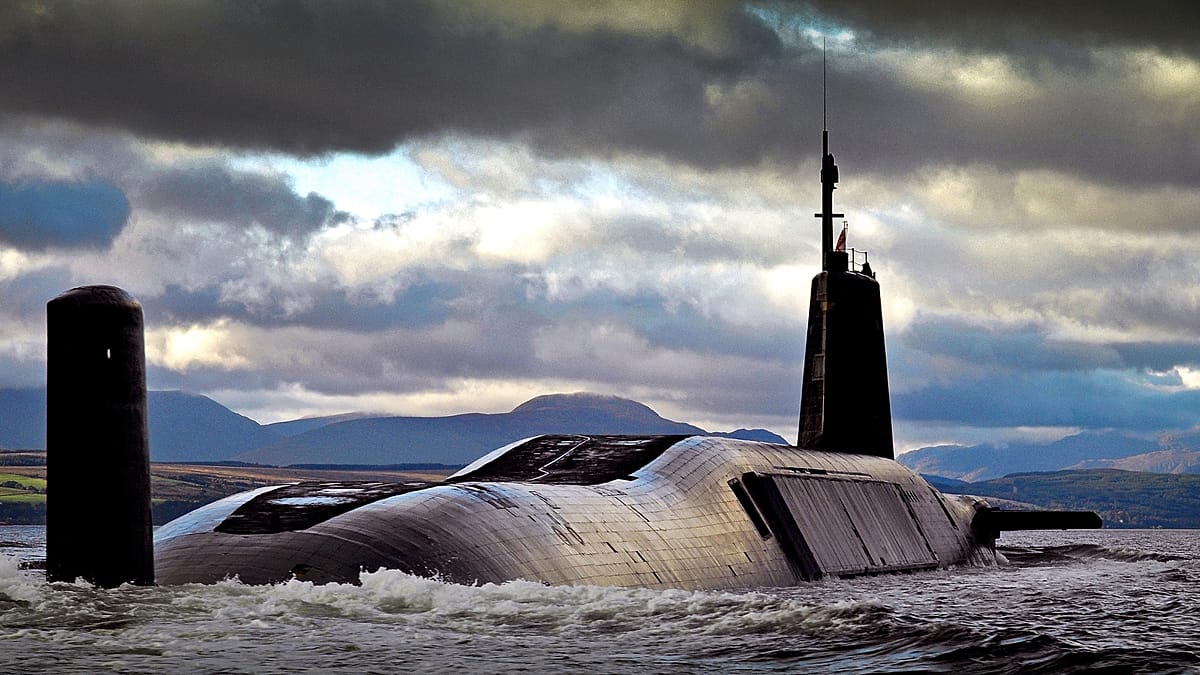
Launched in 1998, HMS Vengeance is one of Britain's four Vanguard class nuclear submarines. asserted
Vengeance → launch → submarines
Approximately 150 metres long and weighing 17,526 tonnes, the submarine was designed to carry Trident ballistic missiles. asserted
submarine → weigh → missiles
Trident missiles can carry several nuclear warheads that can be directed at separate, independent targets. asserted
that → carry → targets
This technology is known "multiple independently targetable re-entry vehicle" (MIRV). asserted
technology → know → ?
Vanguard class submarines sit at the centre of Britain's nuclear deterrence strategy. asserted
submarines → sit → strategy
The aim of this strategy is to ensure that even if Britain's other military infrastructure were badly damaged in a major attack, the country could still respond with nuclear weapons from the sea. However, submarines in the fleet spending long periods in maintenance increases the burden on the boats that are able to deploy. uncertain
that → ensure → boats
Crew cannot speak to their families for months Serving on nuclear submarines is regarded as one of the most psychologically demanding duties in the Royal Navy. asserted
Serving → speak → Navy
Ballistic missile submarines such as HMS Vengeance spend most of their deployments submerged and in radio silence to avoid their position being detected. asserted
position → spend → silence
Although submarines can, when necessary, move to shallower depths and communicate via special antennas, contact between the crew and the outside world is extremely limited. asserted
contact → move → crew
Sailors can receive messages from their families once a week, of no more than 120 words, known as "Familygrams". asserted
Sailors → receive → Familygrams
However, these messages are examined by navy officials before being passed to the crew. asserted
messages → examine → crew
Officials can censor bad news or sensitive information that they think could harm personnel's performance on duty. uncertain
they → censor → duty
On top of that, sailors are not allowed to reply to messages from their families. asserted
sailors → allow → families
As a result, crew members may remain unaware for months of major developments in their families, or be unable to respond to the news they do receive. uncertain
they → remain → news
Harassment faced by women sailors also in the spotlight Working conditions in Britain's submarine fleet have in recent years also been in the news over allegations of harassment and discrimination against female personnel. asserted
conditions → face → personnel
In 2022 Sophie Brook, one of the Royal Navy's first female submarine crew, said that she had been subjected to constant sexual bullying during her time in service. asserted
she → say → service
After Brook's account, other women in the service shared similar experiences with the public. asserted
women → share → public
In 2024 the then head of the Royal Navy, Admiral Sir Ben Key, apologised, describing misogyny in submarine service as intolerable. asserted
head → apologise → service
HMS Vengeance's record mission has also heightened concerns about the future of Britain's nuclear submarine fleet. asserted
mission → heighten → fleet
Vanguard class submarines were originally designed for a service life of around 25 years. However, delays in bringing the new generation of submarines into service mean that the existing boats are expected to operate for about 40 years. asserted
boats → design → years
The first submarine of the new Dreadnought class, HMS Dreadnought, is expected to enter service around 2032. asserted
submarine → expect → 2032
Give feedback · no sign-in needed

No sign-in needed for now. Your note is sent without a name, so it cannot be answered.

History Support