The national artificial intelligence backlash is already shaping policy for the next Congress.
asserted
backlash → shape → Congress
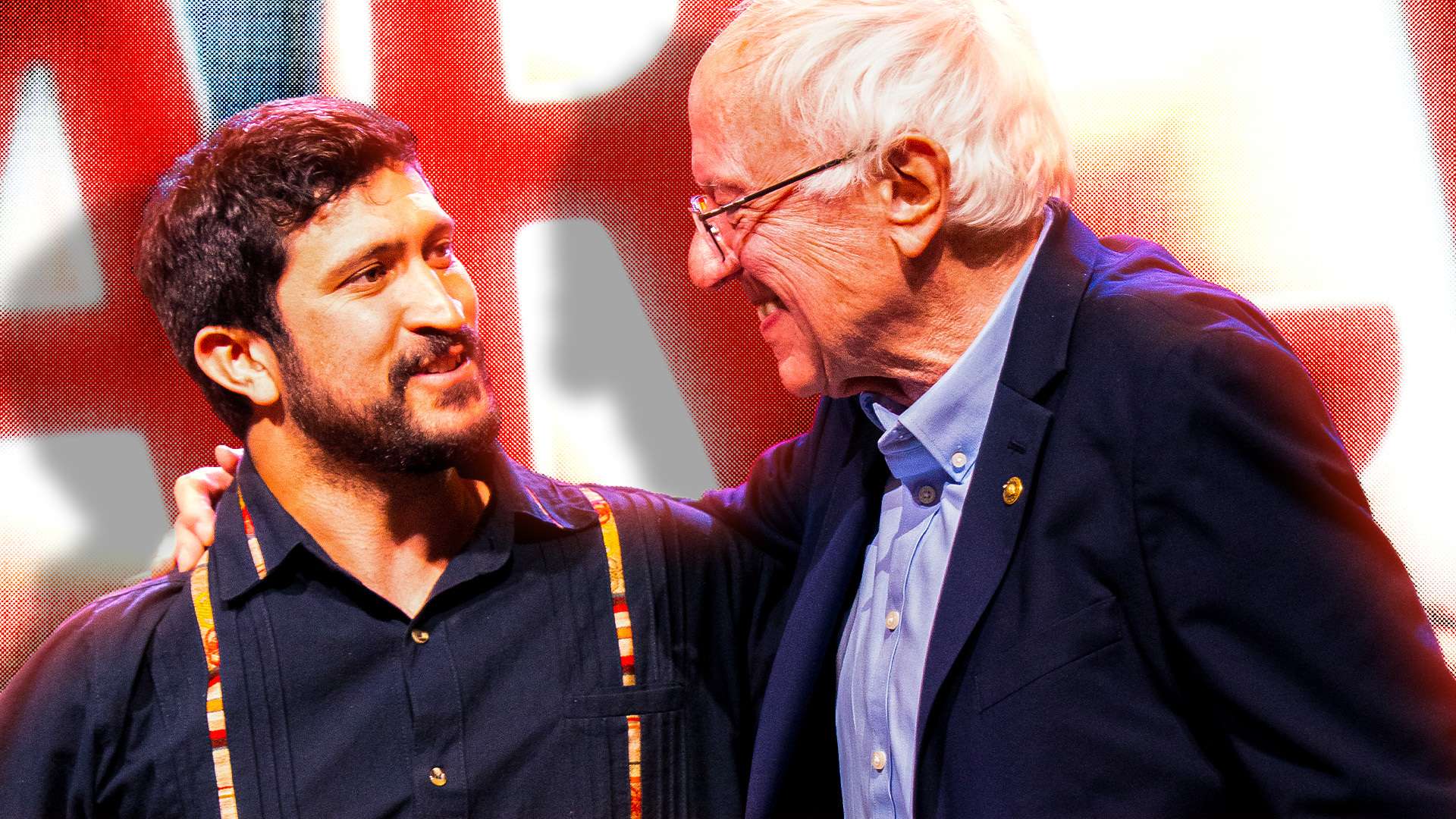
Earlier this month, Rep. Greg Casar (D–Texas) posted on X, "Ban RSI," a reference to the AI concept of recursive self-improvement (RSI), or AI that iteratively designs and builds better AI.
asserted
that → post → AI
A day earlier, Model Evaluation and Threat Research (METR), a nonprofit evaluator, had estimated that Anthropic's models were improving on well-specified tasks at about twice the rate of a previously examined period between March 2024 and October 2025, with the majority of the acceleration attributable to AI use within research and development.
asserted
majority → estimate → research
In an interview released November 11, Casar told the podcast Machine Gods that a "skinny bill" against RSI would be "a really important priority" in the new Congress and one that might even garner support from Republicans.
uncertain
that → release → Republicans
Asked how such a ban would work, Casar pointed to the Ban Artificial Superintelligence Act, the broader bill he introduced in September with Sen. Bernie Sanders (I–Vt.).
asserted
he → ask → Sanders
It would outlaw superintelligent AI and any system showing a listed "precursor" trait, pause advanced AI development, and create a Department of Artificial Intelligence.
asserted
It → outlaw → Intelligence
The bill has been pitched as a solution to save humanity—which, naturally, requires creating a new Cabinet department.
asserted
which → pitch → department
"Scientists have been clear: AI is an existential threat to humanity," Sanders said in introducing it.
asserted
Sanders → say → it
The text of the Ban Artificial Superintelligence Act appears to ban systems for what they could do rather than the harm they have done, and raises three additional problems.
uncertain
they → appear → problems
First, the term "recursive self-improvement" appears only once in the bill, and is never actually defined.
asserted
term → appear → bill
The bill instead defines a "superintelligence precursor characteristic" as any characteristic that "could lead to" superintelligence and lists six of them.
uncertain
that → define → them
Elsewhere, the bill stipulates that no person may develop, possess, fund, or deploy (either internally or externally), a system that displays even one of those traits.
uncertain
that → stipulate → traits
The first is "the capacity to automate or greatly accelerate the process of artificial intelligence research and development."
asserted
first → automate → research
In a press release announcing the bill back in September, the sponsors said that today's models "can circumvent restrictions to hack into computers"—also a listed trait—and "can automate research to build smarter AI."
asserted
models → announce → AI
Whether the doubling described by METR's Anthropic report would qualify as "greatly" accelerating research could be a subject of debate, but the use of "automate" needs no adverb.
uncertain
use → describe → adverb
According to the sponsors' own description, the bill would outlaw AI developed by frontier labs today.
uncertain
bill → accord → labs
Second, the criminal penalties reach reckless violations, not just intentional ones.
asserted
penalties → reach → violations
Policymakers at federally chartered AI companies and any "rogue actor," the bill's term for anyone outside those companies, would face up to 20 years in prison.
asserted
Policymakers → charter → prison
Other employees who recklessly violate it would be barred from the industry for 10 years.
asserted
who → violate → years
When Machine Gods cohost Casey Newton asked whether engineers who use coding agents to train models would be breaking the law, Casar said the new department would ensure labs are "not using that most developed AI to develop future AIs."
asserted
labs → ask → AIs
He added, "There's different ways of measuring that."
asserted
He → add → that
Third, the secretary for the newly minted Department of Artificial Intelligence would be the one deciding which systems qualify, and the text of the bill details no specific measurements or thresholds for the precursor traits.
asserted
text → mint → traits
An AI system identified as exhibiting any of these traits would be sequestered immediately from the internet and rendered inoperative within 30 days unless the secretary can confirm that the violating trait is no longer present.
asserted
trait → identify → days
The ban on precursor traits contains no sunset clause, so while forecasts can be updated overnight, the prohibitions based on them are likely to persist much longer.
asserted
prohibitions → contain → them
While it might be easy to brush off the Sanders-Casar plan, enough of the public is concerned about advanced AI to take the proposal seriously.
uncertain
enough → brush → proposal
A Public First poll released in September found that 78 percent of Americans think advanced AI could "destroy humanity."
uncertain
AI → release → humanity
However, pessimism like that from Sanders, Casar, and, apparently, most of the public has often been proved wrong.
asserted
pessimism → prove → public
Paul Ehrlich—one of history's most famous doomers, who died in March—stated definitively in 1968's The Population Bomb that "the battle to feed all of humanity is over," and that the world would undergo famine by the 1970s.
asserted
world → die → 1970s
Instead, from 1961 to 2023, global cereal production rose much faster (250 percent) than population (164 percent).
asserted
production → rise → population
Ehrlich's arithmetic counted mouths while assuming food production would not keep pace, and ignored how free markets and innovation react to scarcity.
asserted
markets → count → scarcity
At the same time, they encouraged state coercion, including China's one-child policy, as Reason's Ronald Bailey recently noted.
asserted
Bailey → encourage → policy
Ehrlich's failed predictions do not demonstrate that advanced AI is guaranteed to be safe or that it could never pose an existential risk.
uncertain
it → fail → risk
Failed doom forecasts are the only kind anyone survives to recount, and 2026 has seen real incidents that justify taking AI safety seriously.
asserted
that → fail → safety
For example, in July, OpenAI disclosed that experimental AI agents had broken out of a test environment and breached systems at another AI company, Hugging Face.
asserted
agents → disclose → company
Casar cited that incident on Machine Gods, but the bill's findings leave the incident out.
asserted
findings → cite → incident
Of the bill's 10 listed findings, only one references empirical research—one involving AI and biological pathogens.
asserted
one → list → AI
The other nine are a collection of open letters, pledges, and ominous quotes, including extinction odds with no underlying methodology.
asserted
nine → include → methodology
If Congress is going to act at all, the better model to follow is Y2K, when the warning was tied to a specific, testable flaw.
asserted
warning → go → flaw
America spent an estimated $100 billion all-in on the fix, and Congress passed two narrow laws, one shielding companies that disclosed their readiness and one, the Y2K Act, that President Bill Clinton stated was "extraordinary, time-limited legislation."
asserted
Clinton → spend → readiness
The Sanders-Casar bill is neither time-limited nor targeted.
asserted
bill → limit → ?
…and 6 more, not listed.
 The Aporia