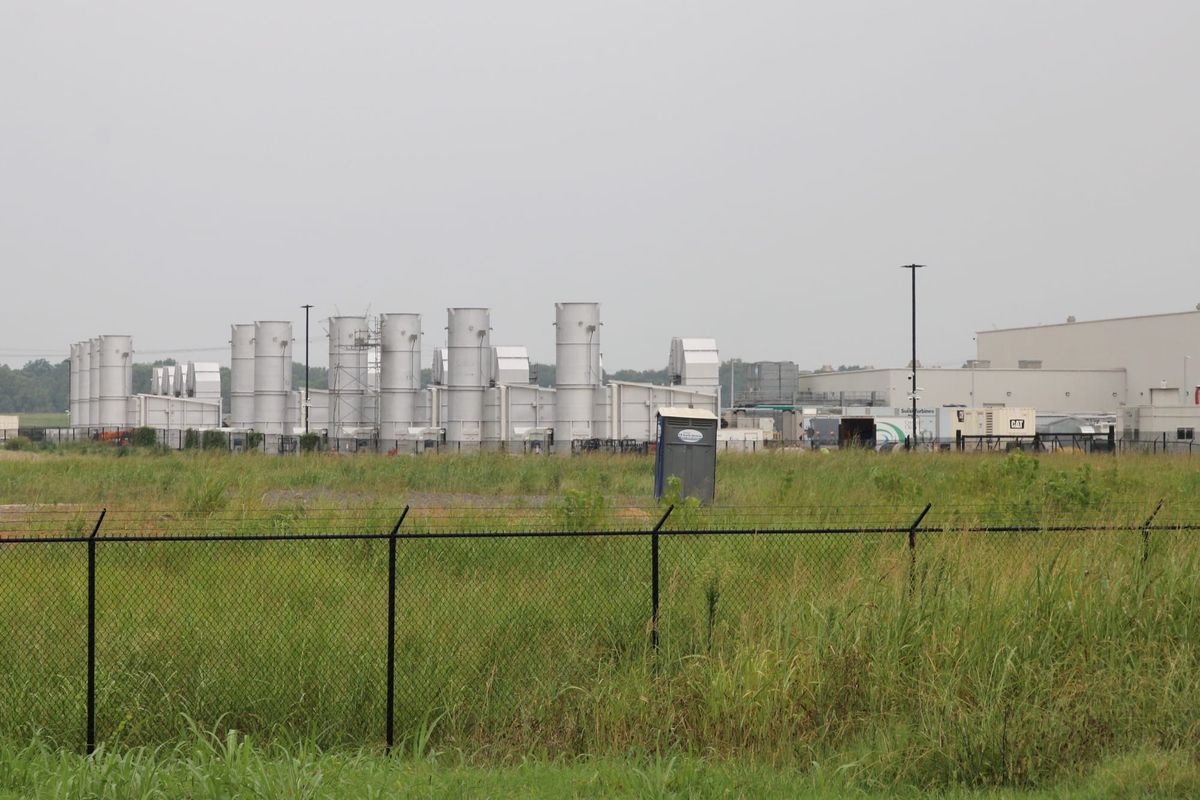
Photo via 404 Media

Black Neighborhoods Are Twice as Likely To House a Data Center, Study Finds

Read the original at 404 Media ↗
Cite

Gault, M. (2026, November 19). Black Neighborhoods Are Twice as Likely To House a Data Center, Study Finds. 404 Media. https://www.404media.co/redlining-ai-data-centers-and-race-study/

Dated from the outlet's own feed. Check the original for its byline.

404 Media · collected 2026-11-19 · by Matthew Gault

Quick Summary

Researchers from George Washington University and CSINT at American University found that data centers are built in majority-Black neighborhoods at 2.2 times the rate of white neighborhoods, increasing to 2.6 times for Hispanic neighborhoods and 4.2 times for Asian neighborhoods. Analyzing 81,000 US census tracts and location data for 5,291 data centers, the study concluded these disparities persist even after accounting for factors like income, education, and land costs. The researchers attribute this trend partly to the legacy of redlining, which often led to the placement of power infrastructure in communities of color, making these areas attractive for data center development.
Written by AI on 2026-11-22, from this article's own text only (the story summary below draws on all the coverage).

AI analysis

Story summary

According to a recent study from researchers at George Washington University and the Center for Security, Innovation & New Technology (CSINT) at American University, data centers are built in communities of color at more than twice the rate they are in white neighborhoods. The study, titled "Redlining in the Age of AI: The Relationship between Data Center Locations and Race in the US," found that majority-Black neighborhoods have 2.2 times the odds of hosting a data center compared to white neighborhoods in the same state. The odds increase to 2.6 in majority-Hispanic neighborhoods and 4.2 times in majority-Asian neighborhoods. Researchers analyzed data from 81,000 US census tracts and the locations of 5,291 data centers, and concluded that these disparities persist even after accounting for factors such as population, household income, education, land costs, proximity to major transmission lines, and state fixed effects.

Written for “Data Centers in Black Neighborhoods Study” on 2026-11-22, grounded in this article and the 0 other(s) covering the same event.
Why this leaning score
The article's own words the score was based on. Each is quoted verbatim and was checked against the article text before being stored, so you can find it in the original.
Reading Leans strongly left (beta estimate) Confidence high
Leaning: leans strongly left for article 164830 (high confidence, 2 verified quotes) · logged 2026-11-22

Compared with similar articles

Nothing to compare against. No article is close enough to this one for the pipeline to have linked or judged the pair.

Story

Data Centers in Black Neighborhoods Study
Technology · 1 article(s) covering the same event.
How this article was measured signals, leaning charts, publisher record, byline, topics and claims

Signals How these are calculated →

Claims extracted
31
sentences that state something as happening or true
Uncertain
10%
3 of 31 hedged ("reportedly", "may", "according to")
Leaning
Leans strongly left
of the writing, not the subject · beta estimate
Publisher signals
95/100
404 Media's corrections and hedging, across everything collected from it. Not a measure of accuracy.
Outlets on this story
1
Technology
Same framing elsewhere
1
articles that frame the event the way this one does
Analyzed 2026-11-22 · how these are computed

How this is being covered How these are calculated →

Article leaning vs. publisher reliability
Source leaning vs. consistency

Publisher

404 Media · 226 article(s) · 0 correction(s) detected
No corrections detected for this publisher. That may mean careful reporting, or simply that nothing has been checked.

Who wrote this

Matthew Gault
20 article(s) here · 1 carrying a prediction
The open world that mirrors our own, the prevalence of sex and death, and the increasingly realistic simulations and graphics pointed towards the dream of what a video game could be.
Community leaders there have said it would bring 1,000 permanent jobs and that sales tax revenues have already jumped 2,000 percent, leading to a $50,000 bonus for area teachers.
“These assessments should be compared cautiously with those for human friendships examined in this report, as young people may have different expectations of what makes an AI companion or human friendship meaningful or supportive,” they wrote.
When writer and musician Samantha Shokin noticed her cover of a public domain Bulgarian folk song had been copyright struck on YouTube, she assumed it would be easy to fix.
Later, the father told detectives he left his daughter behind so “he could maintain his place in line and avoid missing the opportunity to purchase the cards.”
Six cities voted to ban data centers outright and 12 put limits on the amount of megawatts such buildings could draw.
2026-11-04 · assertive framing · American Voters Overwhelmingly Reject AI Data Centers
I participated in democracy and everyone who sees me will know it.
2026-11-02 · assertive framing · Voting in 2026 Is Getting an AI Slop 'I Voted' Sticker
With Ternus at the helm, I feel there’s a good chance Apple’s best days are behind it, that it will have to make do with less, that it’s déclassé.
2026-10-30 · assertive framing · Apple Is Entering Its Slop Era
“I am very concerned that since contractors are accustomed to this automated approval process, they might not be aware of the suspension and continuing construction at some of the largest hyperscale facilities in Texas,” Law said.
“Absent any comprehensive guardrails imposed by the Texas legislature, the industry will continue to move forward as fast as it can, and the TCEQ may let it.
Also by Matthew Gault
Nothing else under this byline is closely related to this article, so these are simply their most recent.
All 20 articles by Matthew Gault →

Topics

404 Media Asian Black CSINT Hispanic

Subjects

Black NORP · 4× 404 Media ORG · 2× Asian NORP · 2× Bradshaw PERSON · 2× CSINT ORG · 2× Hispanic NORP · 2× Meta ORG · 2× Thakur PERSON · 2× George Washington University ORG · 1× the Center for Security, Innovation & New Technology ORG · 1×

Narrative

The study distinguished between several different kinds of data centers and noted there are massive differences between hyperscalers like what Meta, Google, and Grok are building and smaller mixed use buildings that often serve as network transmission hubs as well as compute warehouses, which the study called “co-location facilities.”
framing: assertive · carried by 1 article(s) · first seen 2026-11-22
Community leaders there have said it would bring 1,000 permanent jobs and that sales tax revenues have already jumped 2,000 percent, leading to a $50,000 bonus for area teachers.

Claims (31 extracted, 3 hedged)

Developers build data centers in communities of color at more than twice the rate they do in white neighborhoods, according to a new study from researchers at George Washington University and the Center for Security, Innovation & New Technology (CSINT) at American University. uncertain
they → build → University
According to the study, “Redlining in the Age of AI: The Relationship between Data Center Locations and Race in the US” majority-Black neighborhoods have 2.2 times the odds of hosting a data center than a white neighborhood in the same state. uncertain
neighborhoods → accord → state
The number goes up to 2.6 in majority-Hispanic neighborhoods and 4.2 times in majority-Asian neighborhoods. asserted
number → go → neighborhoods
“As the share of Black, Hispanic, and Asian residents in a neighborhood increases, so do the odds that the neighborhood hosts a data center,” the researchers wrote. asserted
researchers → increase → center
The researchers ran the numbers by examining 81,000 US census tracts and location data for 5,291 data centers. asserted
researchers → run → centers
“We found that these racial disparities persist even after accounting for factors such as population, household income, education, land costs, proximity to major transmission lines, and state fixed effects,” they wrote. asserted
they → find → lines
“These results hold even though data centers are concentrated in and around metropolitan areas, which are often more racially diverse.” asserted
which → hold → areas
“We really wanted to look at this on a nationwide scale to see: is this something that fits into this broader structural racism story?” CSINT executive director Samantha Bradshaw told 404 Media. asserted
Bradshaw → want → Media
“What we did find was yes [...] neighborhoods that have data centers tend to have a higher ratio of people of color.” asserted
that → find → color
Bradshaw and co-author Dhanaraj Thakur told 404 Media that they were inspired to do the study after reading stories about data centers in Memphis, Tennessee polluting Black and Brown communities. asserted
centers → tell → communities
Another high profile case occurred in Taylor, Texas where a white family donated a tract of land to the city with the intention it become a public part. asserted
it → occur → intention
That land abutted a Black neighborhood. asserted
land → abut → neighborhood
The city never built a park there and now it’s slated to become a data center asserted
it → build → park
According to the researchers, the historical legacy of redlining — the process of denying Americans of color loans and other opportunities to keep them in specific neighborhoods — is to blame for some of this. uncertain
legacy → accord → this
Data centers are often built near transmission lines because they provide ease of access to power infrastructure, for example. asserted
they → build → example
Those transmission lines were often built in majority Black neighborhoods in America. asserted
lines → build → America
Thakur said he doubted that data centers developers were seeking to intentionally put data centers in communities of color. asserted
developers → say → color
“It’s just how embedded race is with all these other factors,” he said. asserted
he → ’ → factors
The study distinguished between several different kinds of data centers and noted there are massive differences between hyperscalers like what Meta, Google, and Grok are building and smaller mixed use buildings that often serve as network transmission hubs as well as compute warehouses, which the study called “co-location facilities.” asserted
study → distinguish → which
When a hyperscaler comes to town, the developers sometimes promise economic investment in the community where it’s being constructed and those facilities typically aren’t built in communities of color.. asserted
facilities → come → color
Meta is building a $50 billion data center in rural Louisiana. asserted
Meta → build → Louisiana
Community leaders there have said it would bring 1,000 permanent jobs and that sales tax revenues have already jumped 2,000 percent, leading to a $50,000 bonus for area teachers. asserted
revenues → say → teachers
Most of the hyperscalers that promise massive economic benefits to local communities are built in white rural communities. asserted
that → promise → communities
The study makes several suggestions about what to do about all this including data center-specific zoning regulations, prioritizing racial equity in discussions around building them, and requiring racial impact statements for data centers before they’re built. asserted
they → make → centers
Thakur and Bradshaw emphasized that tech policy should be a negotiation between the companies that provide the tech and the communities that use it. asserted
that → emphasize → it
Data centers have spurred these conversations — they’re physical representations of Big Tech’s powers, a power that Americans recently rejected at the ballot box. asserted
Americans → spur → box
“AI has a physical geography, and that geography is shaped by political and social history,” the researchers wrote in the study. asserted
researchers → have → study
“I think the issue around how racial justice, civil rights plays into many other kinds of policies —health, education, housing, whatever it is — we just don't see enough of that consideration in tech policy, and I think this this kind of analysis shows why this that why we should be doing that, thinking about that more,” Thakur said. asserted
Thakur → think → that
Bradshaw agreed. asserted
Bradshaw → agree → ?
“If you look at who's represented in tech policy and who built these systems, who designs them, who engineers them, it's a very specific kind of white male Silicon Valley California ideology engineer, and that is not representative of the technology and its users,” she said. asserted
she → look → technology
“So I think bringing in these perspectives is really really important because then we can truly think about ways to design a tech future that is for everybody. asserted
that → think → everybody

Give feedback · no sign-in needed

No sign-in needed for now. Your note is sent without a name, so it cannot be answered.

History Support