Photo via The Sydney Morning Herald

Why Sydney’s popular three-storey walk-ups are facing extinction

Read the original at The Sydney Morning Herald ↗
Cite

Yin, C. (2026, November 18). Why Sydney’s popular three-storey walk-ups are facing extinction. The Sydney Morning Herald. https://www.smh.com.au/national/nsw/why-sydney-s-popular-three-storey-walk-ups-are-facing-extinction-20261119-p61er1.html?ref=rss&utm_medium=rss&utm_source=rss_feed

Dated from the outlet's own feed. Check the original for its byline.

The Sydney Morning Herald · collected 2026-11-18 · by Cindy Yin

Quick Summary

Sydney's three- to four-storey walk-up apartments, once common, now make up just 1% of new home approvals, down from 18% in the early 1990s, according to a report by the Committee for Sydney. The report attributes this decline to overly stringent building regulations that drive up costs, making such developments financially unviable. Architects and housing experts suggest reforms like creating a fit-for-purpose building code and reducing compliance costs to revive the construction of these popular but now endangered housing types.
Written by AI on 2026-11-21, from this article's own text only (the story summary below draws on all the coverage).

AI analysis

Story summary

Sydney's three- to four-storey walk-up apartments are facing extinction unless building regulations are overhauled, according to a report by the Committee for Sydney. In the early 1990s, low-rise apartments made up 18% of all home approvals in Sydney, but this has dropped to just 1%. The report highlights that while the state government's rezoning and planning reforms have unlocked capacity for hundreds of thousands of homes, there is a significant shortfall in delivery, especially for low-density walk-ups. Estelle Grech, the think tank’s director of planning, noted that one-size-fits-all building regulations and increased compliance and red tape have driven up construction costs, making it almost impossible for low-rise builds to be financially viable. Tamsyn Glen, a resident of a three-storey flat in Marrickville, emphasized her satisfaction with her low-rise apartment, having lived there for over 16 years.

Written for “Sydney Three-storey Walk-ups Extinction” on 2026-11-21, grounded in this article and the 0 other(s) covering the same event.
Why this leaning score
The article's own words the score was based on. Each is quoted verbatim and was checked against the article text before being stored, so you can find it in the original.
Reading Leans strongly right (beta estimate) Confidence high
Leaning: leans strongly right for article 164395 (high confidence, 3 verified quotes) · logged 2026-11-21

Compared with similar articles

This article reads leans strongly right and hedges 3% of its claims. Each row says how that neighbour differs.
The Sydney Morning Herald
Leans strongly right Hedges 2 of 39 claims Outlet record 61/100
“The articles discuss different aspects of housing policy and affordability without describing the same specific incident.”

Story

Sydney Three-storey Walk-ups Extinction
Environment · 1 article(s) covering the same event.
How this article was measured signals, leaning charts, publisher record, byline, topics and claims

Signals How these are calculated →

Claims extracted
29
sentences that state something as happening or true
Uncertain
3%
1 of 29 hedged ("reportedly", "may", "according to")
Leaning
Leans strongly right
of the writing, not the subject · beta estimate
Publisher signals
61/100
The Sydney Morning Herald's corrections and hedging, across everything collected from it. Not a measure of accuracy.
Outlets on this story
1
Environment
Same framing elsewhere
1
articles that frame the event the way this one does
Analyzed 2026-11-21 · how these are computed

How this is being covered How these are calculated →

Article leaning vs. publisher reliability
Source leaning vs. consistency

Publisher

The Sydney Morning Herald · 7827 article(s) · 16 correction(s) detected
Running correction rate · 16 correction(s)

Who wrote this

Cindy Yin
10 article(s) here · 1 carrying a prediction
Emergency services were called to the Blue Lagoon Beach Resort on Bateau Bay Road about 7.30pm on Saturday after reports a child had been hit by a ute. Paramedics attempted to treat the toddler at the scene, but he could not be revived. The driver of the Mitsubishi Triton, a 47-year-old man, was arrested and taken to hospital for mandatory testing.
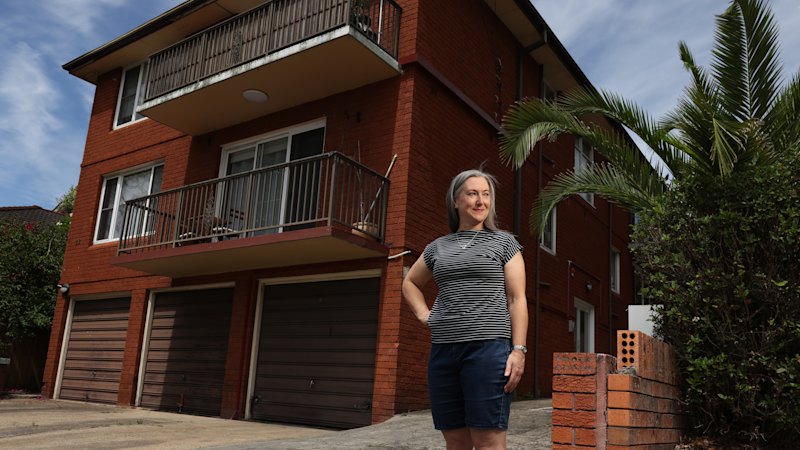
These reasons were why Tamsyn Glen moved from the eastern suburbs to a three-storey flat in Marrickville more than 16 years ago and has not looked back since. “My mother asked if I would ever move, and I told her: ‘You can put a pin in here around about 200 metres, and that’s all I’d move to!’” she said.
Lane’s decision will trigger a byelection in the council’s south ward, covering the suburbs of Henley, Huntley’s Cove, and Woolwich, among others.
A fiery five-hour council meeting took a personal turn when the Woollahra mayor revealed she looked up the value of a pro-housing advocate’s home during a debate over plans to add 9400 homes to Sydney’s eastern suburbs.
Hipsters will go head-to-head with Happy Meals in one of Sydney’s most vibrant entertainment strips after McDonald’s used a fast-track development process to take over the Oporto restaurant on Enmore Road.
The project triggered backlash from heritage groups and the City of Parramatta Council over fears it would overshadow and dwarf what the National Trust described as “three of the most significant historic houses in Australia” – Elizabeth Farm, Hambledon Cottage and Experiment Farm.
When Rikki James’ ex-partner smashed her head into a concrete floor, not even her life-threatening brain aneurysm and surviving brain surgery could stop the barrage of abuse and gaslighting that came afterwards.
“I wouldn’t say it’s [24-hour public transport] number one, but it’s very close to the top in terms of what enables people to participate,” Edwards said.
NSW Planning Minister Paul Scully says he is aiming to strike a balance between heritage and housing uplift in Woollahra, as street-view images reveal how the suburb would be transformed under controversial plans to add 9400 homes to Sydney’s east.
Sorry to bother you but I’m under great pressure with the extraordinary meeting on Monday,” Marshall wrote to Whitworth on May 14, days before the May 18 council meeting.
Also by Cindy Yin
Boy, 3, dies after being struck by ute at NSW holiday park
2026-11-20 · The Sydney Morning Herald
Nothing else under this byline is closely related to this article, so these are simply their most recent.
All 10 articles by Cindy Yin →

Topics

Homes NSW Landcom Sydney Sydneysiders the Committee for Sydney

Subjects

Sydney GPE · 3× Glen PERSON · 2× Sydneysiders NORP · 2× the Committee for Sydney ORG · 2× Estelle Grech PERSON · 1× Homes NSW ORG · 1× Landcom ORG · 1× Philip Thalis PERSON · 1× Thalis PERSON · 1× UNSW City Futures ORG · 1×

Narrative

These reasons were why Tamsyn Glen moved from the eastern suburbs to a three-storey flat in Marrickville more than 16 years ago and has not looked back since. “My mother asked if I would ever move, and I told her: ‘You can put a pin in here around about 200 metres, and that’s all I’d move to!’” she said.
framing: assertive · carried by 1 article(s) · first seen 2026-11-21
These reasons were why Tamsyn Glen moved from the eastern suburbs to a three-storey flat in Marrickville more than 16 years ago and has not looked back since. “My mother asked if I would ever move, and I told her: ‘You can put a pin in here around about 200 metres, and that’s all I’d move to!’” she said.
2026-11-21 · The Sydney Morning Herald
Why Sydney’s popular three-storey walk-ups are facing extinction · assertive framing

Claims (29 extracted, 1 hedged)

Sydney’s three- to four-storey walk-up apartments face extinction unless building regulations are overhauled as the housing sector warns that completion rates lag significantly behind approvals. asserted
rates → walk → approvals
Low-rise apartments comprised a much larger share of Sydney’s housing in the early 1990s, making up one-fifth – or 18 per cent – of all home approvals, but this has plummeted to just 1 per cent. asserted
this → comprise → cent
A new report from the Committee for Sydney found this sharp decline of the “missing middle” was symptomatic of a new dilemma in Sydney’s housing crisis. asserted
decline → find → crisis
While the state government’s rezoning and planning reforms have unlocked capacity for hundreds of thousands of homes, there is a massive shortfall in delivery, the report says. asserted
report → unlock → delivery
Estelle Grech, the think tank’s director of planning, said supply challenges were particularly acute for low density walk-ups because of one-size-fits-all building regulations that treated three-storey apartments the same as a 30-storey tower. asserted
that → say → tower
More compliance and red tape drives up the price of construction, making it almost impossible for low-rise builds to financially stack up, she said. asserted
she → drive → construction
“Even if you rezone the land, the buildings aren’t going to come – because no one can afford to build it. asserted
one → rezone → it
Low-rise apartments are drowning in building regulations that no longer make sense,” she said. asserted
she → drown → sense
Award-winning architect Philip Thalis said what used to take six to eight consultants for the same low-density apartment build now requires 20 to 25 consultants. asserted
used → win → consultants
“You walk past any new apartment building today, you’ll see a plethora of services that are required, each with their own spatial requirements. asserted
that → walk → requirements
They cost money to install, and have ongoing maintenance costs,” Thalis said. asserted
Thalis → cost → costs
One solution proposed by the Committee for Sydney is reducing extra costs from every stage of the development process – from wasted costs accrued during the construction, land acquisition, delays, design or compliance stages. asserted
solution → propose → stages
The think tank has also suggested creating a fit-for-purpose building code for walk-ups that is more proportional to their size, and distinguishes them from towers. uncertain
that → suggest → towers
It has urged the state government to implement a trial through state-owned agencies Homes NSW and Landcom before rolling it out more broadly. asserted
It → urge → it
The decline in walk-ups being built over time is not reflective of how Sydneysiders want to live. asserted
Sydneysiders → build → time
Research by UNSW City Futures shows that low and mid-rise builds were the most popular apartment type for their greater sense of community and lower strata costs. asserted
builds → show → community
These reasons were why Tamsyn Glen moved from the eastern suburbs to a three-storey flat in Marrickville more than 16 years ago and has not looked back since. “My mother asked if I would ever move, and I told her: ‘You can put a pin in here around about 200 metres, and that’s all I’d move to!’” she said. asserted
she → move → metres
Glen said living in a sturdy 1960s or 1970s older walk-up was a non-negotiable when she was house hunting in 2009. asserted
she → say → 2009
“Red brick buildings just have a reputation for being solidly built. asserted
buildings → have → reputation
I wanted a smaller block to manage strata and other issues better. asserted
block → want → strata
I also didn’t want a pool or elevator because those are strata fees, too,” Glen said. asserted
Glen → want → pool
In New Zealand, Auckland boosted its housing supply and reduced rents after widespread zoning changes were introduced to encourage more “missing middle” housing a decade ago. asserted
changes → boost → housing
However, as Sydneysiders face a future in which low-density “missing middle” housing becomes scarcer, developers have also sounded the alarm on broader commercial feasibility constraints delaying projects across the property sector and placing upward pressure on house prices. asserted
developers → face → prices
Urban Development Institute of Australia NSW chief executive Stuart Ayres said housing development had been increasingly squeezed by rising interest rates and supply chain disruptions inflating material costs, putting stress on a housing industry already in crisis. asserted
development → say → crisis
“This pushes development – particularly in low to mid-rise sites – into the north shore and the eastern suburbs because developers can sell their product at a higher rate per square metre there. asserted
developers → push → metre
Once you drift further west, the availability becomes considerably shallower,” Ayres said. asserted
Ayres → drift → ?
The state government is behind on its commitment to build 112,000 “missing middle” homes by mid-2029. asserted
government → build → mid-2029
However, a spokesperson for the NSW government said there were more than 17,000 homes under assessment, and more than 5400 approved in areas where low- and mid-rise planning reforms allow. asserted
reforms → say → areas
They said the government was implementing measures to improve feasibility and reduce the cost of delivering housing, including pattern book designs, prefabricated homes, changes to insurance requirements for low-rise buildings, and the pre-sale finance guarantee, among others. asserted
government → say → others

Give feedback · no sign-in needed

No sign-in needed for now. Your note is sent without a name, so it cannot be answered.

History Support