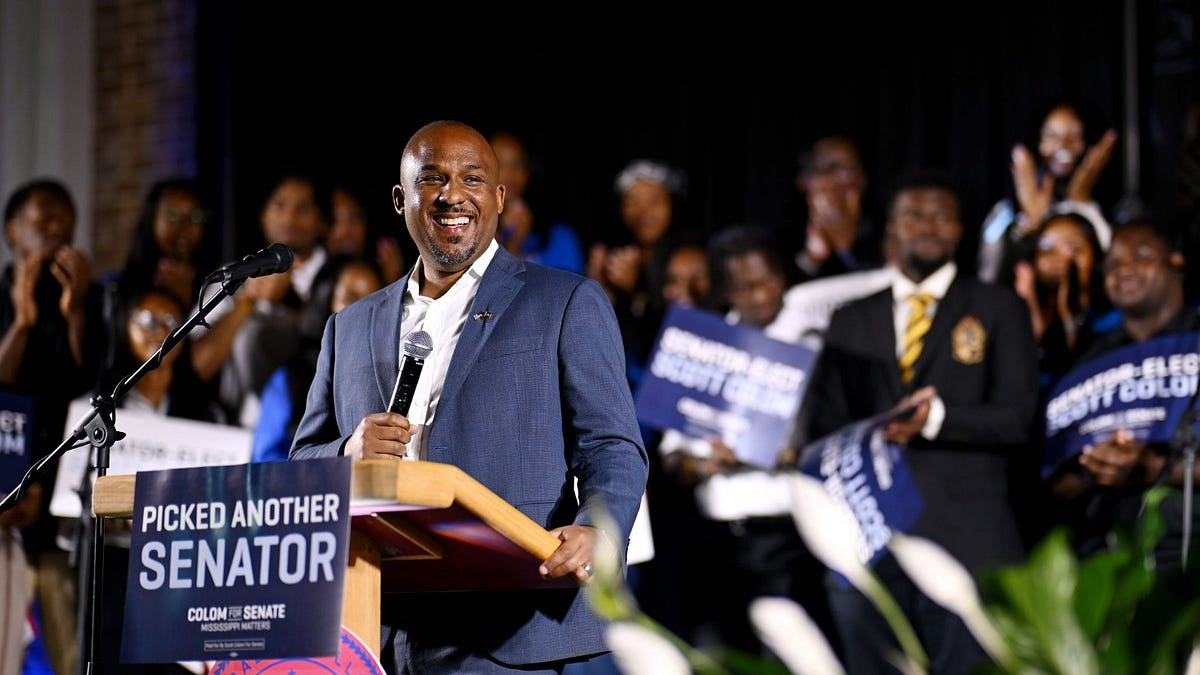
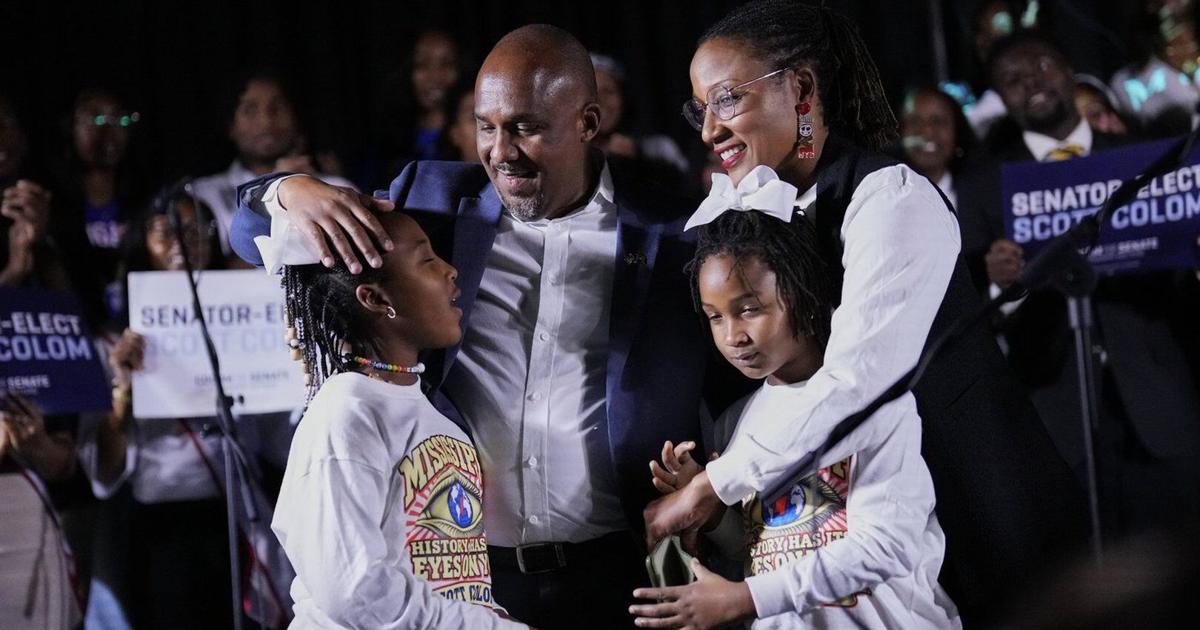
On January 3, Scott Colom will be sworn in as the 52nd United States Senator from Mississippi.
asserted
Colom → swear → Mississippi
Perhaps more importantly, Colom will be the first Black Mississippian elected to statewide office since Reconstruction—and the first Black Mississippian ever popularly elected to the U.S. Senate by voters in the Magnolia State.
asserted
Colom → elect → State
Black Mississippians’ outrage at the Supreme Court’s gutting of the 1965 Voting Rights Act helped put him there.
asserted
outrage → put → him
That fact should inspire quick and committed congressional action to restore the law’s protections—not some misplaced hope that they are no longer needed.
asserted
they → inspire → protections
Earlier this year, the U.S. Supreme Court seemingly completed its decade-long assault on the crown jewel of the Civil Rights Movement.
asserted
Court → complete → Movement
The Voting Rights Act was passed after the 15th Amendment’s prohibitions on race discrimination in voting had languished for nearly a full century.
asserted
prohibitions → pass → century
During that period, the State of Mississippi was often a leader in Jim Crow and white supremacist policies keeping African Americans from participating in the electoral process.
asserted
State → keep → process
Fewer than 10% of Black Mississippians were registered to vote in 1964, on the eve of the Voting Rights Act’s passage.
asserted
% → register → passage
After just four short years of federal enforcement, that number jumped to nearly 60%.
asserted
number → jump → %
At the local level, many Black Mississippians were elected for the first time.
asserted
Mississippians → elect → time
Perhaps in no other state was the Voting Rights Act more effective at helping counter race discrimination in voting.
asserted
Act → help → voting
And yet, in a series of decisions stretching back to 2013’s Shelby County v. Holder, the Supreme Court has steadily eroded the Voting Rights Act.
asserted
Court → stretch → Act
In April this year, in Louisiana v. Callais, the strategy effectively brought an end to Section 2, the law’s last remaining safeguard against discriminatory voting rules and district maps.
asserted
strategy → bring → rules
Writing for the dissent, Justice Elena Kagan lamented the majority’s “now-completed demolition of the Voting Rights Act.”
asserted
Kagan → write → Act
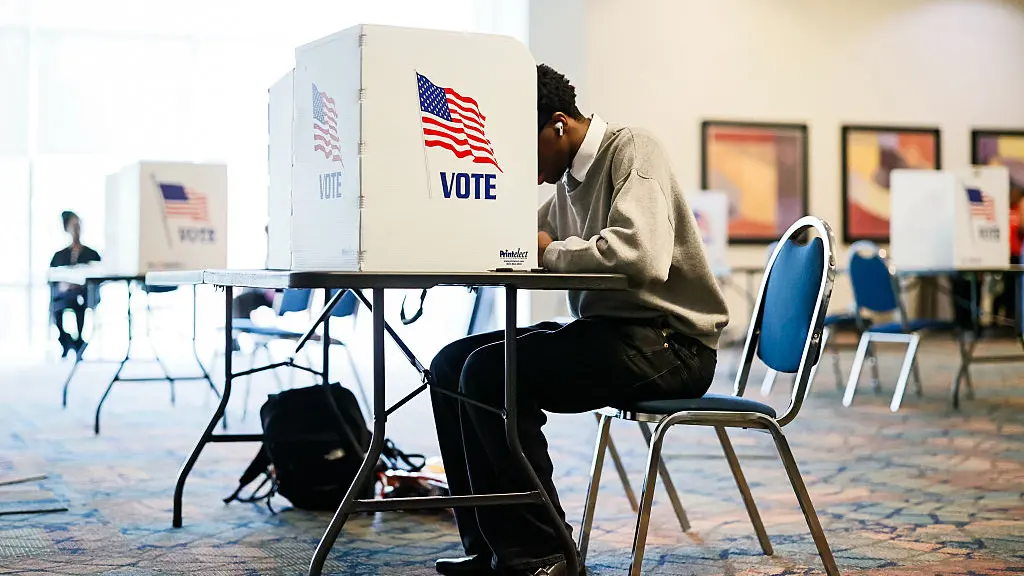
Black voters took this danger to heart; by all accounts, they turned out at extraordinarily high rates this fall, as they did in primary elections this year.
asserted
they → take → elections
But a focus on high turnout by Black voters in general obscures a more telling story.
asserted
focus → obscure → story
My early analysis with Arlyss Herzig at the Brennan Center indicates that turnout by Black and minority voters did not surge equally across the nation.
asserted
turnout → indicate → nation
Instead, the surge was especially pronounced in jurisdictions that, until 2013, were covered under the Voting Rights Act’s preclearance protections.
asserted
that → pronounce → protections
In 2013, the Supreme Court in Shelby County struck down the formula determining which jurisdictions were covered, effectively ending preclearance.
asserted
jurisdictions → strike → preclearance
Those jurisdictions had to prove to the federal government that any changes to voting laws and rules wouldn’t make voters of color worse off, relative to white voters.
asserted
voters → have → voters
It was in these counties that state officials have worked the hardest to dismantle those protections, and where the absence of what remained of the Voting Rights Act is felt the most acutely.
asserted
what → work → Act
Small surprise, then, that these were the counties where minority turnout spiked the most this year, even after accounting for differences among Black, Latino, and other minority voters.
asserted
turnout → spike → voters
If the death of the Voting Rights Act was galvanizing minority voters, this is exactly what we would expect to see.
asserted
we → galvanize → what
In a race decided by around 5,000 votes out of nearly a million cast, it is very possible that this backlash surge could have helped put Colom over the finish line in Mississippi.
uncertain
surge → decide → Mississippi
But the fact that Black voters in Mississippi were able to elect the candidate they preferred should not be taken to mean that the Voting Rights Act is no longer necessary.
asserted
Act → elect → candidate
A dramatic show of political force was needed to overcome the barriers created by the Court’s attacks on the Voting Rights Act.
asserted
show → need → Act
In fact, in Louisiana, across the Mississippi River from where Colom made history, we just saw how strong some of these structural barriers can be.
asserted
some → make → barriers
Thanks to successful litigation brought under the Voting Rights Act, Black Louisianans had the ability to elect two of the state’s six members of Congress in 2024, roughly in line with their share of the population.
asserted
Louisianans → bring → population
But following the Court’s decision in Callais, lawmakers reverted to a previous map that limited Black voters’ ability to elect their preferred candidate to just one congressional district.
asserted
that → follow → district
My analysis suggests that turnout surged among Black voters who previously could, but no longer can, elect a representative of their choosing.
uncertain
who → suggest → choosing
Their turnout increased by four points this year, while the turnout of white voters in that region dropped.
asserted
turnout → increase → region
And yet, my research indicates that white voters—not Black voters—will be represented in Congress next year by the candidate they voted for.
asserted
they → indicate → candidate
A similar post-Callais district map in Tennessee stripped Black voters in Nashville of their congressional representation, too.
asserted
map → strip → representation
Even in Mississippi, Black voters, who make up 36% of the electorate, will be underrepresented in the House next year, with just one Black-majority district out of the state’s four.
asserted
who → make → four
Scott Colom is headed to the U.S. Senate in part because Black voters are rightfully enraged by the dismantling of the Voting Rights Act.
asserted
voters → head → Act
But the gutting of protections still harms minority voters around the nation; hundreds∫ of thousands of Black Louisianans and Tennesseans will now be without a preferred representative in the U.S. House because of the Supreme Court’s decision this year.
asserted
thousands → harm → decision
The next Congress should listen to what voters are demanding: a new Voting Rights Act as bold as the one that arose out of the Civil Rights Movement, one that blocks discriminatory policies before they can take effect in elections, and that's strong enough to strike down those already on the books.
asserted
that → listen → books
The dramatic outcry at the polls has made that possible today, if only our leaders have the courage to act.
asserted
leaders → make → courage
 The Aporia